
Clasps

Clasp for weaving

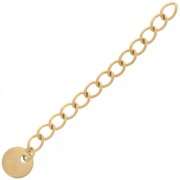
Extension chains

Handcuff clasps

Heart clasps

Hook and eye clasps
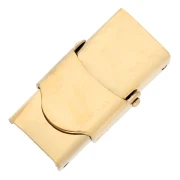
Leather lace & cord clasps
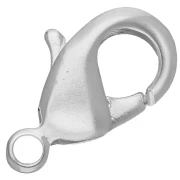
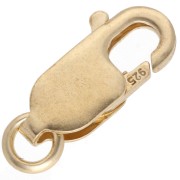
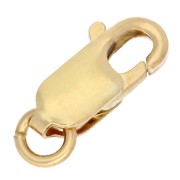
Lobster clasps
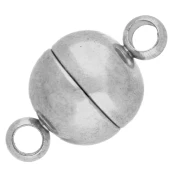
Magnetic clasps

Multi-strands

Rubber clasps

Screw Clasps

Snap Clips and Rivets
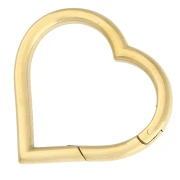
Springring clasps
Tags

Toggle clasps
Watch clasps

XRF testing
Filter1533 items
Clasp Type
Finish
Material
Origin
Plating thickness
wholesale packaging










Need inspiration?
Need advice?
What types of clasp are there?
There are many different kinds of necklace and bracelet clasps: small, large, silver, gold, zirconia... It's up to you to find the one that best suits your creative project!
- Spring clasps. These bracelet clasps feature a spring that is activated by a small catch on the side.
In the clasp family, these are the best-known and most widely used. Mainly used to fasten bracelets and necklaces, they are a practical and inexpensive way to close jewelry. They are sometimes attached to an extension chain for a more elegant look.
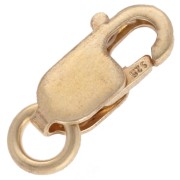
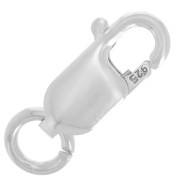
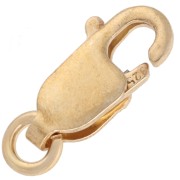
They come in all shapes: some are round, others are lobster or heart-shaped. Lobster Clasps are also known as carabiner cl asps . - The buoy clasp is a spring-loaded ring clasp with a buoy design. Very practical, it features integrated fasteners for easy chain attachment, as in this large-link necklace tutorial.
- Screw clasps are best suited to necklaces and pendants , since you need both hands to open and close them. Unless someone else can do it for you, in which case it's just as suitable for creating a bracelet. Heart-shaped, oval, safety-pin-shaped or butterfly-shaped, use this clasp as in this tutorial for an original bracelet with multicolored seed beads.
- The clip-on clasp, or clip clasp, consists of a decorative part with a slot on the side and a bent metal part with a spring effect that clips into the slot. These clasps are easier to open with one hand, by pinching the bent metal with two fingers like a clothespin.
- T clasps, also known as toggle clasps, are elegant and original, and very easy to put on. The trend is to use a large T clasp as a pendant, as in this asymmetrical necklace tutorial with 14K Gold Filled chain and natural stones.
- Magnetic clasps ensure ease of use, but also the security of not losing your jewelry.
- Multi-row clasps are a classic for jewelry designers. Flat or cylindrical, they enable you to create necklaces, bracelets and anklets with several rows. Ideal for making cuff bracelets or multi-strand bracelets.
- The hook clasp will give an attractive finish to your creations. It is more suited to necklaces than bracelets. For bracelets, this clasp is not secure enough.
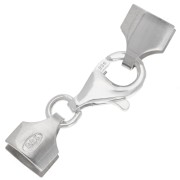
- The lace or cord clasp is specially designed for inserting a lace or cord, and the ends of these clasps can be tightened or glued.
- The handcuff clasp symbolizes a strong attachment. This bracelet clasp features a unisex pattern that's perfect for creating men's jewelry, women's jewelry or jewelry for couples.
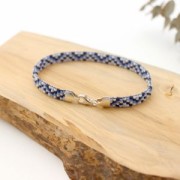
- Weaving clasps can be sliding, magnetic, clip or Lobster Clasp, the common feature being their ability to hide the knots and finishes of your creation. Perfect for making Miyuki cuff bracelets.
How do I close a bracelet with a clasp?
To close a bracelet with a clasp, first string your beads, leaving enough wire free on each side. Insert a Crimp bead, pass the thread through the bead, then through the clasp ring, then back through the Crimp bead, which you pinch firmly with flat-nose pliers. Trim off any excess wire. For a cleaner, stronger finish, use wired wire protectors through which you thread your wire.
How do I fit a screw clasp?
Several options for attaching a screw clasp:
- Withjoining rings: attach two joining rings to the ends of your jewelry and hook them on either side of your screw clasp.
- With thread: tie your thread, such as Linhasita waxed thread, to your clasp in a double knot. This is what our designer did to create a gemstone bracelet.
If you're using a coarse-mesh chain, you can also thread a link directly through each side of your screw clasp.