Average Grades
tuto colier
1 Answer
Show answers

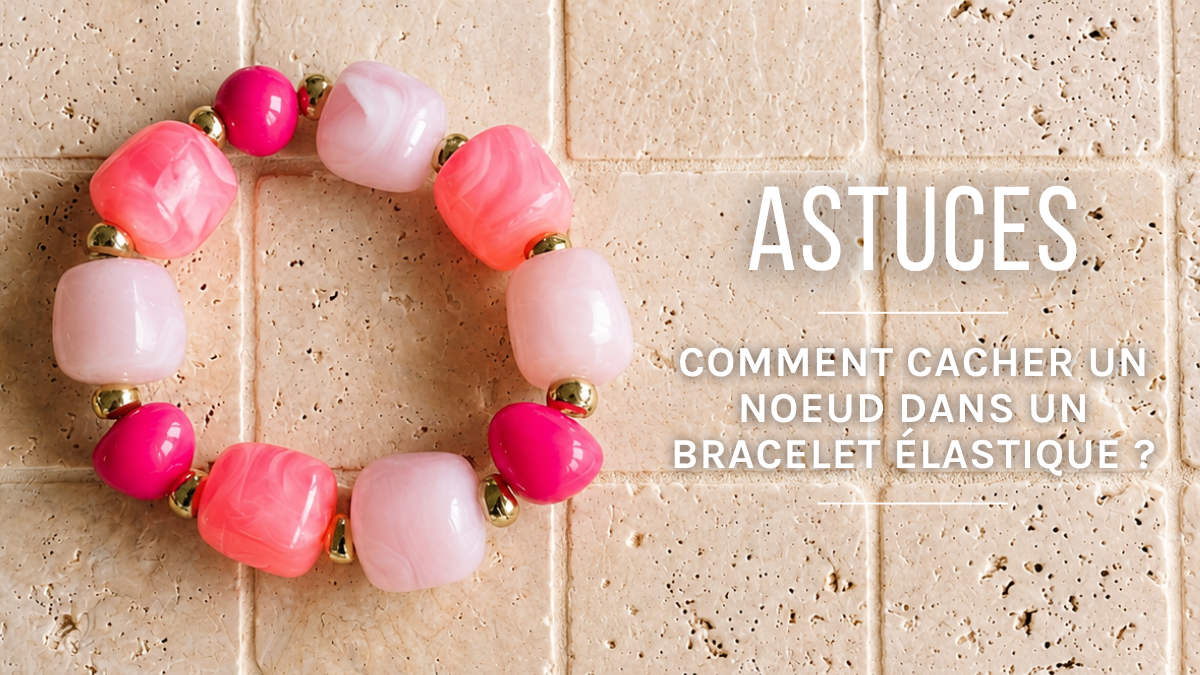
To hide the knot on your elastic bracelet, you have three options: slide it through a large-holed bead, cover it with a crimp bead, or use a thin string from the start. In any case, always reinforce the knot with a drop of glue before hiding it to prevent it from coming undone.
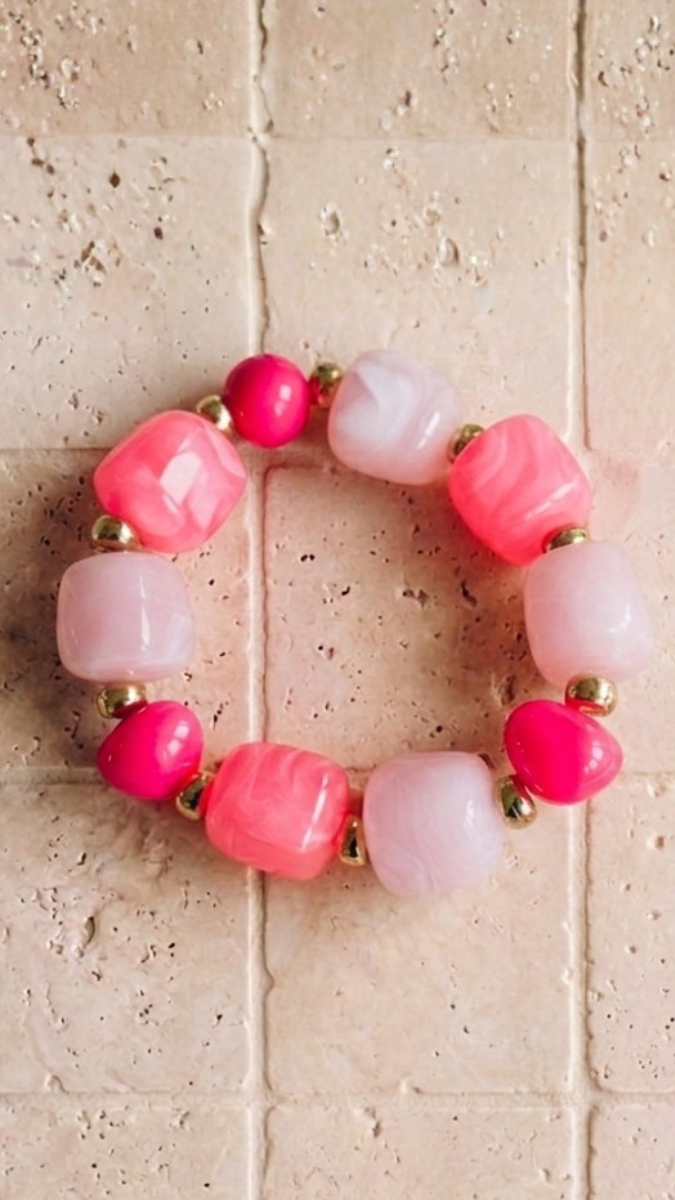
Have you just finished your elastic bracelet, but your surgeon’s knot is sticking out, visible between two beads? It’s that little detail that can ruin an otherwise successful creation… So how can you hide that knot?
Good news: a few simple tricks can make it completely invisible. Plus, it’s really not complicated at all!
Before you begin, if you haven’t tied your knot yet, check out our tutorial on how to finish an elastic bracelet first.
A surgeon’s knot, even when tied tightly, always creates a small bulge. On a thin string and small-holed beads, this bulge easily slips inside a bead. On thick thread or large-holed beads, however, it remains visible on the surface. There are three solutions to fix this, depending on your bracelet design.
This is the most common and least expensive method. It involves tying the knot and then pulling it inside a bead with a hole large enough to accommodate it.
This technique works very well with glass, wood, or metal beads that have large holes, but it’s trickier with Miyuki beads or seed beads, which have narrow holes.
⚠️ Avoid choosing thread with a diameter greater than 1 mm if you want to be able to easily hide your knot inside a bead: the thicker the thread, the larger the hole in the bead you’ll need to slip the knot through, which severely limits your choice of beads. Reserve thick threads for projects where you plan from the start to use a bead cover or large decorative beads.
A bead cap is a small metal fitting normally used to cover crimp beads. It closes over the bead and then looks like a round bead.
You can repurpose it to hide a knot in an elastic bracelet. How?
The bead cover has the advantage of adding a decorative touch to your creation.
This solution is particularly useful if your bracelet combines multiple materials and you don’t want to rely on the size of the beads’ holes to hide your knot.
If your beads have small holes (Miyuki, Delica, 11/0 seed beads, etc.), the most effective solution isto adjust the thread diameter from the start. A 0.5 mm thread, for example, ties a tighter knot than a 1 mm thread and slides much more easily inside a small bead.
A thinner thread may seem less sturdy, but rest assured: most modern elastic threads retain good strength even at small diameters, as long as they are pulled tight and the knot is secured with glue.
No matter which method you choose, always reinforce your knot with a dab of jewelry glue or clear varnish before hiding it. This prevents it from loosening over time and the knot from eventually popping out of its hiding spot. If you’re just starting out, our step-by-step tutorial on making an elastic bracelet walks you through the entire process from the beginning.
Finally, if—despite your precautions—your bracelet loses its shape or breaks after a few weeks, the problem may stem more from the string or the tension than from the knot itself: check out our article on why elastic bracelets break or lose their shape to avoid this issue.

The hole in the bead must be at least three times the diameter of the thread used, so that the knot can slide through it without any difficulty.
It's more difficult because of the small holes in these beads. It's best to use a thin wire (0.5 mm) or a crimp bead rather than trying to slide the knot through the bead.
Yes, but in a subtle and decorative way: it looks like a small metallic bead and blends in well with most designs.
Yes, it's recommended. The glue prevents the knot from coming undone once it's hidden and extends the bracelet's lifespan.
A classic jewelry glue like Hasulith is well-suited for securing the knots on elastic bracelets.
Credits
Perles & Co, Internet & E-Commerce company [09/07/2026] Any reproduction, representation, adaptation, in any form whatsoever, even partial, is prohibited, except for reproduction for private use not intended for collective use, representation in the family circle (art. L 122-5 CPI) and online publishing on condition that the source is mentioned and a link is included to the corresponding page of our site www.perlesandco.com.