Average Grades
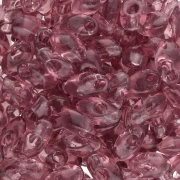
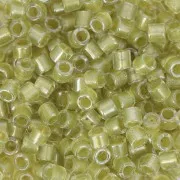
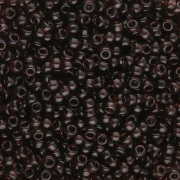

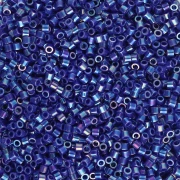
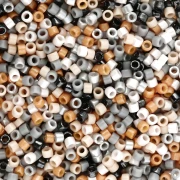
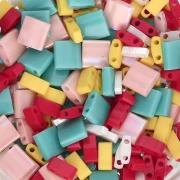
Sur les tutos le nombres le perles est noté. Combien y a t'il de perles dans un sachet de 10g, perles miyuki délicat 10.Merci
1 Answer
Show answers

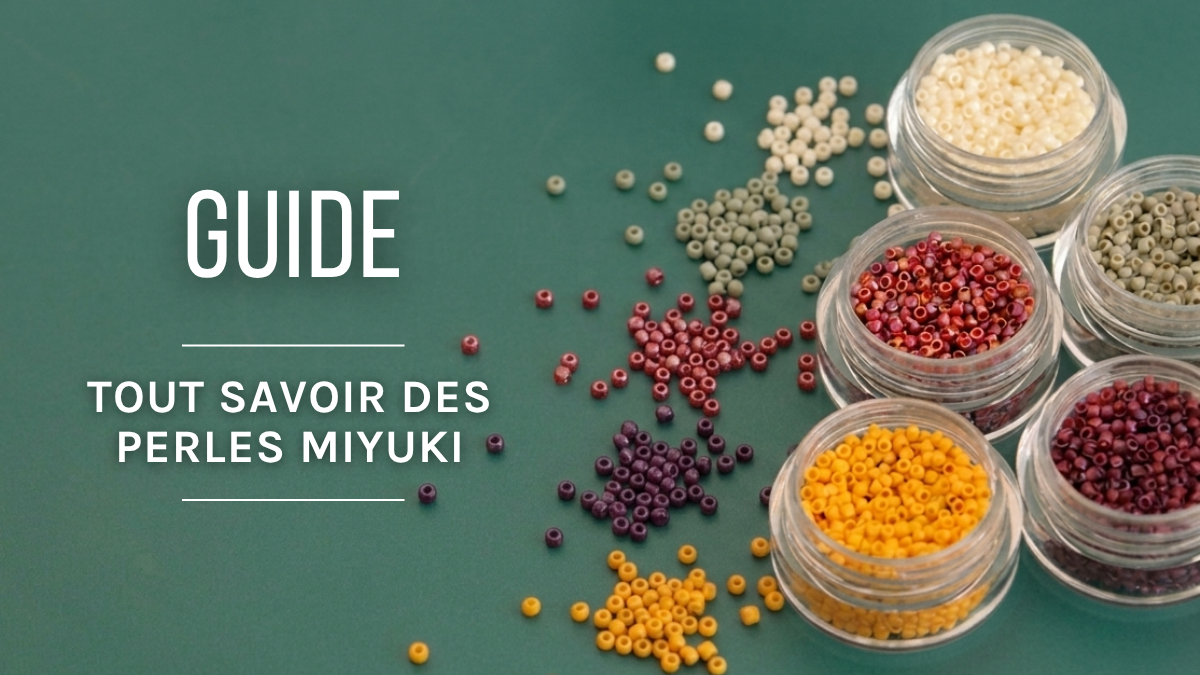
Miyuki beads are Japanese glass beads of great regularity, ideal for your creations. For precise weaving (peyote, brick stitch), Delica 11/0 cylindrical beads are ideal; for threading or embroidery, Rocailles round beads are more versatile. Choose your beads according to technique and desired effect.
Miyuki beads fascinate beginners and expert designers alike. But when faced with hundreds of references, sizes in 6/0, 8/0, 11/0 or 15/0, and names like Delica, Bugle or Tila, it's easy to feel overwhelmed. This guide is here to change that.
Here, you'll find the essentials: the different types of Miyuki Japanese beads, their sizes deciphered, the techniques adapted to each, a guide to colors and effects, and the quantities needed for your projects.
Miyuki is a Japanese manufacturer of glass beads, renowned worldwide for the quality and consistency of its products. It's this rigor that makes it the number-one choice of embroiderers, weavers and jewelry designers the world over.
The brand offers several families: the essential Delica, classic rocailles, Bugles, Tila Beads, and original shapes (cubes, magatamas, triangles, mini-drops...). At Perles & Co, you'll find +4,000 references to satisfy all your creative desires!
👉 Curious about the story behind these beads? Read our article on the subject!
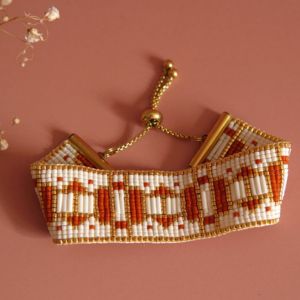
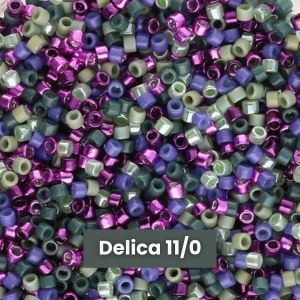
Miyuki Delica beads are cylindrical beads. Their regular shape, large hole and standardized height make them ideal for needle weaving (peyote, brick stitch) and loom weaving. The result: a flat, smooth and perfectly even weave.
Delica beads are available in several sizes: 8/0, 10/0, 11/0 and 15/0. The 11/0 is by far the most widely used and referenced.
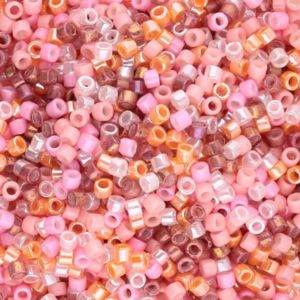
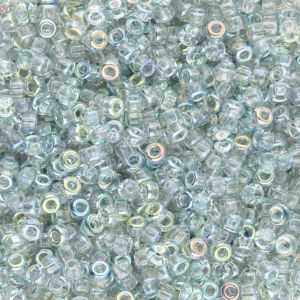
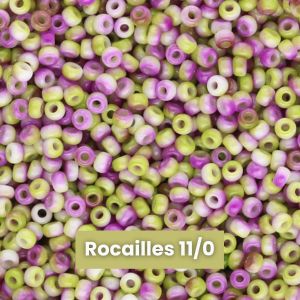
Miyuki rocailles are round pearls, the classic shape of the rocailles pearl. Slightly less regular than Delica, they are highly versatile: for stringing, weaving, embroidery and decoration. Available in sizes 2/0, 6/0, 8/0, 11/0 and 15/0. Special versions are also available: Rococo, Baroque, Hex Cut (faceted).
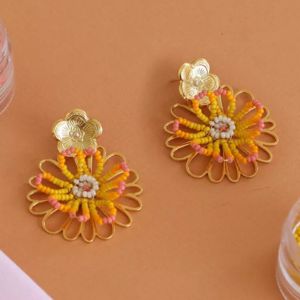
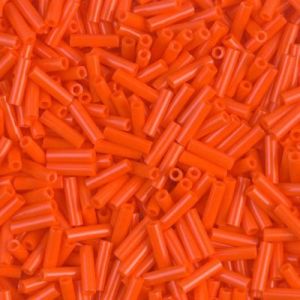
Bugles are long tubular beads. Perfect for bangs, embroidery and necklaces with graphic effects. Miyuki offers straight Bugles, Twist Bugles and thinner Slender Bugles. They are often used as accents, mixed with rocailles.
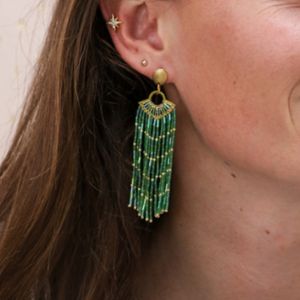
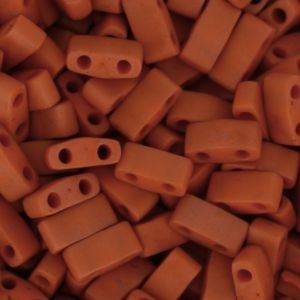
Miyuki Tila Beads are flat rectangular beads with two holes. This feature opens up unique weaving possibilities, notably for creating architectural bracelets and highly structured patterns. They are available in 3 ranges: Tila Beads, Half Tila and Quarter Tila.
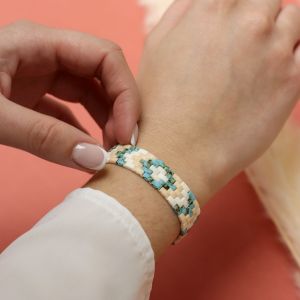
The brand also offers lesser-known but equally addictive shapes:
The numbering system may seem counter-intuitive: the larger the number, the smaller the bead. An inheritance from the old English measurements ("aught").
Size | Approx. diameter | Type(s) available | Main use |
2/0 | ~6 mm | Rockwork | Threading, decoration, children's projects |
6/0 | ~3.3 mm | Rocaille, Rococo, Baroque | Threading, necklaces, cumulative bracelets |
8/0 | ~2.5-3 mm | Rocaille, Delica | Coarse weaving, threading, blending |
10/0 | ~2.1 mm | Delica (DBM) | Intermediate weave |
11/0 | ~1.6-2 mm | Rocaille, Delica (DB) | Peyote weaving, brick stitch, loom |
15/0 | ~1.3-1.5 mm | Rocaille, Delica | Very fine weaving, jewelry embroidery |
11/0 is the reference size for weaving. Most of the grids available on the market are created for Miyuki Delica 11/0.
👉 For full details of all ranges: Miyuki bead shapes and sizes
This is THE question on everyone's mind. In practical terms:
The loom is often recommended for beginners. Wires are stretched over the loom, then beads are passed row by row with a weft thread. The result: beaded bracelets and bands with precise graphic motifs.
Peyote weaving is a needle-based technique in which the beads interlock in a staggered pattern, like the cells of a honeycomb. There is even peyote, odd peyote and circular peyote (for bangles and rings).
In Brick Stitch , beads are lined up side by side, like bricks on a wall. This is the queen technique for free-form earrings, brooches and pendants, as it allows for easy increases and decreases.
👉 Learn brick stitch / With increases and reductions
Square Stitch produces a result visually similar to fabric obtained on the loom, but is worked entirely with a needle. Ideal if you don't have a loom but want to reproduce graphic grids.
There's also bead embroidery on fabric or backing, where 11/0 and 15/0 rocailles are king, and spiral beading, a threading technique that often uses two sizes of rocailles in harmony.
Technique | Ideal bead | Difficulty | Typical projects |
Loom | Rocaille or Delica 11/0 | Beginner | Bracelets, belts |
Peyote odd/even | Delica 11/0 | Intermediate | Bracelets, cuffs |
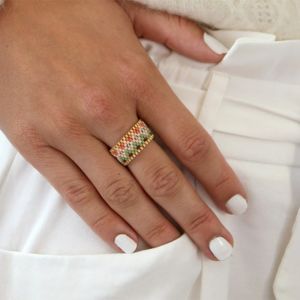
Circular peyote | Delica 11/0 | Intermediate | Bangles, rings |
Brick Stitch | Delica 11/0 | Intermediate | Earrings, brooches |
Pearl embroidery | Rocaille 11/0 or 15/0 | Intermediate | Fabric embroidery |
Threaded necklace | Rocaille 6/0 or 8/0 | Beginner | Necklaces, cumulative bracelets |
Bangs / tassels | Bugle + Rocaille 11/0 | Intermediate | Earrings, necklaces |
You don't have to master everything at once. Here's the most logical path, depending on where you are.
If you're a complete beginner :
Start with the loom: it's the most visual and quickest technique to master. You'll see concrete results from the very first session.
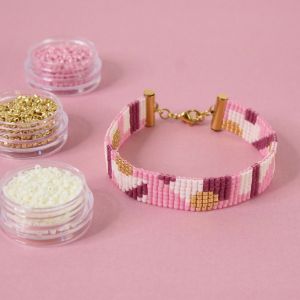
You already have a few creations under your belt:
The peyote pair is your natural next step. The logic is simple once you get the hang of it, and the pattern possibilities are endless.
If you're an experienced designer :
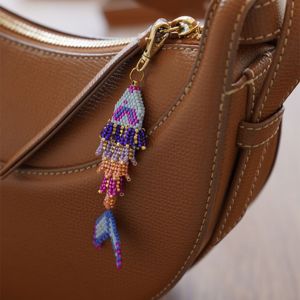
Free-form brick stitch and Tila Beads are for you. These techniques allow for architectural creations, sculpted earrings and assemblies you won't see anywhere else.
Even with good beads and good intentions, certain pitfalls come up time and time again. Knowing them in advance can save you precious time.
❌ Buying too few beads of the same color: this is mistake number one. Lots can vary slightly from one manufacture to another. If you run out of a color during the course of a project, you risk not finding exactly the same shade. Always buy 20% more than the estimate.
❌ Choose rocailles for a first peyote weave: rocailles give a more irregular result that's harder to read on a grid. For your first attempts at peyote or brick stitch, Delica 11/0 are really a must. Consistency makes all the difference.
❌ Using a thread that's too thick: a thread that's too thick won't pass through the hole of a Delica 11/0 twice, yet weaving often requires ironing several times. Find out about the right diameter before you start 👉 Which thread and needle to choose for bead weaving?
❌ Neglect thread tension: too loose a tension = a soft, irregular weave. Too strong a tension = a fabric that curls. Tension regularity is acquired with practice, but starting slowly and conscientiously already makes a real difference.
❌ Confusing Duracoat and non-Duracoat finishes: some beautiful colors on display fade quickly when worn. For everyday jewelry, always check whether the bead carries the Duracoat or Permanent Finish label before buying.
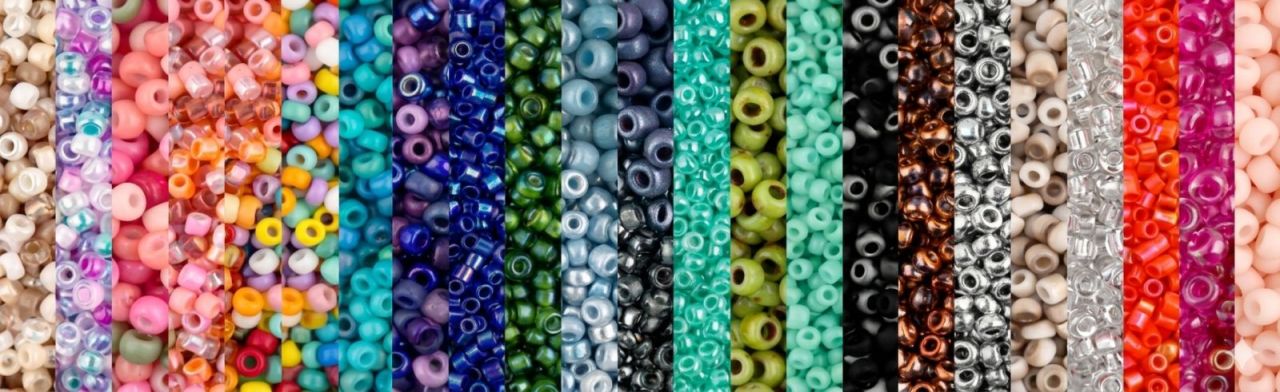
This is often the big question: how many pearls should I buy? Here are reference estimates in Delica 11/0 (data vary according to finish and weave density).
Bracelets :
| Type | Estimated quantity |
| Single loom bracelet (16-18 cm) | 5 to 8 g per main color |
| Woven cuff bracelet (4-5 cm wide) | 20 to 30 g total |
| Circular peyote bangle | 15 to 25 g |
Earrings :
| Type | Estimated quantity |
| Small chips or hoop earrings | 1 to 2 g per pair |
| Brick stitch / dangling earrings | 3 to 5 g per pair |
| Large loops with fringes | 5 to 10 g per pair |
Other projects :
| Project | Estimated quantity |
| Woven ring | 2 to 4 g |
| Brooch / badge (5×5 cm) | 5 to 8 g |
| Pearl fabric choker necklace | 30 to 50 g |
| Spiral necklace | 20 to 40 g |
| Small decorative object (5×10 cm) | 15 to 25 g |
Practical tip: always buy slightly more than you need for each color. Batches may vary slightly from one production to another, and it's better to have a small stock than to run out during creation.
For larger projects, 100 g bags of Miyuki Delica 11/0 are available at sliding-scale prices, perfect for regular designers or pros.
Each Miyuki bead has a unique reference code. For Delica 11/0, it starts with DB followed by 4 digits (e.g. DB-1832 = Galvanized Gold). For Delica 10/0, the prefix is DBM.
Good news: the color name is identical between a Delica and a rocaille of the same shade, even if the numerical code differs.
Finish | Features | Ideal for |
Opaque | Full color, no transparency | Legible graphic patterns |
Transparent | Light transmission | Embroidery on light background |
Silver Lined | Silver interior, mirror effect | Luminous creations |
AB (Aurora Borealis) | Multicolored iridescent reflections | Fairy-like creations |
Metallic | Metallic appearance | Jewelry effect |
Matte / Frosted | Satin finish, no shine | Sleek, modern styling |
Luster | Slightly glossy, between opaque and pearly | Versatile |
Galvanized | Electrochemical metallic coating | High-gloss jewelry |
The Duracoat label means that Miyuki has applied a protective varnish to increase color durability. This is particularly important for galvanized finishes and tinted colors, which can fade with time, perspiration or water.
If you're designing jewelry to be worn on a daily basis, Duracoat and Permanent Finish are the colors of choice.
For accurate color selection, nothing beats the Miyuki physical color chart. Several versions are available: 11/0 seed beads, multi-size beads, Delica beads, Duracoat beads... These cards allow you to see the real colors and match them without any surprises.
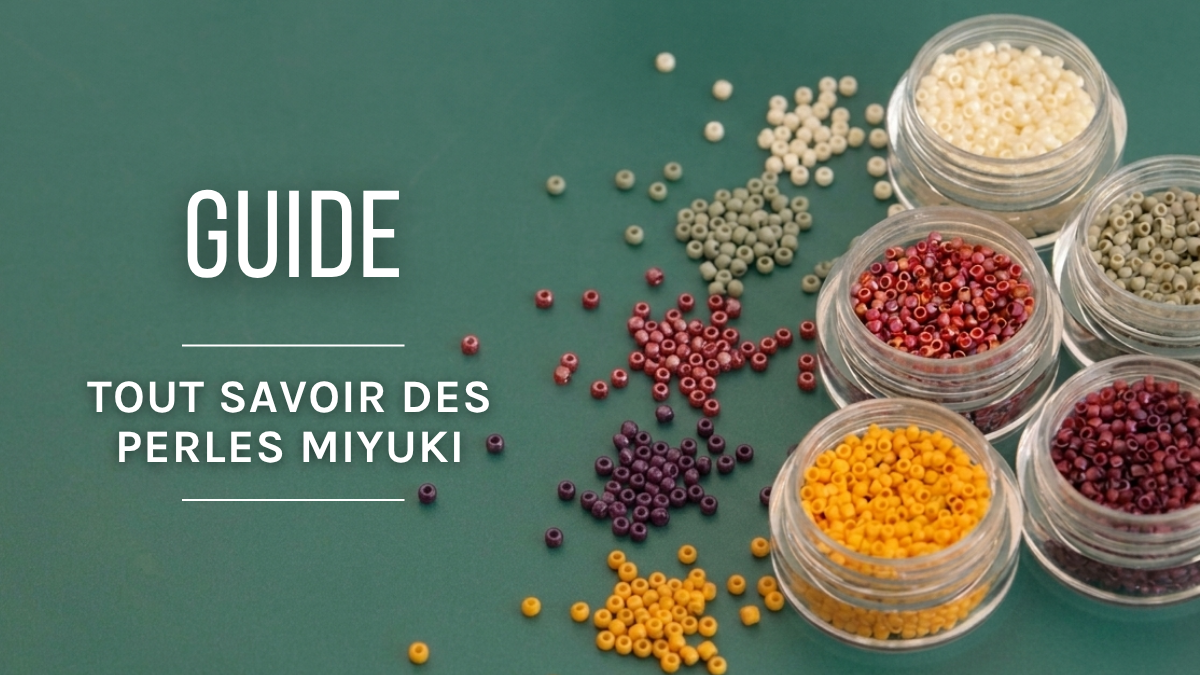
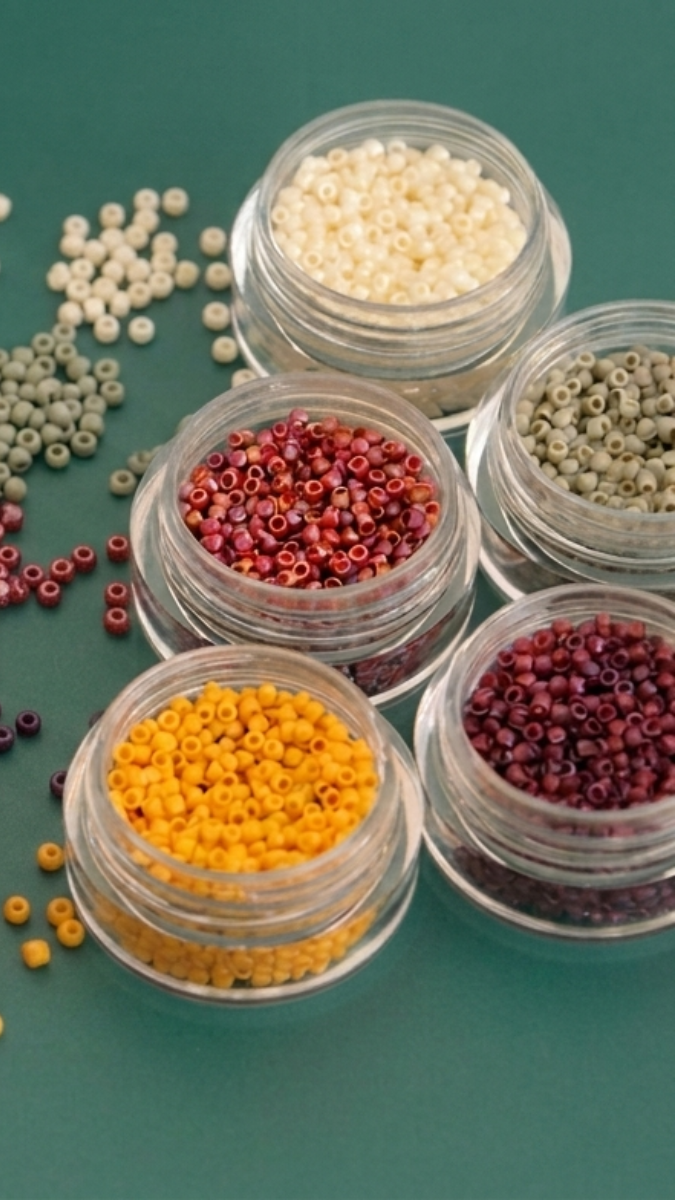

These are the sizes of the pearls: the higher the number, the smaller the pearl. 11/0 is the standard size for weaving; 15/0 is very fine (jewelry embroidery); 6/0 is large (stringing, decorative projects).
The two brands are close, but not perfectly interchangeable. Mixing the two in the same row can create slight irregularities. For precise weaves, it's best to stick with a single brand. You'll find more details in our Toho Aiko vs Miyuki Delica comparison.
Preciosa rocailles are of Czech origin, manufactured in Bohemia. They are round and slightly less regular than Miyuki. Their hole is often smaller. For precise weaving (peyote, brick stitch), Miyuki are clearly superior. For threading or decorative purposes, Preciosa is an affordable, colorful alternative.
Beyond the pearls, the right equipment makes all the difference. The essentials:
Credits
Perles & Co, Internet & E-Commerce company [14/05/2026] Any reproduction, representation, adaptation, in any form whatsoever, even partial, is prohibited, except for reproduction for private use not intended for collective use, representation in the family circle (art. L 122-5 CPI) and online publishing on condition that the source is mentioned and a link is included to the corresponding page of our site www.perlesandco.com.