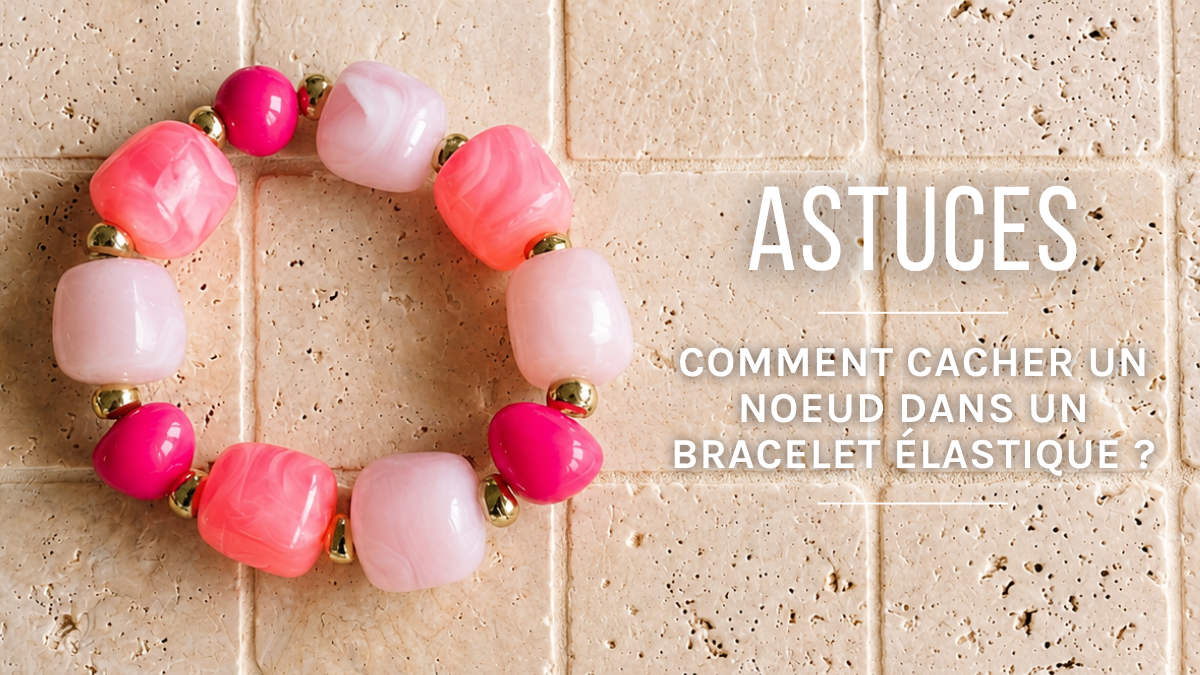
How do I get started in jewelry design?
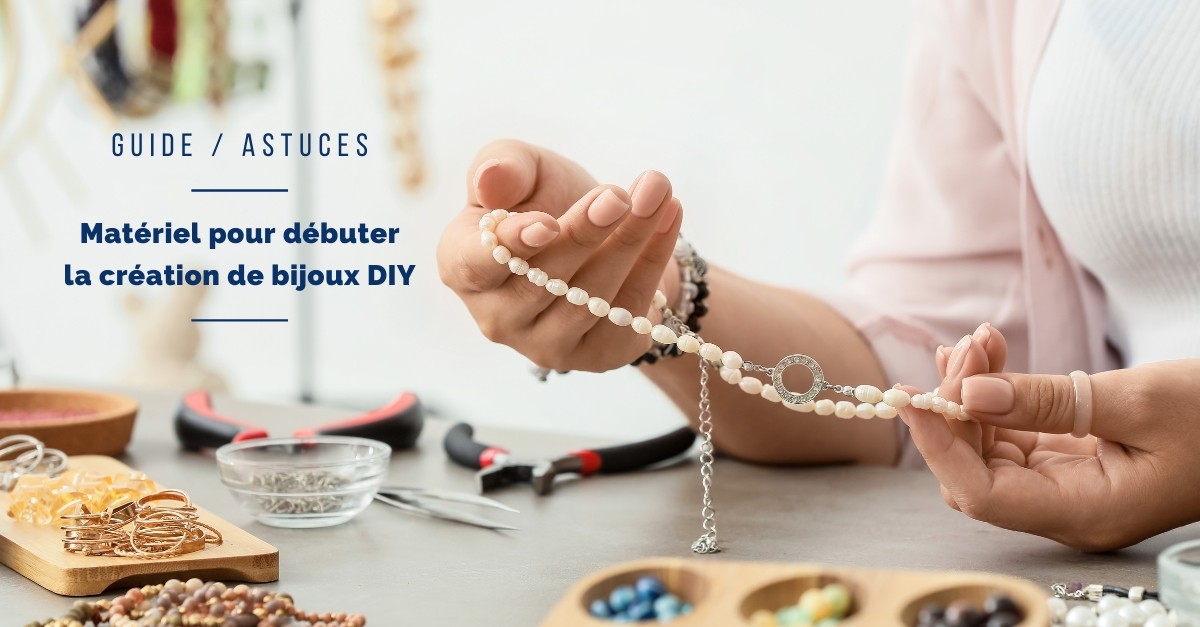
Creating your own jewelry is a satisfying experience. But when you're new to jewelry-making, you often prefer to buy beads, pendants or charms, to the detriment of materials. And yet, having the right materials and tools contributes to the success of your DIY project.
Here's a quick overview of the equipment you'll need in your toolbox to get started in the best possible conditions. This is not an exhaustive list; you can add to it according to your needs, your projects and your desires by selecting the tools you need from our wide choice of equipment.
What tools are needed to create jewelry?
Jeweller's pliers
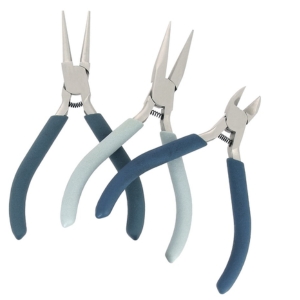
In the jewelry world, there are all kinds of pliers, each with its own specificity. But if you want to create a beautiful piece of jewelry, there's no need to invest in tools you'll never (or very rarely) use. All you need are 3 basic jewelry pliers: cutting pliers, flat nose pliers and round nose pliers.
- Cutting pliers: as the name suggests, these are used to make a clean cut through wires, cables and jewelry nails.
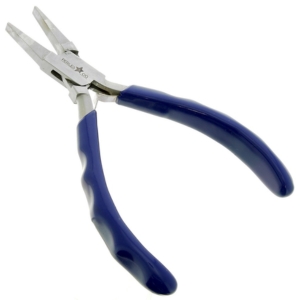
- Flat-nose pliers: useful for gripping and holding wires, metal plates and jewelry components. They can also be used to crush pearls and close knot covers... When working with metal jewelry, flat-nose pliers with nylon tips are preferable to avoid damaging the surface of the jewelry.
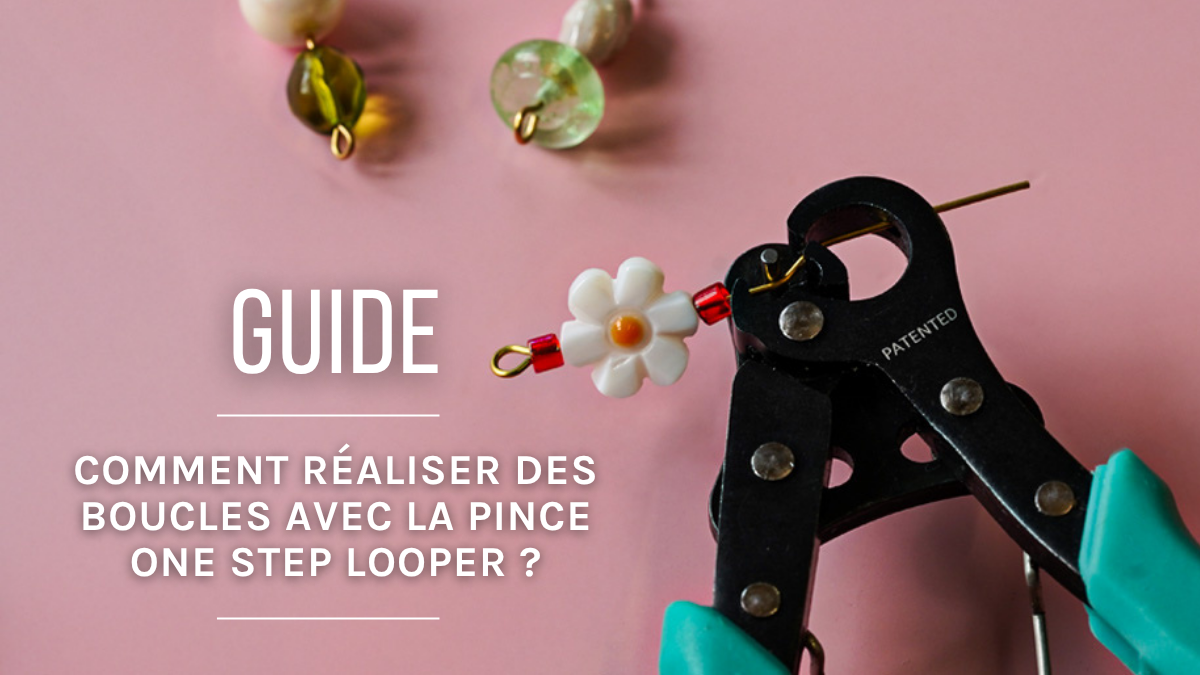
- Round-nose pliers: for gripping, bending and shaping wires, rods and rings. Their conical tips are ideal for making loops, rings, etc.
You can buy these pliers individually or find them in jeweler's pliers kits, perfect for beginners.
If you're a beginner, find out more about basic pliers for beginners in our data sheet.


Measuring tools
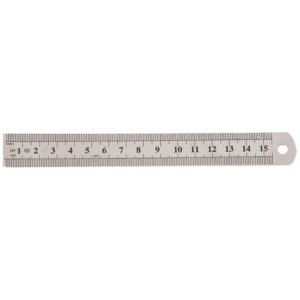
A graduated ruler or tape measure is effective for measuring wire and chain lengths.
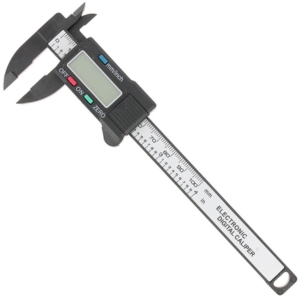
A caliper is more suitable for accurately measuring the diameter of pearls and cabochons.

Cutting tools
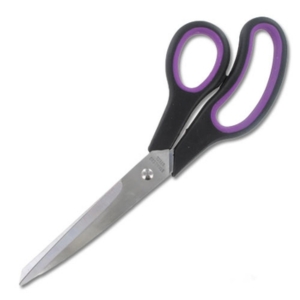
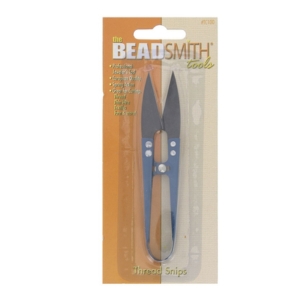
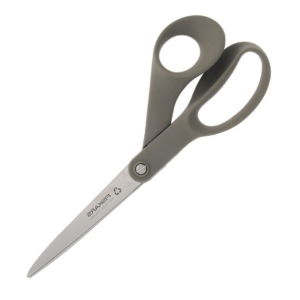
Precision scissors are useful for cutting knots, protruding wires, ribbons and anything non-metallic in general. You can also use a pair of scissors for the same purpose.
Jewelry glue
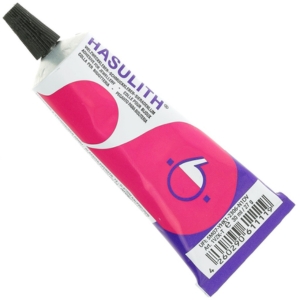
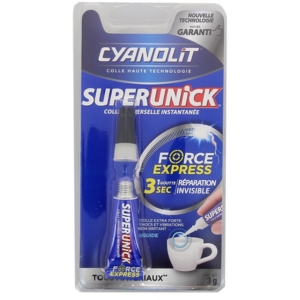
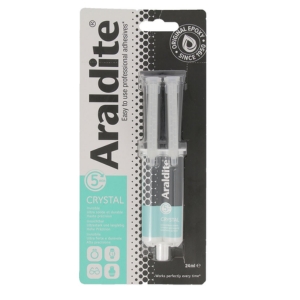
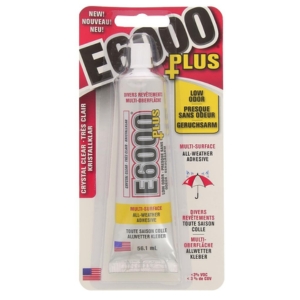
Jewelry glue is versatile and very practical. It can be used to attach a cabochon to a jewel primer, place rhinestones, glue a ribbon, reinforce a bow...
Thanks to this glue, you'll be able to create DIY jewels quickly and easily: a natural stone cabochon glued to a ring base, and you'll have a pretty, trendy ring. The only thing you'll need to do is wait for the glue to dry.
Wire
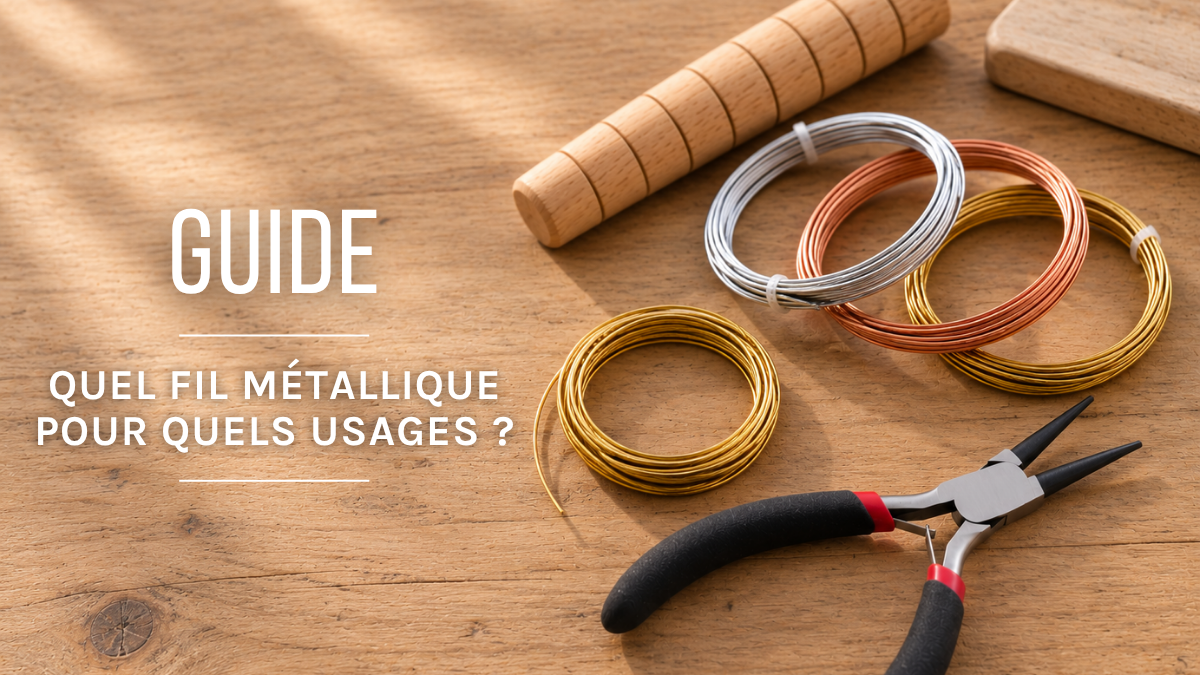
There are many types of thread, with different materials and uses.
- Elastic thread is the easiest to use for beginners. You thread the beads onto it and finish with a surgeon's knot. To help you find the right type of elastic thread for your project, please consult our technical data sheet.
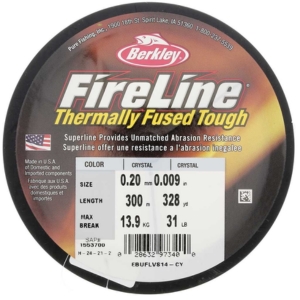
- Nylon thread is perfect for beaded jewelry creations, such as seed beads, Puca beads, gemstone beads, freshwater pearls, wooden beads or plastic beads... It's water-resistant, soft and flexible. To finish off a bracelet or necklace, attach a clasp.
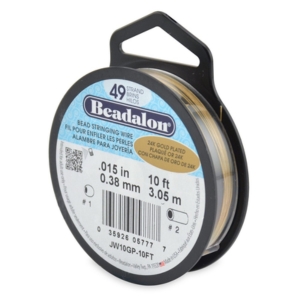
This soft, supple beading wire can be used to make costume jewelry with "floating" and "illusion" motifs, as well as to hang your DIY decorations invisibly. - Wired wire is perfect for a more aesthetic look. Generally made of stainless steel, it is designed to be durable, resistant to twisting and to hold its shape.
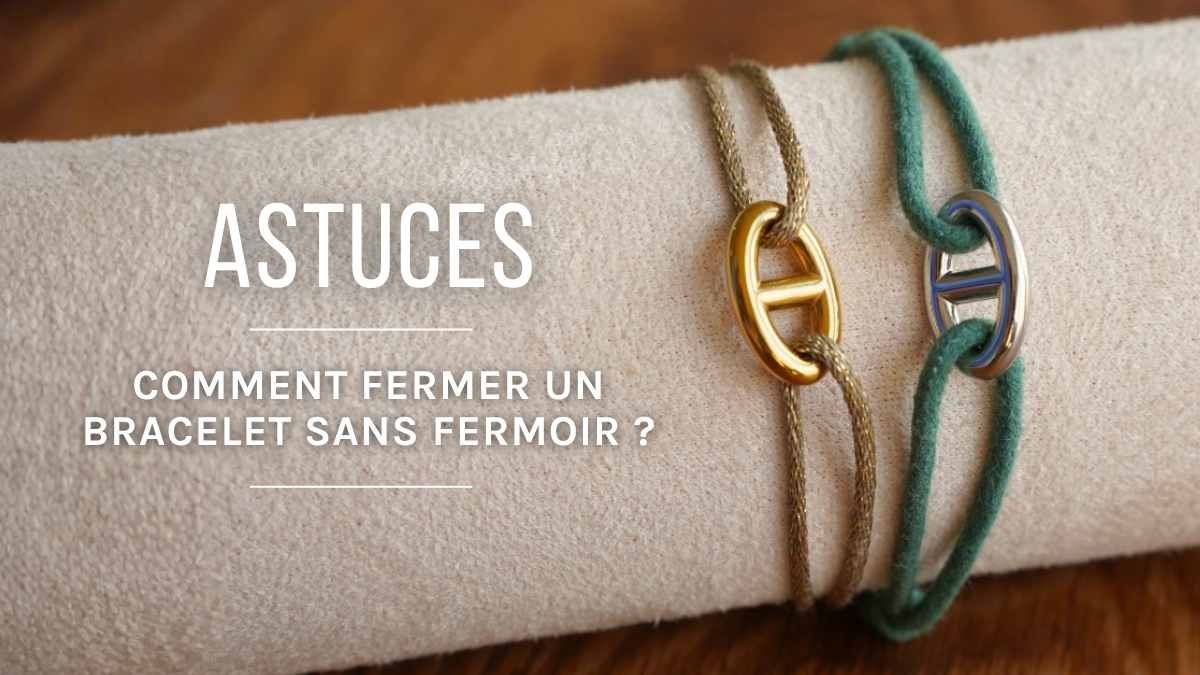
There are a few rules to follow when choosing it. For example, 49-strand cable is more flexible than 7-strand cable. This allows you to string heavier beads and create necklaces that retain their shape. - Macramé wire isn't just for making micro-macramé jewelry. It can also be used to make adjustable bracelets.
- Metal wire is ideal for primers such as creole earrings.
The choice depends on the jewelry design, the type of material you're working with and the aesthetic result you want to achieve. Still not sure? Consult our technical data sheet to find out which wire to use to make your jewelry.
Don't forget to take into account the size of the hole diameter of your pearls before buying your wire.


Clasps
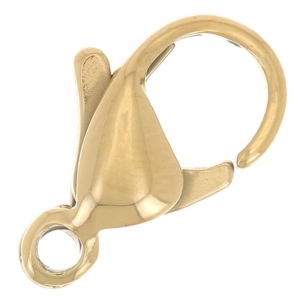
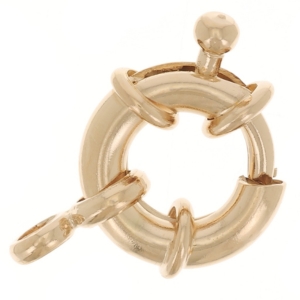
Snap, screw, spring, magnetic, clip, buoy, sliding... You'll find many different clasps, in a variety of styles, sizes and materials. The choice of clasp is an important one, depending on your project and how you want it to look.
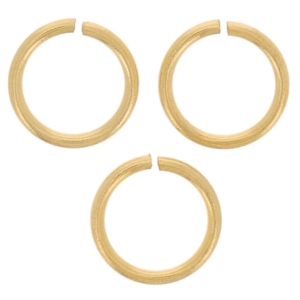
Open or closed rings
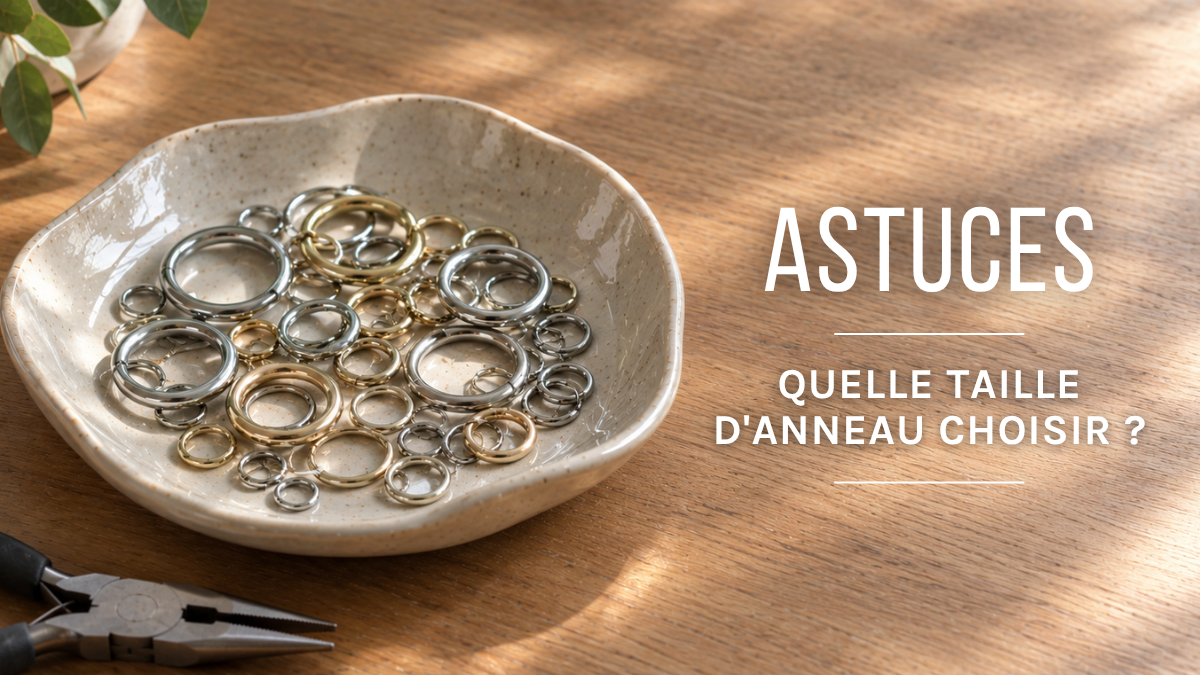
Whether you're attaching a clasp or hanging a pendant, you can't do without finishing rings. To open a ring, you'll need two pliers.
Crush beads
These are used to hold the elements in place on the wired thread, to make pretty finishes and also to create a loop at the ends of the thread for attaching a clasp. To crush the crush beads, you can use special crush bead pliers, but flat pliers can also be used.

Jewelry studs
Also known as jewelry pins, studs are indispensable for creating DIY costume jewelry, such as dangling earrings. There are four types:
- Flat-head nails.
- The ball-head nail.
- The round-headed stud, which ends in a ring.
- The fancy-head nail, whose head can take on all sorts of shapes: a flower, an arrow, a spiral, a leaf...
To attach them to a jewelry primer or charm, or to make a spacer with a pearl, you'll need to form a simple loop or a pigtail loop.
Tip: How do you choose a jewelry nail? Take into account the diameter of the pearl hole and the diameter of the head of the shank. The nail must not be able to pass through the pearl.
Crushable pearl covers
They're not essential, but it's a good idea to have them in your toolbox. Knot covers are highly recommended if you want to make a pretty finish. They are used to hide crush beads and unsightly knots in your costume jewelry settings.
Easy to use, they come in the form of hollow beads almost cut in half. Simply place over the bead to be crushed and close with flat-nose pliers. Once closed, they resemble a pearl.
Wire protectors
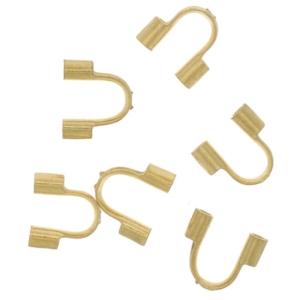
They too are not essential, but they are highly recommended for prolonging the life of your DIY jewelry. Wire protectors are small, U-shaped elements that fit over the wire.. They protect the wire from wear and tear by protecting it from the friction of the clasp.


Pendants, charms and sequins
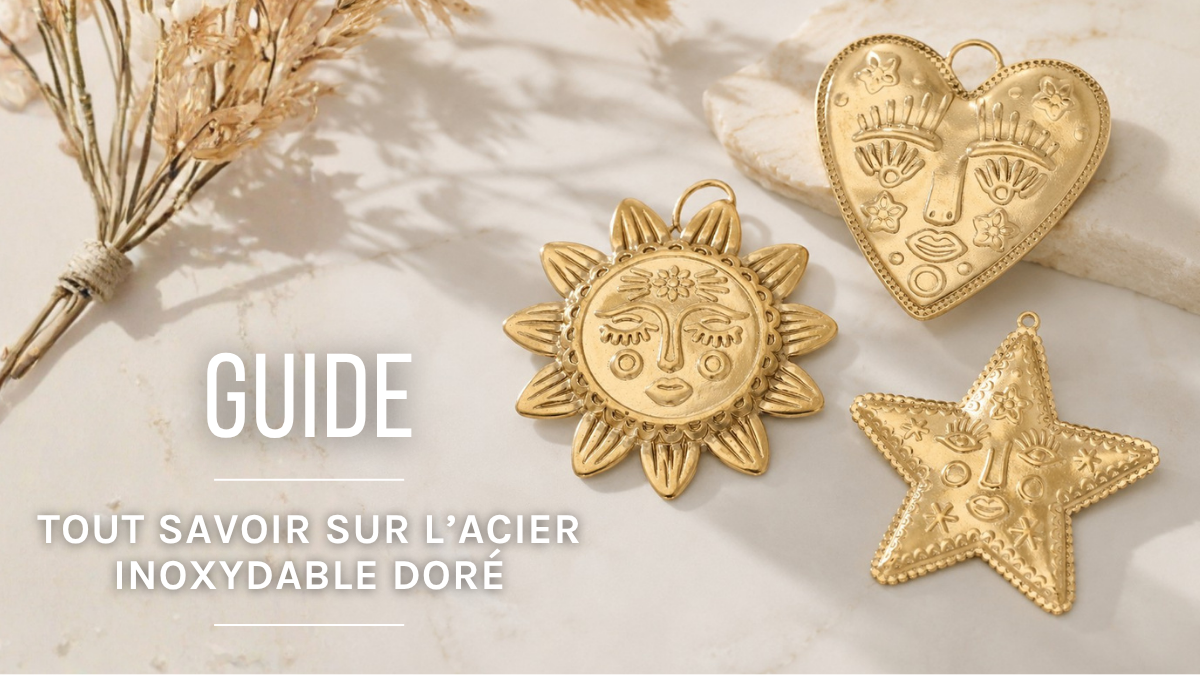
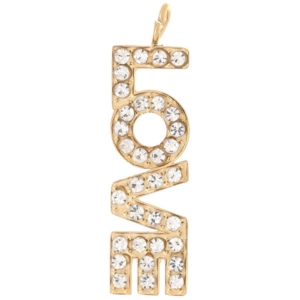
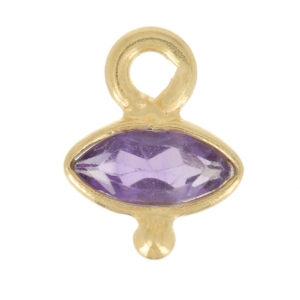
Pendants, charms and sequins are jewelry components that let you decorate and personalize a necklace, bracelet, earrings, anklet or ring. They are available in different shapes, sizes and materials.
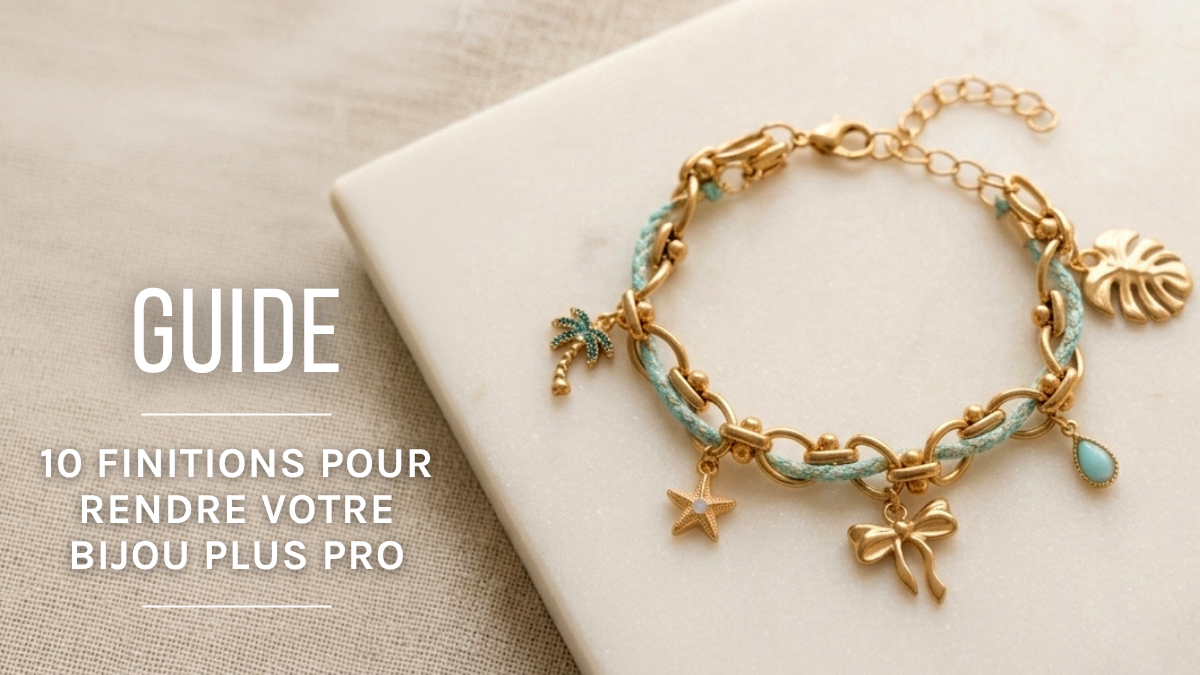
What are charms? They are jewelry components that are attached to bracelets, primers, earrings or necklaces. As a general rule, charms are smaller than pendants. For a tassel effect on a ring or bracelet, we prefer to add a mini charm.
What does sequin mean? It's also a small hanging item. The difference? Sequins don't have rings or fasteners, but they do have a hole.


Jewelry primers
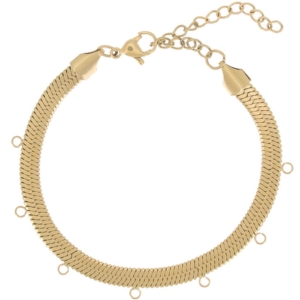
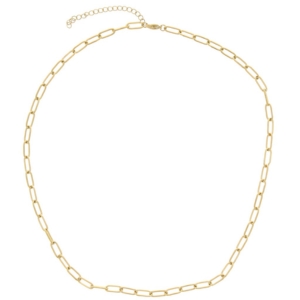
Chain is the basis for bracelets and necklaces. All you need is a clasp and rings to create a minimalist piece of jewelry. Afterwards, you can add a pendant or charm to suit your tastes
With leftover chain, you can easily create other jewelry items such as earrings or rings.
Even simpler, you can opt for a ready-made bracelet orchoker. These already come with a clasp and even an extension chain. All you have to do is decorate them with jewelry components.
Rings to decorate and earringsto personalizeare also ideal jewelry primers for beginners. Simply glue on a cabochon or hang a charm or charm to finish your jewelry.


Pearls
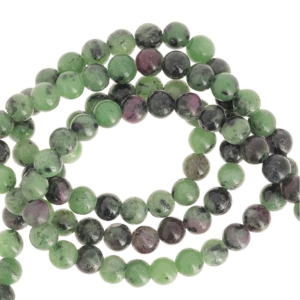
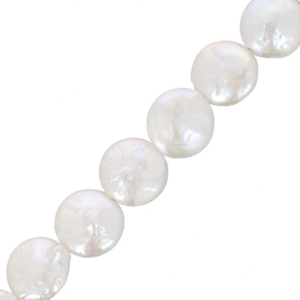
There are so many in so many colors and materials. Natural stone, resin pearls, seed beads, freshwater pearls... The choice is yours!