Average Grades
Je veux acheter des pinces de qualité à un prix raisonnable loisir creatif mais je ne veux pas être deçu de mon choix
1 Answer
Show answers

To get started in jewelry-making, all you need are three essential pliers: wire cutters to cut wire, round-tipped pliers to form loops, and flat-tipped pliers to hold primers securely. These basic tools are ideal for assembling your components without having to invest in complex equipment, allowing you to concentrate on your creations. Once you're more experienced, you can explore other specific pliers for advanced techniques.
The first step when you want to start creating jewelry is to get the right equipment for what you want to do. If you are a beginner, and you want to start with jewelry making, that is to say assembling charms and primers to create personalized jewelry, this article is for you. A component that makes up the jewelry is called a "primer" or "component". It can be an earring, a clasp or something else. These elements are already manufactured (primed) but to make a complete piece of jewelry, you have to select them and assemble them together.
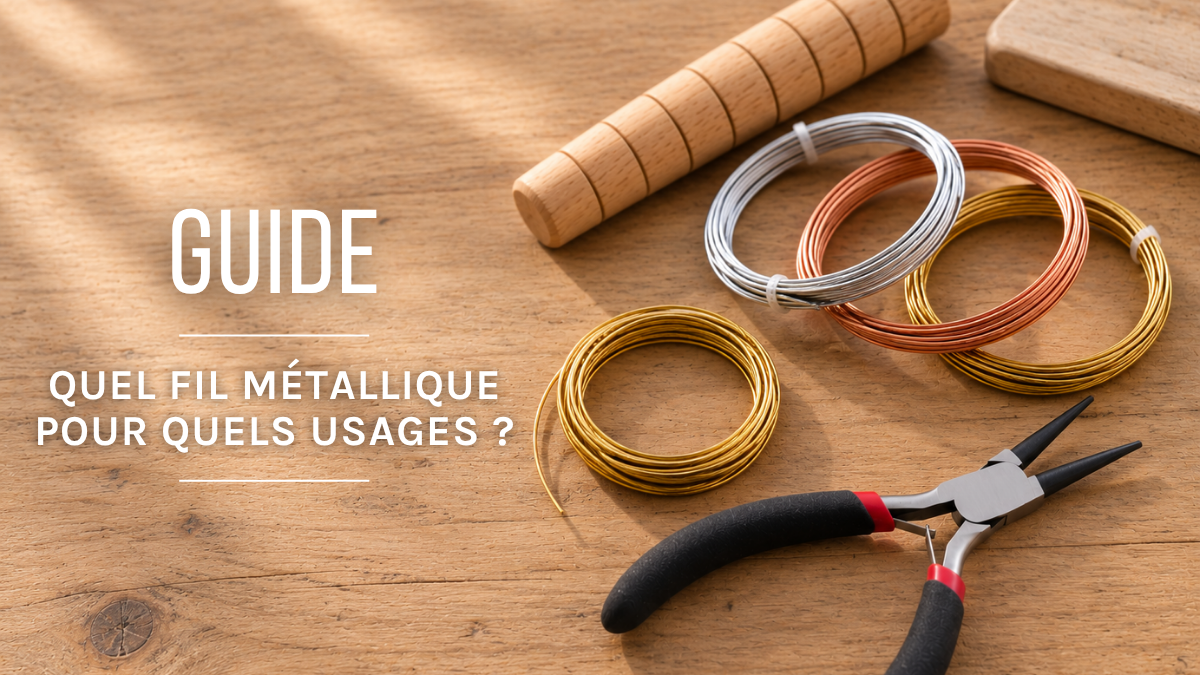
To create costume jewelry, you need simplejeweler's tools that will allow you to assemble these components. When you are just starting out, there is no need to buy dozens of tools and pliers. Most of the time, you will only need 3 pliers for your creations: A pair of cutting pliers, a pair of round-ended pliers and a pair of flat-ended pliers. Later, when you want to do more specific or advanced projects, you can equip yourself with more specialized pliers. There are dozens of types of pliers that can do very specific actions. The 3 basicjewelry pliers have a broader purpose, which is why they are essential inbeginner jewelry tools.

The cutting pliers are small pliers that are used to cut metal wire, cable wire, chain for necklaces or bracelets and nails to create beaded charms for example. It exists in a simple version, in a "flush cutter" model or in a "shears" model. We recommend the simple version which is a good compromise between strength and precision. The flush cutter is more precise in the cut, however, sometimes you need a tool that allows you to cut something hard and we are not sure that the cutting edge of the pliers will not be damaged when cutting, especially when you are a beginner and you do not know the hardness of metals. Better to damage a cheap pair of pliers than a 25 or 26 euros flush cutter.
Designer's tip: I reserve the use of the Flush cutter for the clean cut of wired wire, and primers in soft materials and / or a little precious as the wire and nails in gold filled or silver 925 annealed for refined creations. The Flush Cutter is also used to cleanly cut the wire in my bead weaving.
The shears can be used on very hard metals such as stainless steel, memory wire or hardened 925 silver. It's best not to cut these materials too often with a conventional cutter because it will be very difficult and you will damage your pliers. On the other hand, the shear pliers do not allow a great precision.
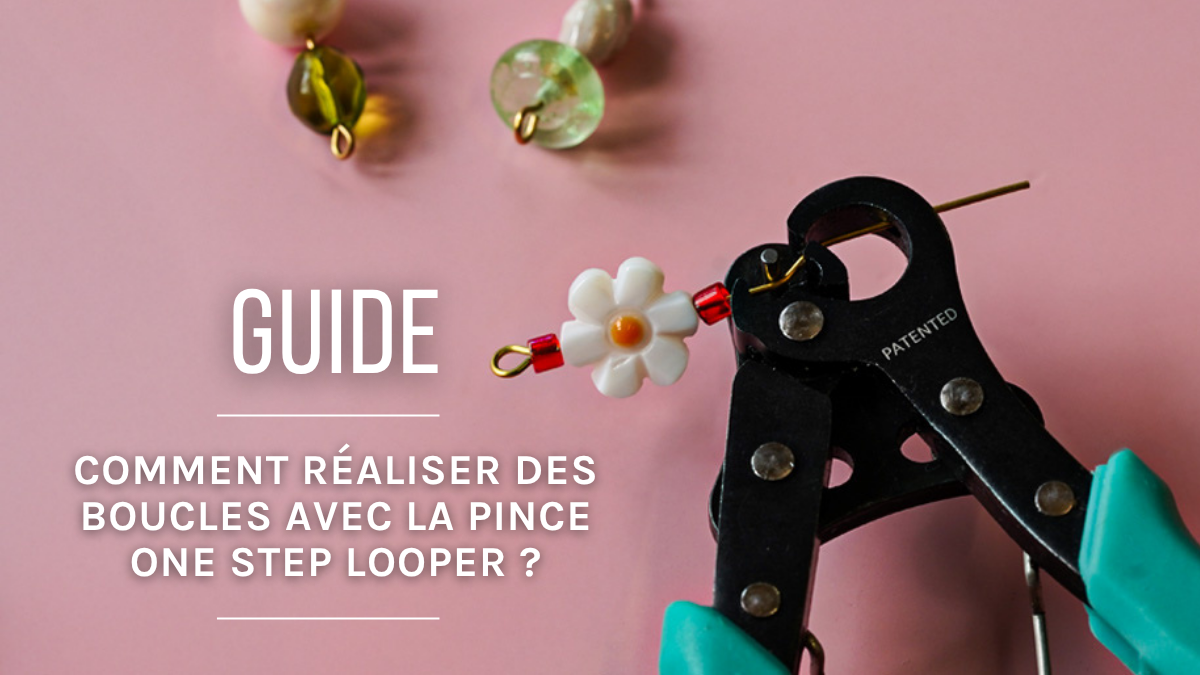
These pliers are also a good compromise since they allow you to hold a primer and to form wire at the same time. It will allow you to create loops on charms or pendants, to form letters for lettering creations, to wrap metal wire around a support, etc. It has two disadvantages: It is difficult to form loops of the same size all the time, because its ends are conical. Designer's tip: You can overcome this concern by making a mark with a permanent marker at the diameter where you want to make all your loops for a jewel.
The other disadvantage is, since the tips are round, they don't hold the primers and wire very well, but it's still very useful anyway. This concern is solved by the following pliers.
The flat pliers allow a good grip on metal primers and wires. It will allow you to fold back a piece of wire that sticks out when you have wound it, to straighten/flatten a wire or component, to crush the crush beads that are used to block the wire when making a beaded necklace or bracelet, and to fold back the prongs of a crimp on a cabochon.
In the case of crushing beads, it is not necessarily the most recommended pliers but it does the trick. Indeed, by flattening the pearl to be crushed on the wire, we risk crushing the wire at the same time and weakening it. This is why, afterwards, it is advisable to equip yourself with pliers for pearls to be crushed. These will flatten the bead by making a mark in the center, which will allow the bead to be folded in half and have the wire stuck on both sides of the bead without being crushed. There are several sizes of pliers depending on the size of the beads to be crushed chosen. These pliers usually have a tip that also allows you to place bead covers to crush. This method is not very easy and sometimes requires several attempts, even for those who are used to it, before succeeding in doing it well on the jewel, so often, even as a pro, we use the flat pliers for ease.
Designer's tip: Flat nose pliers are a little more ergonomic. I prefer to use these pliers instead of the classic flat nose pliers.

There are many different types of pliers. Some exist for very specific actions that you don't use all the time. For example, there are pliers to make rings, spirals, springs, pliers to easily open double rings and many others. Find here a list of jewelry pliers and their uses.
The basic pliers also come with variations. Some fold parallel to ensure grip or to make a more precise cut, others have nylons to avoid making marks on the metal of wires and components. However, these nylons prevent from being very precise and get damaged as they are used. It is therefore necessary to replace them from time to time.
To start, we recommend buying a set of jewelry pliers with a nice pouch to store them, but if you already have a good idea of what you want, find a list of the pliers mentioned in this article below.

Credits
Perles & Co, Internet & E-Commerce company [04/05/2022] Any reproduction, representation, adaptation, in any form whatsoever, even partial, is prohibited, except for reproduction for private use not intended for collective use, representation in the family circle (art. L 122-5 CPI) and online publishing on condition that the source is mentioned and a link is included to the corresponding page of our site www.perlesandco.com.