Average Grades
Bonjour, pour la confection de contenant pour cire de bougie, conseillez-vous la jesmonite AC 100 ou je peux utiliser la AC84? Merci
1 Answer
Show answers

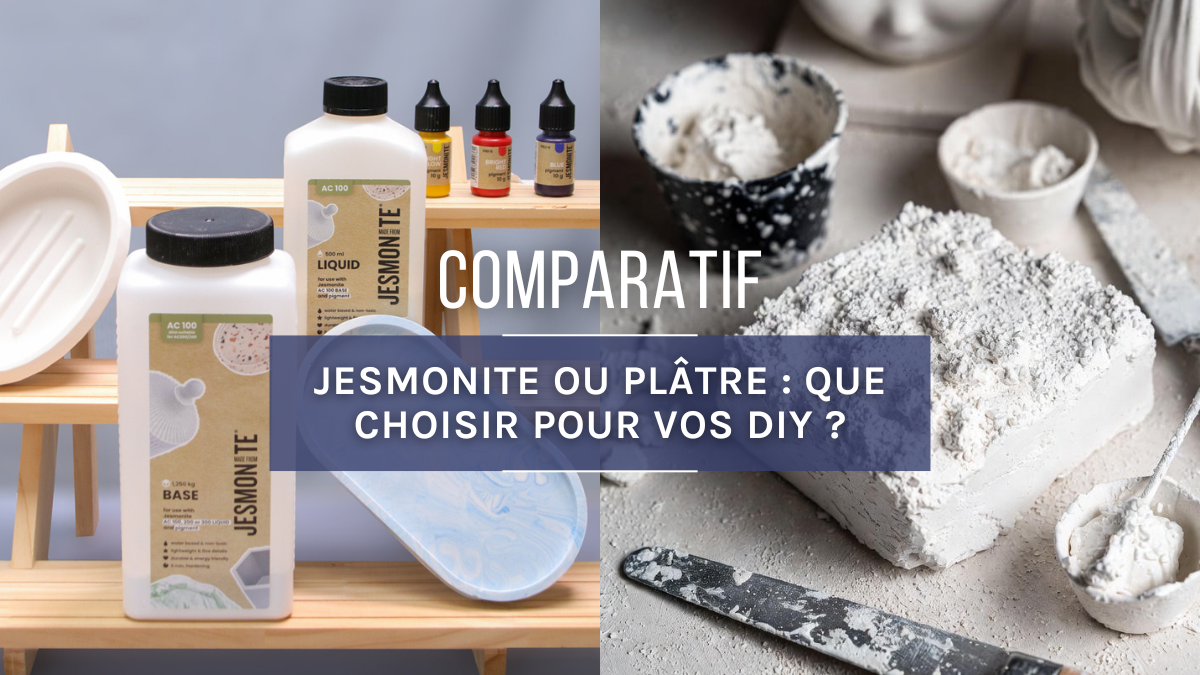
Plaster and Jesmonite are ideal for different projects: Jesmonite is hard-wearing, modern-looking and moisture-resistant, making it perfect for interior and exterior decorating projects. Plaster is more fragile and sensitive, but can be used for large sculptures and fine moldings.
Are you hesitating between Jesmonite and plaster for your DIY projects? These two molding materials appeal to creative people, but meet different needs. Discover our full comparison to make the right choice for your creations.
Jesmonite is a composite material based on mineral powder and acrylic resin.
Today, it is very popular in the DIY and decorating worlds. This is due in particular to its high resistance and modern look.
Advantages of Jesmonite
Disadvantages of Jesmonite
Plaster is a natural material obtained from gypsum (or plaster stone).
It has long been used for molding, sculpting and decorative ornamentation.
Advantages of plaster
Disadvantages of plaster
| Criteria | Jesmonite | Plaster |
| Price | ??? (more expensive) | ?(cheaper) |
| Resistance | Excellent | Fragile |
| Finish | Smooth, modern, stone-like | Matt, porous, more classic |
| Easy to color | Very good | Good, but more pastel colors |
| Resistance to humidity | Good | Very sensitive |
| Environmentally friendly | ? Solvent- and VOC-free | ?Natural recyclable mineral |
| Decorative applications | Candleholders, trays, jewelry, design objects | Sculptures, fine moldings, wall decorations |
Jesmonite outperforms plaster in terms of strength. It is less brittle than plaster, making it ideal for everyday objects or those handled regularly. It is also more impact-resistant, making it suitable for creations intended for prolonged use.
Plaster, on the other hand, is more fragile. It is not very resistant to direct impact, and can crack or crumble more easily over time.
This is where the difference is most noticeable. Unlike plaster, Jesmonite is highly resistant to humidity, making it ideal for bathroom objects, soap dishes and even garden creations.
Plaster is sensitive to humidity: any contact with water or prolonged exposure can damage it. Molds and fungi can also develop in damp environments, limiting its use to dry spaces.
Jesmonite contains no solvents. It emits no VOCs. These volatile organic compounds are toxic. They are responsible for the greenhouse effect.
It's an environmentally-friendly alternative to resin-based materials.
Gypsum is made from gypsum, a natural mineral that is infinitely recyclable, odorless and non-polluting. However, its handling generates a lot of dust. Both materials are therefore relatively environmentally friendly, but Jesmonite is perhaps a little more practical.
Both materials offer excellent customization options, but Jesmonite goes a step further. It accepts pigments, inclusions, glitter, etc., and can be used to create trendy marble or terrazzo effects. Its versatility is remarkable.
Plaster can be colored, painted, sanded and customized after drying. It also allows very fine details to be obtained, making it an excellent choice for sculptures and precise moldings.
Plaster remains the champion of economy. It is one of the most economical materials available, and is easily found in all DIY and hobby stores.
Jesmonite is more expensive, but its price is justified by its superior performance. It represents a higher initial investment, offset by the quality and durability of the creations.
With Jesmonite
With plaster
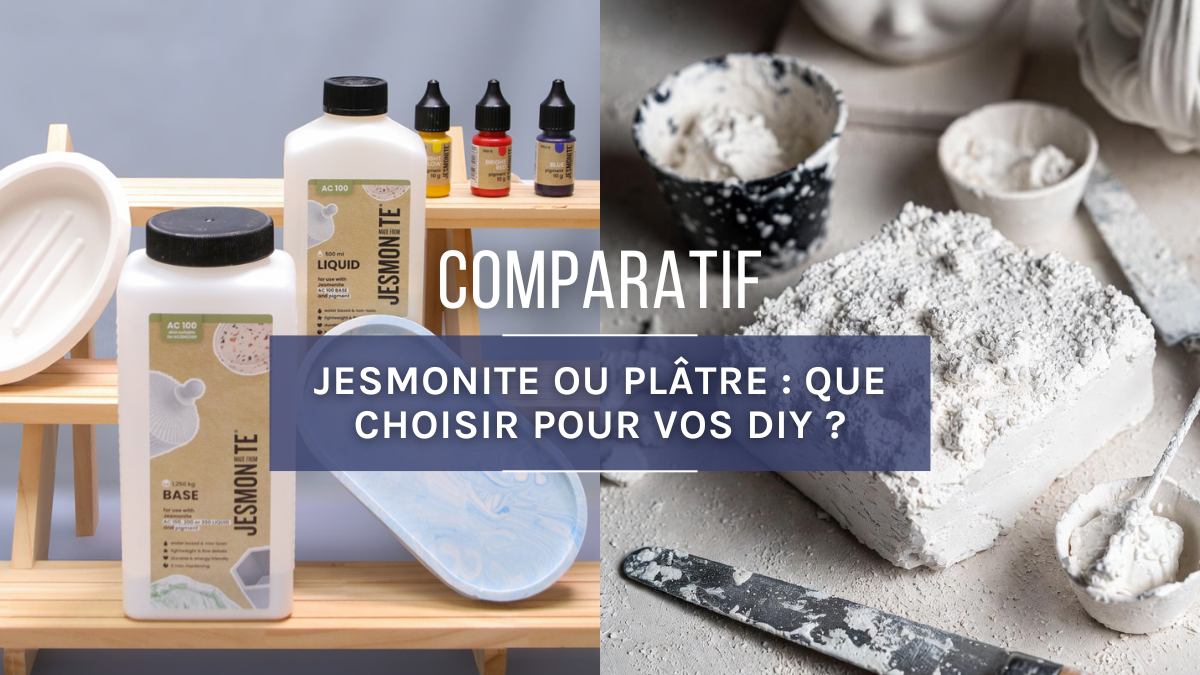
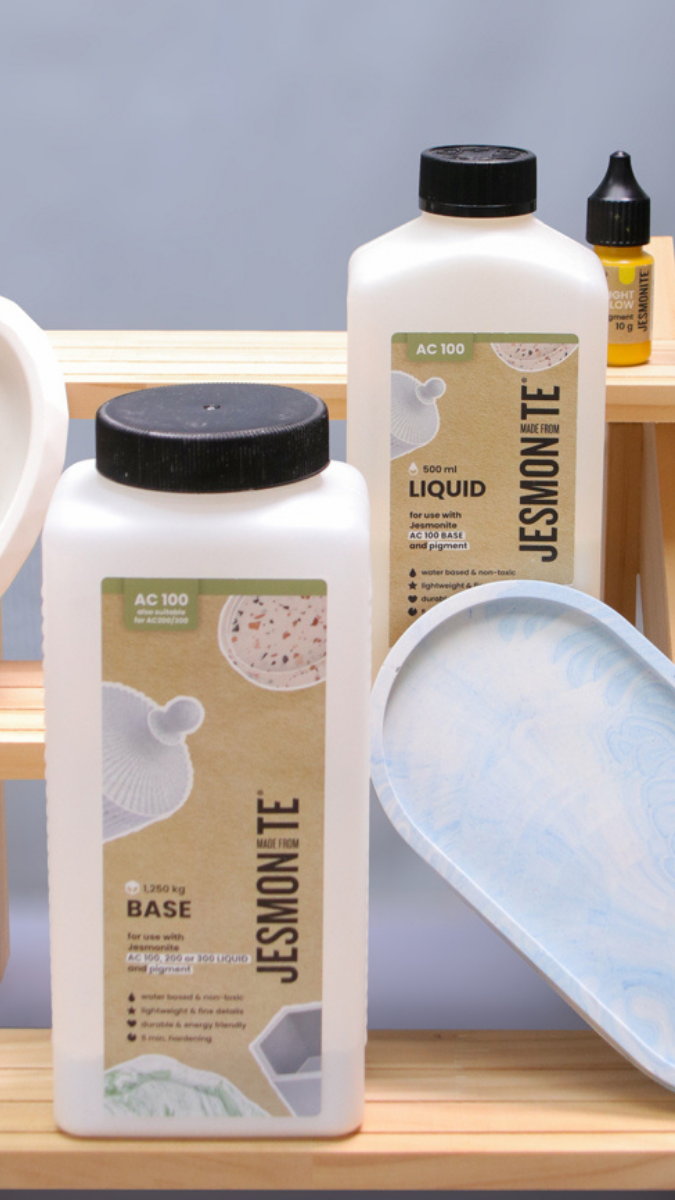

Yes, Jesmonite is much more resistant: it withstands shocks, humidity and daily use better. Plaster, on the other hand, remains fragile and porous, even when varnished. For objects that are handled frequently or intended to last, Jesmonite is the best choice.
Yes, Jesmonite is compatible with humid environments. It is ideal for soap dishes, jars, pot holders and bathroom accessories.
Plaster, on the other hand, absorbs moisture and should not be used without reinforced protection.

Credits
Perles & Co, Internet & E-Commerce company [04/12/2025] Any reproduction, representation, adaptation, in any form whatsoever, even partial, is prohibited, except for reproduction for private use not intended for collective use, representation in the family circle (art. L 122-5 CPI) and online publishing on condition that the source is mentioned and a link is included to the corresponding page of our site www.perlesandco.com.