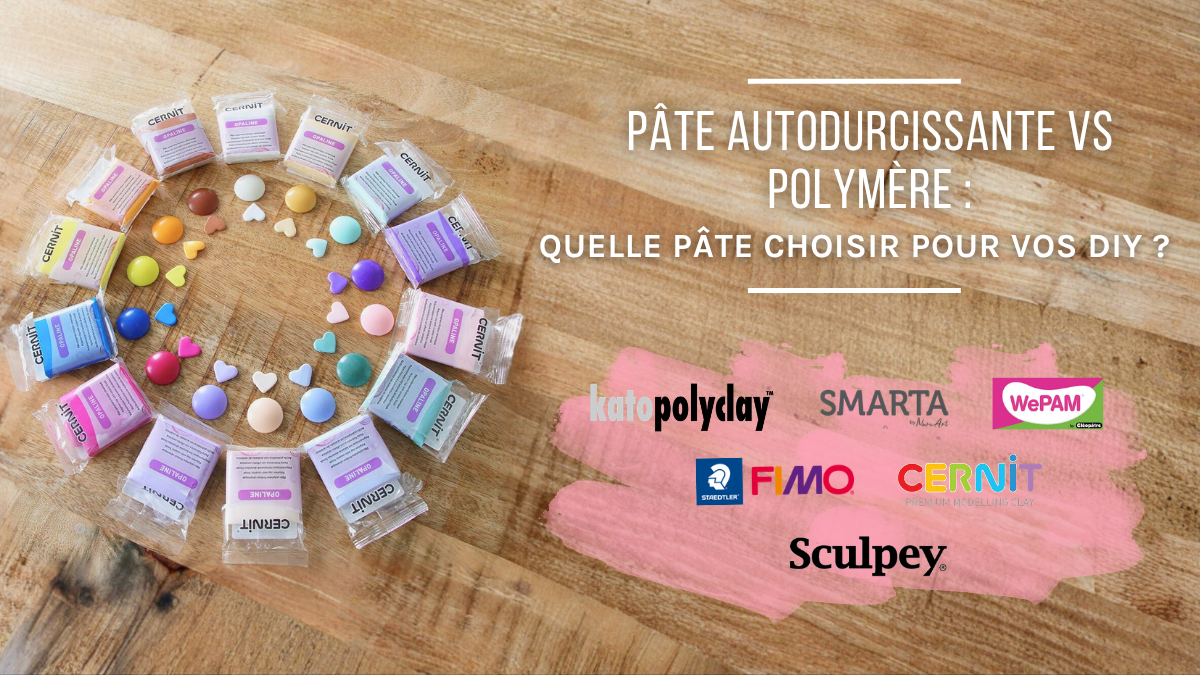
If you love modeling and creative hobbies, you've probably heard of self-hardening clay and polymer clay. These two materials can be used to bring jewelry, figurines and decorative objects to life.
These days, we're hearing about self-hardening clay everywhere. But what's the difference with classic polymer clay? We'll tell you which one to use for your projects!
Here's a full comparison to help you make the right choice between polymer clay and self-hardening clay.
What is self-hardening clay?
Self-hardening clay, also known as no-bake clay, self-hardening clay or no-bake clay, is a ready-to-use paste. It dries in the air, at room temperature, without firing in an oven.
It is often composed of clay, cellulose or stone powder.
Advantages :
- No firing required: air-drying.
- Ideal for children and beginners.
- Easy to sand and paint once dry.
- Natural, ceramic-like appearance.
Disadvantages :
- Less resistant to water and impact.
- Risk of cracks if drying too quickly.
- Does not allow for extreme detailing.
What is polymer clay?
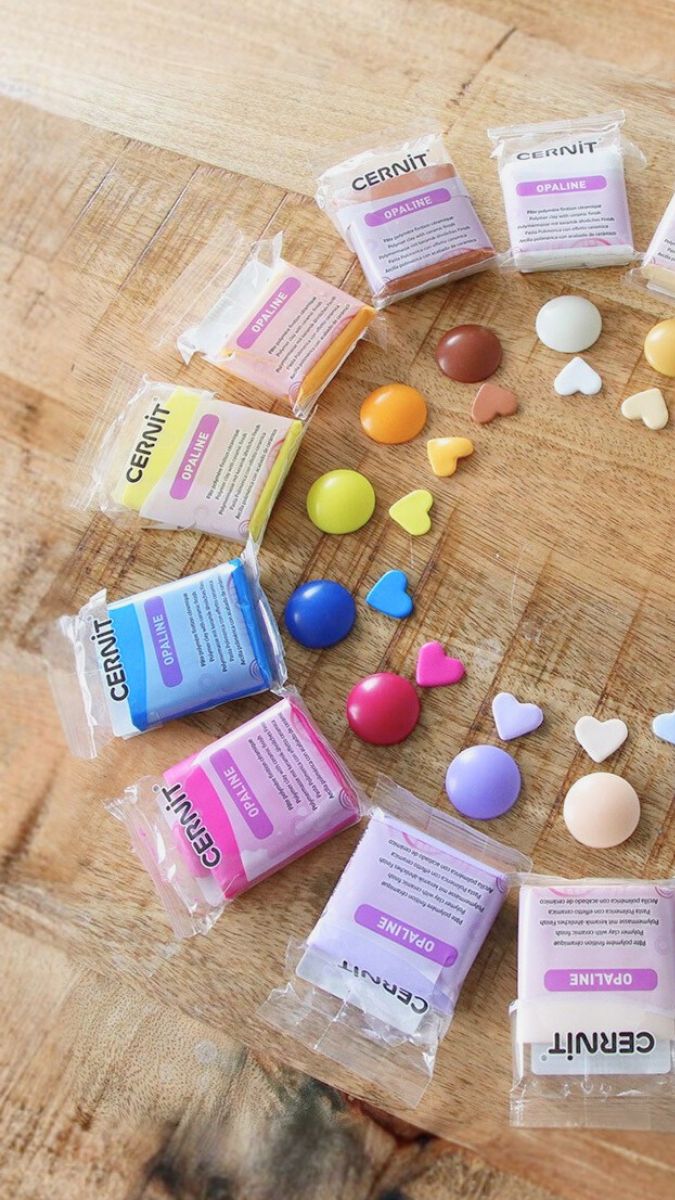
Polymer clay ( Fimo, Cernit, Sculpey...) is a plastic modeling clay that hardens when baked (generally at 110-130°C).
It comes in a wide range of colors and finishes (pearlescent, translucent, metallic effect...).
Advantages :
- Very solid once fired.
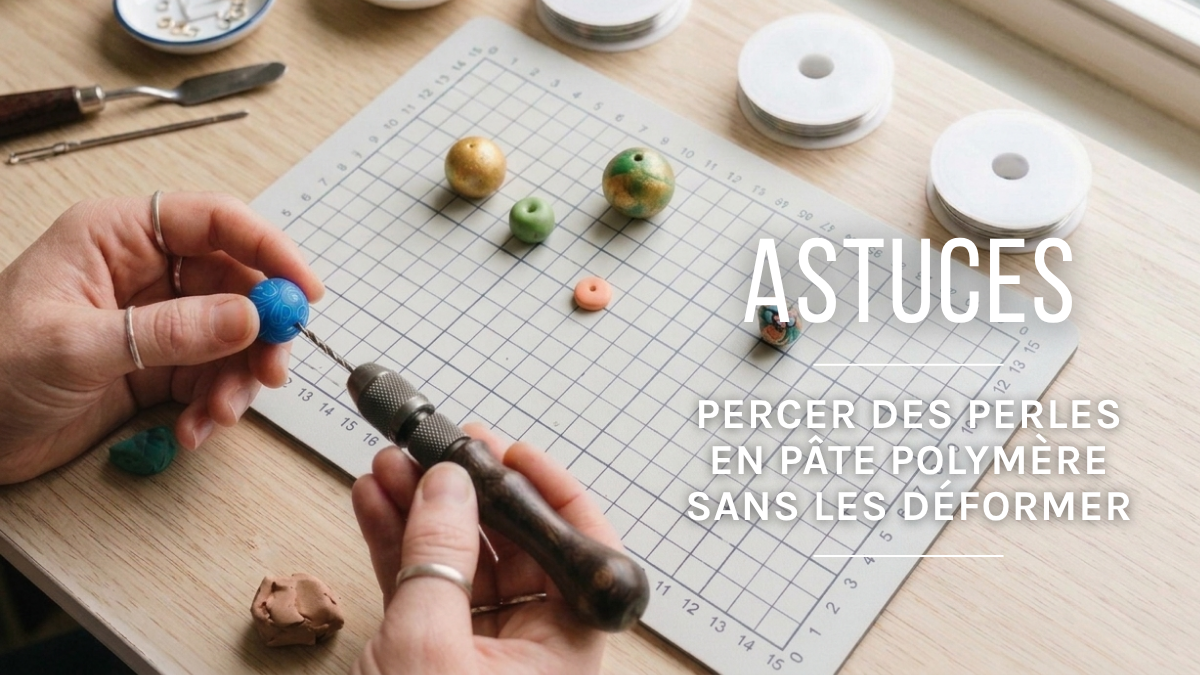
- Ideal for jewelry and miniatures.
- Vivid, long-lasting colors.
- Can be polished, varnished or combined with other materials.
Disadvantages:
- Requires a domestic kiln and firing.
- A little more technical to handle.
Comparison table: self-hardening clay vs. polymer clay
| Details: | Self-hardening clay | Polymer clay |
| Hardening | Open air, no firing | On baking (generally between 110° and 130°C) |
| Drying time | 12 to 48 hours | 15 to 30 minutes in oven |
| Resistance | Good | Very good |
| Flexibility | Very easy | More technical |
| Recommended use | Decoration / Simple modeling / With children | Jewelry / Miniatures / Figurines |
| Finish | Paint, acrylic varnish | Varnish or polish |
| Prices | Generally less expensive | Slightly more expensive |
| Brand | Fimo Air, Smarta, WePam, etc. | Cernit, Fimo, Sculpey, etc. |
Which clay to choose for your project?
For children or beginners: chooseself-hardening clay. Easy to handle and no-fire, it's perfect for discovering modeling in complete safety. If you prefer polymer clay, choose Fimo Kids, which is softer and easier for children to model.
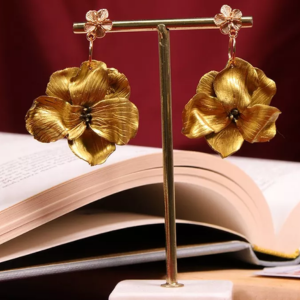
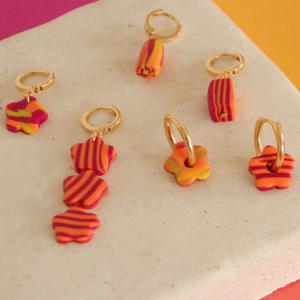
For jewelry and miniature creators: opt for polymer clay, which is stronger and more precise. It produces fine, colorful and long-lasting creations. You'll be able to create shell pendants, flower earrings or a heishi necklace.
For decorative objects or textured sculptures:no-fire clay gives an artisanal finish, ideal for one-off pieces to be painted or given a patina. For a trendy, useful and simple DIY if you're just starting out, consider modeling small soothing stones. Or try your hand at coasters to decorate a table, or an abstract sculpture to dress up a piece of furniture!

Our tips for use
- Store your clay in airtight tins to avoid drying out.
- Lightly sand self-hardening clay before painting to ensure a smooth surface.
- Follow the correct firing times and temperatures for polymer clay to avoid softening.
- Protect your creations with a suitable varnish for greater durability.
Now all you have to do is roll up your sleeves and let your creativity flow!