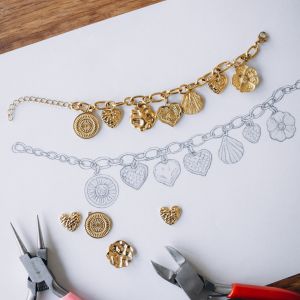
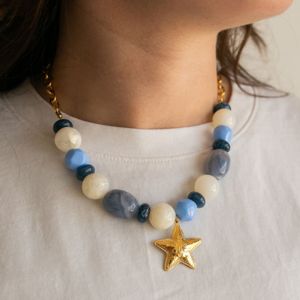
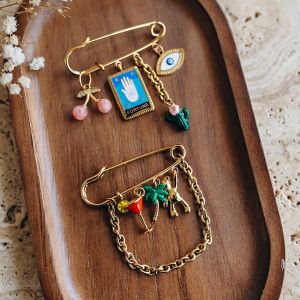
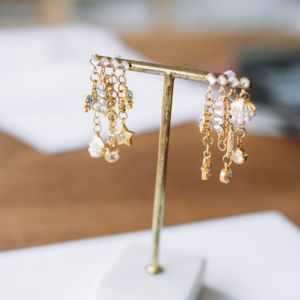
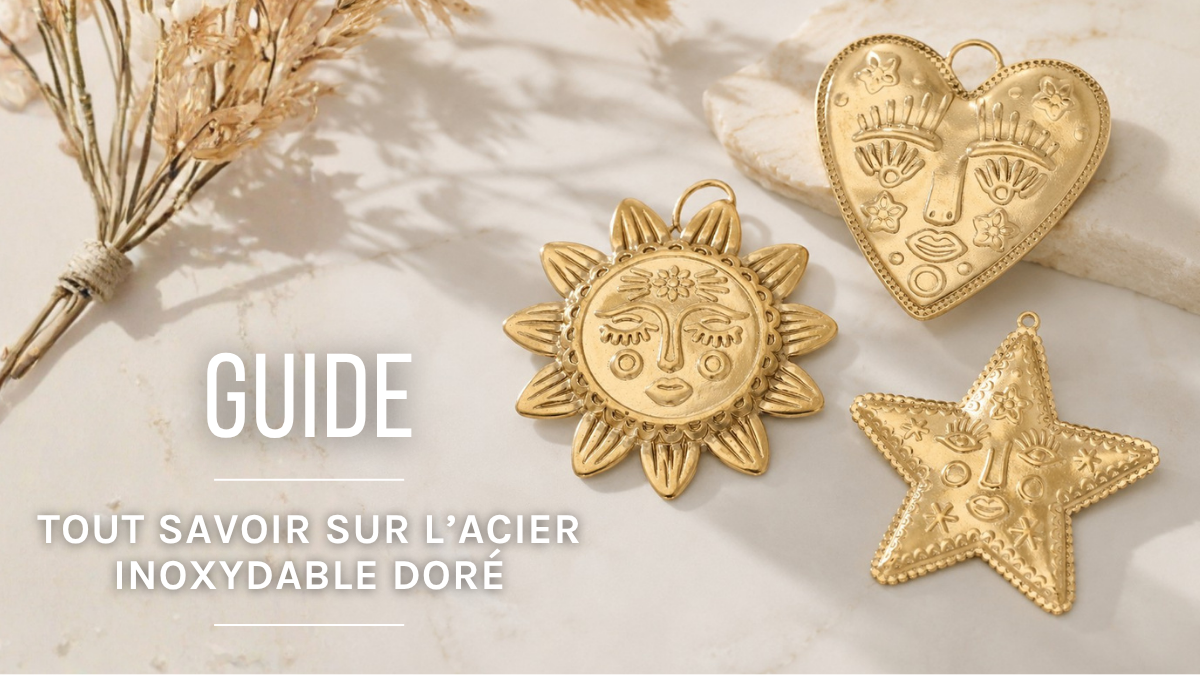
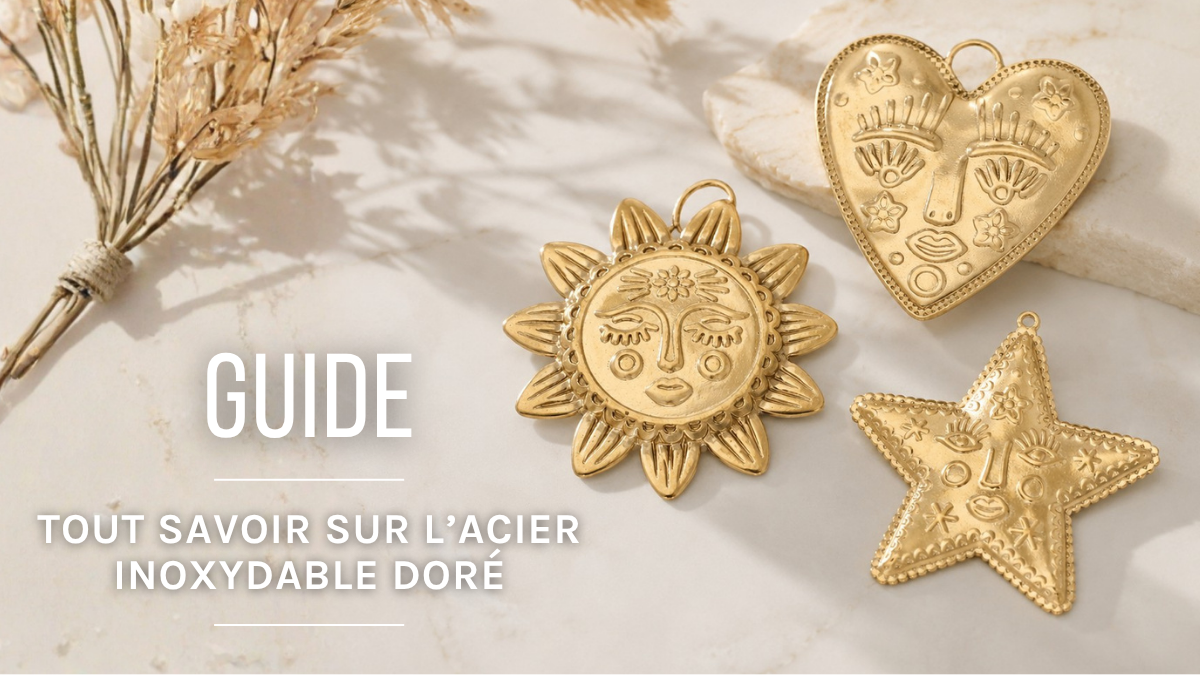
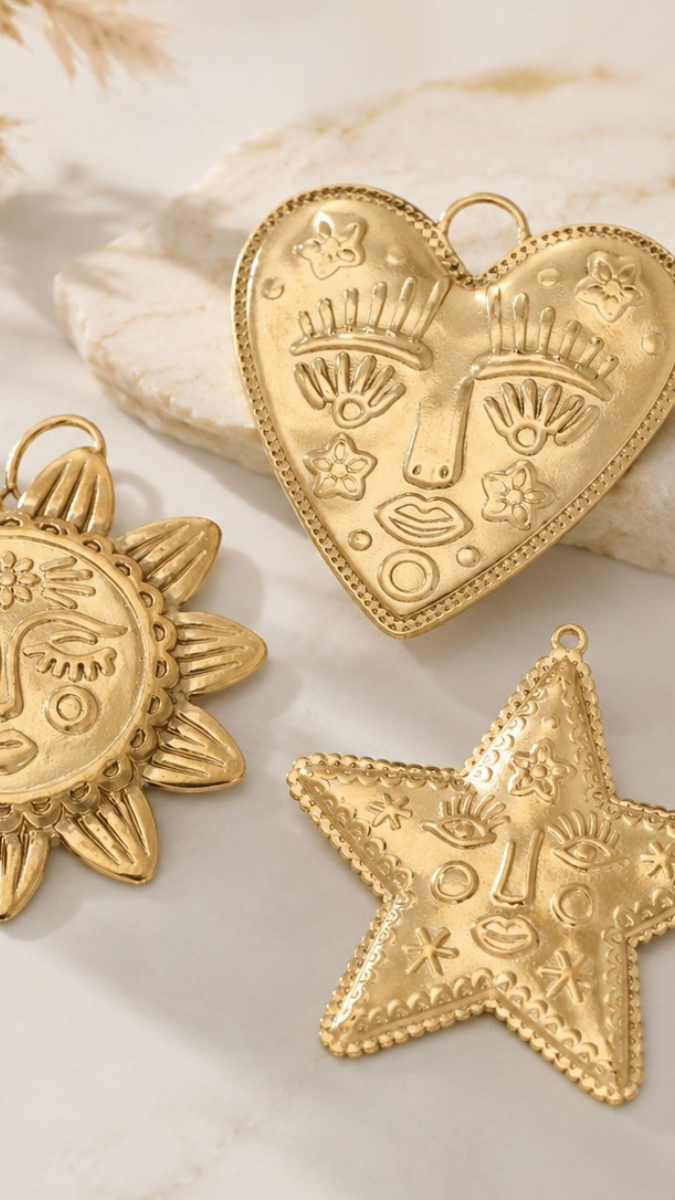
It’s hard to miss this trend: gold-plated stainless steel jewelry is taking over collections, from delicate chains to charm bracelets, as well as statement rings and colorful hoop earrings. And this success is no coincidence.
Unlike many other gold-plated metals, stainless steel is highly resistant to water, sweat, and everyday wear and tear, making it the perfect choice for summer. Swimming, the beach, heat—your jewelry stays just as shiny even when you don’t take it off.
But how is this golden hue achieved on a metal that’s naturally silver-gray? Does it really last over time? And how does it compare to gold-plated or Gold Filled jewelry in terms of cost? Let’s take a closer look.
How is gold-plated stainless steel made?
Stainless steel is naturally gray. To give it its golden color, a surface coating is applied, typically through a process called PVD (Physical Vapor Deposition).
PVD is a physical vapor deposition metallization method that reinforces your jewelry with a thin, highly durable layer. In the case of a steel base, the applied layer is titanium nitride (TiN).
The result is durable, gold-plated stainless steel that is cleaner and more environmentally friendly than electroplating. The gold finish will not flake off over time, although it may fade slightly.
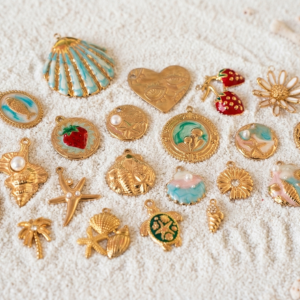
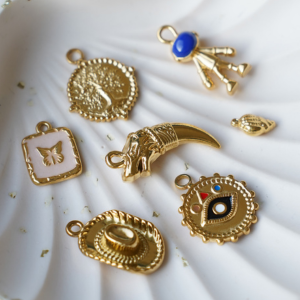
Note that there is generally no difference in color between the various types of steel.
How durable is gold-plated stainless steel?
This is THE question everyone asks before investing in a new material. Good news: thanks to PVD, gold-plated stainless steel is among the most durable gold finishes on the market.
Generally, even though the shine fades slightly over time, the jewelry does not turn gray or silvery, as can happen with brass plating.
A few simple steps can extend its lifespan:
- Remove your jewelry before showering, swimming, or spending extended time in the ocean.
- Avoid direct and repeated contact with perfumes and cosmetics.
- Store it away from moisture when not wearing it.
For daily care, our guide on how to clean stainless steel jewelry details all the best practices.
Gold-plated stainless steel, Gold Filled, 3-micron gold-plated, and gold-plated brass: which one should you choose?
| Gold-plated stainless steel (PVD) | 3-micron gold-plated | Gold Filled | Gold-plated brass |
Process | Vacuum deposition (PVD): a layer of titanium nitride (TiN) coated with a layer of precious metal, such as gold, or metal alloys | An alloy of base metals, typically brass, plated with gold (between 12 and 18 karats) using an electroplating or chemical process, with a layer thickness of at least 3 microns | A treatment applied to a metal (often a brass base) involving the mechanical application of a layer of gold alloy. The weight of the gold alloy corresponds to 1/20 of the product’s total weight | A copper-zinc alloy with a naturally golden hue, sometimes coated with a gold flash or a protective varnish |
Hue of the gold finish | A gold tone slightly different from traditional gold plating; the color is stable and may lighten very slightly without turning silvery | Classic, warm yellow gold | Rich yellow gold, very close to solid gold | Gold that is often slightly lighter |
Durability | Excellent: TiN provides effective protection | Good, but wears down over time (friction, sweat) | Very good to excellent | Average to low: the gold finish (flash or varnish) can fade quickly |
Water/sweat resistance | Good | Average: not recommended for use in the shower or at the pool | Good | Low: Turns black or green easily when exposed to moisture |
Approximate price | 💵💵 | 💵💵💵 | 💵💵💵💵 | 💵 |
Hypoallergenic | Yes, 316 and 316L stainless steel | Varies depending on the base metal (brass = risk of reaction) | Generally well tolerated | Risk of reaction (nickel, oxidation) depending on the alloy |
Recommended use | Daily wear, jewelry meant to last | Occasional or special-occasion jewelry | High-end jewelry, frequent wear | Fashion jewelry, tight budget, occasional use |
Some ideas for gold-plated stainless steel jewelry
Gold-plated stainless steel lends itself to all creative styles, from minimalist pieces to more statement-making designs: