Average Grades




Bonjour je voudrais savoir quel anneaux choisissez pour des perles miyuki 11/0
1 Answer
Show answers

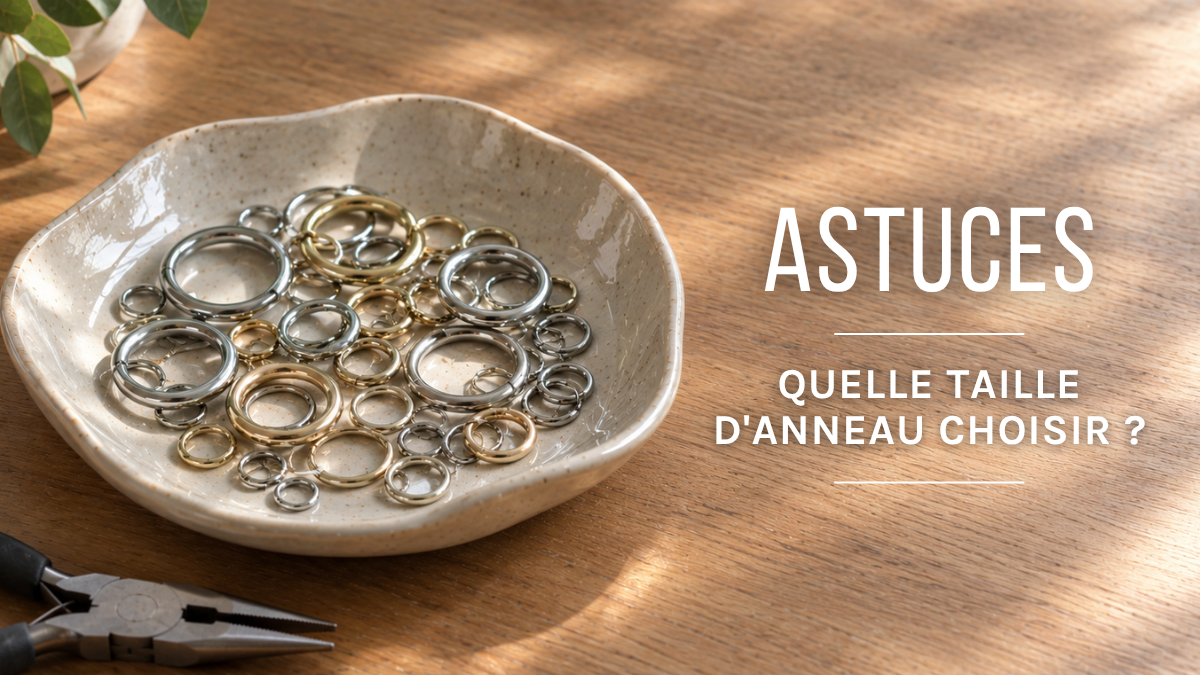
The open ring is an essential component in jewelry making, used to connect pendants, clasps, and charms. The right choice depends on two criteria that must always be considered together: the diameter and the thickness of the wire. The shape (round, oval, or twisted) completes the selection based on the desired style.
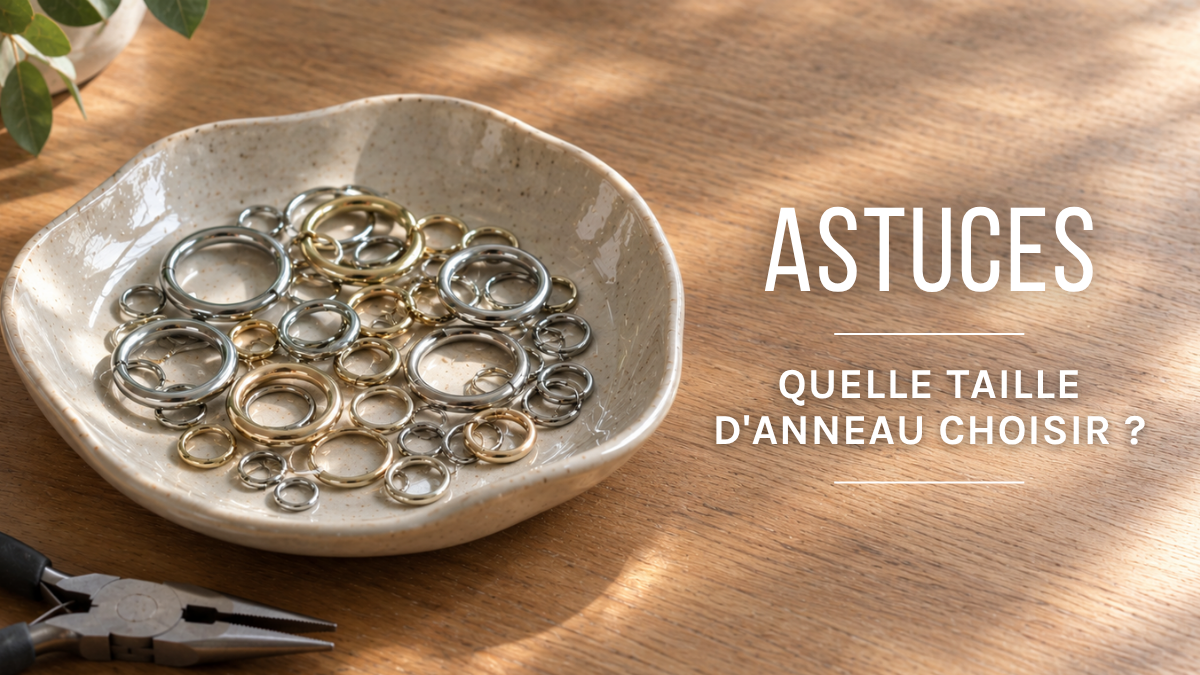
Bracelets, necklaces, earrings, or keychains:the open ring is that small, discreet component without which no piece of jewelry would truly hold together. It connects a pendant to a chain, a clasp to a bracelet, and a charm to a pair of earrings. Although simple to use, it’s still easy to choose the wrong size—especially when you’re just starting out. Diameter, wire thickness, shape: here’s how to choose the right open jump ring for your project and avoid unpleasant surprises during assembly.
A ring that’s too small won’t fit components that are too wide. A ring that’s too large, on the other hand, will make the piece look bulky and may warp more easily with use. The right size for an open ring depends on two measurements you should always check before buying:
These two criteria must always be chosen together; never one without the other.
Open rings come in a wide range of diameters, from the most subtle to the most substantial. Here are some useful guidelines:
To create a harmonious piece of jewelry, keep the overall style of the piece in mind: delicate elements call for small, discreet rings, while a more structured piece can accommodate larger rings, which then become a true decorative detail.
Two rings can have the same diameter but very different wire thicknesses. Yet this detail makes all the difference:
Always make sure the wire’s thickness matches the hole in the component you want to connect: a wire that’s too thick simply won’t fit through.
Note: The smaller the ring and the thicker the wire, the stronger it will be. The larger the ring and the thinner the wire, the easier it will be to work with.
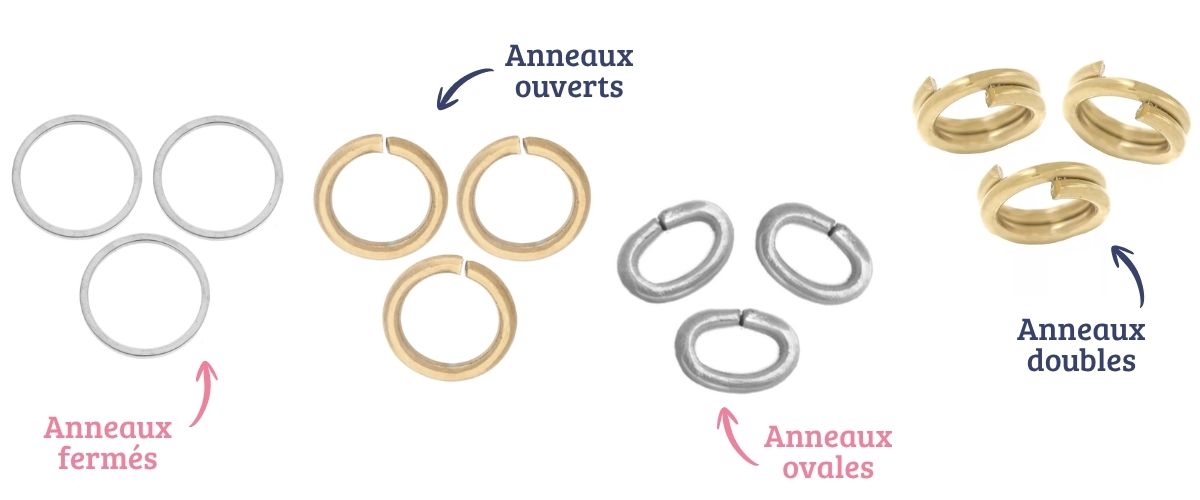
Beyond size, the shape of the open ring plays an aesthetic role. The round shape remains the most classic and versatile. The oval ring, which is more discreet along its length, slips easily into a chain link. Twisted or ribbed versions add an extra decorative touch, which is particularly appreciated on visible jewelry such as earrings or bracelets.
Intended Use | Recommended diameter | Wire thickness | Note |
Hanging a lightweight charm | 4 to 6 mm | 0.6 to 0.8 mm | Ideal for delicate charms on a bracelet or necklace |
Hanging a heavy charm | 7 to 8 mm | 1 to 1.2 mm | Use a thicker wire to prevent deformation |
Hanging a pendant on a chain | 5 to 8 mm | 0.8 to 1 mm | Most versatile size, fits most chains |
Attaching a clasp | 6 to 8 mm | 0.8 to 1 mm | Must withstand repeated handling |
Keychain or bulky item | 10 mm and larger | 1.2 mm and larger | Opt for a double ring for added strength |
If you’re looking for a solution that’s even quicker to use, double rings or closed rings may also be suitable for certain designs, particularly for pieces that don’t need to be opened regularly.
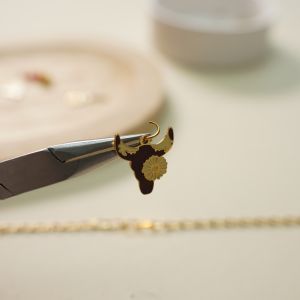
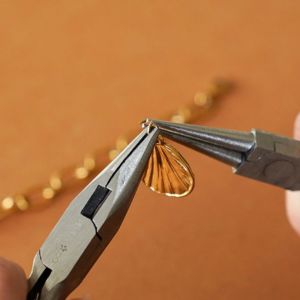
Once you have the right size, the next step is assembly. The technique is simple but requires a bit of precision to avoid damaging the ring:
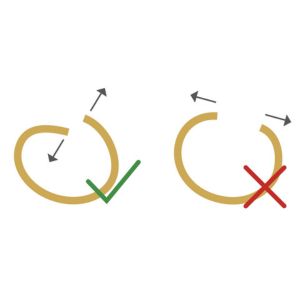
Find complete details on this procedure in our technical guide on how to open a ring. For double rings, which are stiffer, a specialized plier makes opening them much easier.
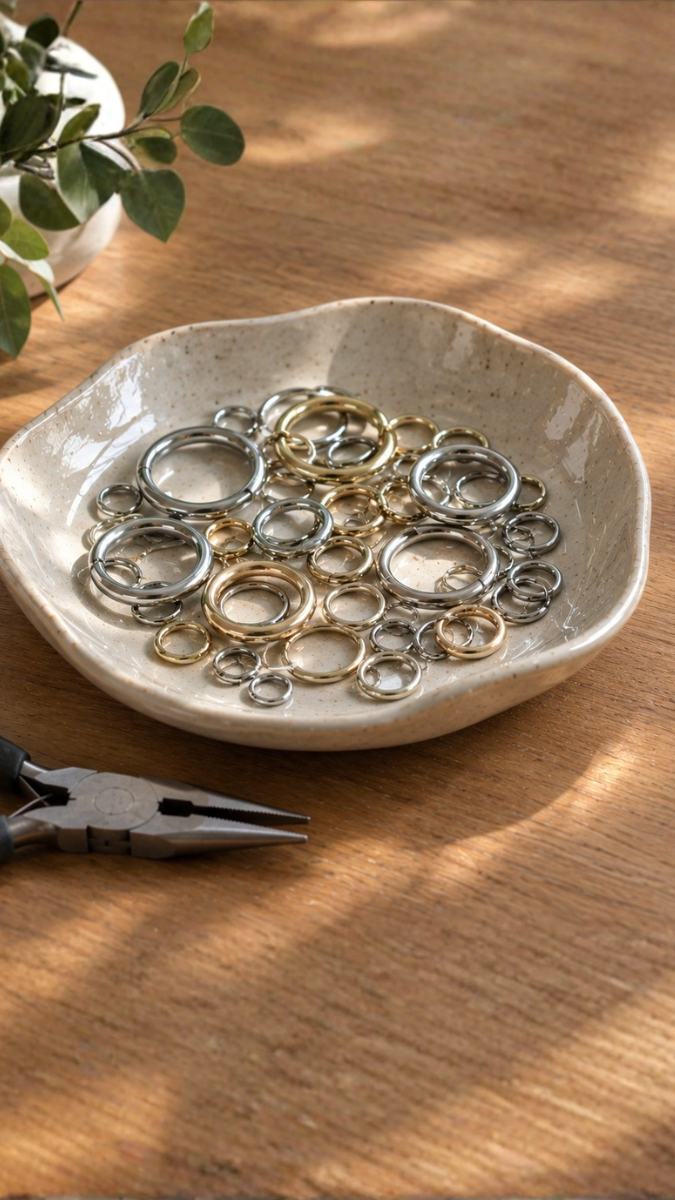

Check the wire's thickness: the thicker it is, the better the ring will withstand repeated handling, especially on pieces worn every day.
Credits
Perles & Co, Internet & E-Commerce company [01/10/2026] Any reproduction, representation, adaptation, in any form whatsoever, even partial, is prohibited, except for reproduction for private use not intended for collective use, representation in the family circle (art. L 122-5 CPI) and online publishing on condition that the source is mentioned and a link is included to the corresponding page of our site www.perlesandco.com.