Average Grades
Free shipping on orders over 50€ up to 500g
French Online shop for beads and accessories for the creation of DIY jewellery and other creative hobbies
Log-in
0
Shopping cart
Shopping cart
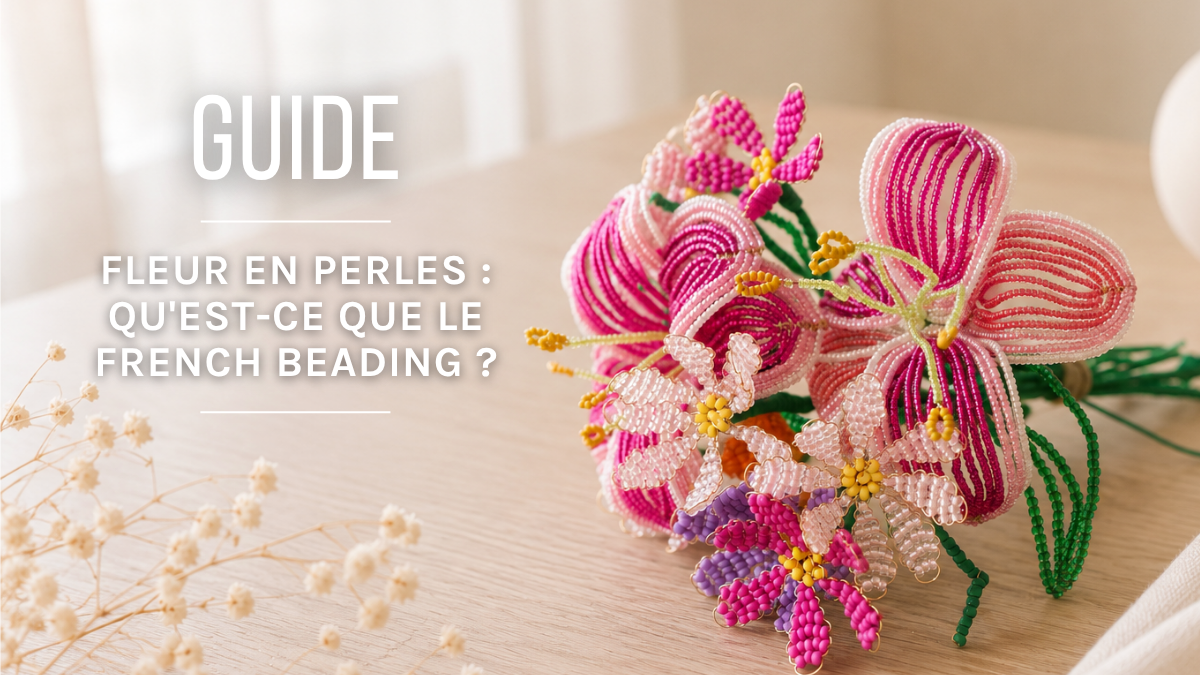
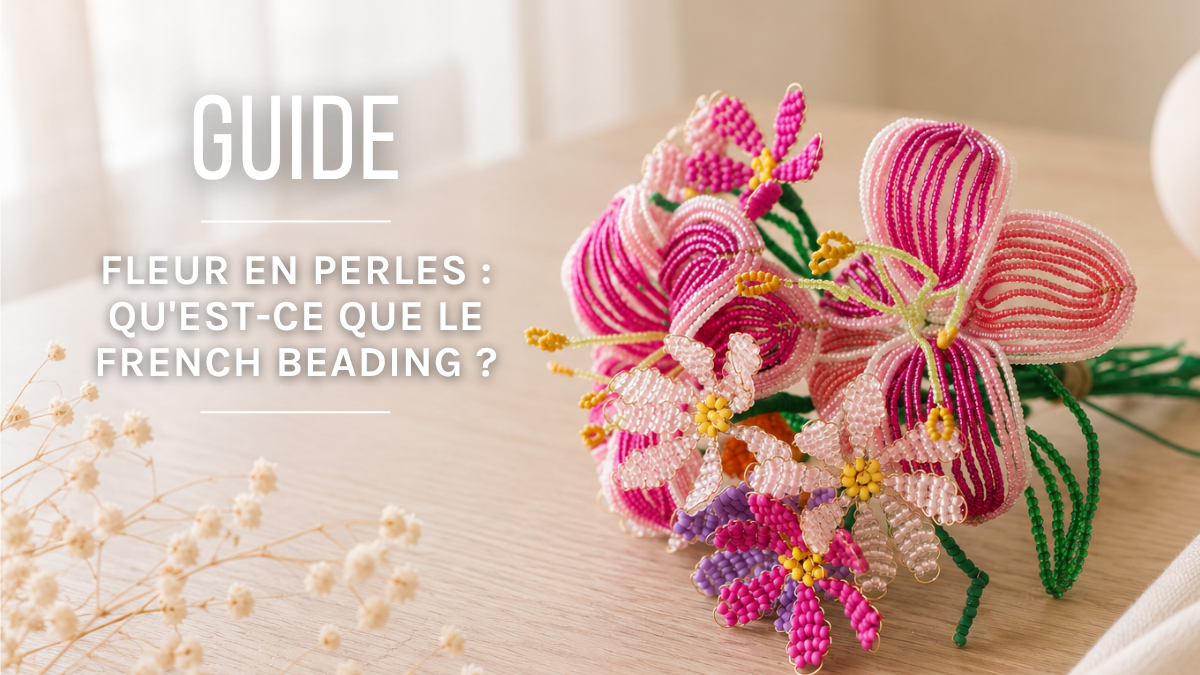
French Beading is a technique that involves shaping petals and leaves using wire and seed beads, without a base or a loom. All you need are Miyuki beads, fine wire, and floral stems to create timeless bouquets that are surprisingly lifelike. Two beginner-level tutorials guide you step by step through making beaded hydrangeas, daisies, and lilies.
Have you ever come across stunning bouquets of hydrangeas, lilies, or daisies made entirely of beads, and wondered how such creations are possible? You’ve just discovered French Beading, a technique for making seed bead flowers that appeals to both curious beginners and experienced beaders looking to learn a new skill!
French Beading, literally “French-style beading,” is a technique that involves shaping petals and leaves using metal wire and seed beads. Unlike traditional bead weaving, this technique requires no loom or frame: it’s the wire itself—strung with beads and then twisted—that gives shape to each floral element.
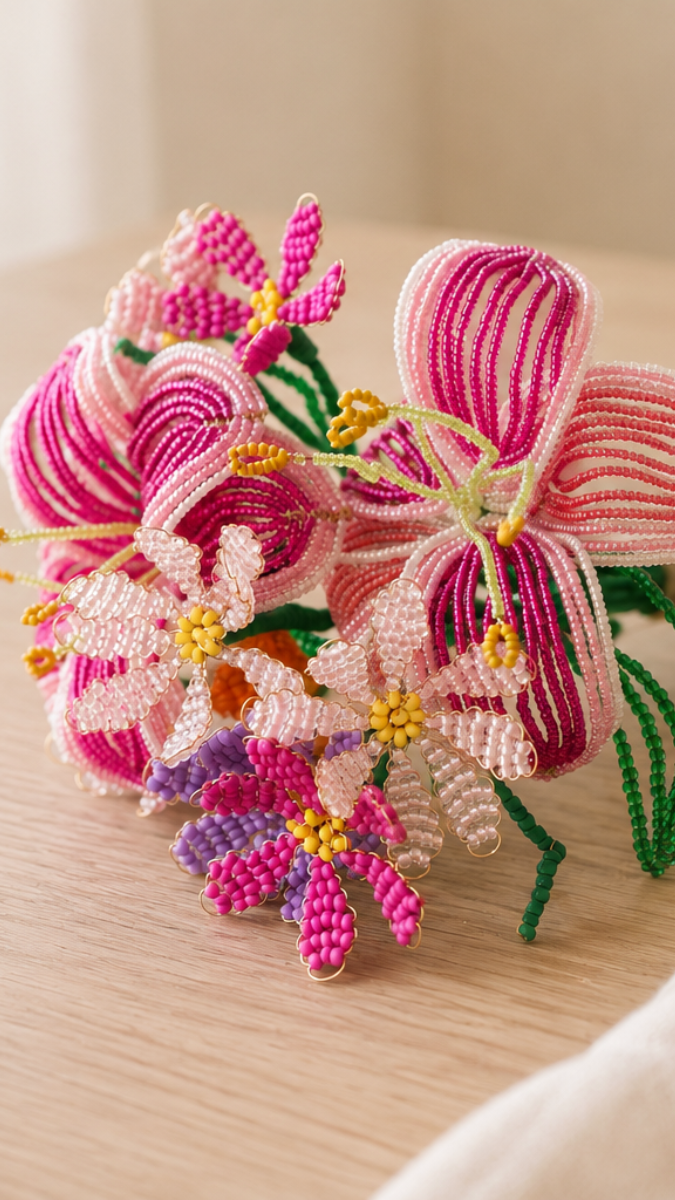
This method produces a surprisingly realistic result. Each petal and each leaf is shaped loop by loop, giving the finished flower volume and movement. The result: beaded flowers that perfectly mimic the curves and shades of real flowers. Plus, they retain their luster indefinitely—much like Lego bouquets!
This technique is particularly popular in sustainable decor, for creating a timeless bouquet or giving a handmade gift that lasts for years without ever wilting.
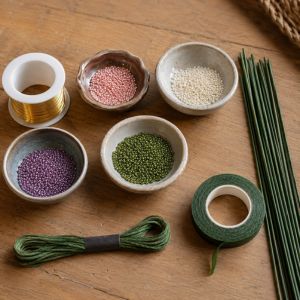
Good news: French Beading requires relatively few materials to get started. The essentials boil down to just a few items:
The choice of seed bead colors is essential here: it will determine the realism and character of your flower, from the pale pink of a hydrangea to the bright yellow of a daisy.
French Beading allows you to recreate a wide variety of flowers.
Our tutorials will teach you how to make three of them:
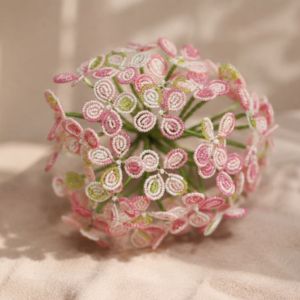
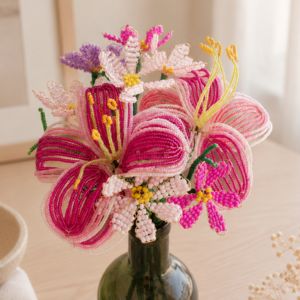
Both of these tutorials are rated beginner level and serve as an excellent introduction to the world of French Beading.
Ready to get started? French Beading is just waiting for your first petal—check out our step-by-step tutorials to create your very first beaded bouquet!

No, the technique is based on a simple, repetitive motion (threading, looping, twisting). Your first attempts may require a little patience, but beginner-level tutorials will help you make quick progress.
Miyuki seed beads in sizes 11/0 and 8/0 are the most commonly used, as their consistent size makes it easier to create loops. Preciosa seed beads are also very suitable, especially for foliage.
It depends on the design and the number of flowers you want. A single daisy can be made in about two hours, while a full bouquet of hydrangeas, with its 36 flowers, takes several hours to assemble.
Yes, that's actually one of the great advantages of this technique. All you have to do is adjust the colors of the seed beads you use to create a blue, white, or multicolored version of the same design.
Credits
Perles & Co, Internet & E-Commerce company [28/08/2026] Any reproduction, representation, adaptation, in any form whatsoever, even partial, is prohibited, except for reproduction for private use not intended for collective use, representation in the family circle (art. L 122-5 CPI) and online publishing on condition that the source is mentioned and a link is included to the corresponding page of our site www.perlesandco.com.