Average Grades
Buongiorno avrei bisogno di un consiglio su prodotti come anellini,chiusure a moschettone e perline in acciaio dorato.. quali sono le galvaniche più resistenti?
1 Answer
Show answers


To clean stainless steel jewelry, warm soapy water and a soft cloth are usually all you need. For silver-colored steel, white vinegar or baking soda can restore the shine to dull or tarnished jewelry. For gold-colored steel (PVD or plated), only mild soap is recommended. Always rinse with clean water and dry thoroughly.
Stainless steel requires almost no maintenance, but jewelry worn every day will eventually lose its luster: lotion, perfume, sweat, and mineral deposits leave a thin film on its surface. The good news is that a few common kitchen items are all you need to clean it. Just be sure to choose the right method depending on whether your jewelry is silver-plated or gold-plated.
On our product pages, the label “nickel-free” indicates that the stainless steel product complies with REACH regulations. Although it contains nickel due to its composition, no nickel is released.
Has your stainless steel jewelry turned black, and are you wondering how to fix it? You’ve come to the right place! To keep it shiny and ensure it lasts, it’s important to clean and care for your stainless steel jewelry regularly.
There are several ways to care for your stainless steel jewelry and restore its shine.
Caution: For chains and componentsmade ofgold-plated stainless steel or Rose Gold-plated stainless steel clasps, avoid acidic cleaners such as vinegar, lemon, or toothpaste. This could damage the finish.


Stainless steel doesn’t tarnish like silver. If your jewelry darkens, it’s usually for one of these reasons:
• A film of cosmetics or limescale: simply clean the silver-colored steel with soap, followed by white vinegar.
• Lower-quality stainless steel or another metal: Jewelry that tarnishes quickly may not be made of stainless steel, or it may be made of a less durable grade (see the comparison chart of stainless steel types).
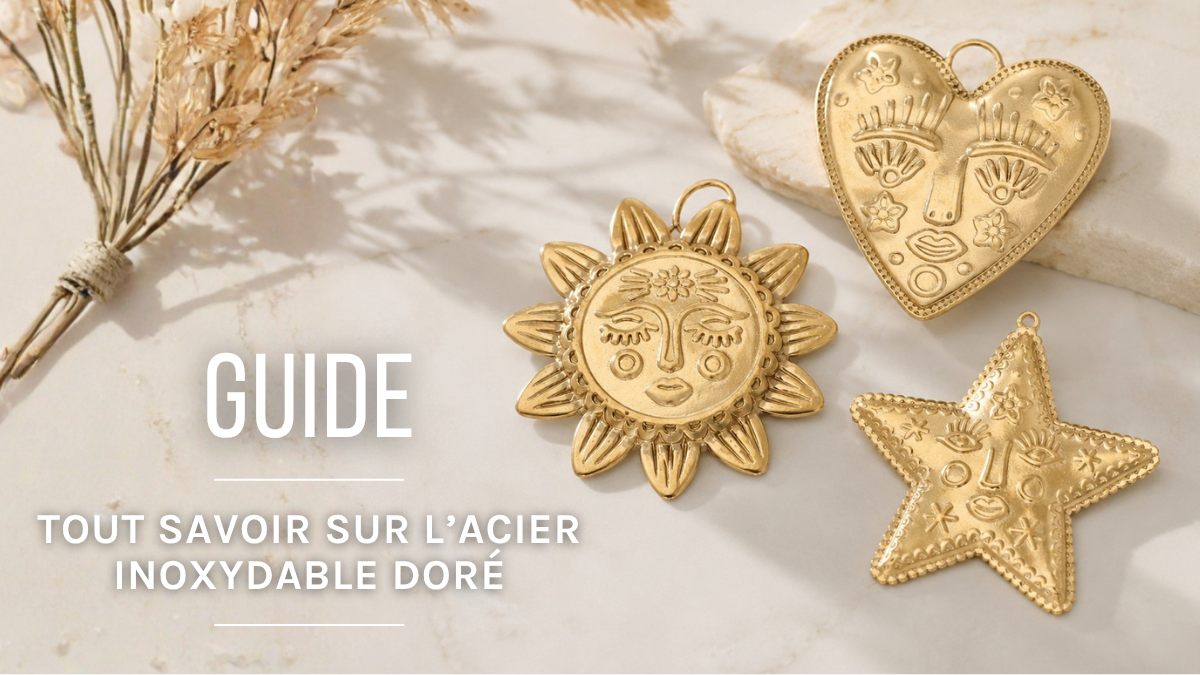
Use only warm water and mild soap with a very soft cloth, then dry it thoroughly. Vinegar, lemon, baking soda, and toothpaste damage the PVD gold coating. Also, do not use a silver polishing cloth, as it contains an abrasive. To understand what makes the gold plating last, see the PVD treatment of gold-plated stainless steel.
All these advantages make it an ideal metal for creating DIY costume jewelry. If all of this has convinced you and you’re now looking for ideas, check out our DIY stainless steel jewelry designs, as well as our jewelry components, findings, and stainless steel chains.
• Use bleach, household cleaners, or descaling agents: chlorine corrodes stainless steel.
• Scrub with an abrasive sponge or steel wool.
• Soak jewelry with glued stones, beads, mother-of-pearl, or resin for long periods of time.
• Do not clean jewelry with glued stones or beads in an ultrasonic cleaner.
• Store jewelry while it’s wet: always dry it thoroughly, including the links.


Let it soak for a few minutes in lukewarm soapy water, brush the mesh with a soft toothbrush, rinse, and then dry it stitch by stitch with a soft cloth.
Yes, if it is unplated and has a "silver-colored" finish. Avoid using it on gold-plated steel and jewelry with glued-on stones.
No, baking soda is slightly abrasive and will wear away the gold plating. For gold-plated steel, use only lukewarm water and mild soap.
Rinse and dry after a day of sports or at the beach; clean with soap about once a month for jewelry worn every day.
Credits
Perles & Co, Internet & E-Commerce company [13/10/2025] Any reproduction, representation, adaptation, in any form whatsoever, even partial, is prohibited, except for reproduction for private use not intended for collective use, representation in the family circle (art. L 122-5 CPI) and online publishing on condition that the source is mentioned and a link is included to the corresponding page of our site www.perlesandco.com.