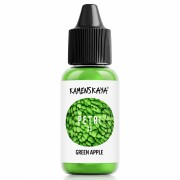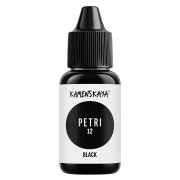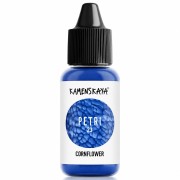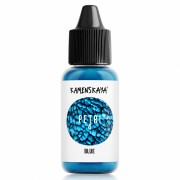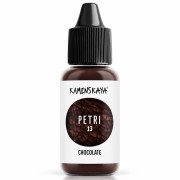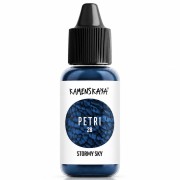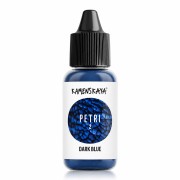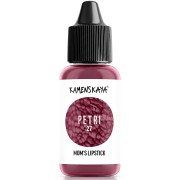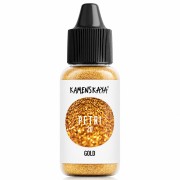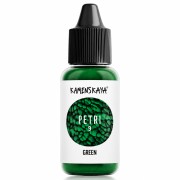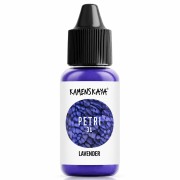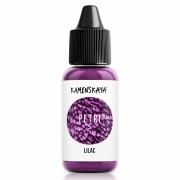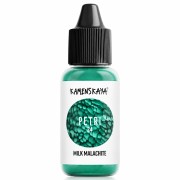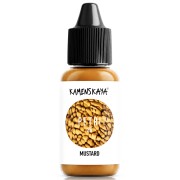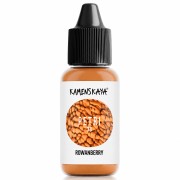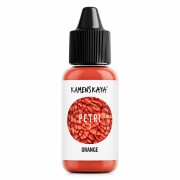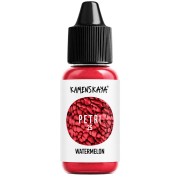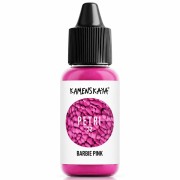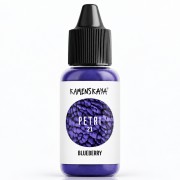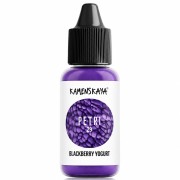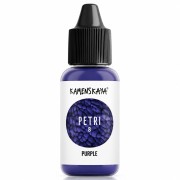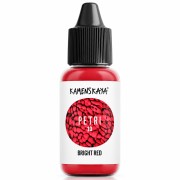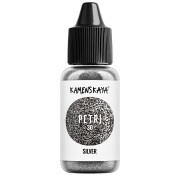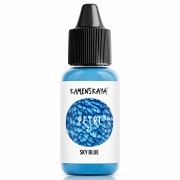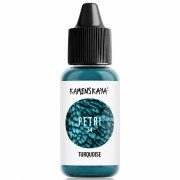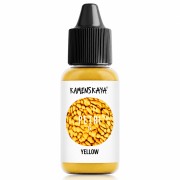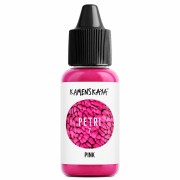

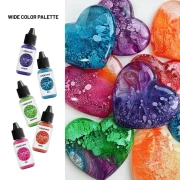

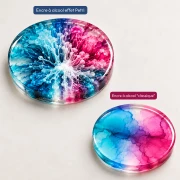

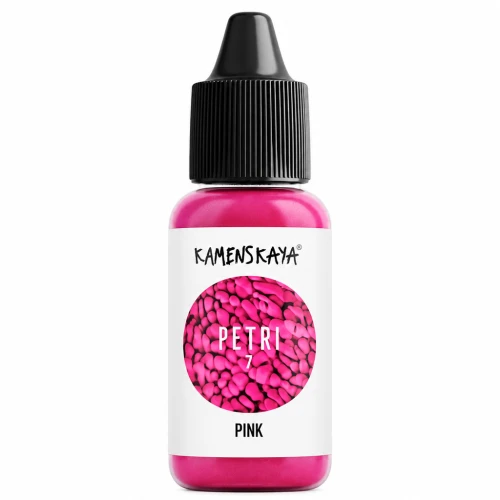


Add color to your creations with this Kamenskaya Rose alcohol ink, which is perfect for creating delicate or more intense translucent effects in resin.
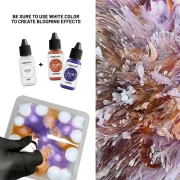
Its fluid consistency makes it easy to mix into the resin and allows you to gradually build up the desired intensity. The pink blends easily with white, purple, red, or blue to create soft or contrasting color palettes. For a Petri effect, be sure to use a special white Petri paint with this translucent ink and alternate the drops to create branching patterns within the thickness of the paint. Always work on a protected surface and do not use a burner, as this ink contains alcohol.
What is the difference between standard alcohol-based ink and special Petri-effect alcohol-based ink?
Standard alcohol-based inks are used to color the resin and create marbled effects, color gradients, or swirling patterns. Kamenskaya special Petri-effect alcohol inks forresin, on the other hand, have been specially formulated with alcohol, pigments, and polymers to achieve the Petri Art technique. They allow you to create more intricate patterns, with colored filaments that sink into the resin and spread out deep within it.
Why use it with a special white Petri-effect ink?
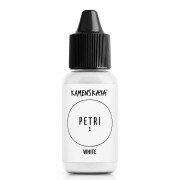
The white ink plays an essential role in creating the Petri effect! Unlike conventional white ink, which is used simply for coloring, the special Petri white ink acts as a “sinker.” When applied after the drops of colored ink, it pulls them toward the bottom of the resin, creating branches, filaments, and stunning depth effects.
What can you do with this pink ink?
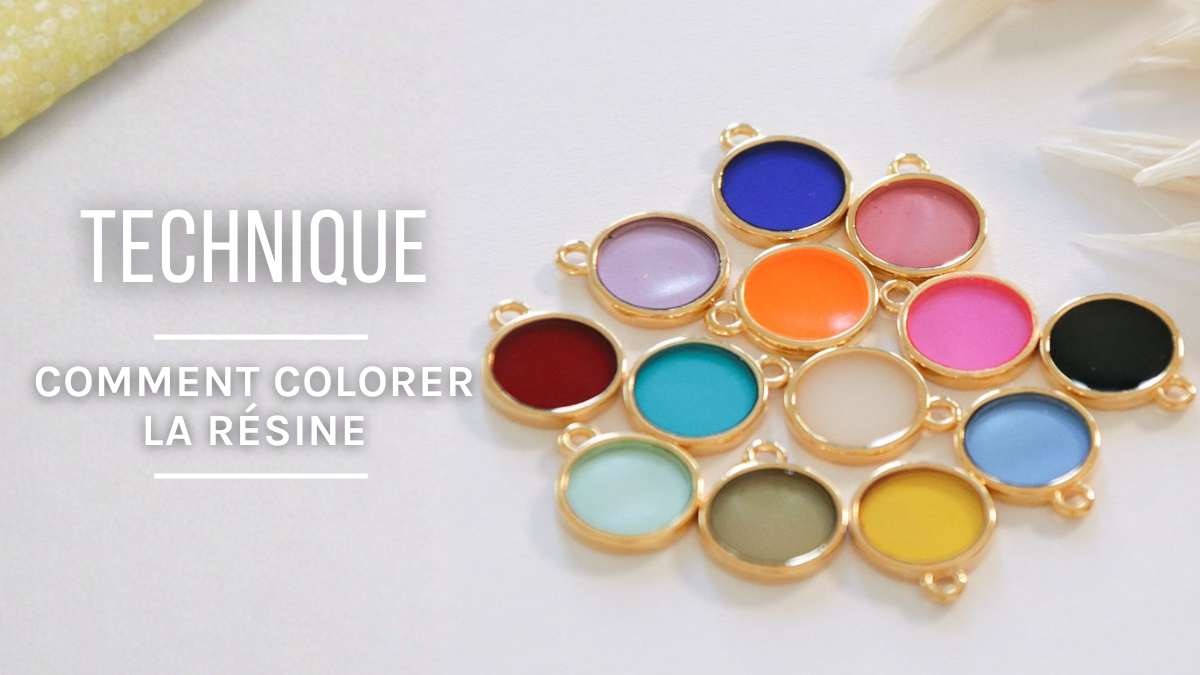
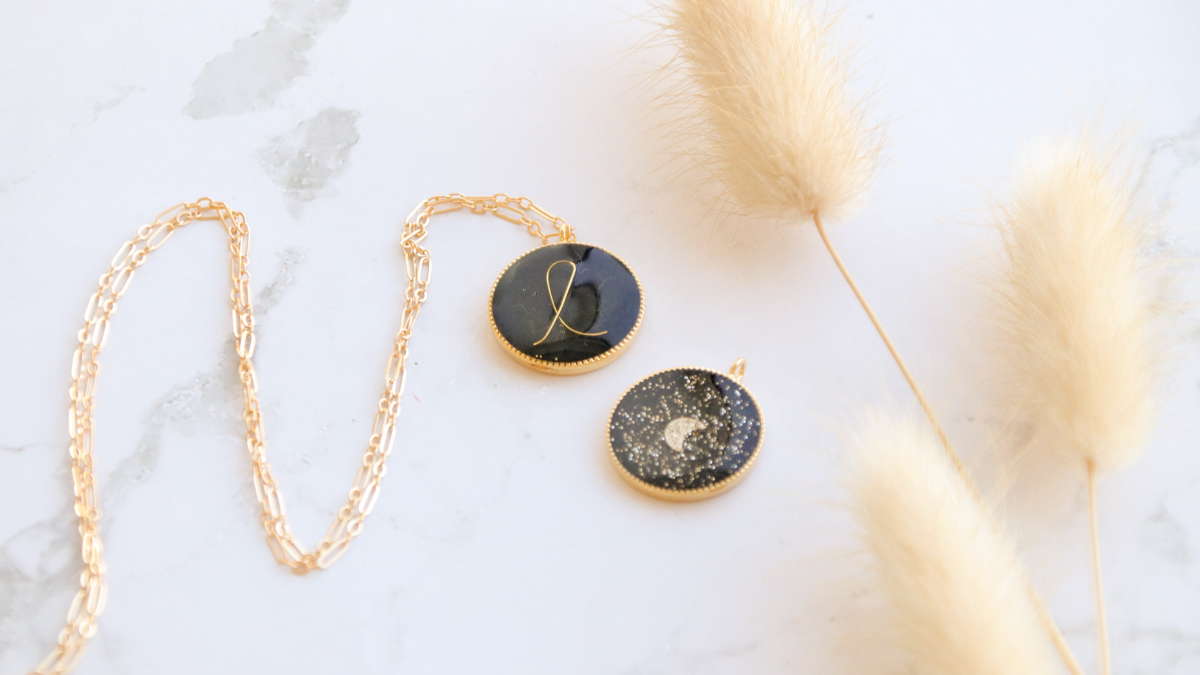
It’s ideal for making pastel earrings, pendants, colorful rings, or small decorative items. Pair it with white for a soft look, or with bright red and purple for a more intense design. These pastel UV LED resin earrings can give you ideas for color combinations. To select the right material for each technique, our guide “UV or Epoxy Resin: Which Type Should You Choose?” provides helpful tips.
Usage Tips:
- Use a resin with a curing time of no more than 24 hours.
- Mix the resin thoroughly with the hardener to avoid defects in your finished piece; stir slowly to prevent excess air bubbles from forming inside.
- Pour the resin in a thin stream to minimize air bubbles within the resin layer.
- Work on a flat surface and cover it with a protective material to keep it secure.
- You can begin working once the bubbles rise to the surface and you’ve removed them.
- After each drop of color, use white. The white color blends with the colored paint, creating effects within the resin layer.
- Use only special white paint designed for marbling, with luminous, translucent shades. Only this paint has a composition that allows you to create marbling effects with these inks.
- Shake the paint jars regularly before applying each drop to ensure the mixture is uniform.
- Do not let the paint fall near the silicone edging, as this prevents it from sinking into the resin.
- If the resin is too runny, wait 20 to 30 minutes before starting to work with the paint. This will increase the viscosity, and the paint won’t sink too far to the bottom. The more runny the resin is, the more likely the paint is to sink to the bottom.
Both beginners and experienced creators can experiment with different ratios and layering techniques. Our tutorials and technical guides offer tips and tricks to master coloring and achieve polished results.
Details:
Volume: 15 ml
Sold in 15 ml bottles