Average Grades
Je cherche une resine époxy qui sèche rapidement
1 Answer
Show answers

Two-component epoxy resin is characterized by slow curing and versatility, making it ideal for decorative objects and inclusions. UV LED resin, faster and easier to use, is better suited to smaller creations, but remains more expensive and less suitable for large surfaces. Depending on your project, opt for epoxy resin for large quantities and UV resin for rapid jewelry.
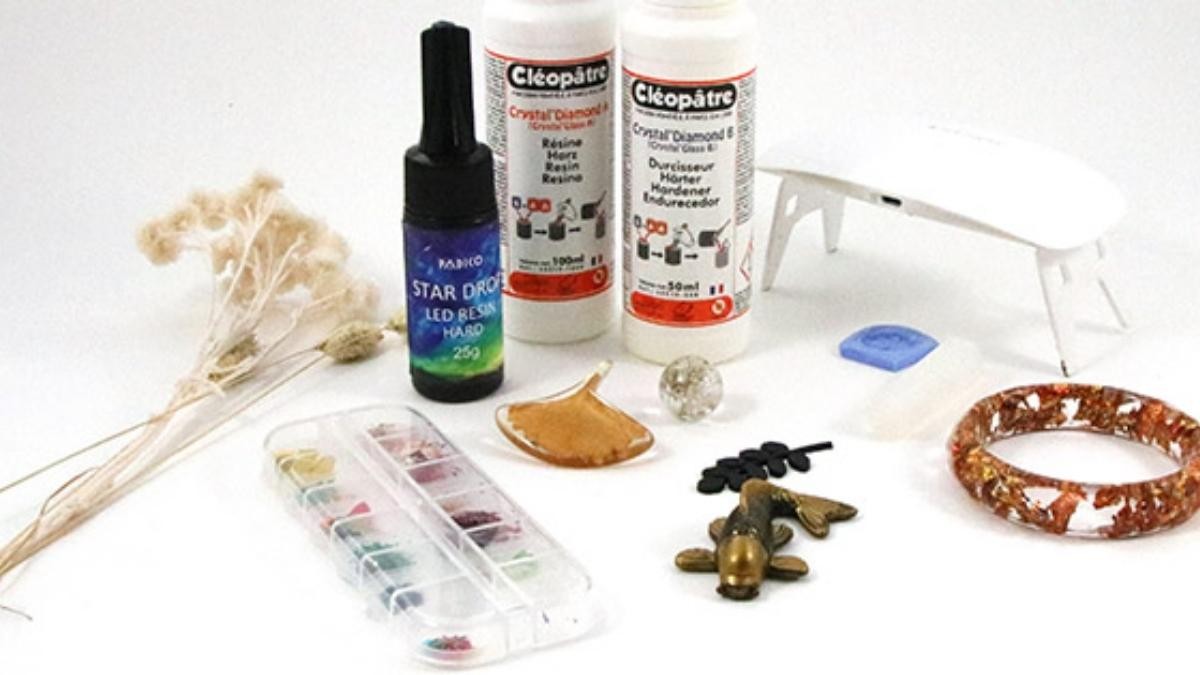
There are a multitude of different resins, each with its own specific characteristics. Today, we're going to look at 3 main types of resin used in the hobby. Casting resin, glazing resin and UV LED and UV resin. The choice of resin to use will depend not only on your project, but also on the surface to be covered and your budget. To guide you, we've listed the properties, advantages and disadvantages of UV and UV LED resins compared with epoxy resins.
What is UV or UV LED resin? What are its advantages and disadvantages? What are two-component resins? What applications and projects can be created with either UV or epoxy resins?
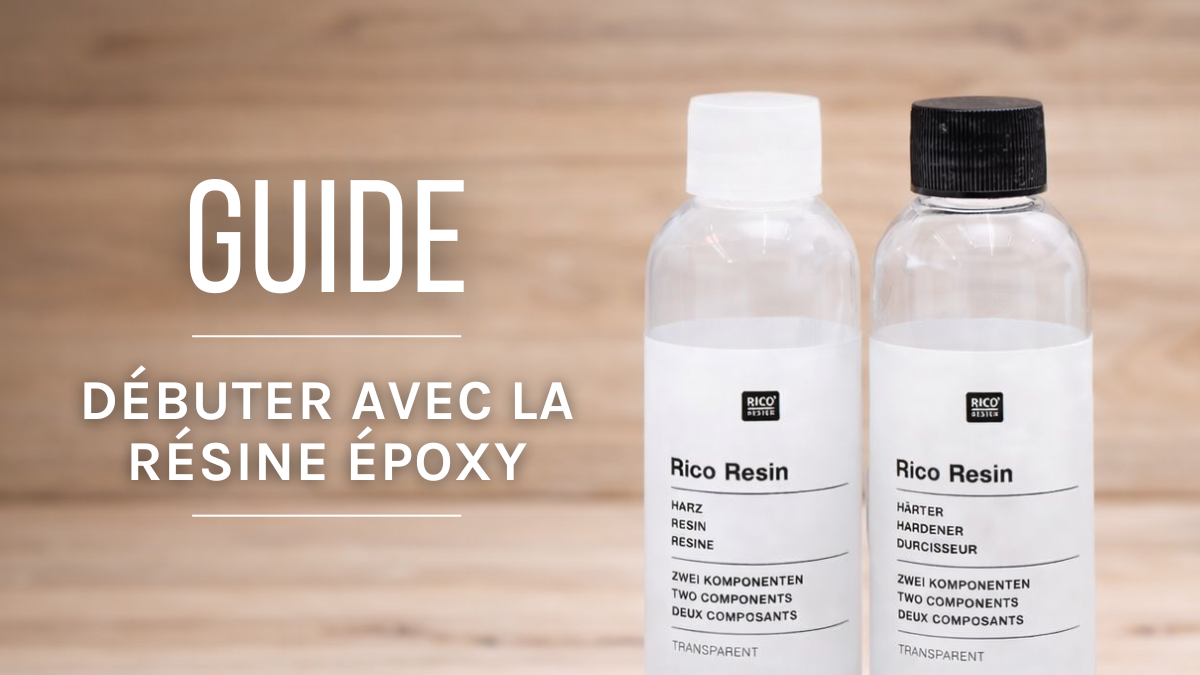
What is epoxy resin?Epoxy resin is also known as two-component resin. Two liquids are mixed together: the resin itself and the hardener, which creates a chemical reaction. This hardens the resin. The resin is said to catalyze. The quantities of each liquid to be mixed are generally indicated on your resin's packaging or instructions. Very often, you'll need to make two doses of resin for one dose of hardener, mix well with a stick and then change containers to make sure the resin is homogeneous. Wait until there are no more bubbles before using.
There are two main types of epoxy resin: casting resin and glazing resin.

Epoxy resin can take from 24 h to 72 h to cure , depending on resin type, ambient temperature and resin thickness. The optimum temperature is usually between 20 and 25° C in a dry place. However, even if the resin is hard to the touch, it can still "work" for up to 15 days after mixing. During these 15 days, it can still undergo transformations due to the external environment. For example, if exposed to direct sunlight, the resin may turn slightly yellow. Sudden temperature changes can also have an influence. Another example, in the case of a resin-coated coaster: wait at least 15 days before placing a glass on it, otherwise the glass may mark.
That's why it's important to protect epoxy resins from UV rays, dust, temperature shocks and humidity during curing.
There is a wide range of these resins, which can be fully transparent, opaque colored or translucent tinted.
The viscosity of epoxy resins varies according to their specificity:
Crystal resins , for example, are liquid and areused to embed elements in molds, spheres or beads containing flowers. They are often used for decorative purposes, but can also be used for jewelry.
Epoxy glazing resins, also known as topping resins, are viscous. Glazing resin is used to protect a flat surface such as a photo or sheet. It can't be used very thickly, but since it's more viscous than casting resin, it stops at the edge of the surface to be resinated and doesn't need to be contained in a mold, at least not as long as the part is flat and level. Some glaze resins retain the flexibility of the resinated element. This is the case with Flex resin. Other glazing resins can also be used to create relief on a painting, for example.
| THE ADVANTAGES | DISADVANTAGES |
- Its crystal-clear, transparent finish is unequalled. - It can be molded in any silicone mold. - It can be colored with resin colorants, inks, pigments, acrylic paints and Micas powders. - It can be used for the pourring technique on canvas, giving superb effects. - It's less expensive than UV resin. - Highly resistant, harder than UV resin. - It can be sanded and polished, although this is difficult and should be avoided. -It can be used in large molds. - Epoxy glazing resin shrinks very little. | -It requires precise dosing, otherwise it will not harden. Use a scale or measuring cup. - There is often a loss of product. You can freeze the remaining resin mixture once. - It requires patience, as it takes a long time to harden (catalyze). All the more so if your creation requires several layers. Ex: Inclusion of dried flowers. - Creations must be protected from UV rays, otherwise they will turn yellow. Tip: when creating your resin pieces, leave them for 15 days in a dark place. - As the hardening process takes a long time, some elements in inclusions may rub off, such as dried flowers and leaves. |
Imitation geode coaster made with epoxy crystal resin:

Polymer clay creations protected with epoxy glaze resin:

Take a look at the resin tutorial area. You'll be able to create a wide range of costume jewelry, trendy accessories and DIY decorative objects.
Unlike epoxy resin, UV or UV LED resin is a single liquid that hardens under UV rays. The UV and UV Led resins we're talking about are from the Japanese brand Padico. Very easy to use, they are ready-to-use, protected in an opaque bottle with a nozzle for precise application.
It can be cured by the sun's rays in around ten minutes if the weather is fine. Again, this curing time may depend on the temperature and the resin itself. For faster curing, you can also use a UV or UV LED lamp. UV resin will take longer to cure than UV LED resin. The lamps are the same as those used for semi-permanent nail polish. So if you already have this lamp at home, you'll only need to buy the resin! Please note that your lamp must have a minimum wattage of 36 W if it's UV and 6 to 10 W if it's UV LED.
UV LED resin is very practical and delivers fast results. UV LED resin cures under the UV LED lamp's rays in less than 2 minutes. However, it does have a few drawbacks: it's much more expensive than epoxy resin, and can only be used on small surfaces, such as medallions for jewelry. If you use it on large surfaces or thicknesses, it will not harden on the inside, and other defects may appear, such as ripples on the surface due to the difference in catalytic speed of the different parts of the piece.
| Light / Resin | Padico UV resin | Padico Star Drop LED UV resin (hard) | Sun Drop Padico UV LED resin (hard) |
| UV LED lamp 6 to 10 watts | Not suitable - random results | 30 to 90 sec | 30 sec to 2 minutes (each side) |
| 36-watt UV lamp | 2 to 10 minutes | 2 to 4 minutes | 2 to 4 minutes (each side) |
| sunlight in very fine weather | 10 to 30 minutes | 30 to 90 sec | 30 sec to 2 minutes (each side) |
| sunlight on overcast days | 30 to 60 minutes | 3 to 10 minutes | 3 to 10 minutes (each side) |
How to use UV resin?It can be used in transparent silicone molds or directly on a silicone mat, as in the case of this beaded bracelet, where a spacer is filled in. In all cases, light must be able to reach the resin. UV resins are transparent and do not come in colored versions. But you can tint them with colorants, pigments, glitter or mica powder.The consistency of UV resins resembles that of a gel.
| ADVANTAGES | DISADVANTAGES |
- Easy to use. - Cures very quickly. -Long shelf life. - Can be applied to curved surfaces thanks to its gel-like appearance. | - More expensive than other two-component resins. - It can only be used in thin 3 mm layers or on small molded creations. - It has a high shrinkage rate. - It is less crystalline than epoxy resins. - After one year, it tends to be a little more cloudy. - The molds used must be transparent to let UV light through. - It can only be colored with the same brand of UV or UV LED colorants. Do not use epoxy resin colorants. Opaque creations are not possible, as the light must be allowed to pass through. -Requires the purchase of a UV or UV Led lamp. -It is difficult to polish. It's easier to re-cast a thin film on the surface. |

Now that you know the main differences between these 3 resins, choosing the right one for your project usually becomes clearer:
To create a shaker, i.e. a resin shape with water and glitter included: You'll need special Shaker molds and preferably UV LED resin, as you'll need to glue and seal the various parts of the Shaker quickly.

Aqueous and oily liquids are not compatible with resin in its liquid state. They will prevent the resin from catalyzing. That's why, if you ever want to trap a liquid in a resin form, you need to create a resin shell that will enclose the liquid.
Similarly, if you wish to resinize plants, they must be completely dry, otherwise they will rot inside and prevent the resin from catalyzing properly.
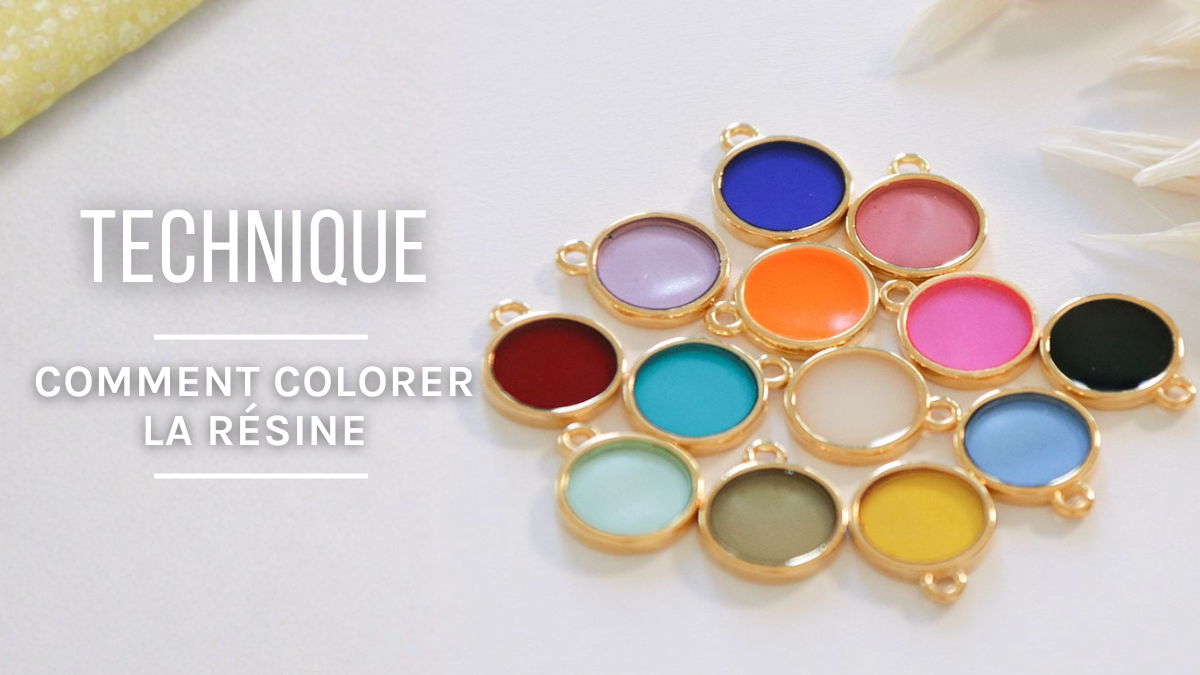
To color the resin, you can't use just any dye or paint. I invite you to have a look at our data sheets onincluding dried flowers in resin and on coloring resin.

Credits
Perles & Co, Internet & E-Commerce company [31/01/2022] Any reproduction, representation, adaptation, in any form whatsoever, even partial, is prohibited, except for reproduction for private use not intended for collective use, representation in the family circle (art. L 122-5 CPI) and online publishing on condition that the source is mentioned and a link is included to the corresponding page of our site www.perlesandco.com.