Average Grades
Free shipping on orders over 50€ up to 500g
French Online shop for beads and accessories for the creation of DIY jewellery and other creative hobbies
Log-in
0
Shopping cart
Shopping cart
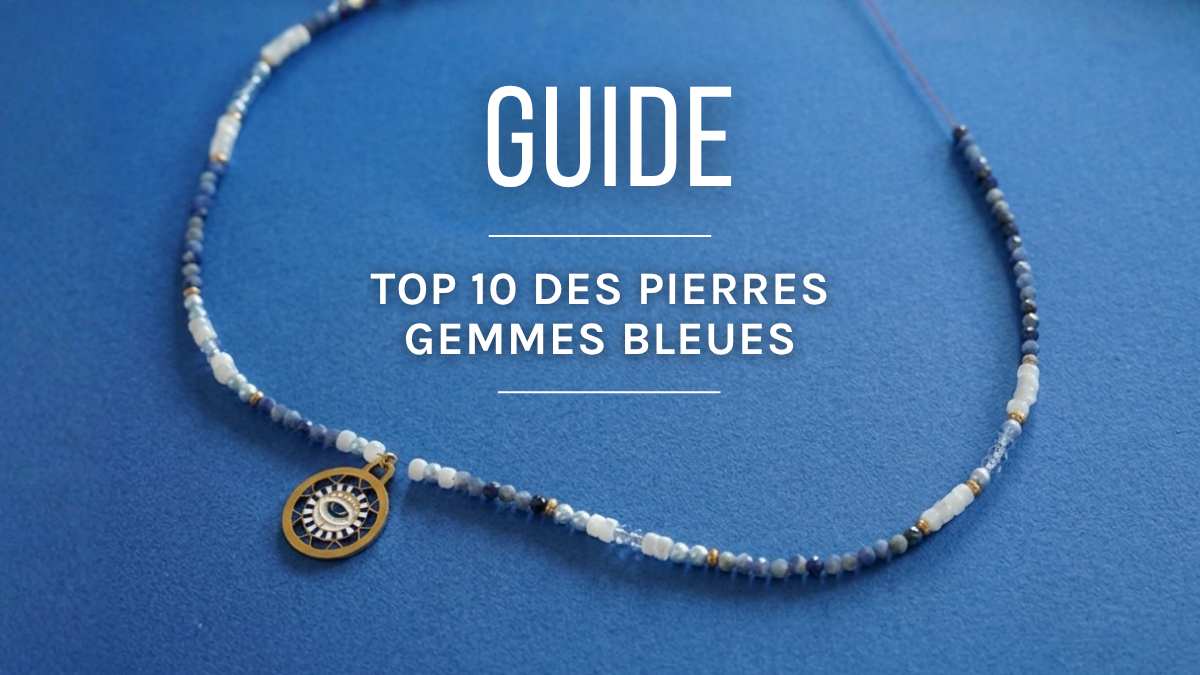
Natural blue stones, from lapis lazuli to turquoise, offer a varied palette for your creations. Lapis lazuli stands out for its intense midnight blue and golden glitter, while the well-known turquoise has a unique blue-green hue. For a modern, affordable choice, sodalite and blue apatite stand out for their vivid colors and versatile styles.
Natural blue stones are full of originality and contrast. From deep midnight blue to translucent lagoon blue, they offer an infinite palette for your creations. Whether you're new to DIY or a seasoned designer, you're bound to find your nugget in this selection. Ready to dive into the world of blue?
Important note: our gemstones are intended exclusively for the creation of jewelry and accessories. They are not sold for their lithotherapy properties and in no way replace medical advice.
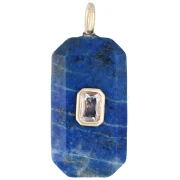
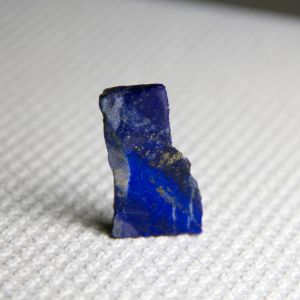
It's impossible to talk about natural blue stones without mentioning lapis lazuli first. Its intense ultramarine blue, often studded with golden pyrite flakes, is instantly recognizable. This metamorphic rock, composed mainly of lazurite, has been used in jewelry since time immemorial: the Egyptians used it to adorn the masks of the pharaohs.
Why use Lapis-Lazuli components?
Find our lapis lazuli components and lapis lazuli beads for all your creations.

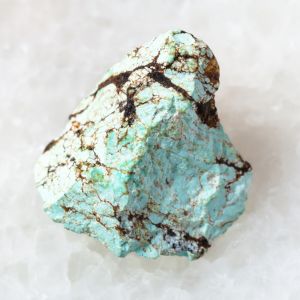
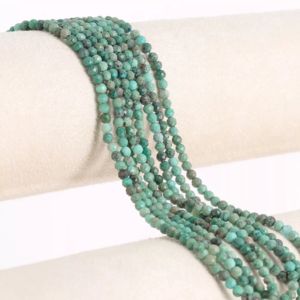
Turquoise is without doubt the world's best-known blue gemstone. Its characteristic blue-green color, sometimes veined with brown or black, makes it an instantly recognizable stone. It's always in fashion, from Native American jewelry to contemporary bohemian creations.
Explore our full range of turquoise components to find the shape that inspires you.
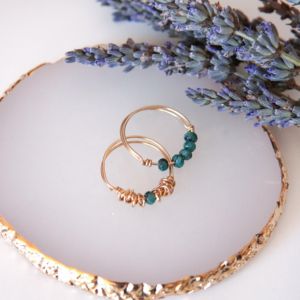
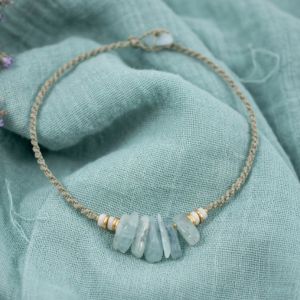
Its name comes from the Latin "aqua marina" and that says it all! Aquamarine unfurls aquatic pale-blue hues reminiscent of limpid seabeds. A variety of beryl, it has a hardness of 7.5 to 8 on the Mohs scale, making it a highly resistant stone, perfect for everyday wear.
Design ideas :
Combine your aquamarine beads with amazonite, moonstone or sodalite for a harmonious result. Find our aquamarine beads on the website.
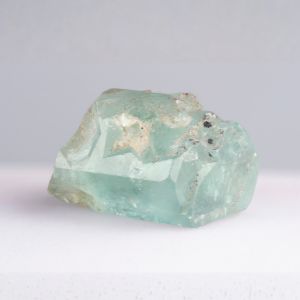
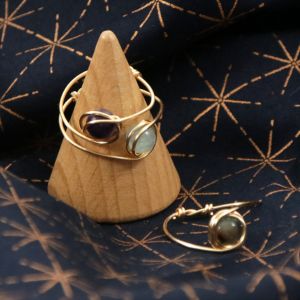
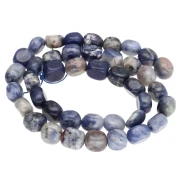
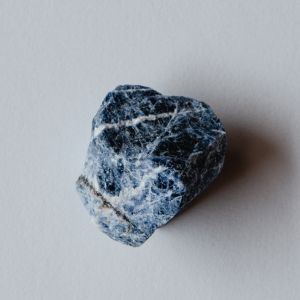
Often confused with lapis lazuli, sodalite is distinguished by its characteristic white calcite veins and the absence of golden flakes. Its intense royal blue is just as striking, at a more affordable price. Its name recalls its composition: "soda" for sodium and "lithos" for stone.
It combines perfectly with aquamarine and lapis lazuli for monochrome blue compositions.
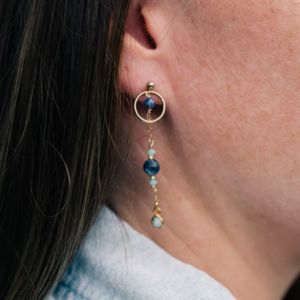

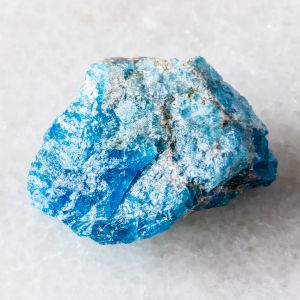
Less well-known than its predecessors, blue apatite is a blue gemstone that deserves your full attention. Its bright blue, sometimes turquoise, color is particularly luminous. Its partial transparency gives it an almost aquatic sheen that's very seductive.
Why try it?
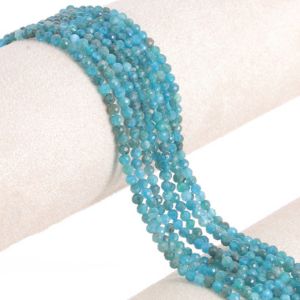
Blue chalcedony belongs to the quartz family. Its translucent pale blue hue, sometimes slightly milky, lends an incomparable softness and lightness to your creations. It's the ideal stone for delicate jewelry worn every day.
Our advice:
Discover our natural stones to find your blue chalcedony.

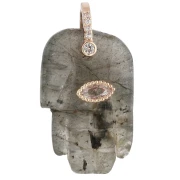
Labradorite is in a class of its own. Behind its gray surface lies a unique optical phenomenon: labradorescence. Depending on the angle of the light, it reveals fascinating blue, green, golden or violet reflections.
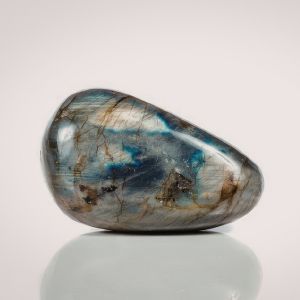
Less well known than its green sister,blue aventurine offers a soft, deep blue hue with silky, pearly reflections. Its peaceful color makes it a very versatile stone, easily integrated into many styles of jewelry.
Amazonite lies on the border between blue and green, with its pale blue-green hues reminiscent of Caribbean waters. Its natural white veining gives it a very graphic visual texture. It's a modern, trendy stone that appeals enormously to creative jewellers.
Why choose it?
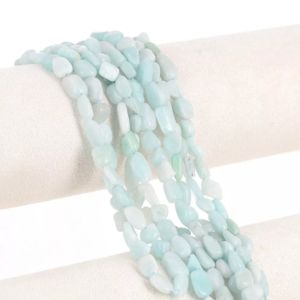
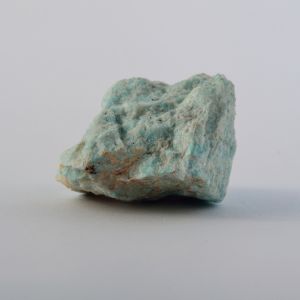
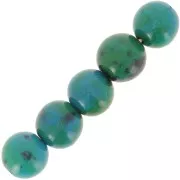
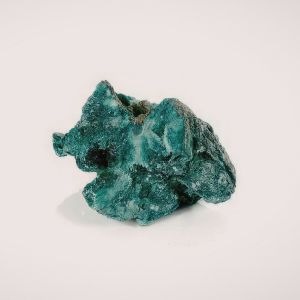
To finish this top 10, chrysocolla stands out with its vibrant turquoise-blue hues, sometimes mixed with green and brown. A copper silicate, it presents unique nuances on each piece, some almost evoking a satellite photo of the Earth. It's a statement stone par excellence.
Favorite creations :
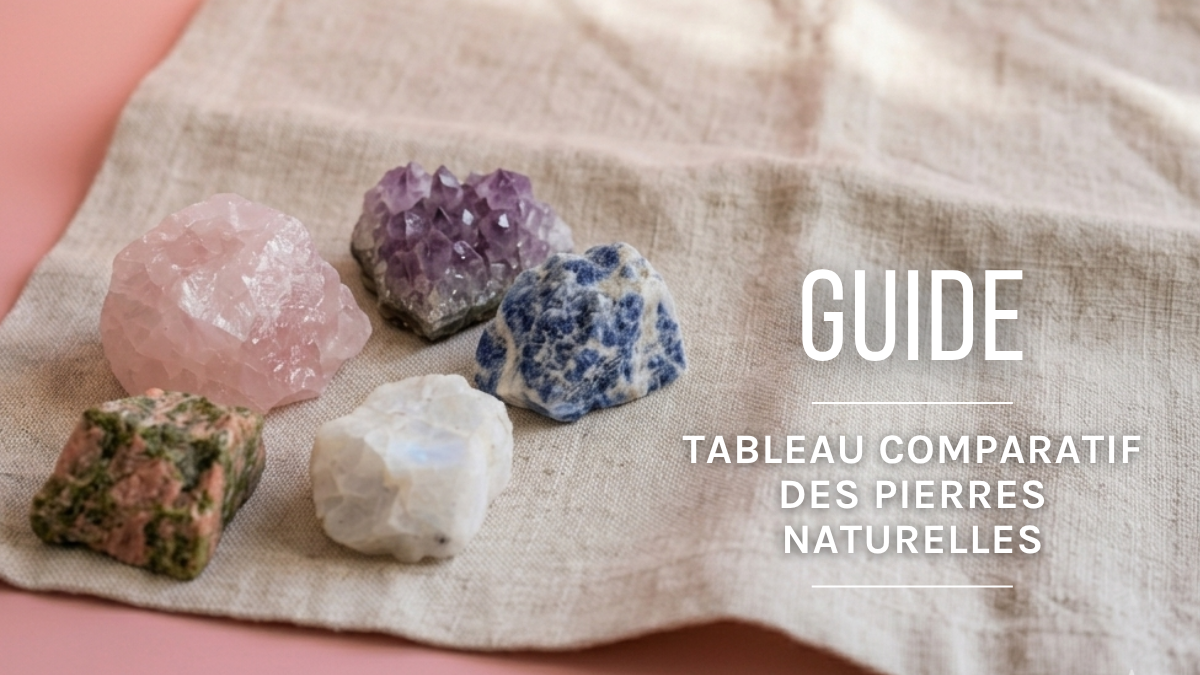
Here's a quick summary to help you:
| Stone | Hue | Style |
| Lapis-Lazuli | Midnight blue | Luxury, classic |
| Turquoise | Blue-green | Bohemian, ethnic |
| Aquamarine | Pale aqua blue | Summery |
| Sodalite | Veined royal blue | Accessible, modern |
| Blue Apatite | Electric blue | Trendy |
| Blue Chalcedony | Translucent blue | Minimalist |
| Labradorite | Iridescent blue | Mysterious, unique |
| Blue Aventurine | Soft pearly blue | Versatile |
| Amazonite | Caribbean blue-green | Summery, graphic |
| Chrysocolla | Bright turquoise blue | Artistic, statement |
To go further in your creations, discover all our DIY jewelry tutorials and our gemstone guide.
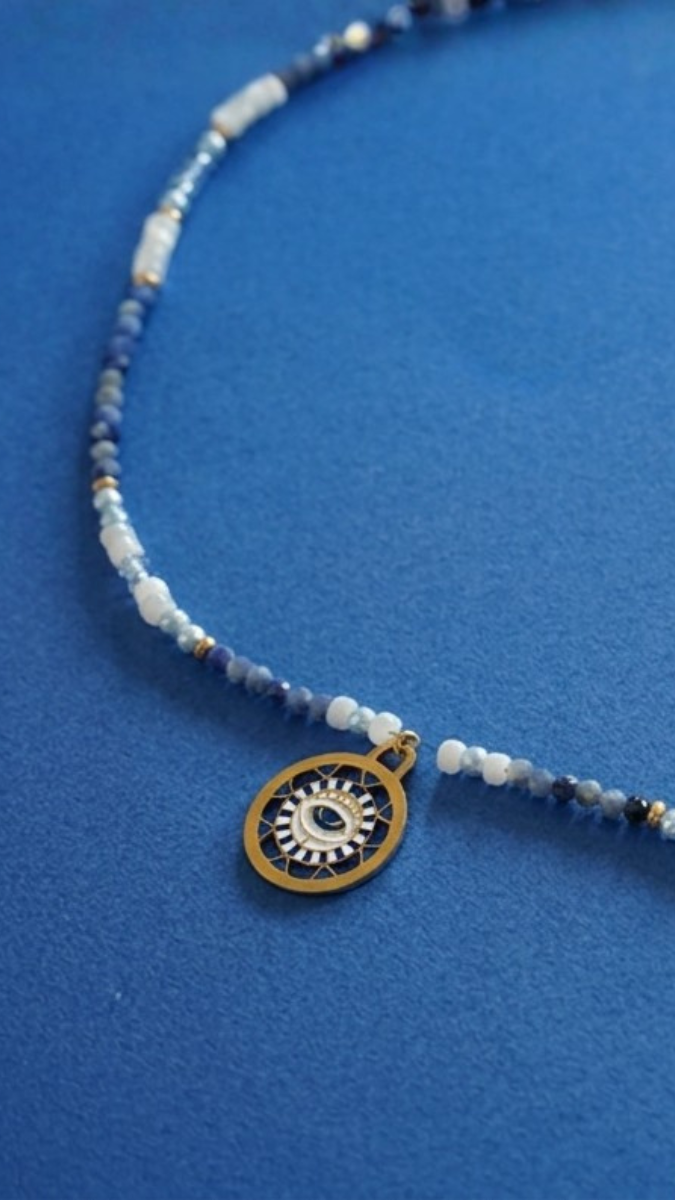

Lapis lazuli is certainly the most emblematic natural blue stone. Used since Antiquity, notably by the Egyptians, it fascinates with its intense blue dotted with golden flakes. Turquoise is just as famous, appreciated in many cultures throughout the ages.
Sodalite has conspicuous white veins of calcite and no golden flakes, unlike lapis lazuli. Lapis lazuli is generally a deeper, uniform blue, and may contain inclusions of golden pyrite.
Aquamarine (hardness 7.5-8), sodalite and blue chalcedony are among the most robust for everyday wear. Lapis lazuli is more fragile (hardness 5-6) and requires greater care.
Blue stones go equally well with gold (gold-plated, gold-filled) for a warm, luxurious contrast, or with silver (925 silver, stainless steel) for a cooler, sleeker look. It all depends on the desired effect!
Absolutely! Combining lapis lazuli, sodalite and aquamarine in a multi-stone bracelet creates a harmonious cameo of blues. Vary the hues and sizes of beads for a dynamic, modern result.
Credits
Perles & Co, Internet & E-Commerce company [09/04/2026] Any reproduction, representation, adaptation, in any form whatsoever, even partial, is prohibited, except for reproduction for private use not intended for collective use, representation in the family circle (art. L 122-5 CPI) and online publishing on condition that the source is mentioned and a link is included to the corresponding page of our site www.perlesandco.com.