Average Grades


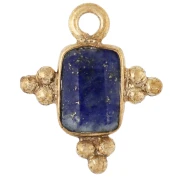
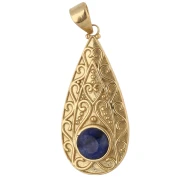
Quels sont les effets de cette pierre
1 Answer
Show answers

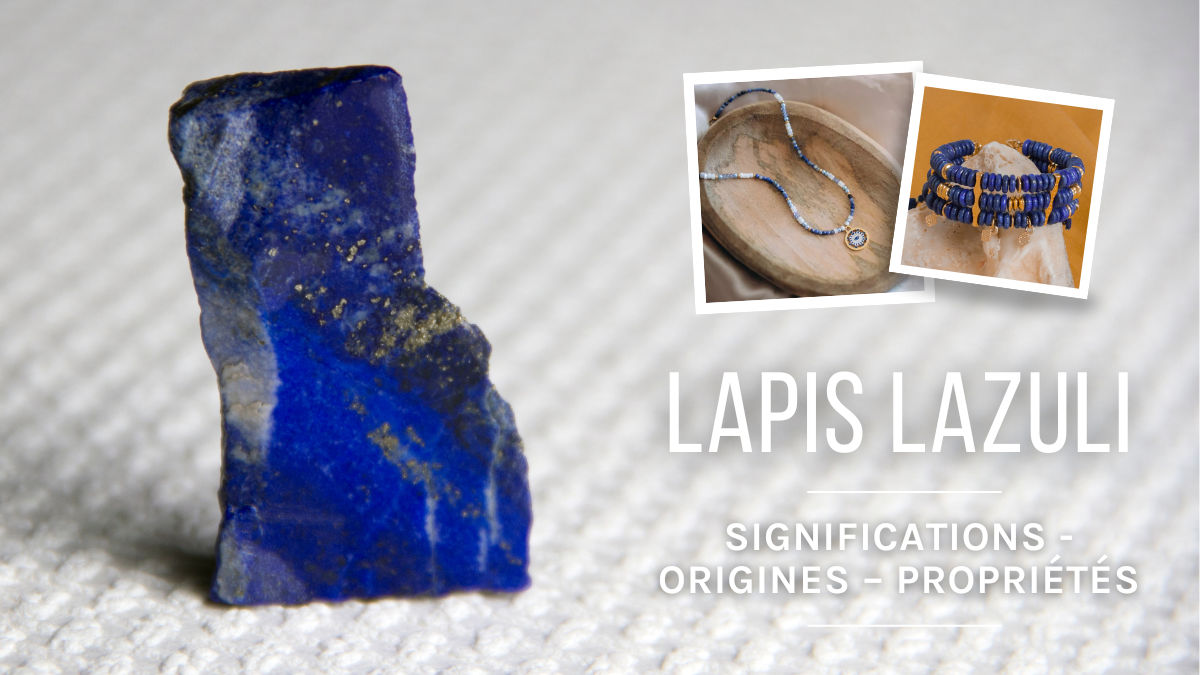
Lapis lazuli is a deep-blue stone, often studded with gold or white flakes. Mainly mined in Afghanistan and Chile, it is used to create luxurious jewelry and objects, symbolizing nobility and strength. Compared with other stones, lapis lazuli stands out for its intense color and rich history, making it a preferred choice for those seeking elegance and authenticity.
The name of this natural stone means “blue stone.” It comes from the Latin word “lapis,” meaning “mineral,” and the Arabic word “lazul,” meaning “blue.”
This gemstone, formerly known as a “semi-precious stone,” has fascinated people since time immemorial. Over the centuries, lapis lazuli has been regarded as a symbol of health, nobility, good fortune, divine strength, power, courage, elegance, and purity.
This gemstone has often been used to create luxurious objects and sumptuous jewelry. Even in prehistoric times, lapis lazuli was already set in jewelry or worn as adornments. The Egyptians used it to adorn the funeral masks of the pharaohs and to create good-luck amulets in the shape of an eye or a scarab.
In the Middle Ages, this blue stone was also ground into powder to make ultramarine blue pigments. It was then used to dye fabrics or to paint surfaces and canvases, as can be seen on the ceiling of the Sistine Chapel or in Vermeer’s painting *Girl with a Bead Earring*.


This natural stone belongs to the feldspathoid family. Its hardness ranges from 5 to 6 on the Mohs scale, and its density varies between 2.5 and 3.
It is composed of lazurite. It also contains pyrite when it exhibits golden flecks, or calcite when it is speckled with white.
It is a magnificent deep blue stone, with golden or white flecks depending on its composition. Our ancestors said that its color is reminiscent of a starry sky.
Lapis lazuli is often confused with sodalite.
The main deposits of lapis lazuli are found in Afghanistan, where the oldest deposits were discovered, but also in Chile, where it is considered the national stone. There are also deposits in Peru, Angola, Afghanistan, Pakistan, Russia, Myanmar, and North America.
In crystal healing, lapis lazuli is said to have a calming effect that reduces stress and promotes communication and self-confidence. This blue stone is also said to be very beneficial for boosting creativity.
It is associated with the throat chakra (the 5th chakra) and the brow chakra, also known as the Third Eye (the 6th chakra).
Please note: our gemstones are not sold for use in crystal healing. Natural stones are in no way a substitute for medical expertise or medical treatment.
If you wish to cleanse your lapis lazuli stone, you can purify it in clear, pure, or distilled water.
To recharge lapis lazuli, it is recommended that you place your gemstone directly under moonlight, ideally during a full moon.
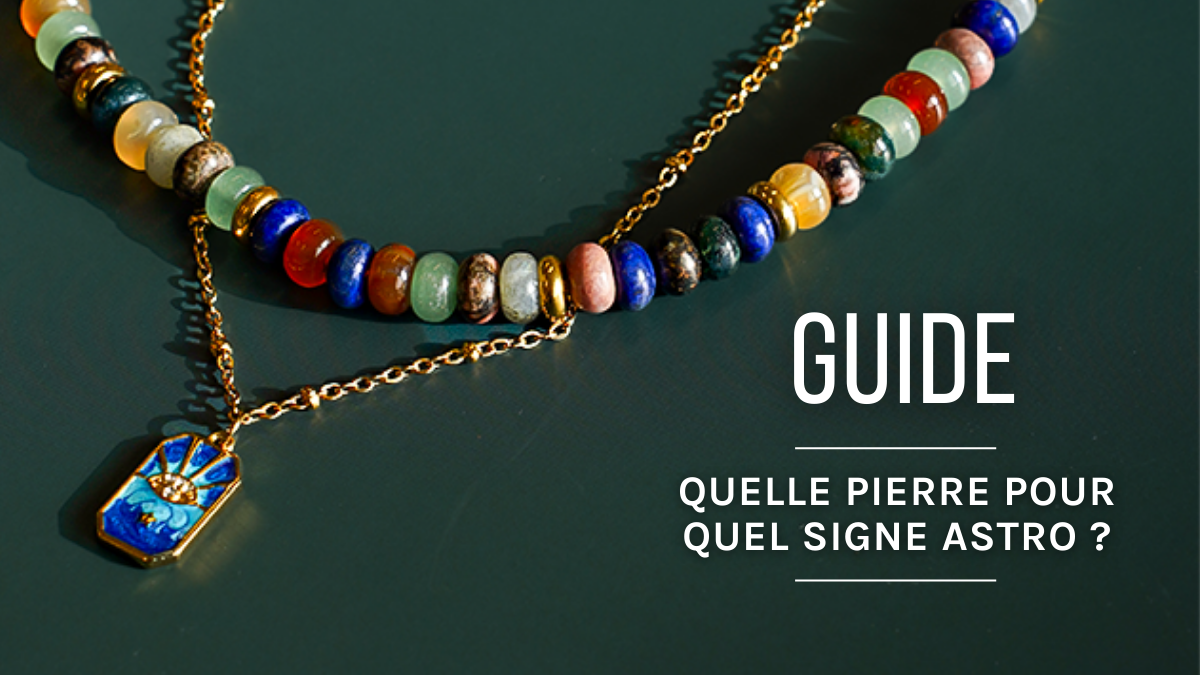
Its intense blue color pairs well with warm tones such as Gold Filled, gold-plated, or even Rose Gold.
If you prefer silver jewelry, 925 Sterling Silver or stainless steel will allow you to create pieces with a cool, elegant look.
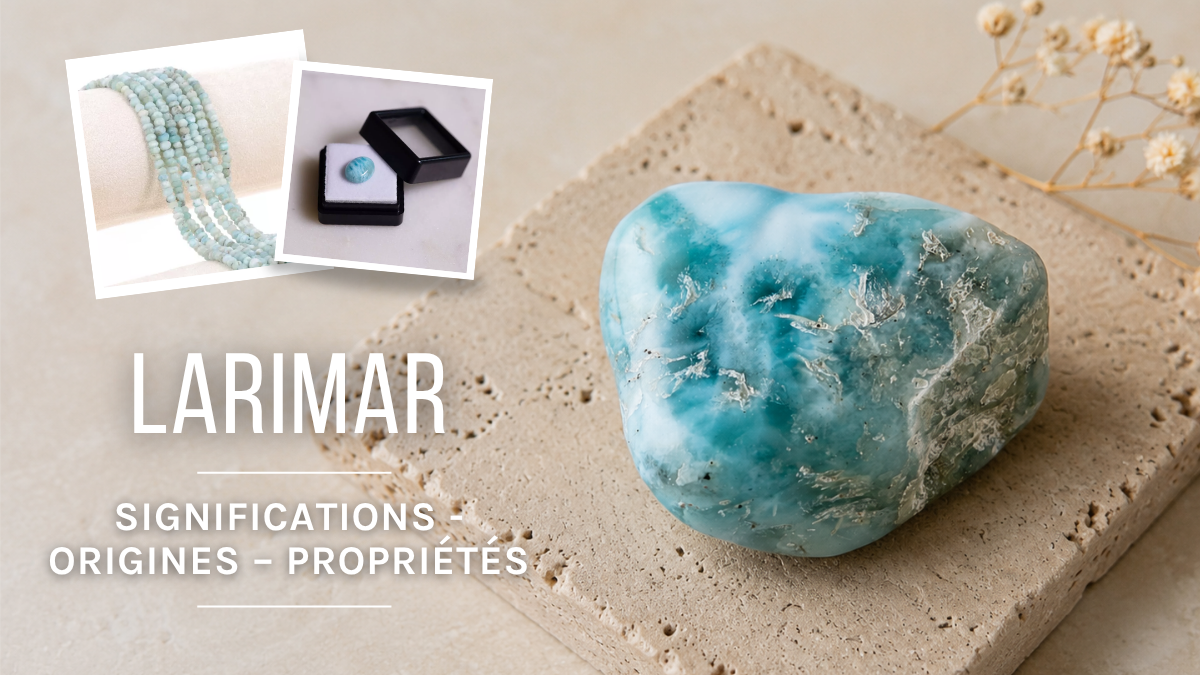
In crystal healing, lapis lazuli pairs very well with other blue stones such as apatite, sodalite, larimar, blue aventurine, or aquamarine. You can also pair it with amethyst, fluorite, labradorite, or moonstone. These stones are said to emit similar energies and enhance calm and serenity.
However, it’s not recommended to combine it with red jasper, malachite, black obsidian, or onyx. These stones are too powerful and energizing, which would diminish the benefits of lapis lazuli.
But if you choose a lapis lazuli stone solely for its beauty and brilliance, then any combination is fine! Simply pair it with the stones you love...


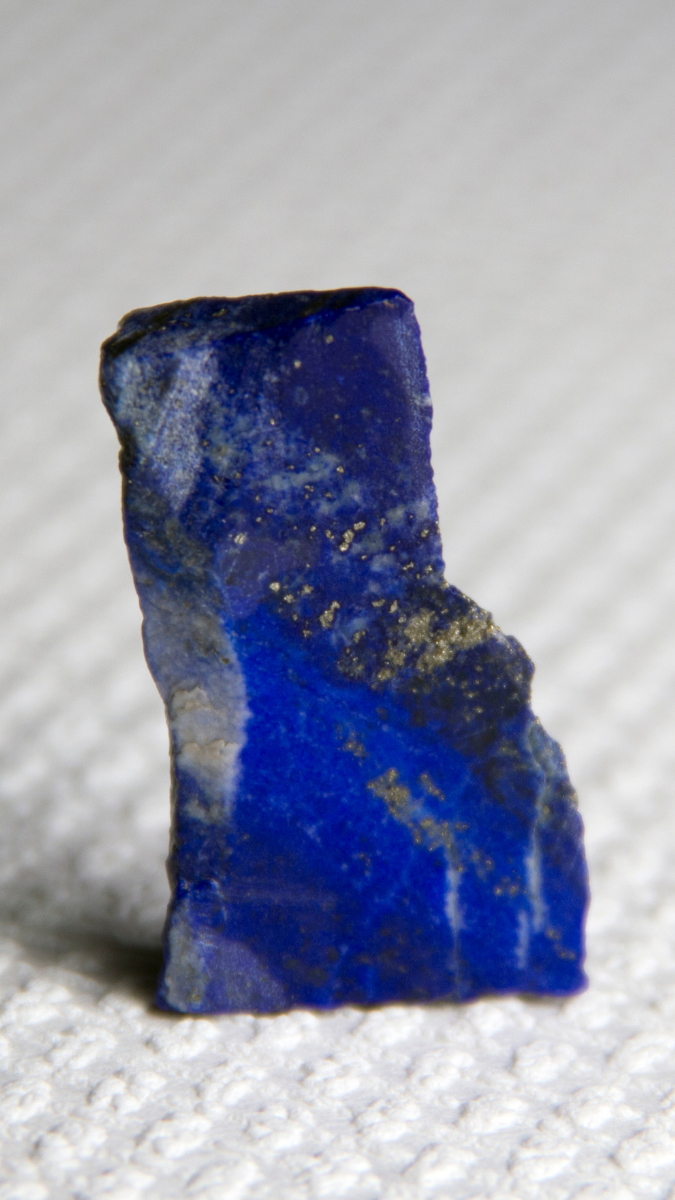

No, lapis lazuli does not contain gold in the chemical sense. It often contains small inclusions of pyrite, a naturally golden iron sulfide. It's these shiny metallic flakes that sometimes give the impression that there's gold in the stone.
Credits
Perles & Co, Internet & E-Commerce company [17/01/2026] Any reproduction, representation, adaptation, in any form whatsoever, even partial, is prohibited, except for reproduction for private use not intended for collective use, representation in the family circle (art. L 122-5 CPI) and online publishing on condition that the source is mentioned and a link is included to the corresponding page of our site www.perlesandco.com.