Average Grades




Bonjour,
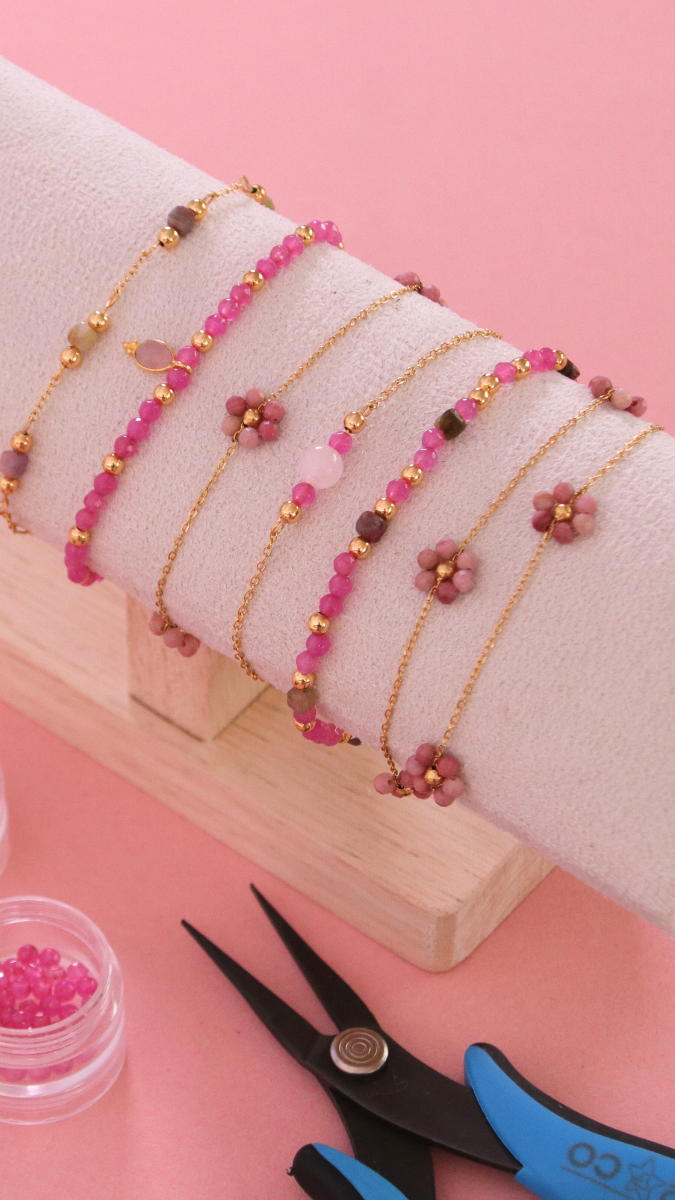
avez-vous des tutoriels pour les bracelets avec les fleurs, qui sont dans la photo ?
avez-vous des tutoriels pour les bracelets avec les fleurs, qui sont dans la photo ?
1 Answer
Show answers

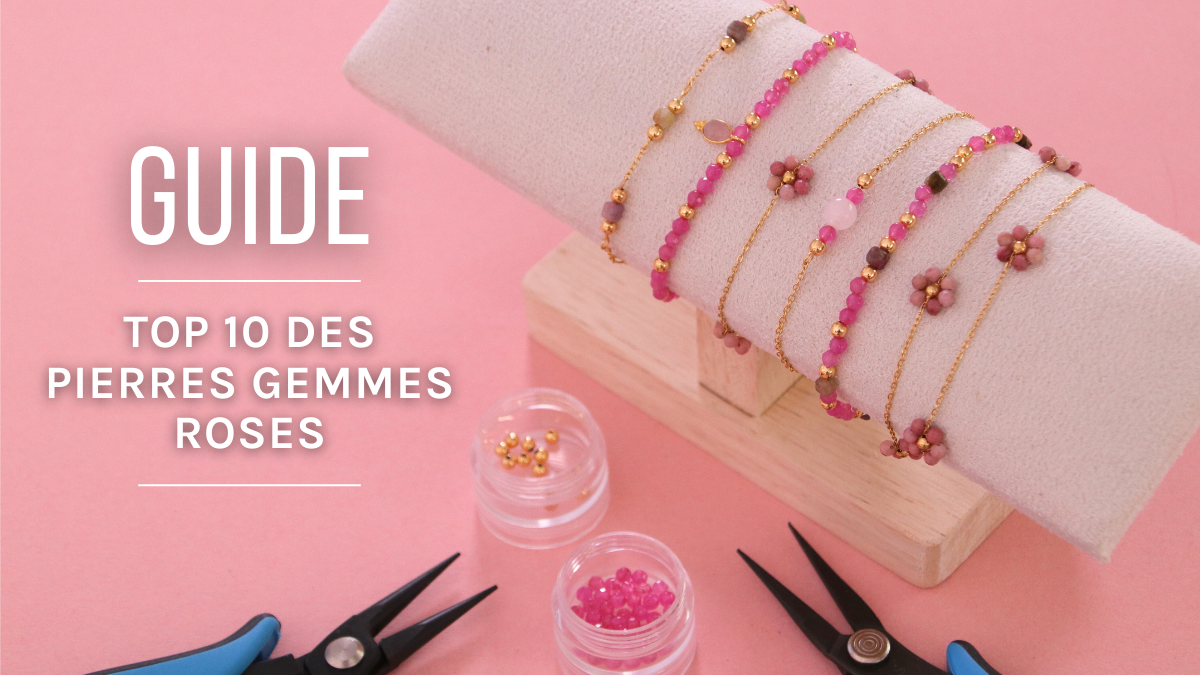
Pink stones, such as rose quartz, rhodonite and pink tourmaline, are distinguished by their varied shades, from pale to bright pink. Each has its own special characteristics: rose quartz is associated with love, rhodonite with friendship, and pink tourmaline is a symbol of tenderness. These gems blend harmoniously into your jewelry creations, adding a touch of elegance and softness.
Pink is a must-have color in jewelry. A symbol of tenderness, femininity and serenity, it comes in a multitude of shades in the mineral world. Whether you're a first-time jeweler or a seasoned designer, incorporating pink gems adds a touch of timeless elegance to your collections.
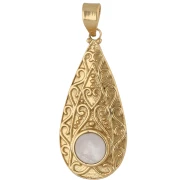
Here's a quick overview of the pink stones available on our site to create your own pink jewelry (don't forget to take inspiration from our natural stone jewelry tutorials). Charms, pendants, cabochons, beads, jewelry primers... Pink stones are highly sought-after for their versatility. They pair perfectly with Gold Filled, 925 Silver or fine gold-plated brass jewelry primers.
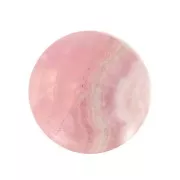
This pretty natural pink stone (formerly known as "semi-precious stone") belongs to the quartz family. It has a hardness of 7 on the Mohs scale and a density of 2.65 g/cm³.
The color of rose quartz covers several shades of pink, ranging from pale pink to rose.
Since the dawn of time, this natural stone has been associated with love and the heart. No wonder, then, that many civilizations associate it with the gods and goddesses of love, beauty and motherhood.
In Greek mythology, rose quartz is said to have been created by the blood of the goddess of beauty and love, Aphrodite. For the Greeks and Romans, this pink stone came from the gods of love,Amor and Eros, who brought it to earth to spread love and peace. In the Muslim religion and among the Indians, it is associated with the maternal deity.
A gift of rose quartz jewelry is an ideal gift idea for a mother, sister, cousin or best friend.
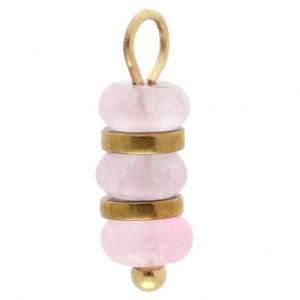
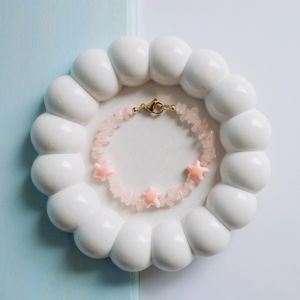

This fine stone is a member of the Pyroxenoid family. It has a hardness of between 5.5 and 6.5 on the Mohs scale and a density of between 3.4 and 3.7 g/cm³.
Rhodonite is essentially composed of pink manganese and silicon.
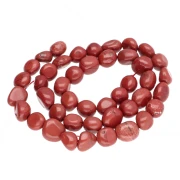
Rhodonite's color ranges from light pink to bright red, reddish-brown and magenta, with occasional shades of brown and beige. It is streaked with black or gray cloudy lines and inclusions.
Rhodonite has been known since ancient times. It was considered an emotional symbol. It was given as a gift to express friendship.
The Romans and Greeks wore it as a protective amulet to guard against bandits on their travels.

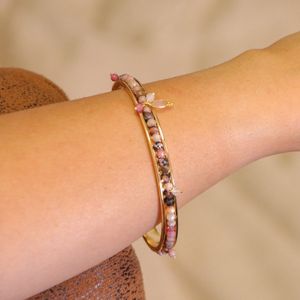
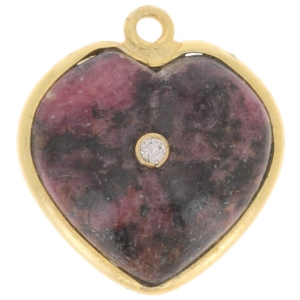
Rhodochrosite is often confused with rhodonite. In fact, with its color ranging from pale pink to deep pink, sometimes with white, gray or black stripes and/or patterns, it closely resembles its cousin.
Its name comes from the Greek "rhodos" meaning "rose", in reference to its pink hue. Its hardness ranges from 3.6 to 4 on the Mohs scale.
Throughout history, rhodochrosite has been used to make jewelry, sculptures and decorative objects. For the Incas, this fine stone had great religious significance. They believed that rhodochrosite was the blood of their gods.
More generally, its color is associated with love and emotion. All the more reason to make and wear pink jewelry without moderation for Pink October!

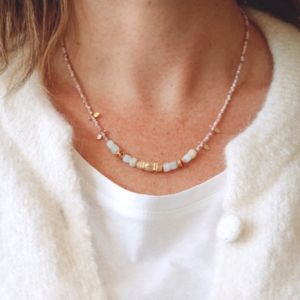
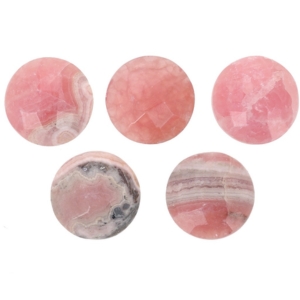
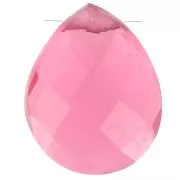
Pink tourmaline belongs to the Tourmaline family, which includes an infinite number of colors. Its seductive color ranges from pale to bright pink. The best-known pink variety is rubellite. Pink tourmaline has a hardness of between 7 and 7.5 on the Mohs scale.
The Egyptians made no mistake, using pink tourmalines for their jewelry. In India, it was a sacred stone, symbolizing love and tenderness. Today, pink tourmaline continues to embody delicacy and love in many jewelry creations. A piece of pink tourmaline jewelry brings softness to any look.
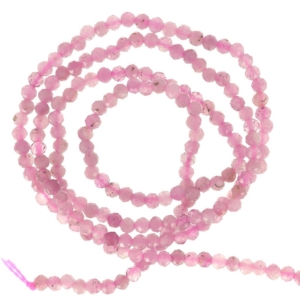
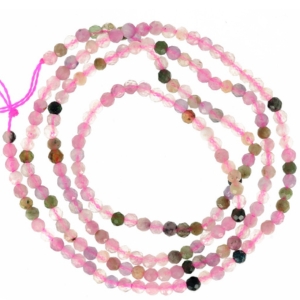
The color of pink chalcedony can vary from pale to dark pink, or even bright pink. It has a hardness of between 6.5 and 7 on the Mohs scale.
Highly appreciated for its soft, soothing color, it has been used since Antiquity in the creation of jewelry, cameos and objets d'art. Today, it can be found in rings, pendants, pearls, earrings and more. Its delicate beauty and brilliance will enable you to create a most seductive piece of pink stone jewelry.

Strawberryquartz is often confused with rose quartz. But it's another gemstone in the Quartz family. It is distinguished by its pink color, prickled by small inlays, reminiscent of a strawberry (the fruit). Hence the name! This quartz has a hardness of 7 on the Mohs scale.
In jewelry, this unique gemstone is often used to create soft, elegant jewels that add a fresh note to an outfit, such as a charms pearl necklace, a pair of creoles decorated with a strawberry quartz pendant or an elastic bracelet made of chip pearls.
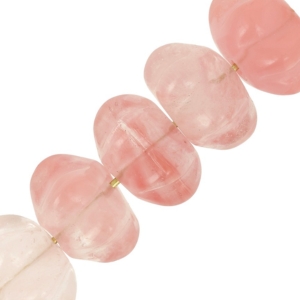

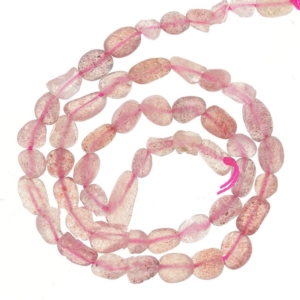
This natural stone is characterized by its pink hue, evoking softness and tenderness, veined with white. Its hardness is between 6.5 and 7 on the Mohs scale.
Throughout history, thulite has been used to create jewelry, interior decorations and objets d'art. Its appeal lies mainly in its unique, vibrant pink color. Among the Vikings, thulite was considered a lucky charm, a symbol of protection and courage. Over time, it became a national treasure in Norway.
Today, it is used in jewelry to create pink jewelry, capturing the essence of love and passion in its color.

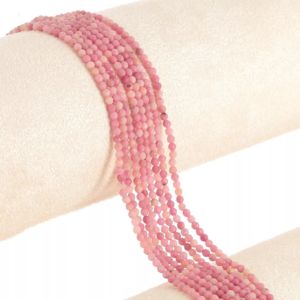
Pink jasper is a variety of jasper whose color ranges from pink to pale pink. It has a hardness of between 6.5 and 7 on the Mohs scale.
This natural stone was used in ancient Egypt and Greece for protective amulets and talismans. Today, this pink stone is still appreciated for its subtle beauty in pink costume jewelry and decorative objects.
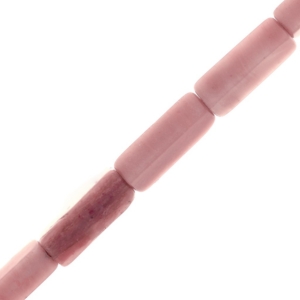

Morganite is a natural stone of the Beryl family. Its pastel hue, oscillating between pink and peachy pink, evokes tenderness and softness. It's the ideal gemstone for creating women's jewelry. It has a hardness of between 7.5 and 8 on the Mohs scale, making it a relatively hard stone.
Throughout history, morganite has been used to make jewelry, especially engagement rings, because of its romantic color. Today, this gemstone continues to be used to create elegant jewelry.

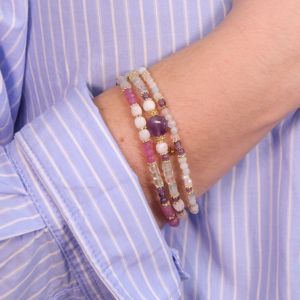

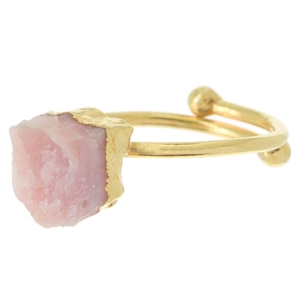
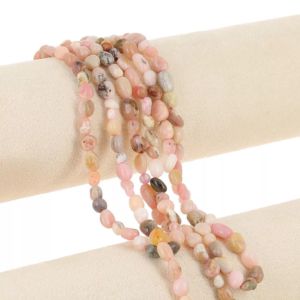
Pink opal has a captivating color, ranging from light, pleasant pale pink to bright pink, through shades of peach and salmon pink, with shimmering reflections and delicate nuances. Its hardness ranges from 5.5 to 6.5 on the Mohs scale.
William Shakespeare called it "the queen of gems". Its unique beauty and bewitching play of colors add a touch of elegance and mystery to DIY costume jewelry.
Please note: our gemstones are not sold for lithotherapy. The effects of stones have not been scientifically proven. Natural stones are no substitute for medical expertise or treatment.

Rhodonite often features black flecks of manganese, while Rhodochrosite has characteristic white bands. The former is more opaque, the latter can be more crystalline.
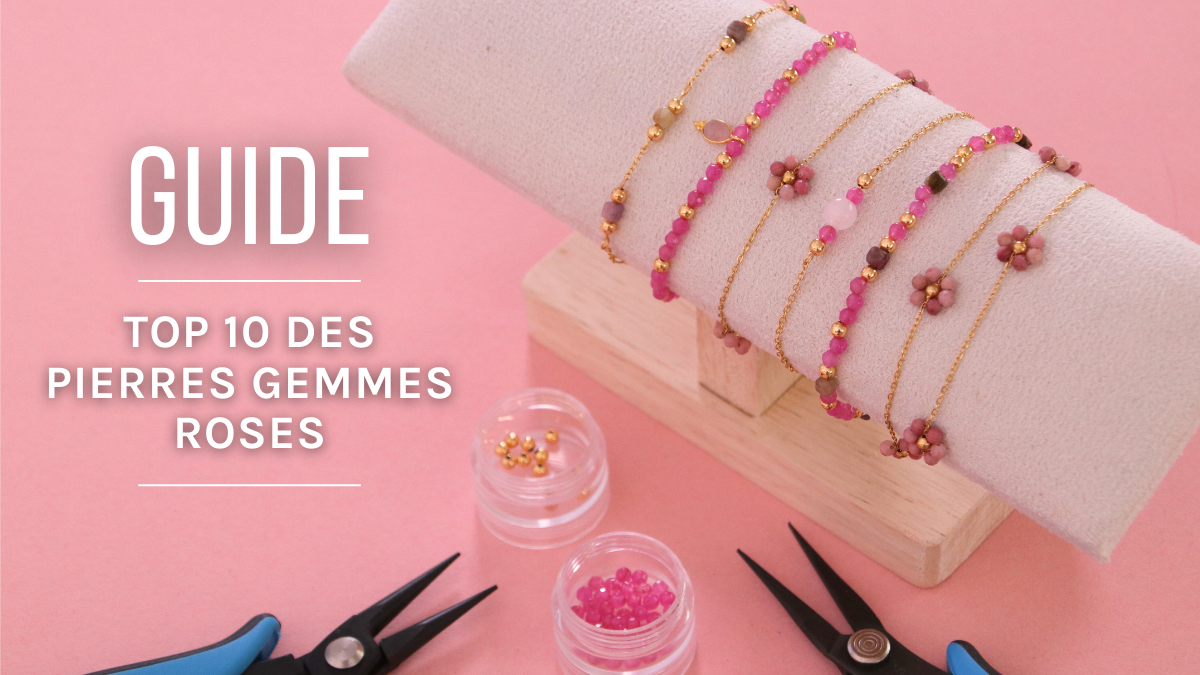
Pink gemstones are perfect for creating fresh, luminous jewelry:
Credits
Perles & Co, Internet & E-Commerce company [25/03/2026] Any reproduction, representation, adaptation, in any form whatsoever, even partial, is prohibited, except for reproduction for private use not intended for collective use, representation in the family circle (art. L 122-5 CPI) and online publishing on condition that the source is mentioned and a link is included to the corresponding page of our site www.perlesandco.com.