Average Grades
Free shipping on orders over 50€ up to 500g
French Online shop for beads and accessories for the creation of DIY jewellery and other creative hobbies
Log-in
0
Shopping cart
Shopping cart
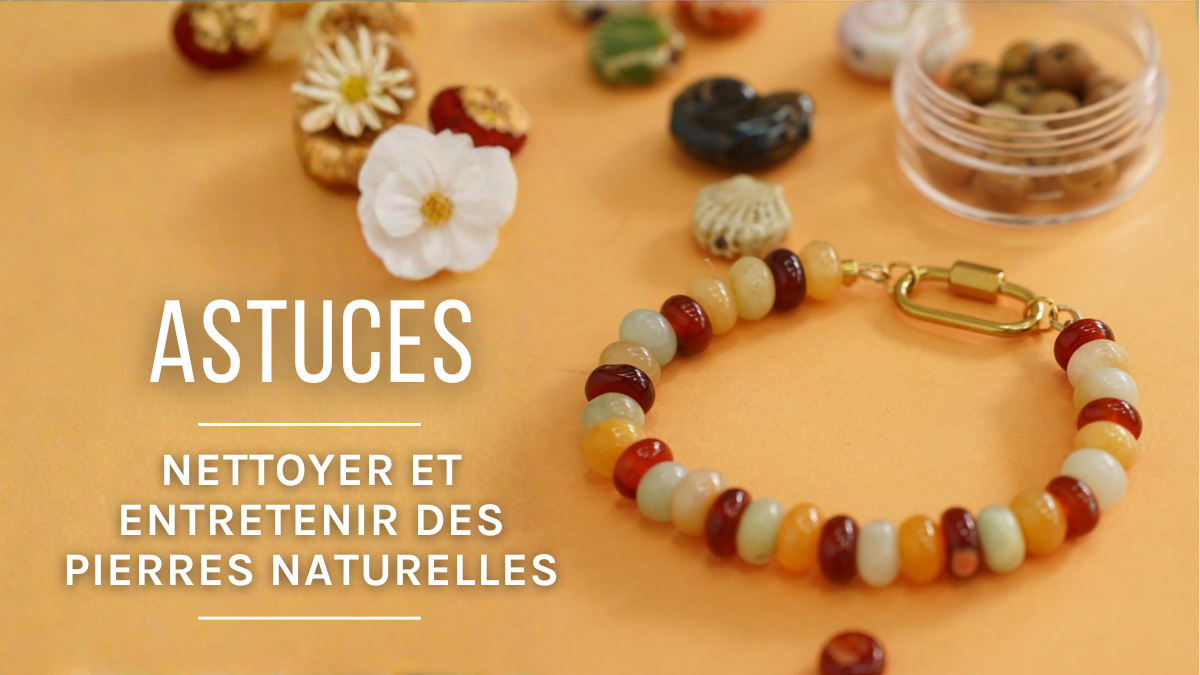
To maintain the brilliance of your natural stone jewelry, it's essential to adopt simple gestures adapted to each type of stone. Avoid chemicals and ultrasound, preferring gentle cleaning with lukewarm water and mild soap, and don't forget to store your jewelry separately to avoid scratches.
You've created or invested in beautiful natural stone jewelry, and you want to keep it looking as good as new? Good news: caring for your creations doesn't require expensive products or special skills. Just a few simple gestures!
Why do natural stones require special care? Unlike stainless steel or gold, natural stones are living materials, some porous, others fragile. Their mineral composition varies enormously from one stone to another: what's perfect for an amethyst may damage a malachite or tarnish a lapis lazuli.
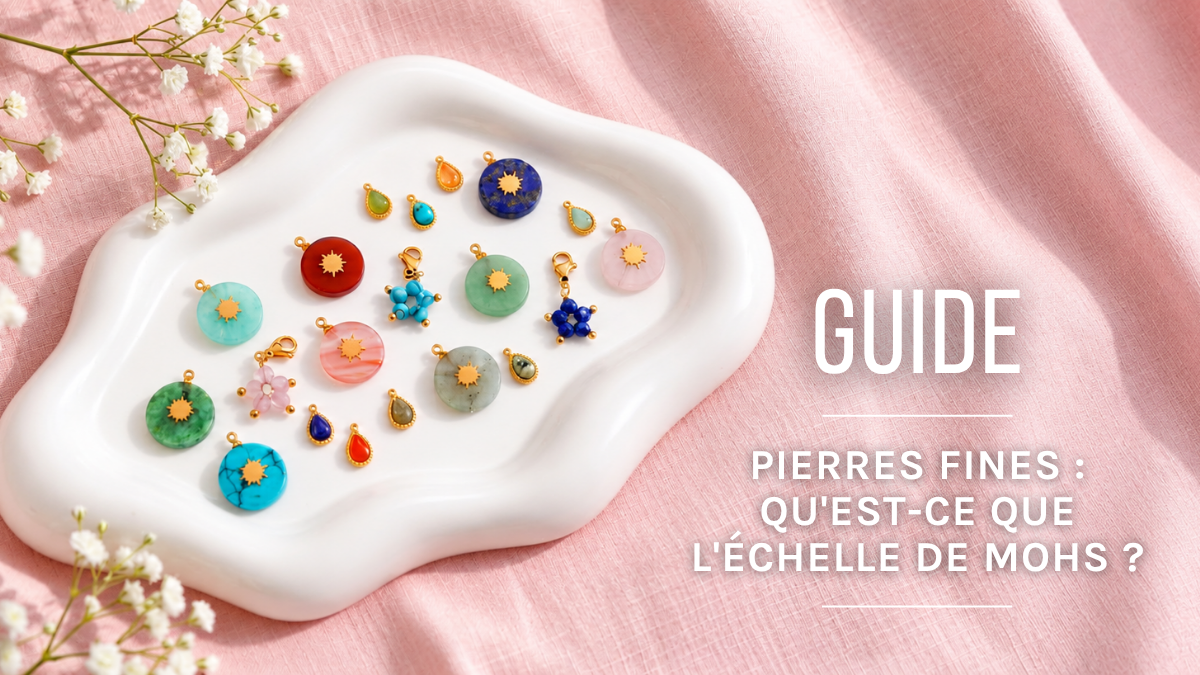
Before cleaning, you need to know two things: the hardness of your stone (expressed on the Mohs scale, from 1 to 10) and its porosity. These two criteria determine everything.
Whatever the stone, certain principles apply universally:
For the vast majority of stones, here's the gentle method that works:
What you need:
Method:
Please note: do not leave your stones to soak.
Some stones require additional precautions. Here are the main ones:
Highly porous stones (clean dry or with a slightly damp cloth only):
For these stones, water can alter the color, cause staining or weaken the structure. A soft, slightly damp cloth will suffice.
Stones that do not cope well with temperature changes:
Stones that react to acids:
Cleaning gemstone jewelry also depends on your setting, not just the stone:
The best care is often preventive:
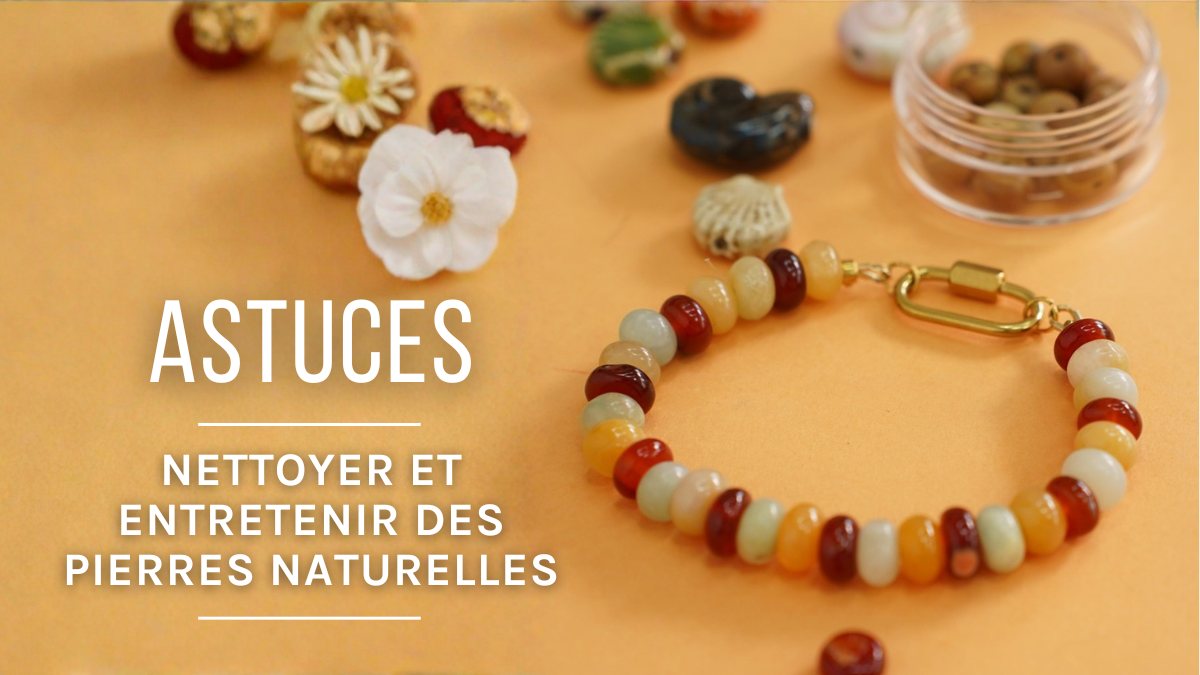
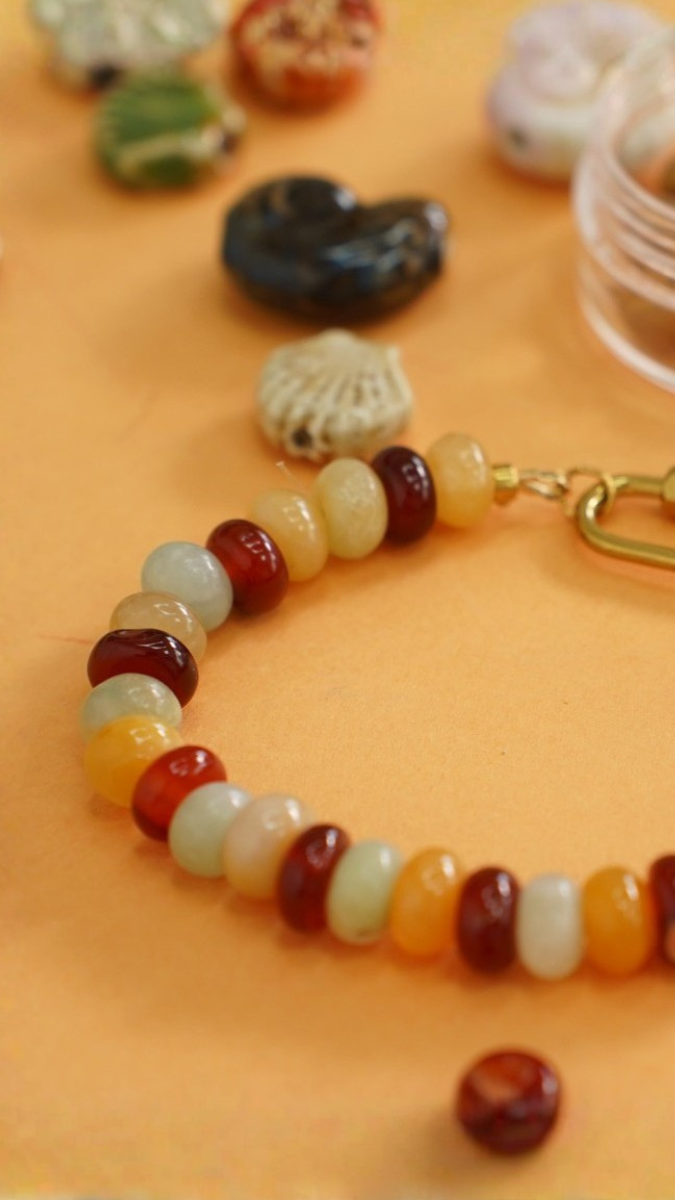

Unlike glass or plastic, natural stones have unique chemical and physical properties. Their hardness (measured on the Mohs scale) and porosity determine how they react to their environment. These factors will have an impact on how they are cared for.
No, this is not recommended. Baking soda is slightly abrasive and basic, which can dull some stones or damage soft metal mountings. Warm water + mild soap is the safest method.
Remember this simple guideline: a stone below 5 or 6 on the Mohs scale is generally considered soft and often porous. Turquoise, malachite, opal, calcite, selenite, lapis lazuli - all these stones deserve particular caution when it comes to water. When in doubt, consult the stone's data sheet or always opt for the dry method.
Credits
Perles & Co, Internet & E-Commerce company [05/03/2026] Any reproduction, representation, adaptation, in any form whatsoever, even partial, is prohibited, except for reproduction for private use not intended for collective use, representation in the family circle (art. L 122-5 CPI) and online publishing on condition that the source is mentioned and a link is included to the corresponding page of our site www.perlesandco.com.