
Fimo Polymer clay
Are you a fan of arts and crafts? Fimo clay is THE perfect polymer clay! Available in several ranges for kids, pros, no-bake, etc., there's something for everyone. Discover all the colors and effects available and get started on your DIY creations.





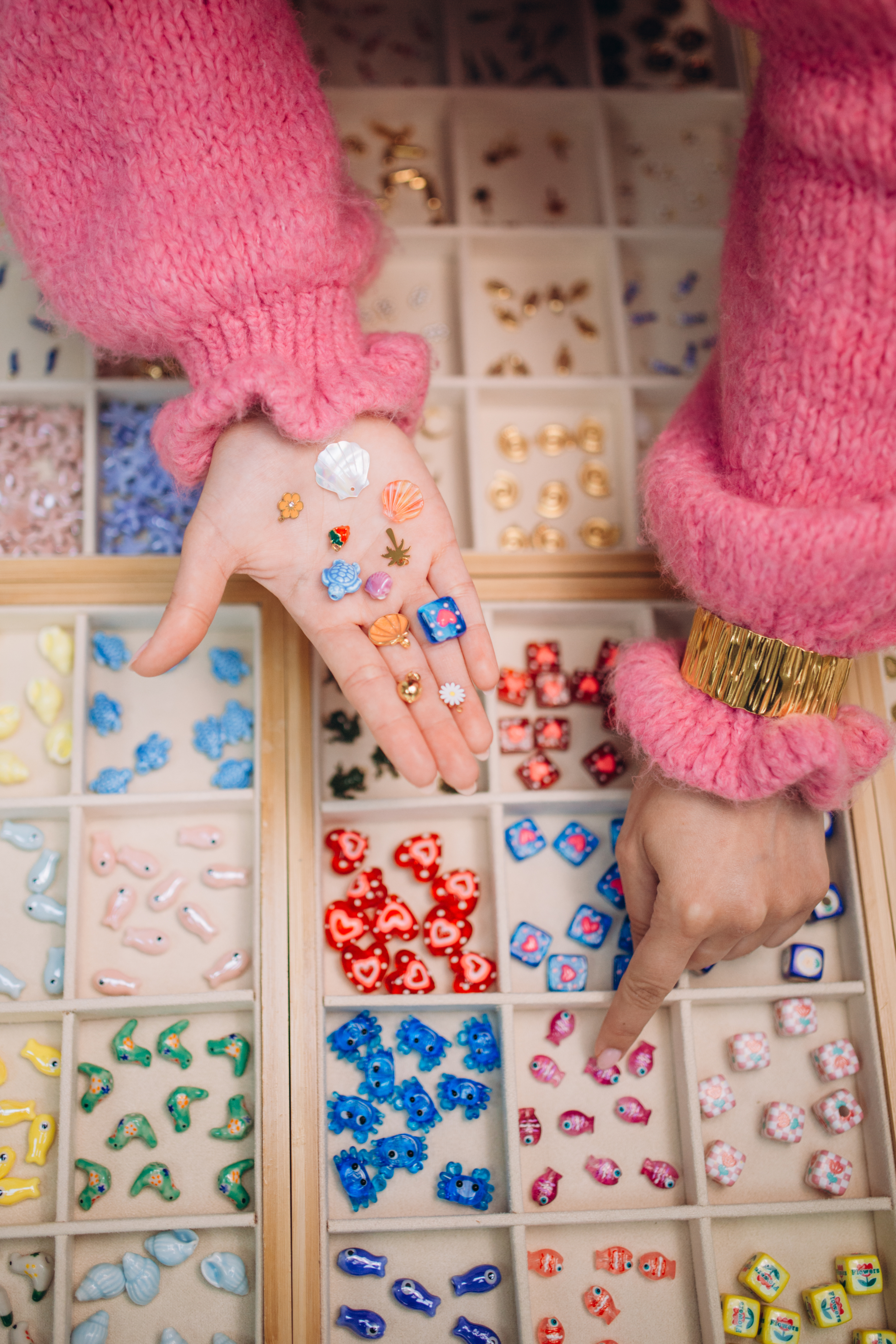
Fimo clay is one of the best-known polymer clay brands in France, created by Staedtler, but there are many others: Cernit, Sculpey, Kato Polyclay...
Choosing the right Fimo clay
There's a wide selection of Fimo ranges, including Soft, Pro, Fimo effect and many others. In fact, the Fimo brand has an extremely wide range of colors andeffects that can be mixed together, and there are even semi-translucent and phosphorescent clays...:
- Fimo Soft: this is Fimo's basic clay, available in rather classic shades, yet covering the whole range of colors perfectly. This clay is elastic enough to be spread thinly.
- Fimo Effect: identical to Soft in texture and use, Fimo Effect offers pearlescent, glittery, pastel, metallic, transparent and phosphorescent effects that would be impossible to reproduce with a simple clay mix. Beware: there are major differences in appearance before and after firing!
- Fimo Pro: replaces Fimo Classic. It is firm and less flexible than Soft or Effect. It is the most resistant to firing in the range and can be mixed with all other Fimo clay.
- Liquid Fimo : liquid and transparent, it becomes soft and flexible after firing. It is used in particular forimage transfers, glazing and depth effects.
- Fimo Air: Fimo's no-oven polymer clay hardens in the open air. Works like clay.
- Fimo Kid: softer and easier to work than all other Fimo clays, ideal for introducing your children to polymer clay.
Fimo can be painted, or decorated with microbeads, powders or inks to give different effects of materials, colors and textures.
For a professional finish, you can sand and polish your creations.
Use molds, texture plates, silkscreens and cookie cutters to create stunning patterns!
Get inspired by our polymer clay tutorials to make animals, jewelry or decorative objects.
Fimo clay beginner?
Discover the essential equipment you need to get started with polymer clay. Our tips and technical sheets will help you make beautifuljewelry with Fimo clay and polymer clay.
Learn how to soften Fimo clay, bake it, work it, texture it... as well as all existing techniques such as marbling, shading or millefiori.
Find Fimo clay
Look no further! On Perles&Co you'll find all the Fimo pastes available, as well as all the modeling tools, inks, texture plates, silkscreens, varnishes and glues you need to make objects in polymer clay.
What is Fimo clay?
It's a modeling clay that can be used to make DIY costume jewelry and decorative objects, such as pendants, earrings, cabochons, key rings, figurines, ornaments... Once worked, the clay is placed in the oven to harden.
How to bake Fimo clay?
- Work on a tiled plate or silicone mat.
- Arrange your creations on the baking sheet.
- When the oven is at 120°, place your models in the oven for 30 minutes.
- Once the 30 minutes have elapsed, remove the baking tray from the oven.
- Remove your creations from the baking tray and leave to cool.
- Leave the oven door and window open for ventilation.
Is it necessary to bake Fimo clay?
Classic Fimo clay requires time to bake. However, if you don't have an oven or prefer a no-bake activity, you can use Fimo Air clay, which is self-hardening and air-dries without the need for baking.
Which polymer clay is right for kids?
Fimo Kids clay is made for children. It's a range of polymer clay that's softer and easier for children to handle.
Is it possible to make jewelry with polymer clay?
Yes, polymer clay such as Fimo is ideal for jewelry-making. You can make earrings, pendants, beads, cabochons and even decorative accessories.