There are obviously a lot of tools and accessories of all kinds around polymer clay. As you experiment and create, you will add to your stock of materials according to the techniques and renderings you choose to test. However, a certain number of elements will remain essential. Here is the list (not exhaustive, of course) of the basic material to possess in order to correctly create a piece of jewelry from A to Z.
We will distinguish the tools and accessories according to the different stages of manufacturing a piece, namely the manipulation of the raw material, the treatments following the firing and finally the assembly.
Essential equipment for raw polymer clay
The work support
You can work on tiles, glass or on a modeling mat.
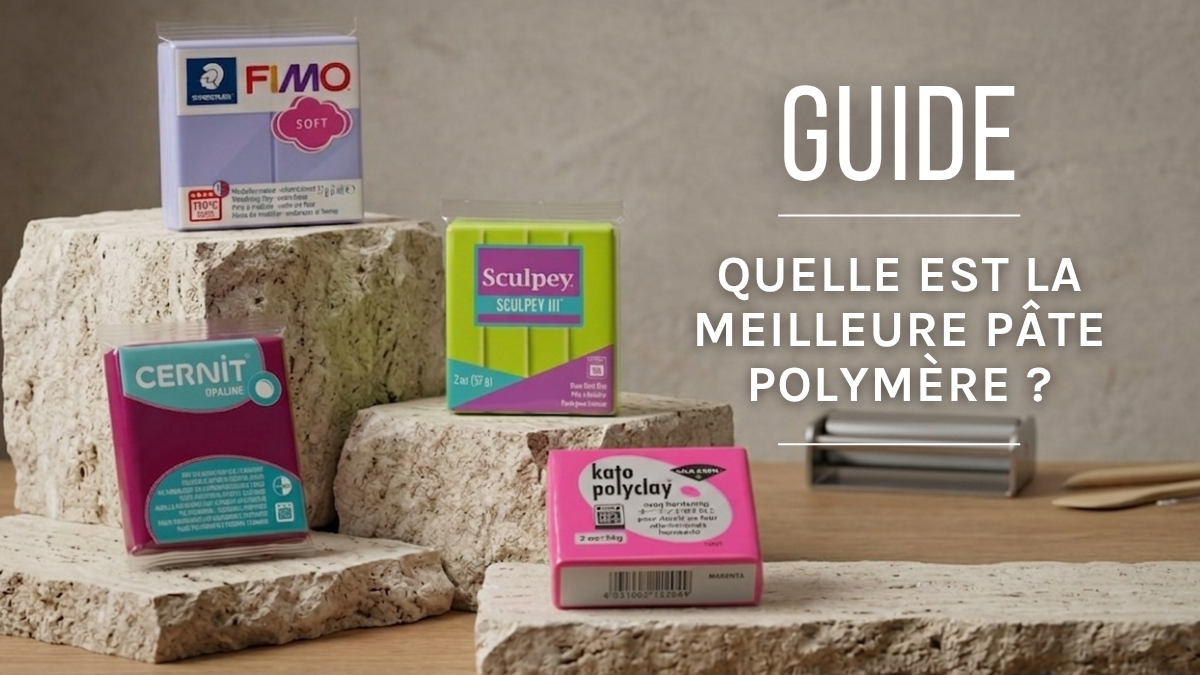
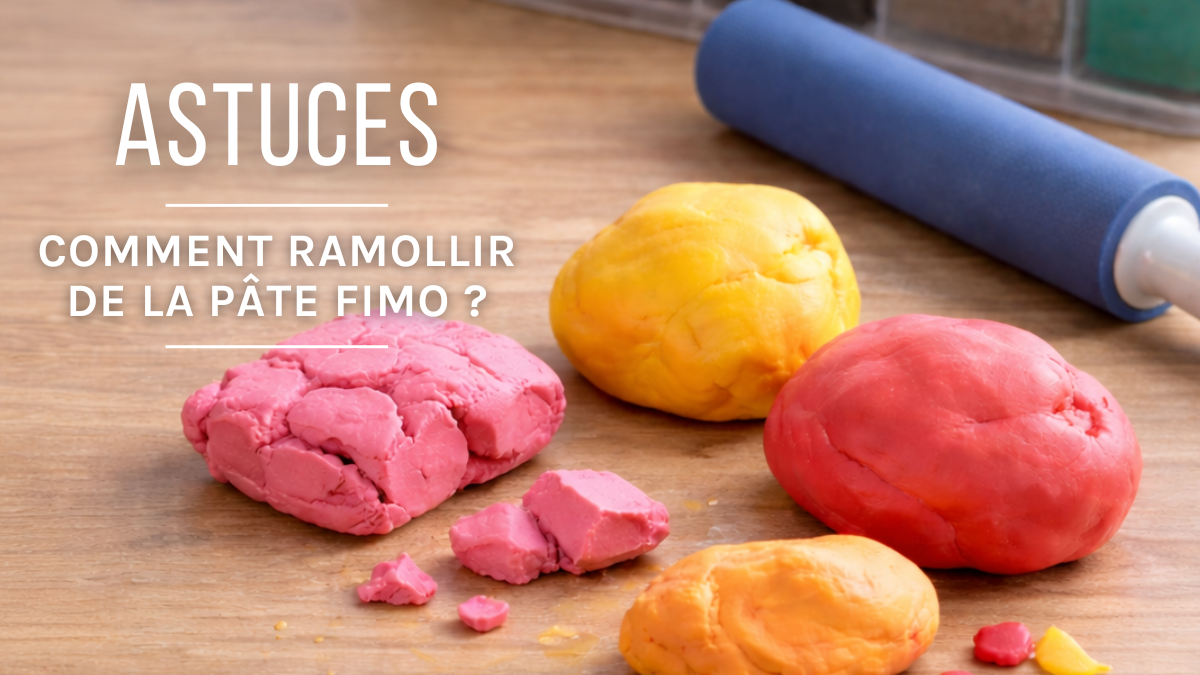
The polymer clay
You will find several brands(Fimo, Cernit, Sculpey) which all have distinct products in different packaging to best suit your needs.

The Dough Machine
The dough machine saves time and will allow you to achieve more regular work surfaces. This machine has different thickness settings. It is ideal for obtaining thin and regular plates, as well as for achieving effects such as crackle or hidden magic, but also precise striped blocks and of course, gradients. The latter being the basis of the great majority of patterns and canes, this paste machine will quickly become indispensable. (recommended brand: Imperia)

The roller
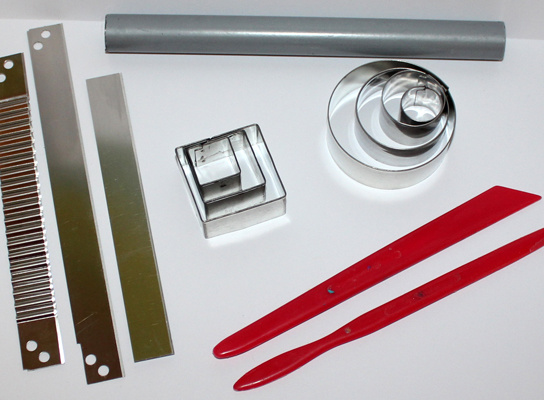
Plastic or stainless steel to roll out the dough. (for intensive use, prefer the stainless steel roller).
Sharpened blades
In order to cut your pieces cleanly during your creations, use the blades. You will find straight and wavy, rigid and flexible blades.
Smoothing tools
Do the junctions between your designs and your fingerprints show up all over your piece? Consider using a shaping tool to smooth the surface of your beads through parchment paper. You can finish by using a roller.
The cookie cutters
There are, of course, a large number ofcookie cutters of all shapes and sizes, but it is strongly recommended to have the basic sets of round cookie cutters (which allow you to make a variety of shapes).However, it is highly recommended to have the basic sets of round cookie cutters (which allow you to make almonds, moons and many other cuts) andsquare cookie cutters (perfect for arranging a striped block while saving waste).
Parchment paper
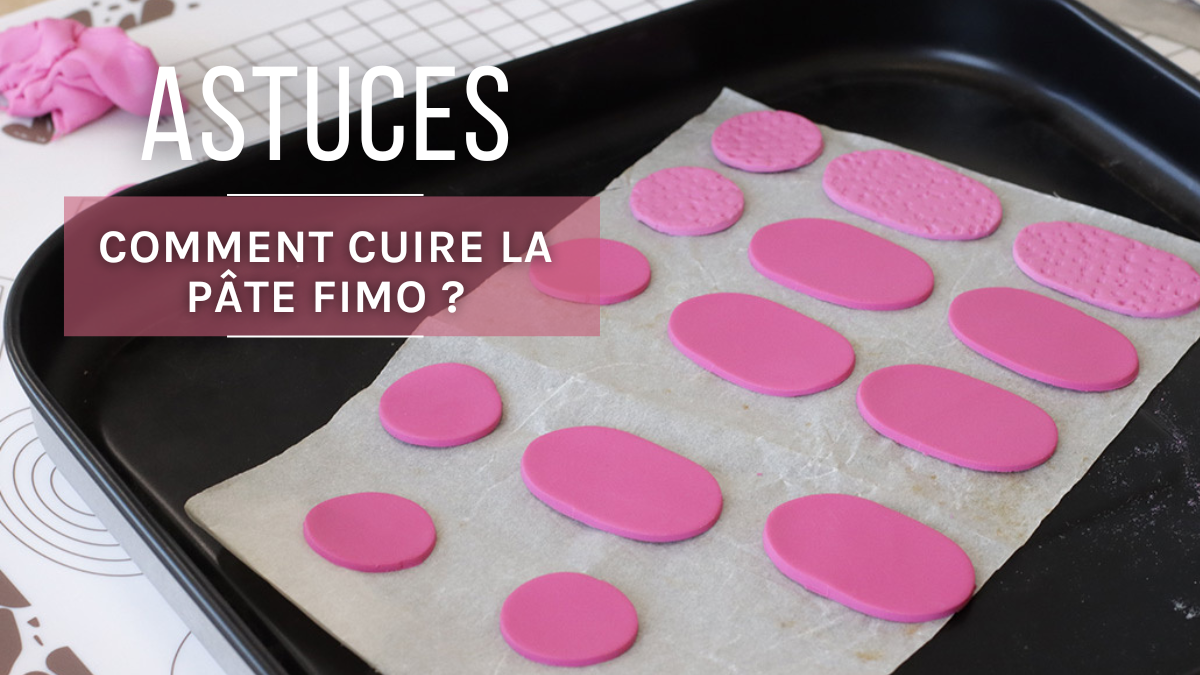
This is great for covering your work surface to make it easy to peel off the polymer clay, for smoothing the surface before baking and for the baking itself.
Latex gloves
Working with gloves is not very comfortable at first, but if you want to handle this material often, keep in mind that prolonged contact with the raw clay on your skin can be toxic.
Needles
In order to properly pierce your beads, and in case you don't have anything to pierce with once you've finished baking, choose thin and regular piercing needles instead of wooden toothpicks which tend to crush the bead and not pierce properly.
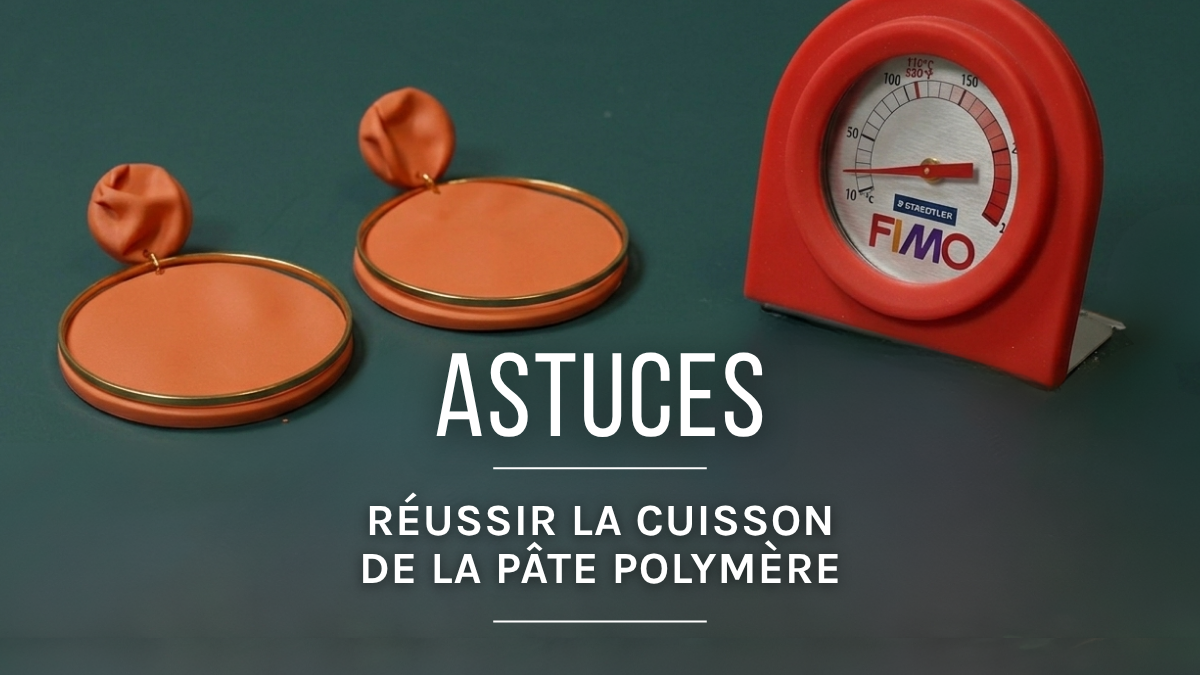
The baking tray: a drip pan alone is not always enough, it browns the parchment paper and has a surface that is not always very smooth. An earthenware or ceramic dish covered with parchment paper or a small smooth tile (always covered with paper) will do the trick. Otherwise, you can opt for adapted bakingracks.
Essential equipment after baking polymer clay
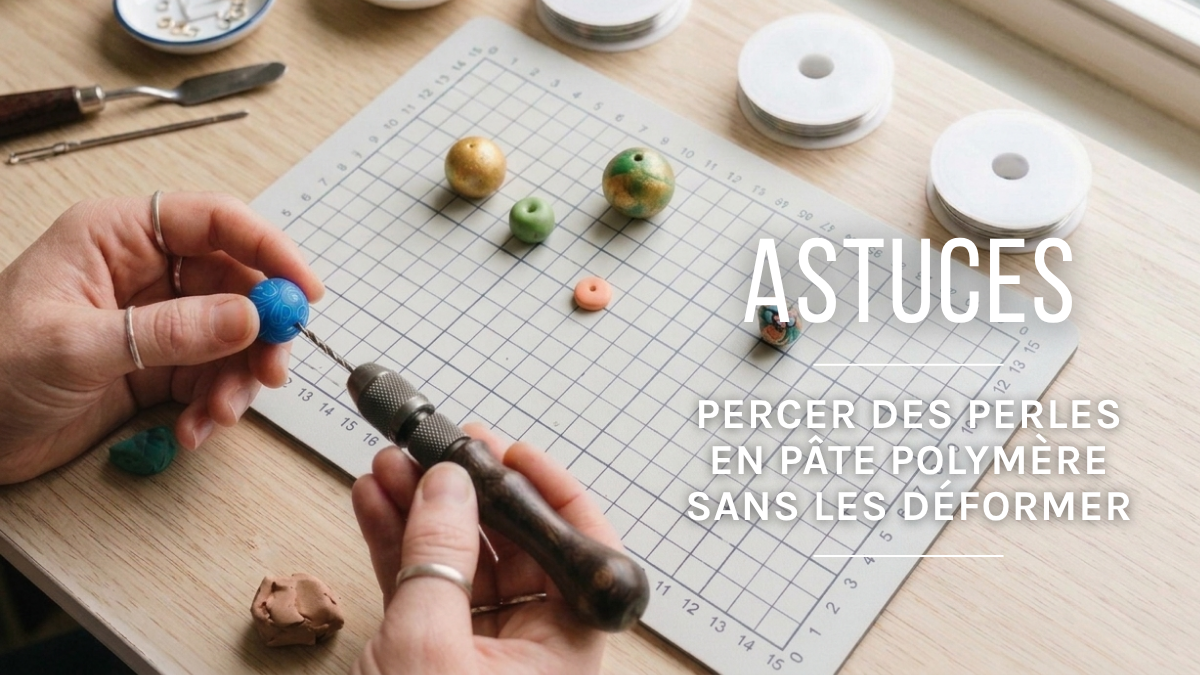
Drilling tools
If your beads are not yet drilled, use a Dremel drill or a hand chuck. This is a kind of screw that will sink into the hardened clay as you turn it. (Tip: Pre-pierce your raw clay to prevent your creation from splitting).
The material to be sanded
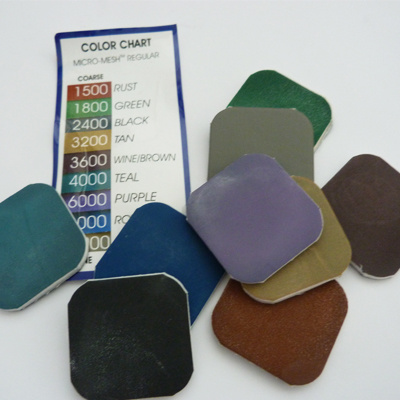
Whether you want a varnished or glossy finish, you will quickly need to go through the sanding stage. In addition to properly smoothing the surface of your pieces, sanding allows you to erase any traces and dirt that may have soiled the clay before firing. Between body paper, abrasive sponges, polishing blocks and Poly-Fast, you will inevitably find the approach that suits you. The principle remains the same as it is to rub the part (usually using water) with an abrasive surface. You should start with the largest grit available and end with the finest. You will find in this video all the necessary gestures and tools for sanding and polishing.
The polishing material
Use Micro Mesh for a soft and matte look without varnish.
Varnishing accessories
If you don't want to polish, if you are still a little afraid of the technique and if you are looking for the look of the varnish, arm yourself with a brush and a matte or gloss varnish. These are usually acrylic varnishes which have the advantage of being cleaned with water. Place your beads on toothpicks and then stick them on something to let them dry (block of foam, pieces of yuck dough, weighted polystyrene). Remember to follow the instructions on the bottle, including drying times between layers.
Material for the assembly of polymer clay
In order to make simple, but effective and aesthetic assemblies, it is important to arm yourself with some essential accessories:
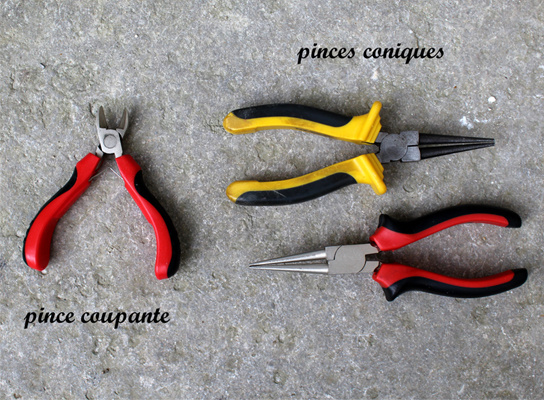
- A pair of cutting pliers in order to adjust the length of nail rods, wires and chains of all kinds.
- Two conical pliers to form the loops that will allow to hang earrings, for example, but especially to open and close correctly the open rings. There are several types of round pliers that mark the metal wires to a greater or lesser extent, so it's up to you to choose what suits you.
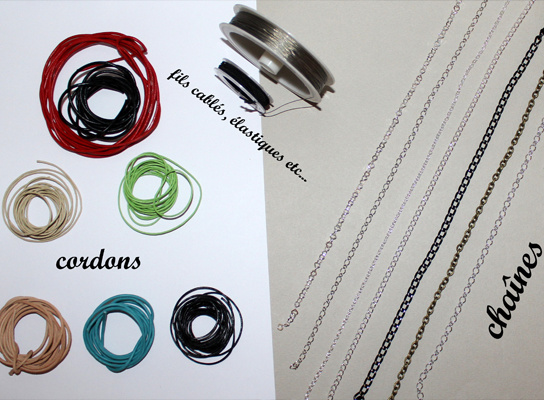
- Wires or chains: depending on your choice of assembly, you will need to provide yourself with the corresponding finishing tips. For example, beads for leather links, beads to hide knots for fine wires and simple open rings for chains.
- Clasps: snap hooks, spring clasps, magnets, etc. There are many different kinds and sizes, so you can choose.
- Earrings
- Studs: ideal for the simple realization of dangling earrings.
- Rings: depending on the thickness of the steel that forms the ring and its diameter, the difficulty to handle it will be more or less great. The smaller the diameter and the thicker the wire, the more strength and precision the ring will require. Sometimes a little tricky to handle at first, open rings will quickly become indispensable.
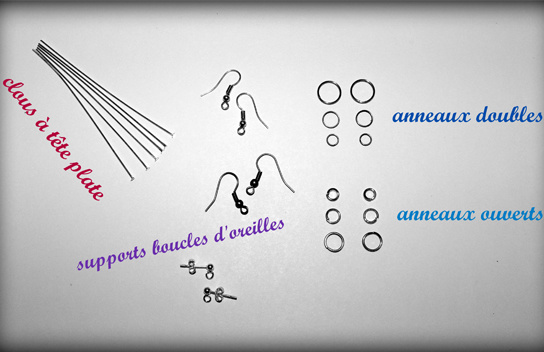
When ordering, be sure to check the size scale of the products you wish to purchase, especially for clasps, chains and rings.
You are now perfectly equipped to start creating the pieces that will be born from your imagination or from the tutorials that you can follow. Good luck with your creations!
Copyright Perles&co