Average Grades



Buongiorno, vorrei sapere che terminale usare per un braccialetto peyote con delica 11/0 di 10 file.
1 Answer
Show answers


Weaving end caps are essential for finishing your jewelry creations, such as bracelets. It is crucial to choose the appropriate size based on the type of weaving technique used—whether on a loom, in peyote stitch, or herringbone—to ensure a good fit and a neat finish.
Weaving end caps allow you to neatly finish a woven piece and turn it into jewelry, particularly a bracelet. However, it’s important to choose the right size based on the type of weaving you’ve done. This guide will help you make the right choice and adjust your work if necessary.
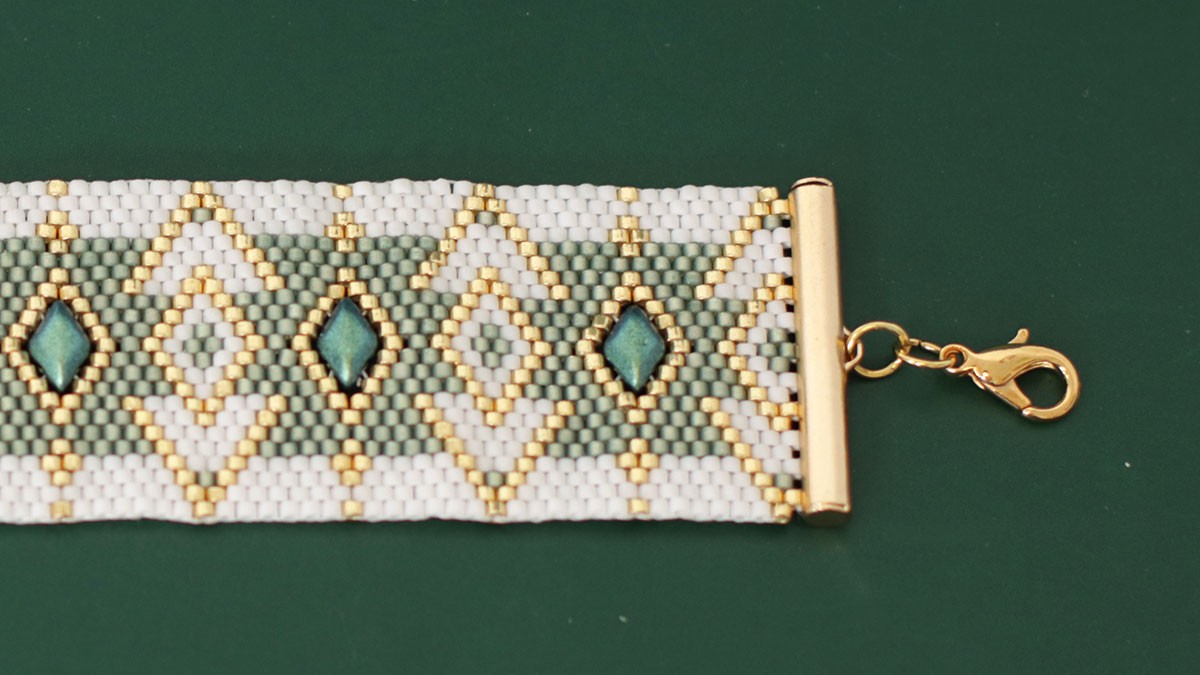
Weaving end caps can be used for various techniques:

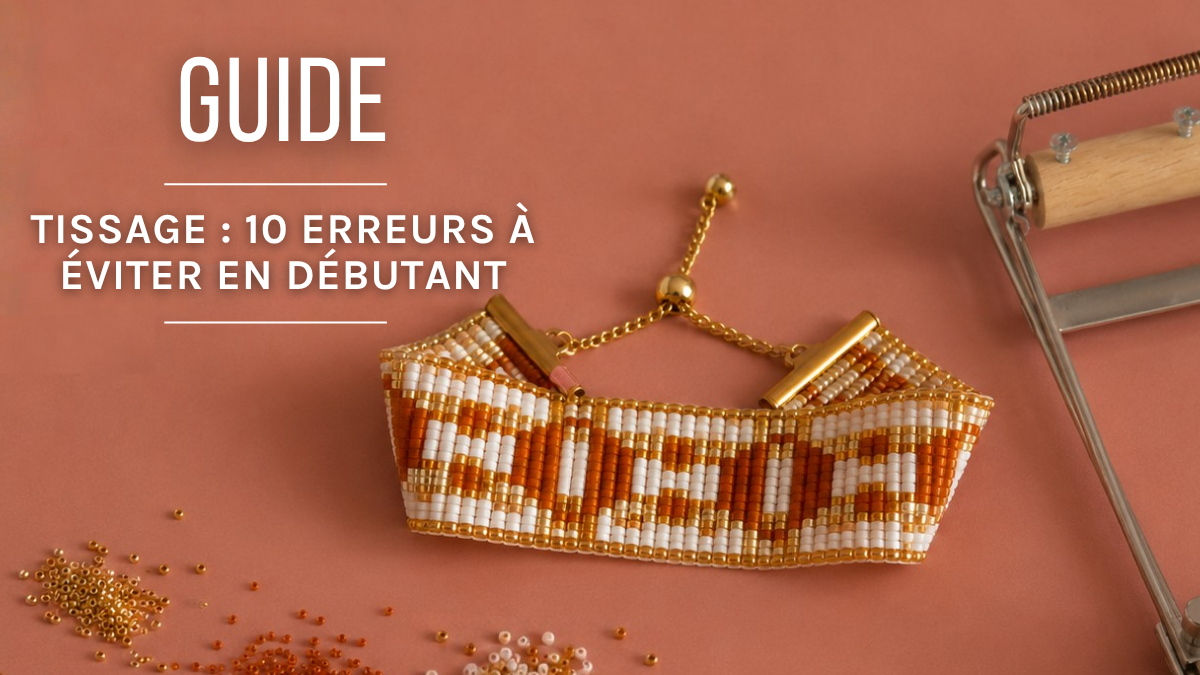
Mocha Mousse Bracelet Made on a Weaving Loom

The values below are provided for reference only. Generally, a Miyuki Delica 11/0 bead is 1.3 mm tall. Several factors can affect the width of the weave:
In any case, it’s better to choose a bead cap that’s slightly smaller than the weave than one that’s too large. Whether weaving on a loom or using a needle, it is possible to decrease the number of beads on both sides of the bracelet, thereby adapting it to a smaller end cap.
The measurements listed in the guide are for reference only, as several factors can affect the width of a weave: the finish of the beads, the thickness of the thread used, and the tension of the weave. A looser weave may result in a width slightly narrower than expected.
| End Cap Sizes | Number of Miyuki Delica 11/0 beads across the width |
| End caps 5 mm weaving tubes | 3 |
| 7 mm weaving tubes | 5 |
| 8 mm gold-plated stainless steel tube ends | 5 |
| 10 mm Tube End Caps, Gold-Plated Stainless Steel | 7 |
| 13 mm Gold-Plated Stainless Steel Tube End Caps | 9 |
| 15 mm Tube End Caps | 10 |
| 16 mm Gold-Plated Stainless Steel Tube End Caps | 11 |
| 25 mm Tube End Caps, Gold-Plated Stainless Steel | 17 |
| Tube End Caps, 26 mm | 18 |
| 30 mm Tube End Caps | 21 |
| 35 mm Tube End Caps, Gold-Plated Stainless Steel | loom: 24 - peyote: 25 |
| Tube End Caps 40 mm | loom: 27 - peyote: 29 |
| 60 mm Tube End Caps | loom: 42 - peyote: 45 |
It’s possible that the width of your weave doesn’t exactly match the available end cap sizes. In that case, it’s best to choose a smaller end cap and slightly reduce the width of your weaving by gradually tapering the first and last rows. This will ensure a secure fit and a neat finish. Here’s a video showing how to taper on a loom:


Credits
Perles & Co, Internet & E-Commerce company [13/03/2025] Any reproduction, representation, adaptation, in any form whatsoever, even partial, is prohibited, except for reproduction for private use not intended for collective use, representation in the family circle (art. L 122-5 CPI) and online publishing on condition that the source is mentioned and a link is included to the corresponding page of our site www.perlesandco.com.