Average Grades
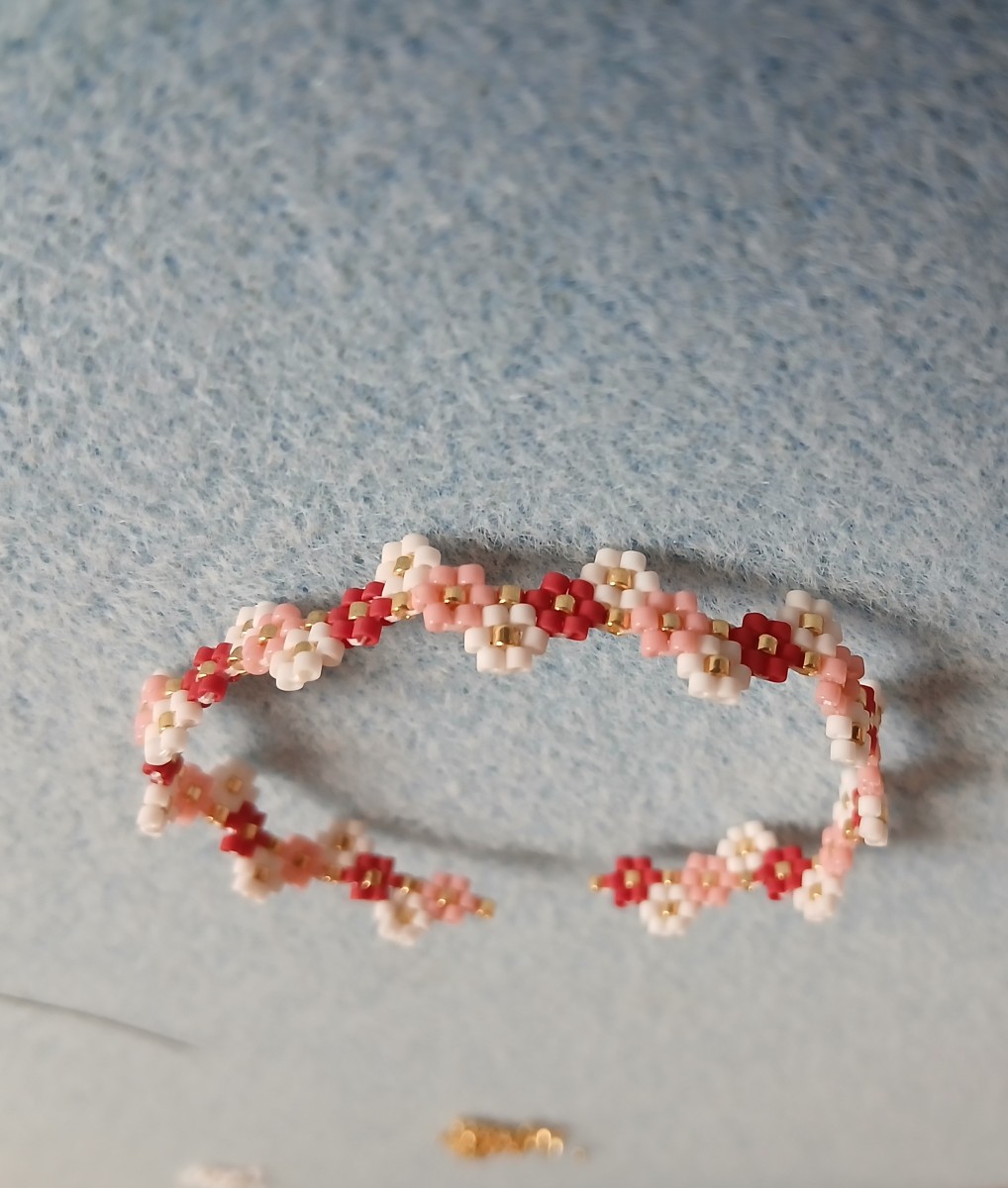
Bonjour, je n'ai pas encore posé la chaînette fermoir, mais le rendu est top. Merci pour vos vidéos qui nous permettent d'acquérir les bases du tissage de perles !

Brick Stitch is a needle weaving technique that allows you to create bead patterns without needing a loom. Ideal for making jewelry such as earrings or bracelets, this method is characterized by its brick-wall-like pattern and requires uniform beads for a harmonious look.
Brick Stitch is a technique for weaving beads with a needle. You don't need a loom to weave your beads. All you need is weaving thread and a weaving needle. Brick Stitch is a needle weaving technique in which beads are joined together to create a brick wall effect. This stitch is often used to make jewelry, such as earrings, bracelets or pendants, but also for decorative motifs to make brooches.
General view of a Brick Stitch weave, showing the beads arranged like a brick wall:

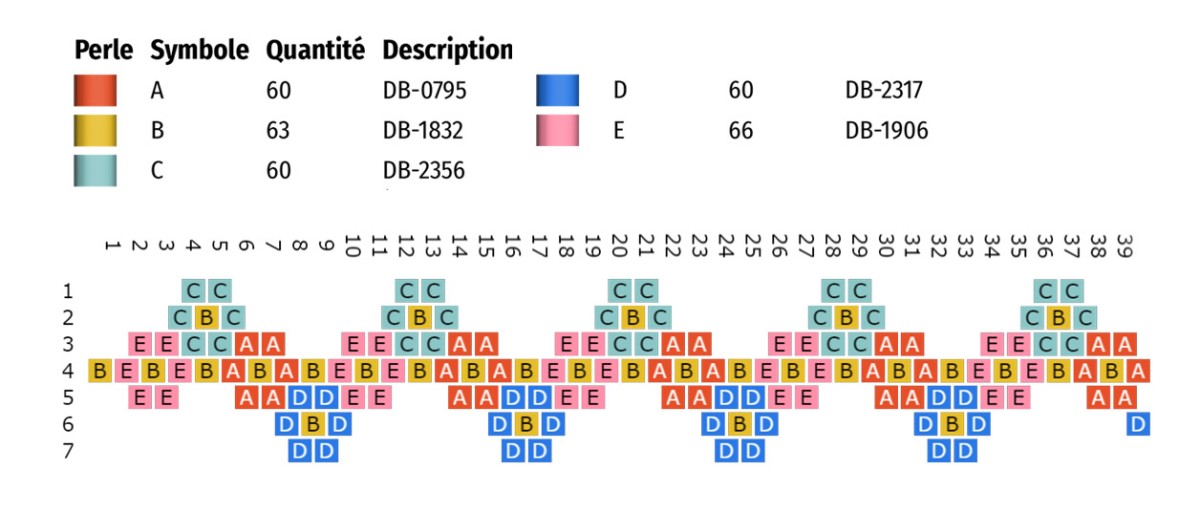
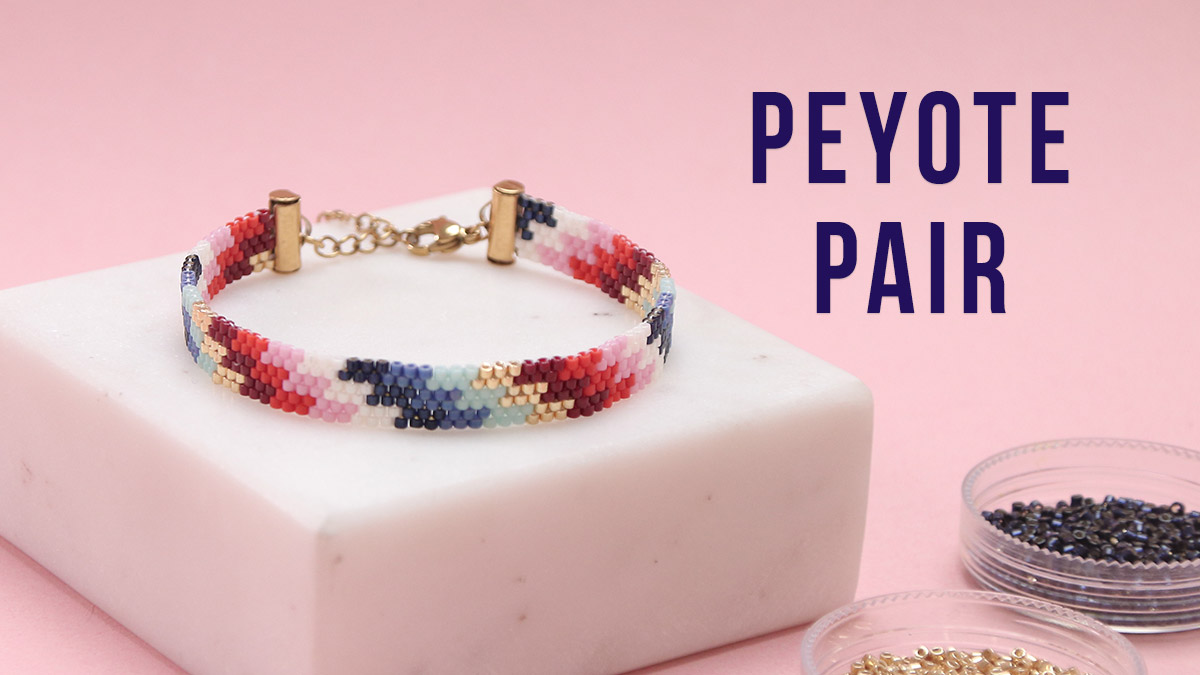
Find the materials and diagram for the Brick Stitch Flower Bracelet in the video at the bottom of the page.
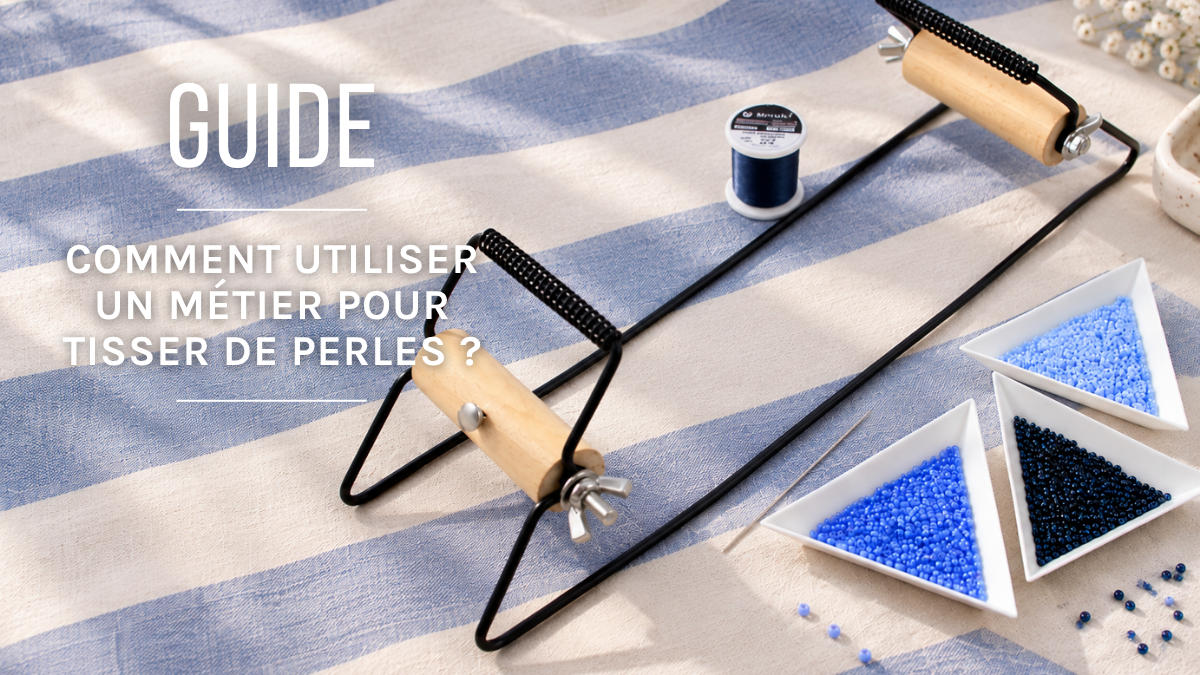
The first episode of our beginner's weaving course was devoted to equipment and general information on needle bead weaving. If you haven't already done so, go here to watch the video and read the article: Basic materials for bead weaving. To sum up, here are the materials you'll need to complete a Brick Stitch project:
You can adapt these tools to suit your preferences or the type of project you wish to carry out. To make a jewel or brooch, you'll need to add accessories, also known as "jewelry primers", such as rings or jewelry fasteners.
Brick Stitch weaving always begins with weaving the longest row of beads in the pattern.

The first row of a Brick Stitch weave is done differently from the others. It's done using a technique called Ladder Stitch. Thread two beads onto your needle and pass through the first bead again to align them side by side. Pass through the beads a second time to solidify the weave.

Continue weaving the next beads one by one. To do this, thread a new bead and then pass the needle through the previous bead. If the thread was coming out of the bottom of the previous bead, pass through the top into this bead, if the thread was coming out of the top, pass through the bottom. The two beads are placed side by side. Pass back through both beads to solidify the weave. Continue like this until you reach the end of the main weaving line.

Once you've completed the first row, you can start Brick Stitch. Thread two beads, then pass the needle under the thread that connects two beads from the previous row. Then pass the needle back through the second bead you've just threaded to secure it in place. The first bead is automatically secured. Subsequent beads are attached one by one. For each new row, weave the first two beads in the row at the same time.


When you start a new row, you do either a decrease or an increase in Brick Stitch. An increase occurs when the second bead is attached next to the bead in the previous row from which the thread exits. It's a decrease if, on the other hand, the second bead is attached further away, i.e. if there's another bead between the second bead's attachment point and the bead of the previous row from which the thread exits.
Increase in Brick Stitch :

Decrease in Brick Stitch:

In the case of a decrease, the two newly woven beads need to be ironed so that they lie side by side.

Change the thread as soon as it begins to show signs of wear and/or as soon as it is less than 10 cm long. To change the thread, you'll need to go back through the beads in the weave so as to wedge the thread. Pass through the beads adjacent to the bead from which your thread is coming, and through the beads diagonally to it, so that you can't see the thread above the beads. Pull on the last bead you've threaded to check that the first thread is trapped. Cut the thread flush. Take a new thread and clamp it in the same way. Keep the end of the thread in your hand to prevent it from slipping off when you pull.

You can start by exploring simple patterns such as lozenges, chevrons or triangles. These basic shapes are perfect for creating colorful earrings or pendants. As you progress, you can try your hand at more complex designs, such as animal figures or nature-inspired motifs.





Credits
Perles & Co, Internet & E-Commerce company [26/09/2024] Any reproduction, representation, adaptation, in any form whatsoever, even partial, is prohibited, except for reproduction for private use not intended for collective use, representation in the family circle (art. L 122-5 CPI) and online publishing on condition that the source is mentioned and a link is included to the corresponding page of our site www.perlesandco.com.