What are Toho Aiko beads?
Toho Aiko beads are high-quality Japanese cylindrical glass beads, specially designed for bead weaving. Toho is the name of the manufacturer and Aiko the name of these cylindrical beads. They are manufactured on ultra-modern precision machines and are distinguished by their exceptional regularity. Each bead measures approximately 1.3 mm in the direction of the hole and 1.6 mm in diameter, making them slightly larger than the classic Miyuki Delica (11/0). Their large hole allows the thread to be passed through many times with the needle, which is particularly appreciated in projects requiring several passes of thread.
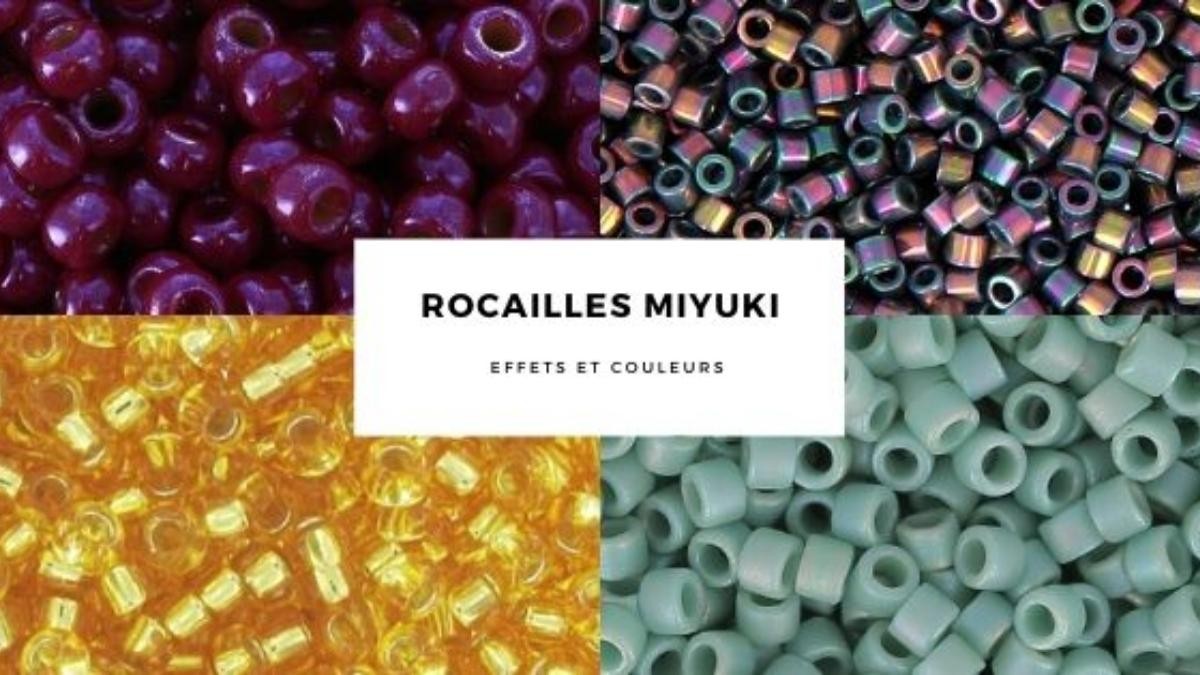
These beads are available in a wide range of colors and finishes. Have a look at our selection of Aiko bead colors and effects. Toho Aiko beads are often referred to as "the perfect cylindrical beads", as they guarantee uniform, harmonious creations, whether for jewelry, accessories or decorative objects.
Toho Aiko should not be confused with Toho Treasures. Although these beads are cylindrical and come from the same manufacturer, Treasures are often of comparable quality to Delica and are not exactly the same size as Aiko. Treasures are either 1.8 mm or 3.3 mm in diameter.
The letters PF added to the Aiko reference stand for PermaFinish. Example: TA01PF559 - PF. This is a varnish applied by the manufacturer. Miyuki's equivalent is "Duracoat".
Why use Toho Aiko rather than Miyuki Delica?
While Miyuki Delica are well known for their quality, Toho Aiko stand out for their even greater precision. Their slightly rounded edges make it easier to position the beads when weaving, especially on a loom, where their regularity offers a visually cleaner, smoother finish. Unlike Miyuki Delica beads, which can have more angular edges and occasional breaks, Toho Aiko beads minimize the appearance of threads between the beads, improving the overall aesthetics of the weave.
Another advantage lies in their ease of use: their larger hole simplifies multiple thread passages and reduces the risk of breakage. What's more, for techniques such as Brick Stitch, loom weaving or Mississippi weaving, Toho Aiko allows easier alignment and a more elegant end result.
However, they are more expensive, partly due to their manufacturing process. This price is justified by their incomparable regularity, although their use is not always essential, especially for techniques where small imperfections go unnoticed, such as Peyote. Similarly, in the case of double weaves such as Double Brick Stitch or double Peyote, the result will certainly be prettier with Toho Aiko, but it won't be perfect either. These are both weaves where the beads are complicated to align.
Author's point of view: Personally, I think it's interesting to use Aiko beads for small projects requiring regularity, such as Brick Stitch earrings, small bracelets in loom or Mississippi bead weaving, but also, for simple stringing to make small fine beaded bracelets or beaded bangs.
Size differences
Toho Aiko and Miyuki Delica are very similar in size, but slight differences can impact your creations. For example, a 15-bead wide loom weave measures 21 mm with Miyuki Delica, versus 22 mm with Toho Aiko. Over a length of 20 beads (20 rows), the weave reaches 33.5 mm with Delica and 34 mm with Aiko. Although these differences are minimal, they can influence the fit of your clasps or endpieces. It is therefore advisable to recalculate your measurements if you replace Delica with Aiko in a pre-existing project.
Note also that dark opaque bead references are more irregular in height. You'll find some beads in your package a little lower than others.
Can I mix Aiko and Delica beads in a weave?
Yes, it is possible to mix these beads in the same weave, but only if the presence of one or the other type of bead is in the minority and is not used as a flat color, as this would result in a slight difference in size. However, the beauty of Aiko is its consistency. Mixing these beads, which are similar but not identical in size, loses this appeal. The only reason to combine these two types of beads might be to exploit a color available in the Aiko range but absent from the Delica range.
In conclusion, Toho Aiko beads represent a high-end alternative to Miyuki Delica beads, particularly suited to projects where precision and aesthetics are a priority. Their higher price tag may deter some users, but their consistency and impeccable rendering will appeal to the most demanding designers. It's up to you to choose according to your needs, style and preferred techniques.
I'd like to thank SylVie, a Du Fil et des Perles designer and specialist on the Super Club des Client(e)s Perles & Co Facebook group, for her tests, which enabled me to add more detail to this article.