Free shipping on orders over 50€ up to 500g
French Online shop for beads and accessories for the creation of DIY jewellery and other creative hobbies

Log-in

How to cook the Fimo paste?

Made by :Pauline Perles Co
Published on the :29/09/2025
How to cook the Fimo paste?
In summary

Firing Fimo clay is crucial to hardening your polymer creations. Preheat your oven to 110°C and respect the 30-minute baking time to obtain solid, long-lasting objects. Follow the baking instructions and make sure your work area is well ventilated for an optimal experience.

Firing Fimo clay is the essential step for making jewelry, small decorative objects or trendy accessories. Why bake Fimo clay? It's the only way to harden your molded objects.
Firing time and temperature are the two essential elements for successful polymer clay firing!

cuisson fimo

How to bake fimo?

  • Preheat oven to 110°C. Work your fimo on a tiled plate or silicone mat.
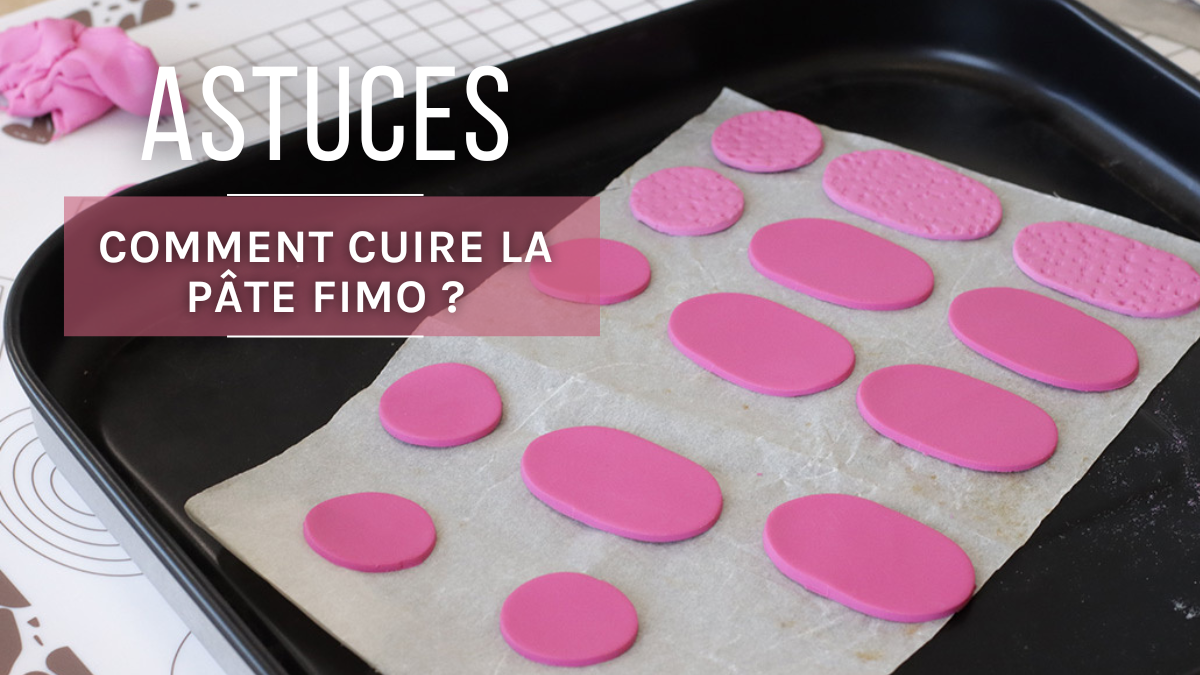
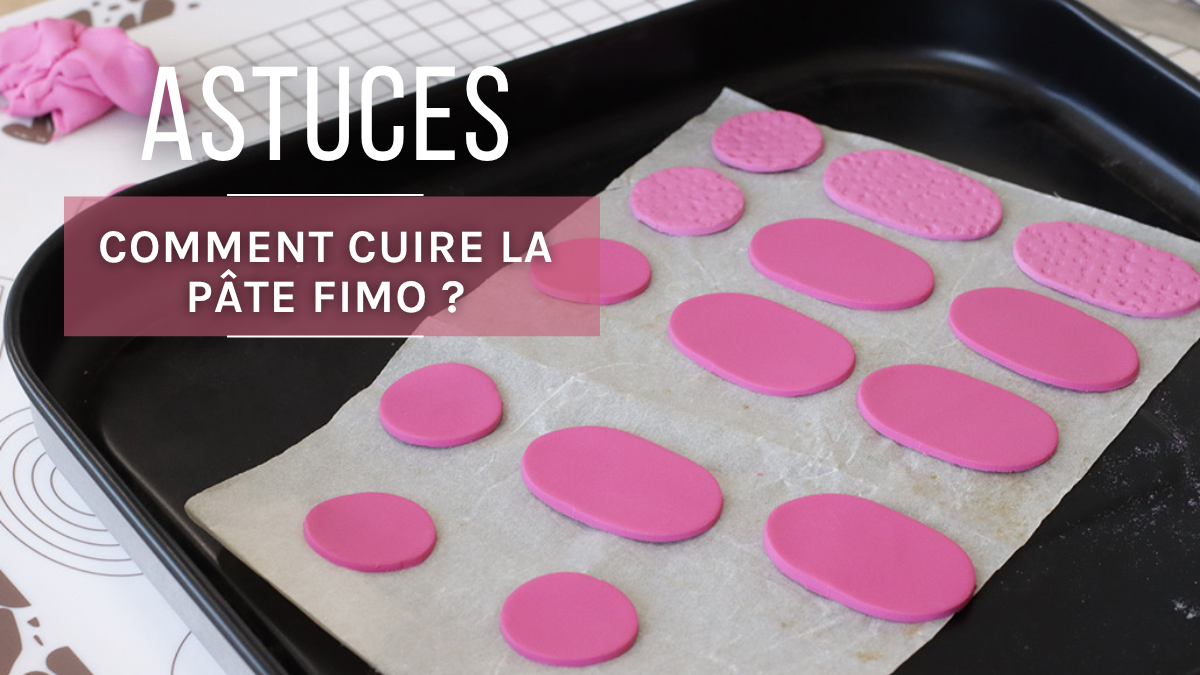
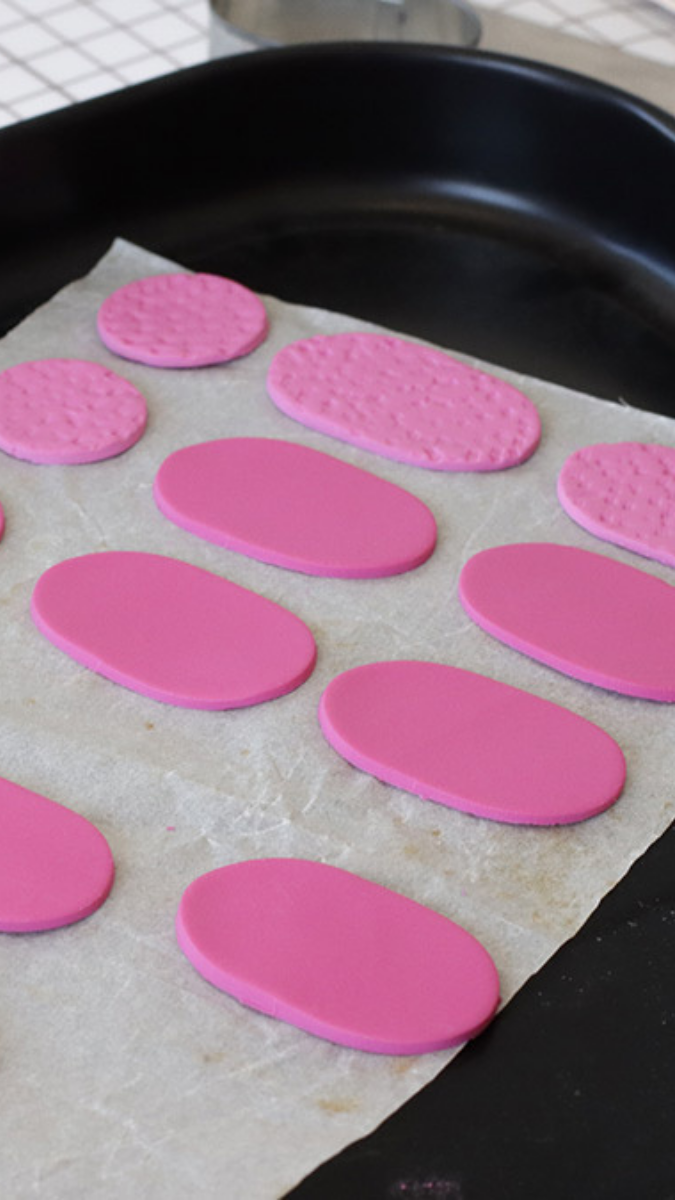
  • Place your creations on the baking sheet, protected by parchment paper. Be sure to space your creations well apart so they don't stick together during baking. Be careful not to put the baking sheet in contact with food.
    If you're working with beads and you don't have a Dremel, don't forget to pierce them with a toothpick, and stick the toothpick into a ball of aluminum foil to prevent them from flattening during baking. You can also arrange them in a baking rack.
  • When the oven is at 110°C (thermostat 3), place your models in the oven for 30 minutes. It's imperative to respect the cooking time and temperature. If in doubt, refer to the Fimo polymer clay sachets for instructions.
  • When the baking time is up, remove the tray from the oven.
  • Remove your creations from the baking tray to prevent further cooking and allow to cool.
  • Leave the oven door and window open for ventilation.
  • Once your creations have cooled completely, you can sand, polish, buff or varnish them.

Good to know:

  • When you take your creations out of the oven, they haven't hardened, but are still malleable? This is normal! Fimo will be perfectly hard after it has dried completely, not before. Patience, patience!
  • It's important to take certain precautions: work in a well-ventilated or aerated room to avoid any toxic fumes.
  • If the firing temperature is too high, your creations may turn brown, blister or even melt.
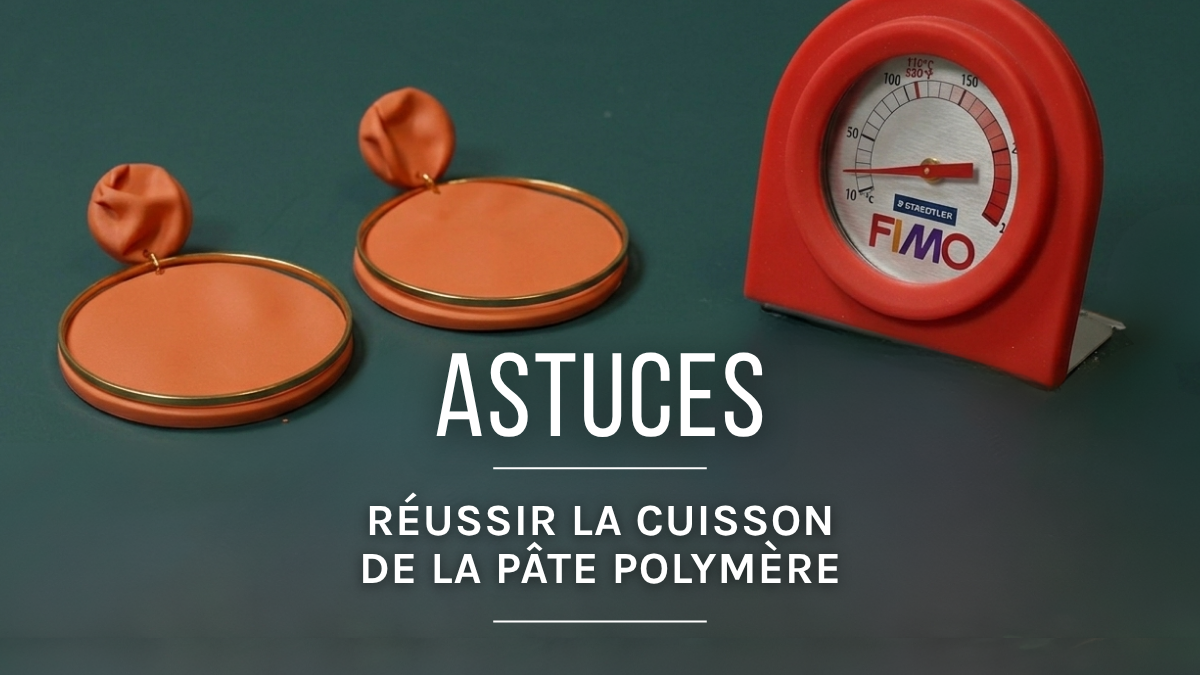
    If the temperature is too low, your Fimo polymer clay may be soft even after it has cooled completely. To check the temperature of your oven, you can use a suitable thermometer.

cuire fimo

What is Fimo clay?

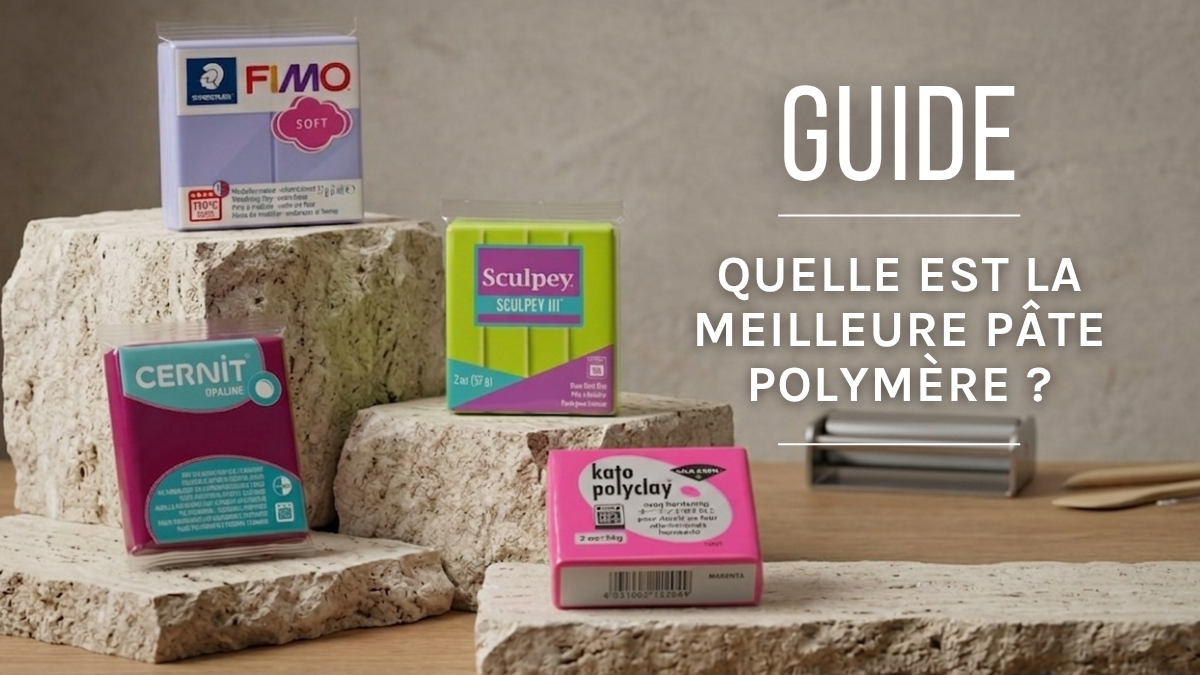
It's one of the best-known brands of polymer clay in France, created by Staedtler, but there are many others: Cernit, Sculpey, Kato Polyclay...
This type of clay can be used to make DIY costume jewelry and decorative objects, such as pendants, earrings, cabochons, key rings, figurines, decorations...
There's a wide range of Fimo clay such as Fimo soft, Fimo effect, Fimo Kids clay... There's also liquid Fimo and Fimo air, which hardens in the open air!
Fimo also offers a wide choice of shades and effects that won't be altered after firing. What's more, they are perfectly miscible with each other.
Fimo is baked in a conventional household oven or electric oven (but never in a microwave, gas oven or pot of hot water).

What can I do with Fimo clay? No creative ideas? Get inspired by our free tutorials for making polymer clay jewelry or decorative objects. Get started!
If you're new to Fimo clay, take a look at our list of essential tools to get you started. Our tips and step-by-step instructions will help you learn how to use Fimo clay. Then it's easy to create beautiful jewelry and animal models.

Pauline Perles Co
 Pauline Perles Co - Pauline Perles&Co
Moi, c'est Pauline, je suis assistante SEO chez Perles & Co et depuis mon arrivée, je me découvre une passion pour les bijoux DIY ! Quel plaisir de dénicher la nouveauté qui nous fait craquer et de confectionner des pièces personnalisées..! J'en apprends davantage chaque jour et je partage ça avec vous.
Share with my friends
Which material to use ?
Fimo Polymer clay
Fimo Polymer clay
List of useful products
Imperia pasta machine Sfogliatrice type
OUTIL-525
Qty : 1
58 in stock
49,90€
Fimo Thermometer in silicone
OUT-847
Qty : 1
16 in stock
19,70€
Your questions (10)
You have a question about this sheet? Ask our team and the people who have already tested it. The Perles & Co community is here to help!
By So (11/01/2026 14:10:41)
Bonjour , je préchauffe mon four jusqu’à 110 degrés pour fimo, je mets mes pièces espacées sur un carreau de carrelage, je malaxe bien la pâte afin qu’elle soit bien souple, avant le passage au four les pièces sont lisses , et problème à la sortie du four certaines pièces ont des bulles 😬 pourquoi ???? Merci
Translate the question
Please log in to use this feature
Our Lucie expert answers you (12/01/2026 09:55:56)
Bonjour, parfois même bien malaxée, la pâte peut garder des microbulles d’air : à la cuisson, l’air se dilate et remonte en surface, ce qui crée des cloques. Pour limiter ça, je vous conseille d'aplatir la pâte en fines plaques puis replie-la plusieurs fois afin de chasser l’air. Et s'il y a des bulles avant cuisson, perce-les très délicatement avec une aiguille.
Translate the answer
By Stephanie (04/10/2025 14:25:58)
Bonjour. Est-ce bien la pâte filou, que je dois utiliser pour confectionner des tiges de citrouille ? Merci à vous pour votre réponse
Translate the question
Please log in to use this feature
Our Lucie expert answers you (07/10/2025 14:51:56)
Bonjour, vous pouvez utiliser de la pâte polymère type Fimo soft ou Cernit pour ce genre de projet. Merci
Translate the answer
By Alejandra (10/05/2025 21:18:28)
de temps le faire cuire
Translate the question
Please log in to use this feature
Our Laurence expert answers you (13/05/2025 09:16:41)
Bonjour,
Le temps de cuisson est d'environ 30 minutes.
Translate the answer
By Tonivida (08/09/2024 21:26:11)
bonjour
y 'a t il un volume maximum ou la cuisson n'est pas optimisé?
Translate the question
Please log in to use this feature
Our Tiffanie J. expert answers you (09/09/2024 09:14:17)
Bonjour, si vous faites des grosses pièces, il va falloir laisser cuire plus longtemps et faire des tests. De plus, la cuisson risque d'être compromise si vous avez une pièce dont l'épaisseur est très variable. Par exemple, très fine sur un bout et très épaisse à un endroit.
Translate the answer
By Jenoraa (08/05/2024 21:18:40)
Es ce qu’on peux remettre une création au four ? J’ai fait des boucles d’oreille et elles sont toujours un peu souple même après refroidissement

Merci :)
Translate the question
Please log in to use this feature
Our Tiffanie J. expert answers you (15/05/2024 08:25:03)
Bonjour oui c'est possible.
Translate the answer
Your reviews (1)
Notices subject to control
5/5
Average Grades
Please log in to use this feature
By Marie (posted on : 01/03/2024 )
Instructions de cuisson très utiles merci
Translate the notice

Credits

Perles & Co, Internet & E-Commerce company [29/09/2025] Any reproduction, representation, adaptation, in any form whatsoever, even partial, is prohibited, except for reproduction for private use not intended for collective use, representation in the family circle (art. L 122-5 CPI) and online publishing on condition that the source is mentioned and a link is included to the corresponding page of our site www.perlesandco.com.