Average Grades
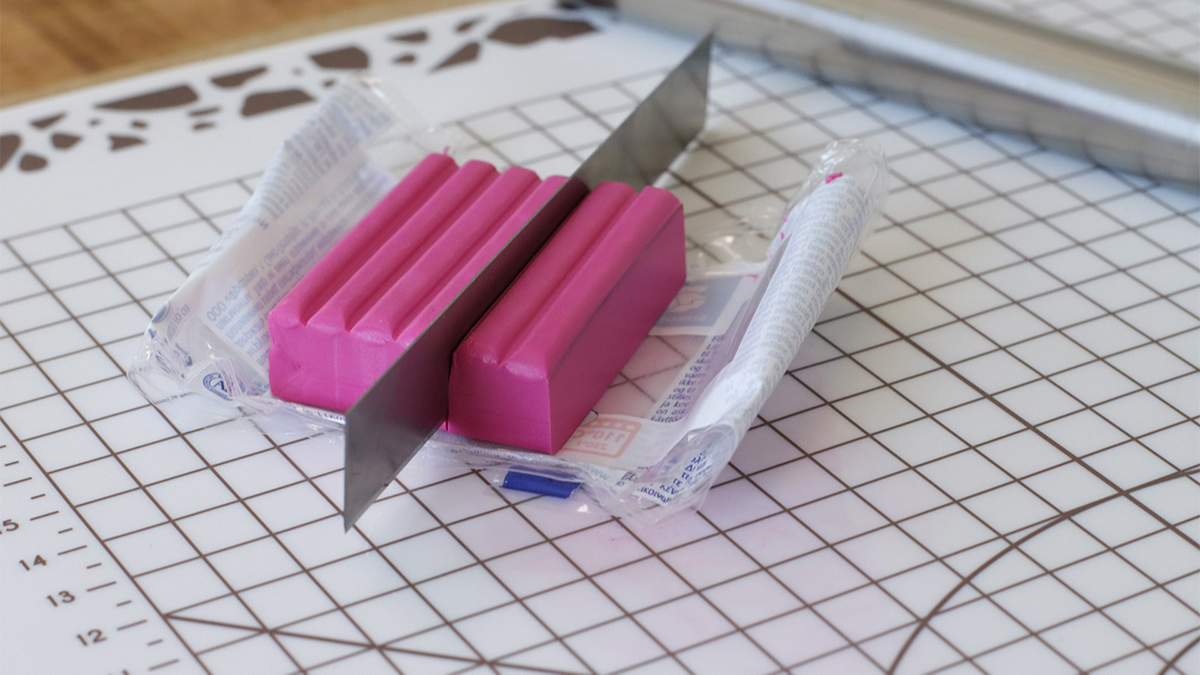
Using your stiffest smooth blade (two levels of flexibility), cut one or two bars (or more depending on the quantity of pieces desired) of your pink (raspberry color to be exact) dough if you are duplicating this tutorial.

Want to bring all your creative ideas to life? Discover polymer clay and the infinite possibilities it offers. Often (and wrongly) called Fimo clay from the name of one of the most famous brands of clay, polymer clay is used for the creation of jewelry but also the realization of figurines or small decoration. It is a moldable paste that requires cooking to obtain its final appearance. Firing allows the shapes and pieces created to be rigid and to be assembled to each other.
This tutorial special beginner, was designed to allow you to launch and understand the basics of creating jewelry in polymer clay: choose the right material, cut your dough and roll it out with a roller, get an even thickness, create shapes with cookie cutters, andshapes with cookie cutters, texturing the clay, baking your pieces and finally making the final assembly with open rings.
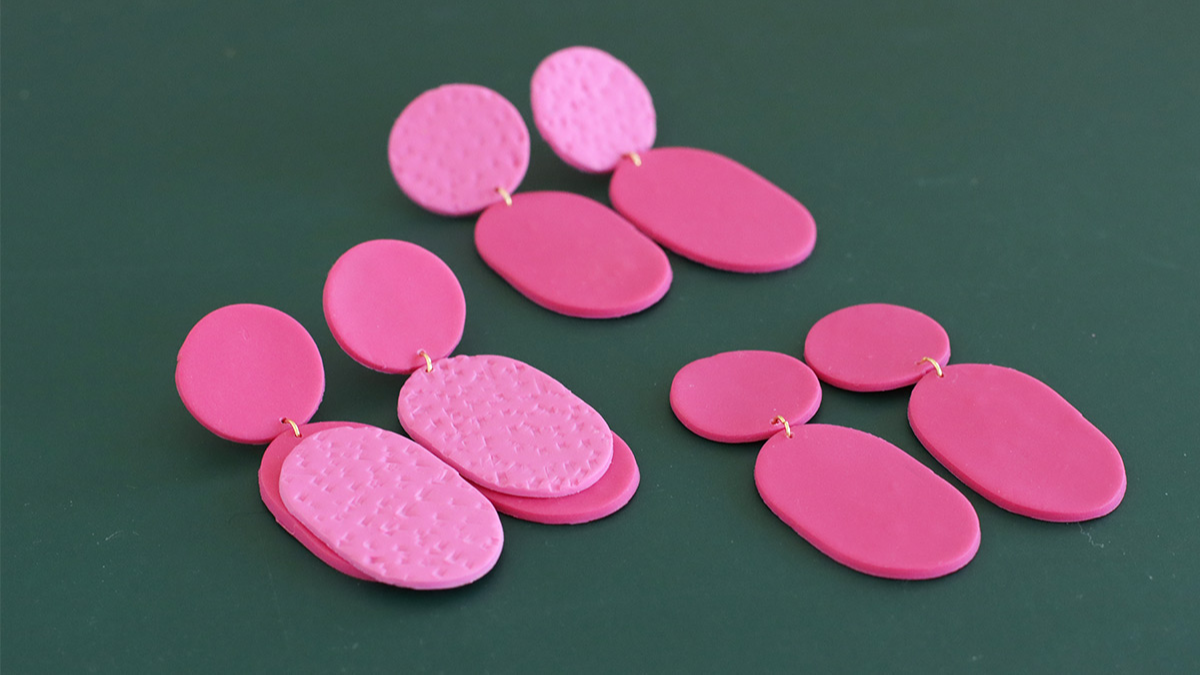
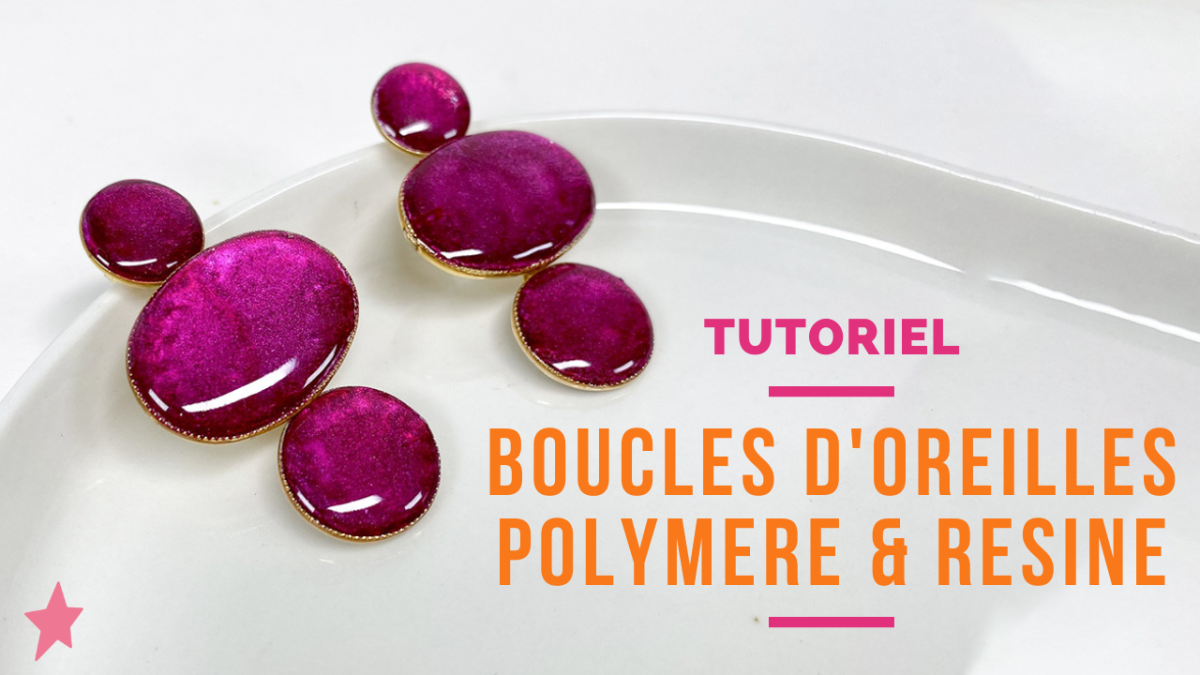
With very little material (just the bare essentials to start) you will be able to make one or more pairs of geometric dangling earrings. It is in a pink color block spirit that the three pairs of earrings presented in this tutorial have been imagined. The idea is to create a piece of jewelry based on a single color. You will see that a shade of pink is achieved through the insertion of white paste in the mixture. Of course, it is up to you to choose your favorite color and adapt this tutorial according to your desires.
For those who would like to go further, you can imagine adding even more fantasy to your jewelry. Here are some additional ideas:
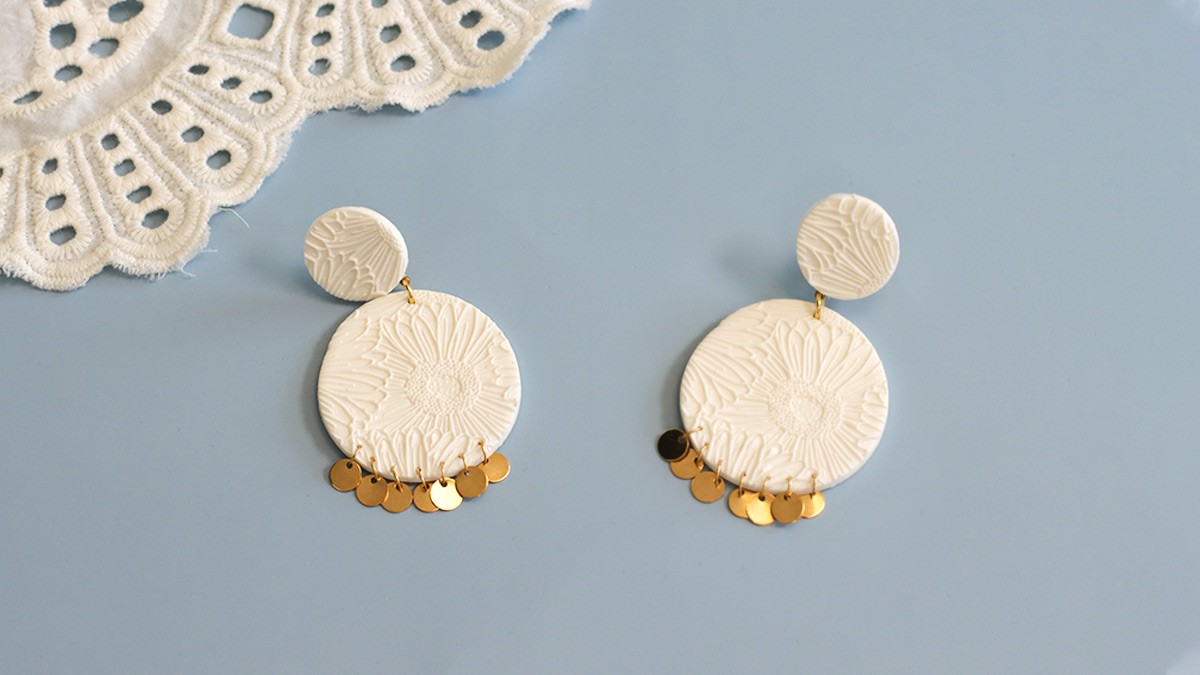
- Add mini charms or sequins at the bottom of your forms as in this tutorial: Earrings Fimo paste and texture plate Moïko
- Create gradations of colors with your paste to take two-colored or multicolored forms.
Using your stiffest smooth blade (two levels of flexibility), cut one or two bars (or more depending on the quantity of pieces desired) of your pink (raspberry color to be exact) dough if you are duplicating this tutorial.

Knead your dough between your hands in order to heat it (it is the heat that allows it to be more malleable). You understand that depending on the ambient temperature, your dough will naturally be softer or harder (when it is cold). You must take this into account. A dough that is too hard and rigid risks crumbling, a dough that is too soft is difficult to work with (sticks, deforms too easily...)

Now you have to roll out the dough. There are two solutions: the dough machine (often abbreviated to MAP) or a roller. The dough machine is recommended when you want to have a perfect regularity of your dough sheet but it represents a certain cost. To start with polymer, a simple roller can be enough. In this case, to obtain a regularity, we will place two guides on both sides of your dough to determine the maximum thickness at which the dough will flatten. You can do this with what you have on hand (here wooden cutlery but ideally skewers) and find something to make different thicknesses if needed.
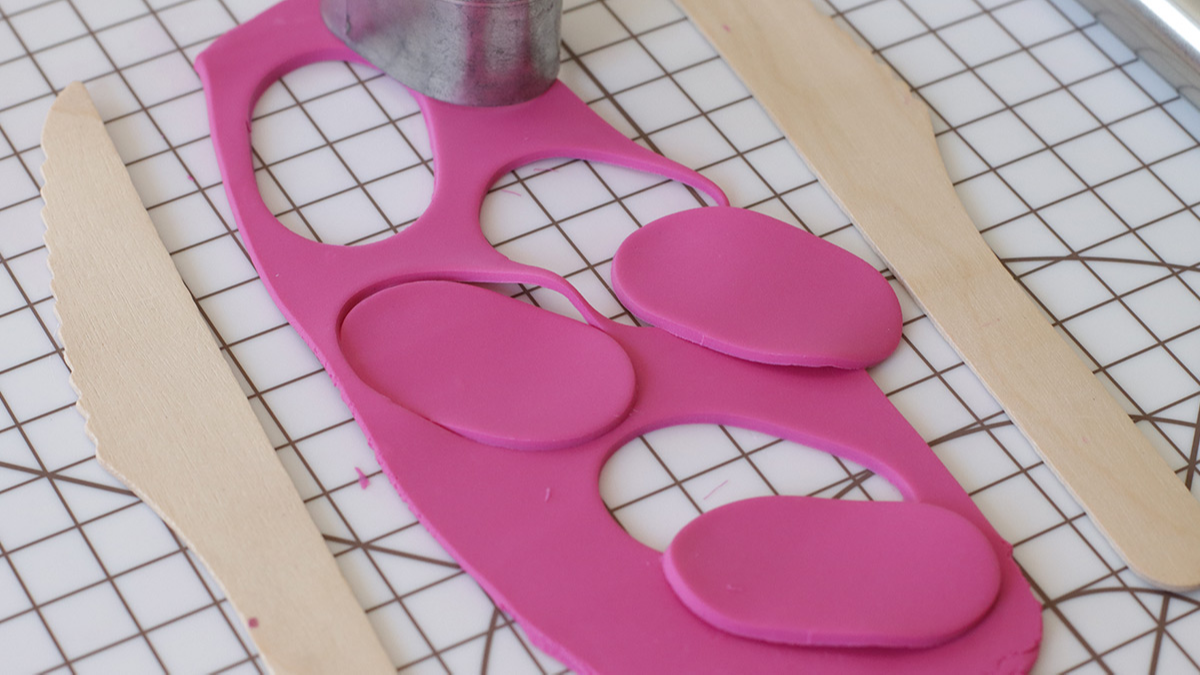
Once your dough sheet is ready, all you have to do is cut out your shapes. These are oval and round cookie cutters of various diameters. Take as many as you need to make your projects. In this tutorial, it is necessary to have at least: 2 rounds and 2 ovals. The sizes can also be adapted.
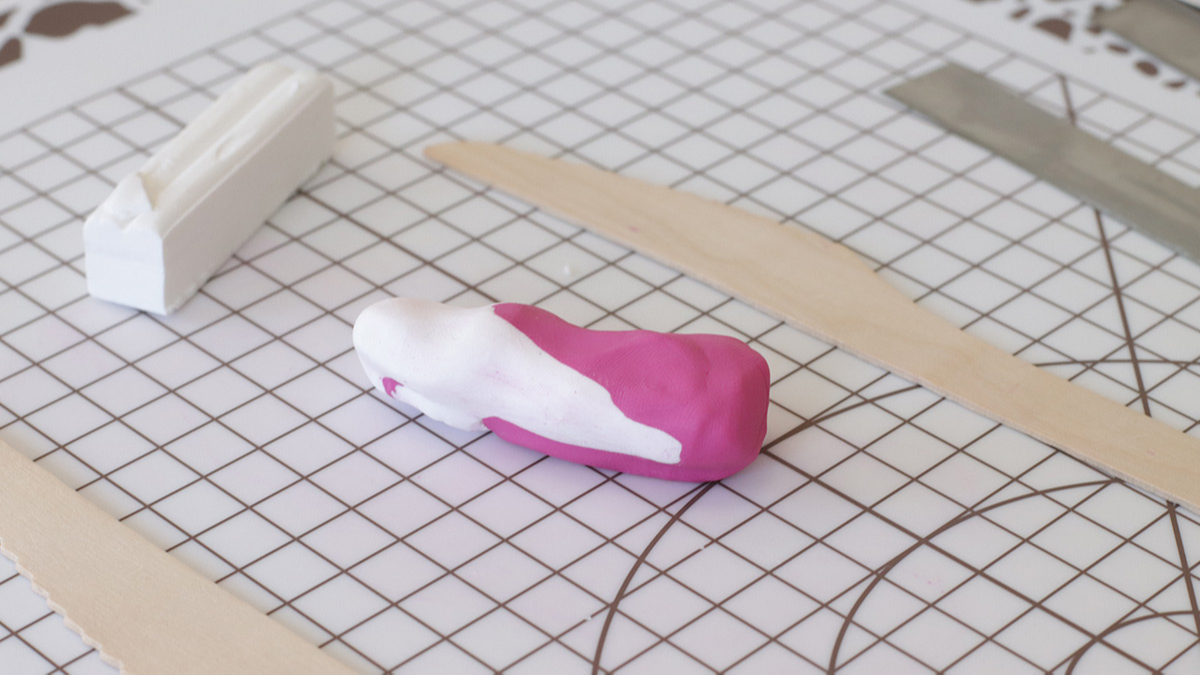
To create a variation and still in the colorblock spirit intended in this tutorial, you can create a shade of pink from the raspberry paste. To do this, add a touch of white paste. Cut with your blade, knead and add your white paste to the pink until you get a new uniform color with the roller. This will give you a paler pink. Accentuate the shade by adding less paste (lighter or darker depending on the contrast you want).
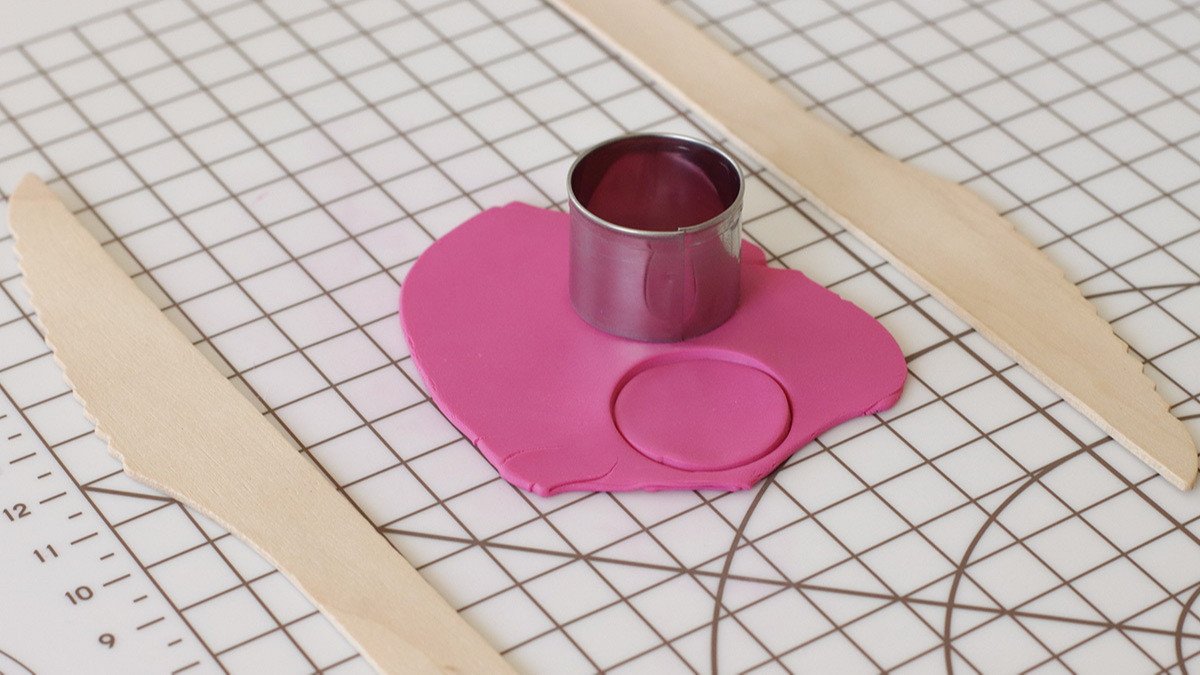
If you have chosen to create a shade, pick up shapes again. You can either make a new plain pair, or consider mixing your shapes with those previously made. Also, you can, as in this tutorial, texture your clay very simply with tools you have on hand. Here, for example, the lighter pieces have been marked with the teeth of the wooden knife used as a guide.

Place your shapes flat (to prevent them from curling up during baking) on baking paper and on your baking sheet. Bake according to the manufacturer's instructions on the package: here, the pieces were placed in a hot oven at 110° for 30 minutes. When they come out of the oven, your pieces are still soft, this is normal. Let them cool down so that they become rigid.
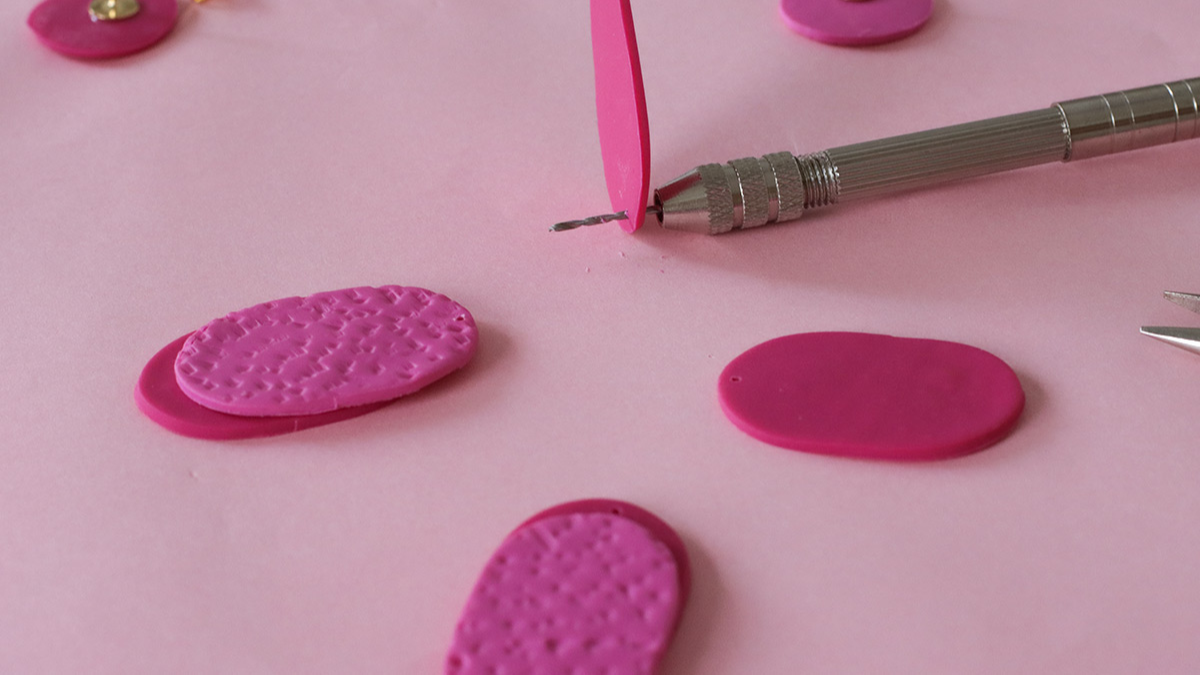
Drill your pieces using the hand chuck on which you will have previously fixed a drill of about 1mm diameter. Think about the location of your holes on the rounds and ovals in order to assemble them later (generally, the hole is located in the upper or lower middle of your pieces). Gently turn with the chuck while applying pressure until you pierce your pieces.
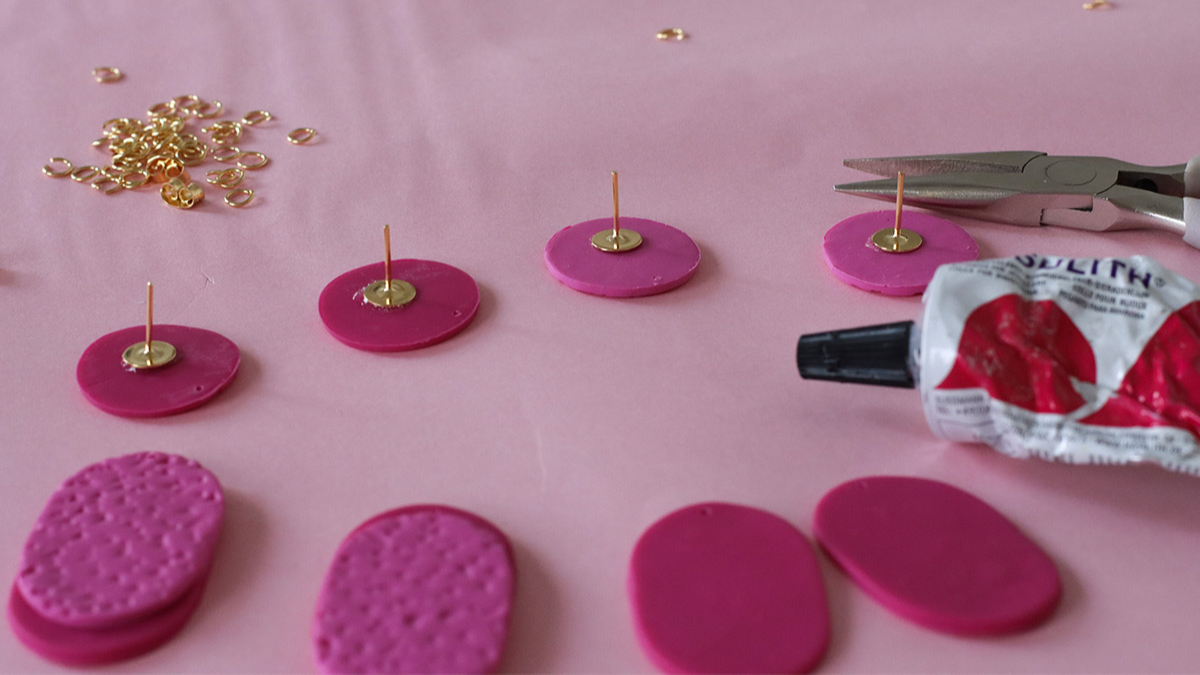
Meanwhile, glue the round shapes onto your disc ear studs using the jewelry glue and let dry for several hours (up to 24 hours for complete drying). Once dry, assemble your rounds (studs) to your ovals using an open ring and your pliers. To do this step, find out how to open a ring correctly.

Once dry, assemble your rounds (ear studs) to your ovals using an open ring and your pliers. To do this step, find out how to open a ring properly.


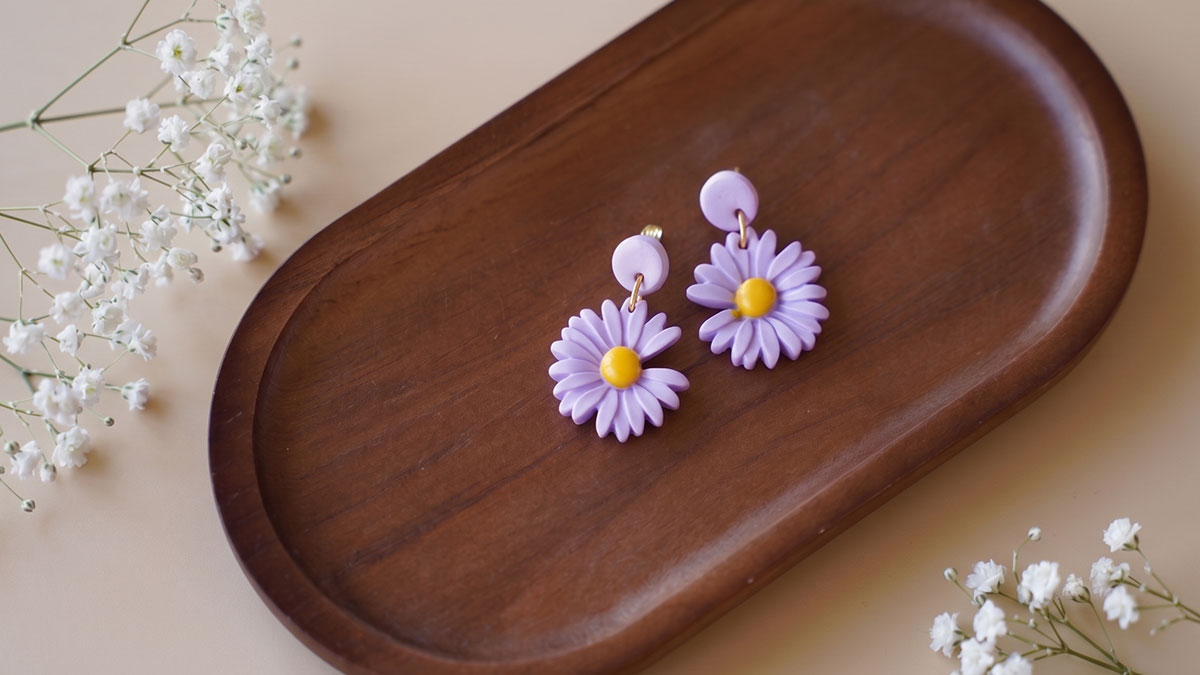


You have a question about this tutorial? Ask it to our team and the people who have already tested it. The Perles & Co community is here to help you!
Credits
Perles & Co, Internet & E-Commerce company [10/07/2022] Any reproduction, representation, adaptation, in any form whatsoever, even partial, is prohibited, except for reproduction for private use not intended for collective use, representation in the family circle (art. L 122-5 CPI) and online publishing on condition that the source is mentioned and a link is included to the corresponding page of our site www.perlesandco.com.