Average Grades

Create different colors of polymer clay by mixing them evenly, you will need several greens of white, dark red, and a yellow ochre that will serve as a support plate.

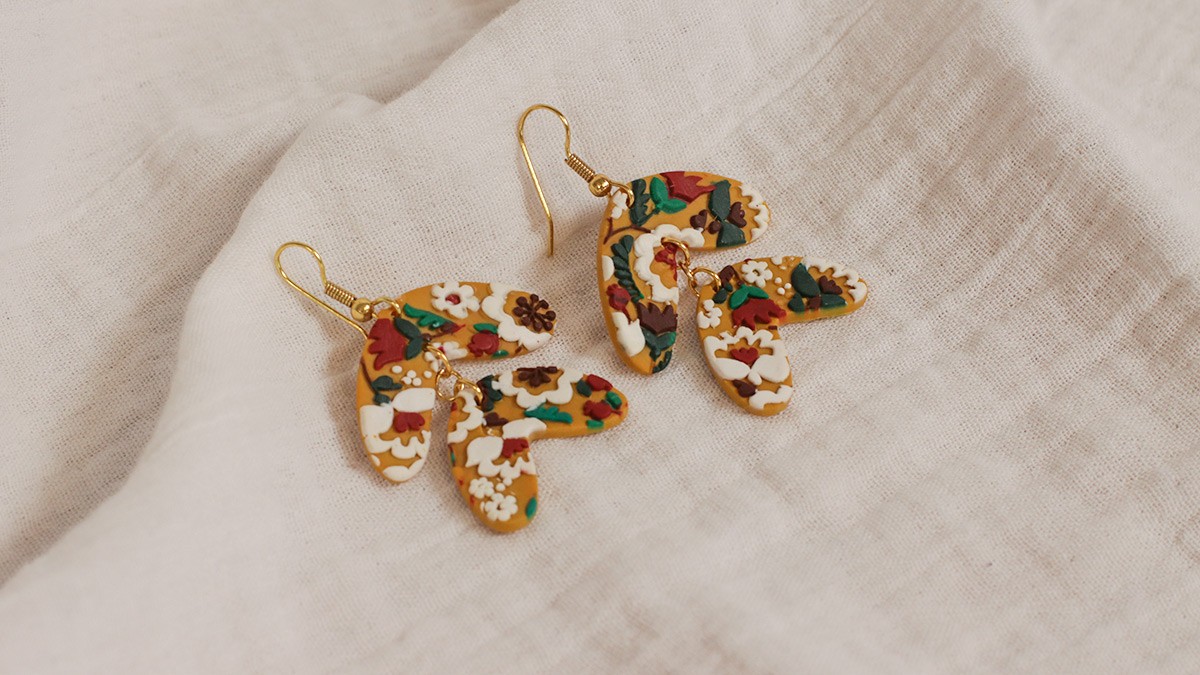
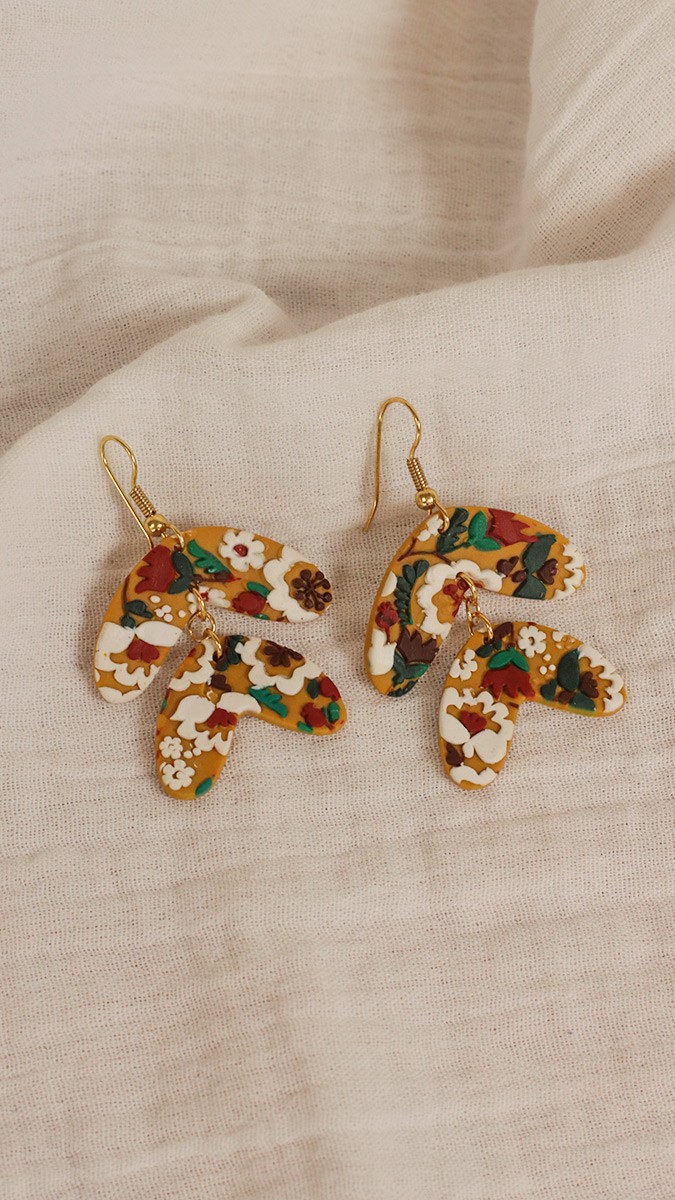
Learn how to make the Sutton slice technique with a pretty Moiko floral texture plate. You must choose several colors of dough, they must be manipulated until their consistency is soft enough to be able to fill with precision all the hollows of the texture plate following the patterns. Most of the flowers, especially the larger ones, are made of white paste, this being the lightest color to start with. Once the filling is done, you have to pass the blade horizontally on the surface of the plate, being careful not to attack the silicone, you have to proceed little by little, remove the excess of the filling which hides the patterns in relief of the silicone. You will then fill the foliage with the different shades of green paste that you created at the beginning of the tutorial by mixing with yellow or brown. The tiny flowers that look like pomegranates will be dark red. Don't wait until you've filled everything in to scalp and bring out the design - it's best to do it as you go.
The most difficult step in the tutorial is to lay all the raised texture patterns on a polymer clay plate run through the dough machine at a medium notch. Flip the texture plate over the polymer, roll over it and then press more with your fingers. Take an edge of the plate, lift it gently and see if the transfer is complete, continue to lift the texture by folding it to unroll it slowly, if there are missing pieces you can locally press again on the texture.
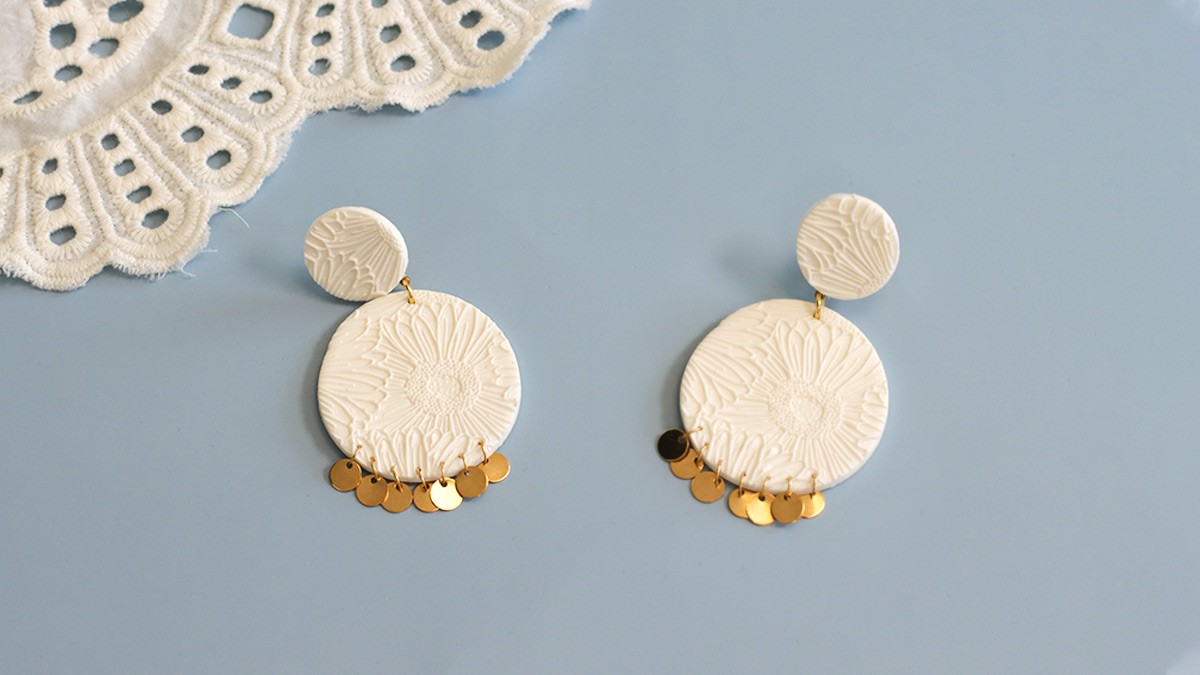
Then comes the cutting of shapes with cookie cutters that look like leaves and then baking, piercing and mounting with some rings and ear hooks.
Create different colors of polymer clay by mixing them evenly, you will need several greens of white, dark red, and a yellow ochre that will serve as a support plate.
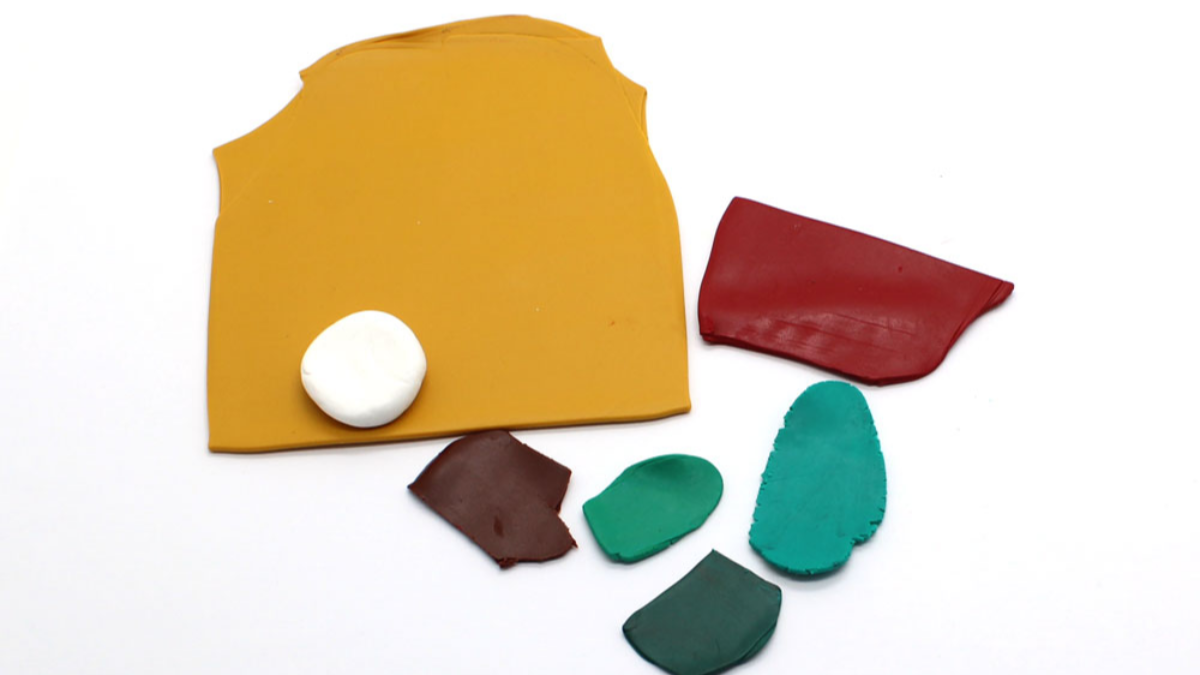
Here are the different shades obtained after mixing the pastes.

If your texture plate is new you won't need to put a little talcum powder on the surface. Start by filling the petals of the large flowers without filling their hearts. Make small balls of pasta to fill in the hollows, once done you need to scalp the excess pasta gently and be careful to slide on the silicone surface and not to dent it.

Continue to fill in more flowers in red, the center of the white flowers can be either red or brown. Foliage is filled in from the three green ones created and some stems in brown. dotting tools can help you fill in the hollows well.
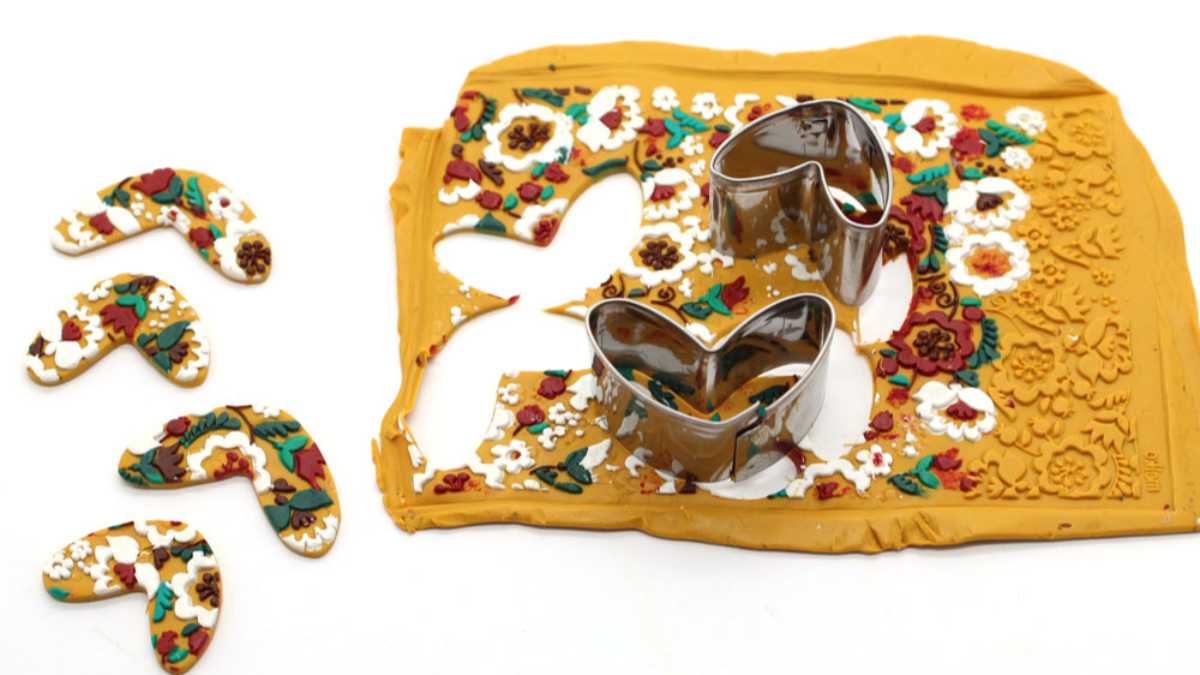
On your ochre clay plate you will turn the silicone texture over to put the polymer patterns in contact with the ochre polymer. Pass the roller strongly then lift one edge of the texture by folding the plate on itself so that we can see if the transfer has been well done. Proceed by unrolling a little at a time so that you can lower the plate and put it back in contact with the ochre surface so that a pattern can be properly reattached. If you are working in a non-air-conditioned room in hot weather, it will be difficult to do this, so it is best to wait for a favourable period.
Take with two punches twice the two forms. rectified the cutting with a blade on the part where there was the junction of the iron of the EP.

Bake your four pieces in a traditional oven at 120 degrees for 30 minutes. You can take care of your finish by sanding the back and edges of the shapes.
Drill two holes on the larger shape and only one hole on the smaller one.

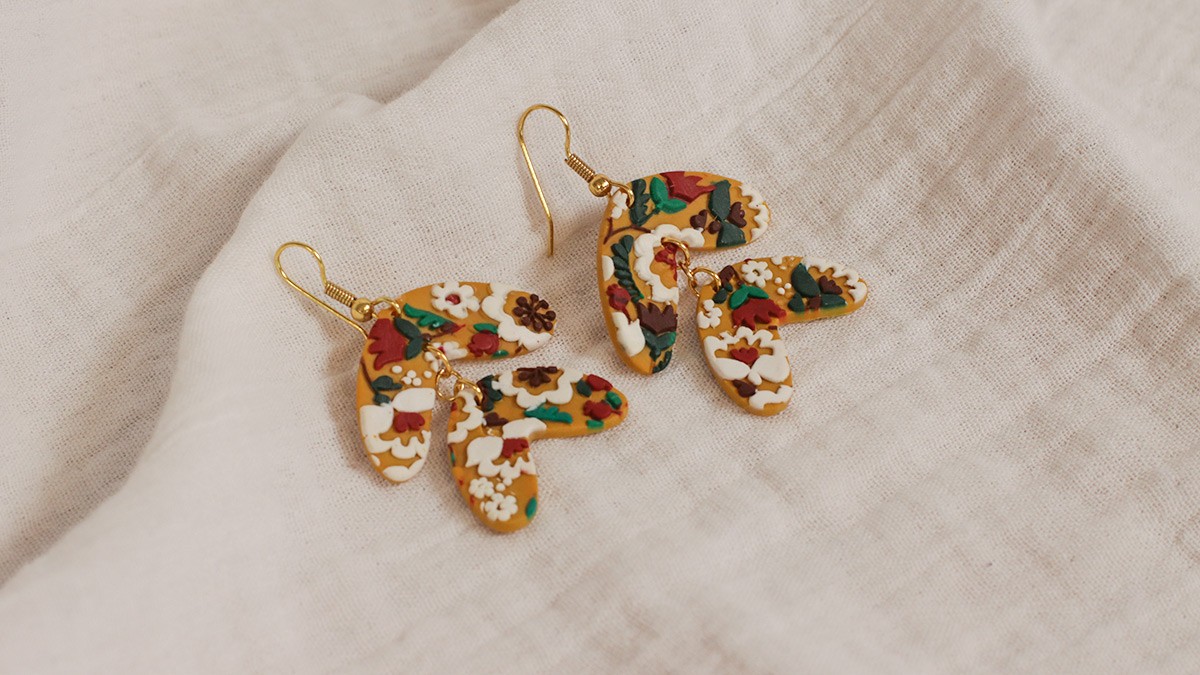
Make the assembly of your loops by passing rings in the holes of the pieces, add a smaller ring in the middle, pass directly the ring of the hook by opening it delicately with pliers in the hole of the top of the largest form.



You have a question about this tutorial? Ask it to our team and the people who have already tested it. The Perles & Co community is here to help you!
Credits
Perles & Co, Internet & E-Commerce company [19/08/2022] Any reproduction, representation, adaptation, in any form whatsoever, even partial, is prohibited, except for reproduction for private use not intended for collective use, representation in the family circle (art. L 122-5 CPI) and online publishing on condition that the source is mentioned and a link is included to the corresponding page of our site www.perlesandco.com.

