Average Grades



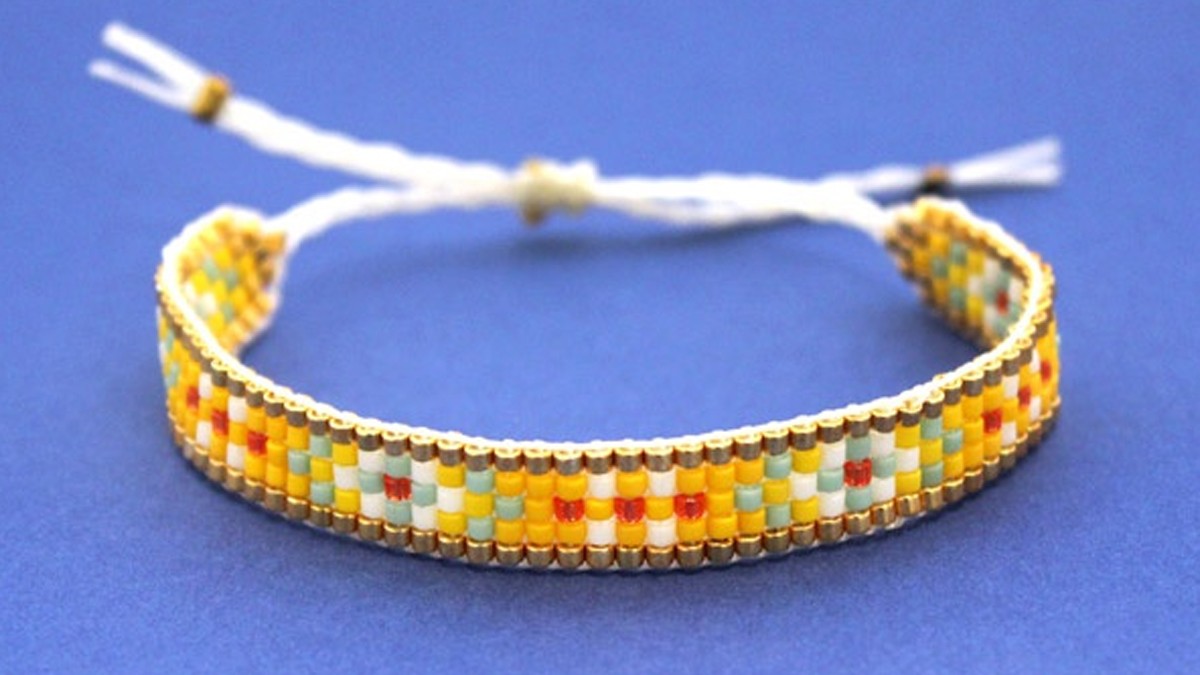

My pattern says yse macrame cord? Which do I buy
1 Answer
Show answers

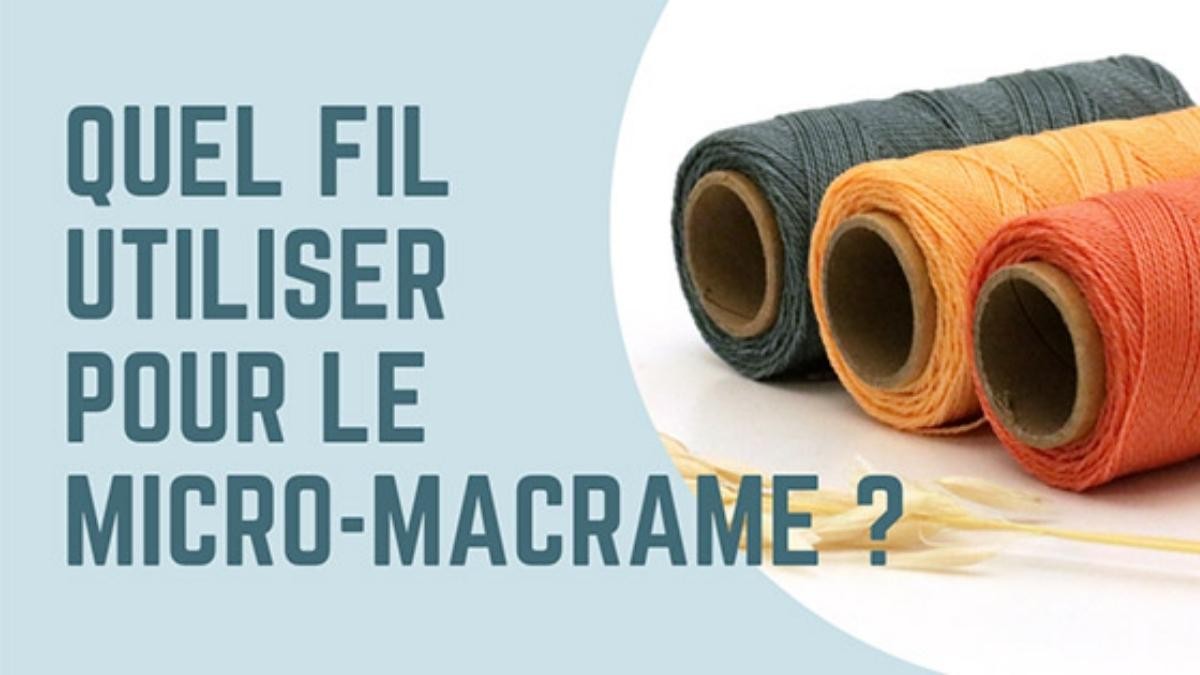
To get started with micro-macramé, it's essential to choose a suitable wire, generally thin (0.5 to 1.5 mm), that allows knots to be clearly visualized. Linhasita wire, coated with a synthetic wax, is recommended for its strength and ability to hold knots, while Slam Cord flat wire offers a unique texture and precise rendering. Adapt your choice according to your level and the type of creation you desire.
If you're new to micro-macramé and don't know what materials to buy to get started, you've come to the right place. We're going to talk about the different wires you can use to make micro-macramé jewelry, their specific features and the tools that can help you.
Click on the photos to access the corresponding tutorials.
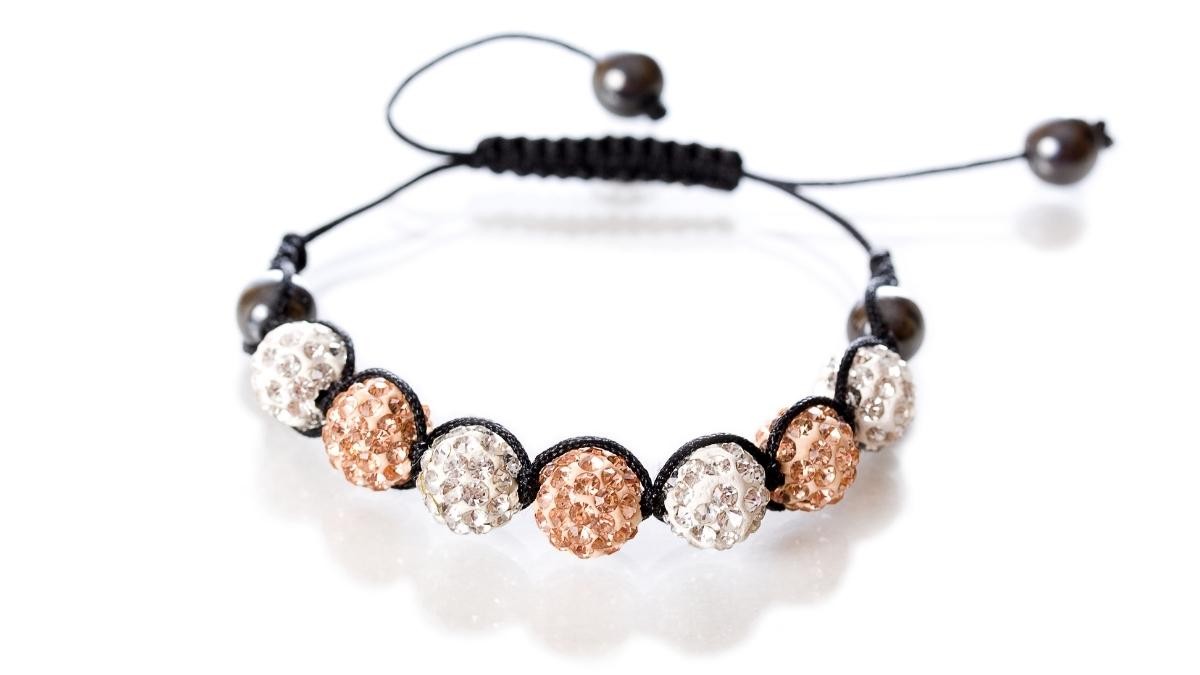
As its name suggests, micro-macramé is macramé in miniature. It's called this to differentiate it from macramé, which can be used to create decorative objects such as macramé hanging baskets or macramé cushions. The knots or sequences of knots are used to create decorative shapes. Technically, Brazilian bracelets could be described as a sub-category of micro-macramé, since they are also made up of knots.
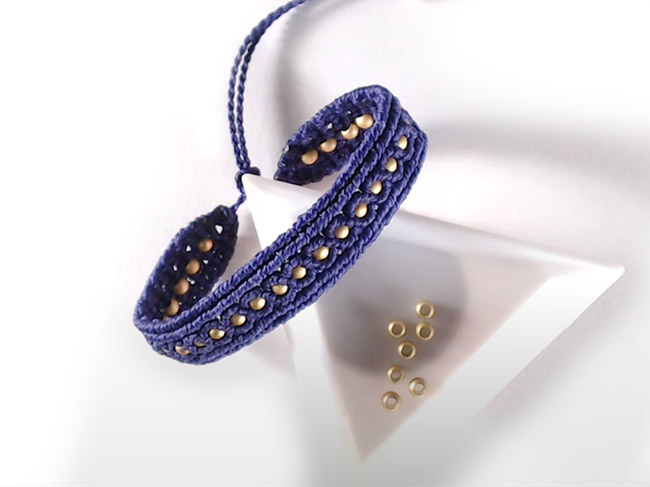
Micro-macramé is most often associated with jewelry, so fine wire is used. The advantage of micro-macramé is that you can see the knots, which is why most of the time, we use a cord between 0.5 mm and 1, or even 1.5 mm in the case of a larger necklace, for example. It is very rare to use a diameter greater than 2 mm to create a micro-macramé bracelet or necklace, or else these creations are no longer qualified as "micro" in most cases.
The smaller the wire diameter, the more details and finishes are possible.
If you're new to macramé, we advise you to use 1 mm wire to see the knots clearly. Once you've got the hang of it, if you like, you can try out micro-macramé wires with a smaller diameter. That way, you'll know which wire diameter you prefer!
For 0.35 mm, 0.5 mm, 0.75 mm, 1 mm, 1.2 mm or 1.5 mm... The diameter of the thread depends above all on the tastes of the person tying it and on the desired effect.
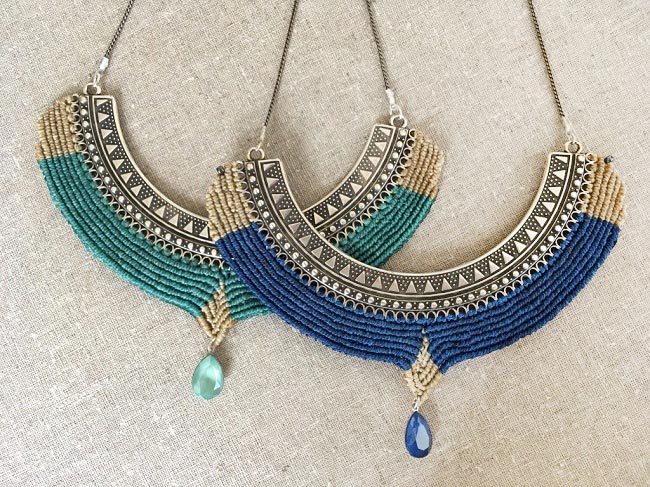
The micro-macramé technique creates a lot of repetitive friction. So you need a strong thread. It also needs to be very supple so that knots form properly. If it's waxed or soft, the knots will hold even better. You can use either synthetic or natural cords, but the finish to stop the thread will not be the same.
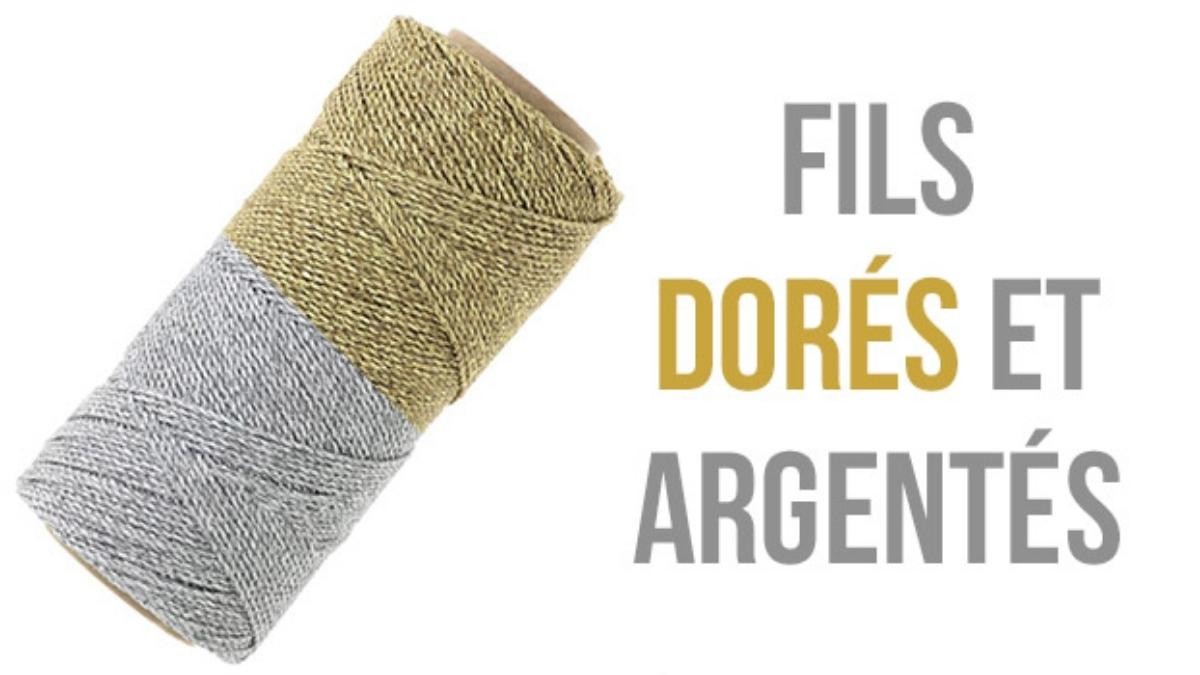
In our opinion, the best for this technique is Linhasita yarn. Made in Brazil, it is specially designed for micro-macramé jewelry. It's coated with a synthetic wax that gives it a sticky feel, which may put some people off, but this wax holds the knots in place and makes the work much easier. It is rub-resistant and non-fading. The wax can, however, create color differences from one place to another due to reflections. This is the most widely used cord in recent years. To stop the thread, melt it with a thread burner or lighter. This serves as a replacement for glue.
Then there's C-Lon(C-Lon Beading cord, C-Lon Tex 400 Bead Cord and C-Lon Micro Cord). It's tough, glides well and is also coated with a wax, but unlike Linhasita, it's not sticky and knots don't hold together as well, so if they're not pressed together, they'll slip. This cord does not fade and is of good quality.


Slam Cord is a waxed polyester yarn like Linhasita with a few minor differences:

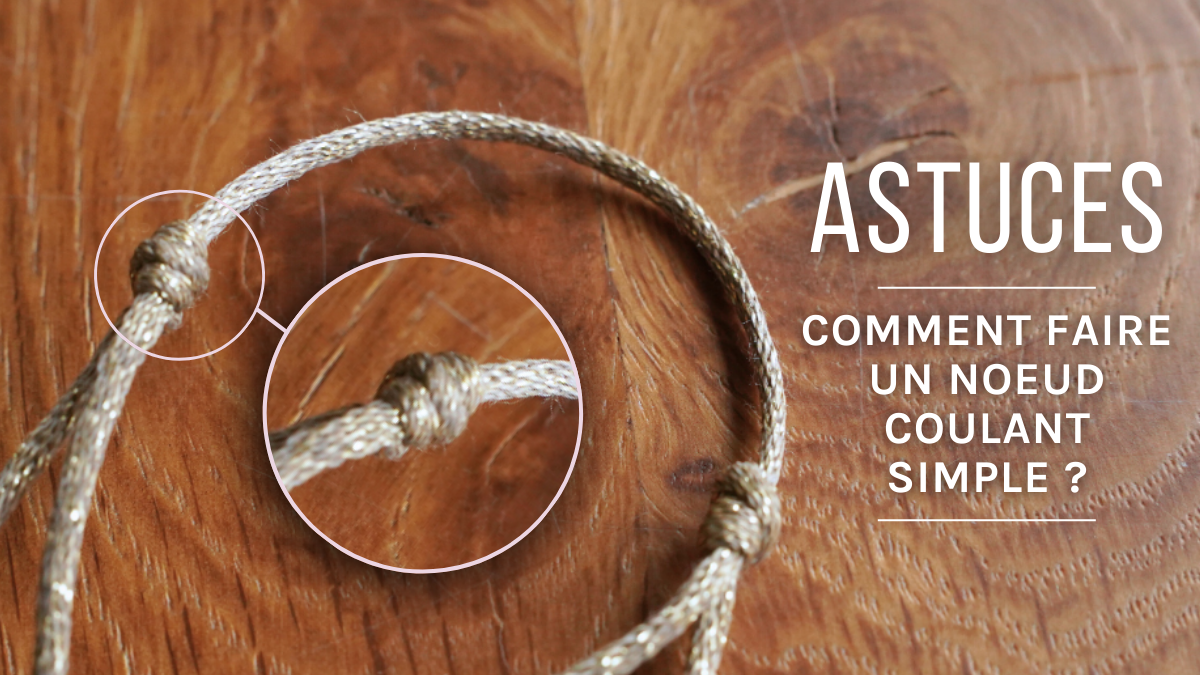
You can also use rat-tail or braided nylon thread. It's a little soft, which helps hold knots in place when tightened, but not as well as Linhasita. They have a sheen that gives them the appearance of silk thread. They are also very flexible and strong. If you're looking to make slip knots, this yarn will do just fine. The Griffin brand also offers good-quality braided nylon yarns of European origin.
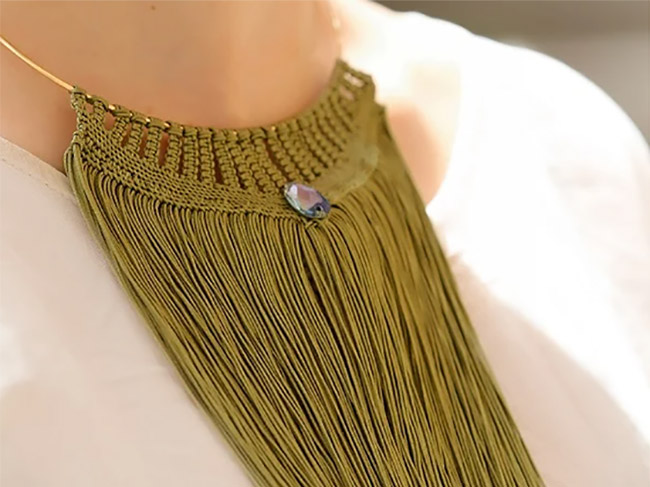
We recommend waxed linen thread or Kesi Art waxed cotton thread. As explained above, the wax helps protect the thread from rubbing and holds the knots in place. For this type of thread, you'll need to either hide and wedge the thread ends in the creation, or make a knot, cut and apply glue.
You can also use natural cotton, or cotton embroidery skeins like those used for Brazilian bracelets.

It's also possible to include other threads in macramé jewelry, mixing them with those mentioned above. For example, we've used Au Ver à Soie's size 16 shiny threadin this video tutorial, even though it's a little more fragile than the others. You need to use it sparingly and bear in mind that knots will unravel if they're not caught by other knots. Leather cords can be used for larger bracelets.


At first, you can simply tape your wires to the table with masking tape or hang them from your purse with a safety pin, but as soon as you want to make more complex creations, we suggest you invest in a flexible macramé tray. It's a handy tool for holding wires in place and preventing tangled brushes! You can secure them with special nails or sewing pins.

Credits
Perles & Co, Internet & E-Commerce company [31/12/2020] Any reproduction, representation, adaptation, in any form whatsoever, even partial, is prohibited, except for reproduction for private use not intended for collective use, representation in the family circle (art. L 122-5 CPI) and online publishing on condition that the source is mentioned and a link is included to the corresponding page of our site www.perlesandco.com.