Average Grades
Free shipping on orders over 50€ up to 500g
French Online shop for beads and accessories for the creation of DIY jewellery and other creative hobbies
Log-in
0
Shopping cart
Shopping cart

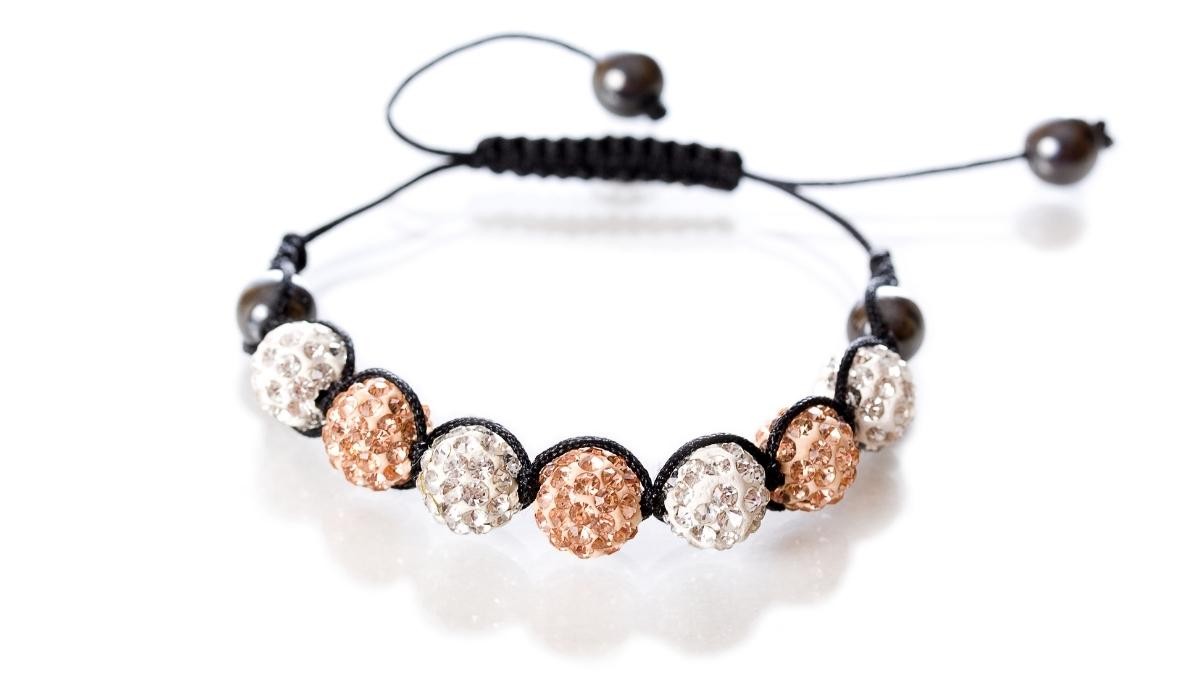
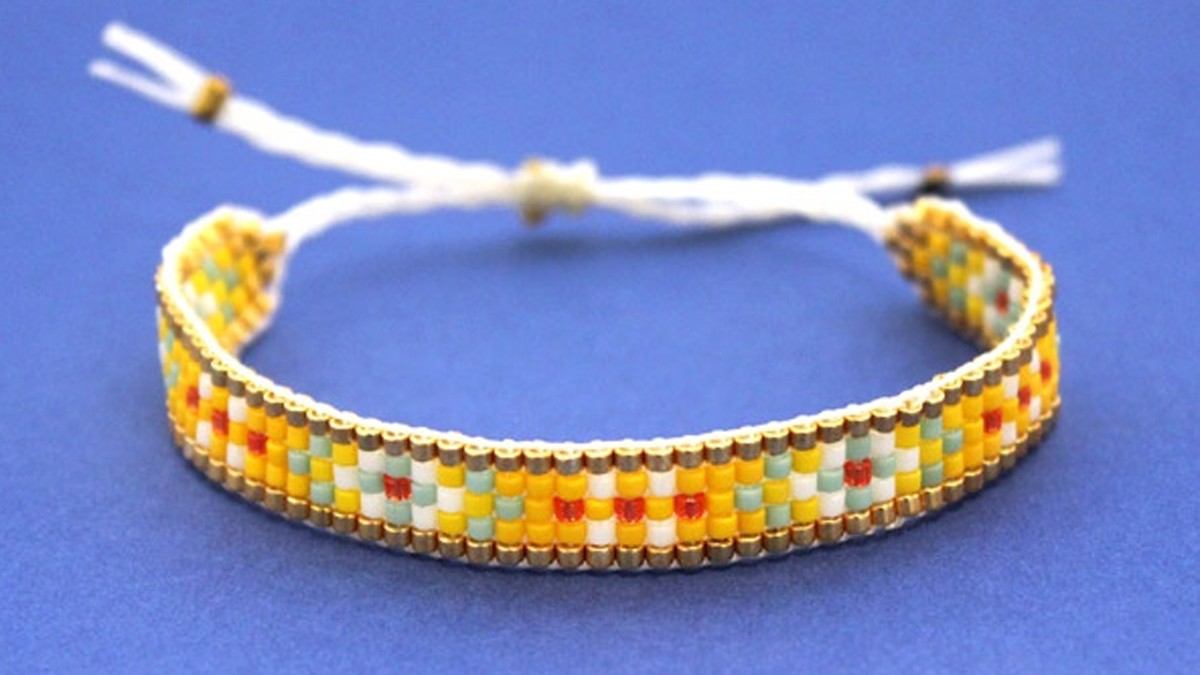
This datasheet presents several finishing methods for your macramé wire bracelets, ranging from a sliding flat knot to a button loop system and the use of stopper beads. Depending on your preferences, you can opt for a discreet knot for a minimalist look or a button finish for a more assertive style.
Are you embarking on micro-macrame or Brazilian bracelets and you do not know how to finish your bracelet other than with a permanent knot? You are in the right place. In this technical sheet we will show you different finishing methods for a macrame thread bracelet. We will draw from our many tutorials to give you examples and products to use for your jewelry creations.
If you are more interested in the different macrame knots for the creations themselves, go to this sheet which is embellished with a video step by step: Learn the different basic macrame knots .
1- The macrame flat knot
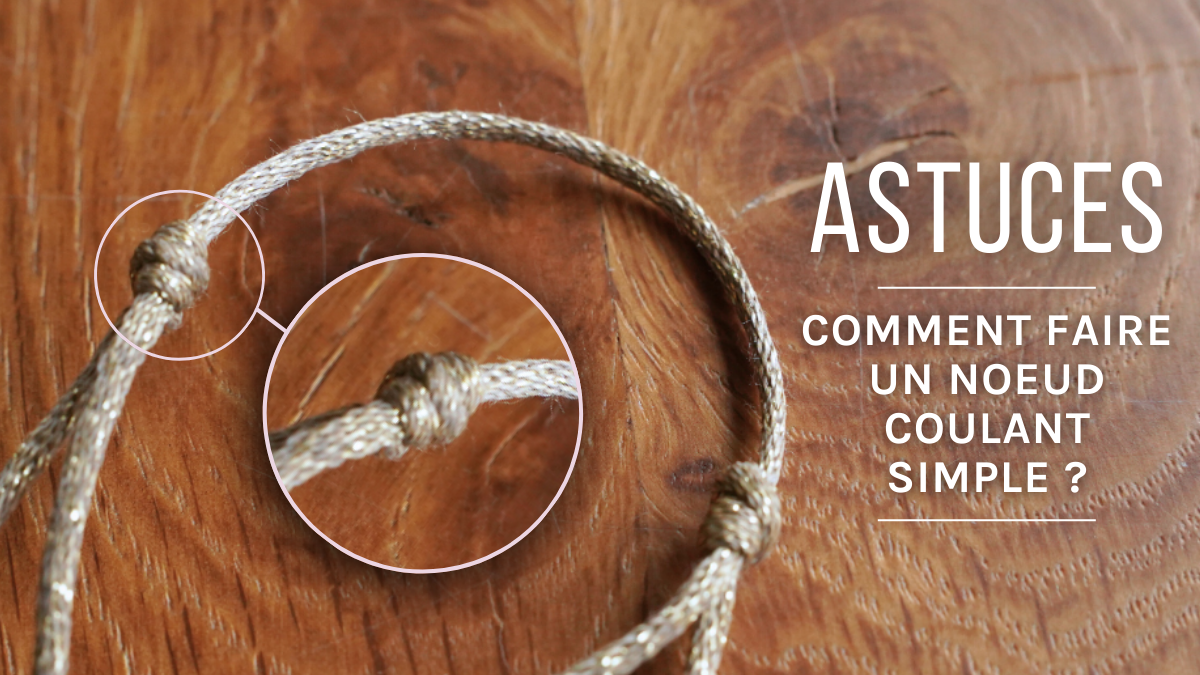
The alternating flat knot is a basic of macrame and micro-macrame. It is so widely used that it is even called the macrame knot. This knot is also often used to make sliding knots to finish thread bracelets. To be able to do this, you must have kept enough thread on both sides of your bracelet.
To check it, cross the threads on both sides at the end, hold them between your thumb and forefinger and see if you have ample room to put your hand through the bracelet. If this is the case and the amount of thread allows you, tie a knot on each side to prevent the threads from coming out of the central sliding knot later or flatten a bead to be crimped on the ends.
Cross the threads. Cut a new piece of thread of about 15 cm and tie it, well in the center of the thread, on the two crossed threads. Tie an alternating square knot in 5 to 9 knots depending on your preference. Cut the ends of the threads and burn them or glue them if it is natural thread that does not melt.



Here is a list of tutorials using this method, click on the photo to access the tutorial:


2- The double sliding knot
This one is common on small, thin bracelets with only a spacer and a few beads because it is generally more inconspicuous, provided the thread is thin. However, it is a little more difficult to understand and handle. Mistakes are more common. It is better to use this wire only when you only have 1 wire on your bracelet.


The finish is the same. Cut the thread, burn it or glue it depending on whether it is synthetic or natural.
3- Buckle finish with button
This finish is very often used on wrap bracelets as well or on necklaces. On one side of the bracelet you form a loop that you hold in place with a knot and on the other you attach a button. Burn or glue the remaining piece of wire. This method does not allow you to adjust the size afterwards so be sure of the length of your bracelet.


Here is a list of tutorials using this method, click on the photo to access the tutorial:


4- Stopper beads
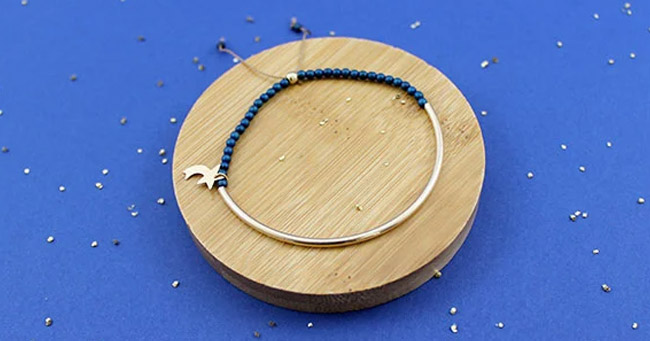
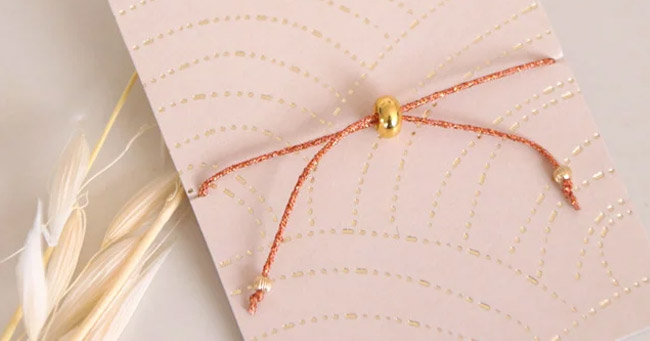
To replace a sliding knot you can also use stopper beads. These are beads with somewhat elastic rubber cylinders inside the hole that prevent the threads from slipping. There are different sizes, all the difficulty is finding the right size of pearls for the size of the thread. We indicate the sizes of the threads compatible with each bead in its product sheet but sometimes the size of the thread given by the manufacturer is not exactly its actual size. Accuracy on tenths of a millimeter is sometimes difficult and from one material to another, the threads will not pass in the same way in the bead. Unfortunately, we cannot test all the beads with all the threads in our shop.
As far as possible rely on the tutorials using these beads to know which threads to use:

5- Lace clips or crocodile clips
Pearl weaves have their own weaving tips and for all threads, cords and laces you can use alligator clips. These are pliers / bits with small teeth to flatten on the wires. Some people use them on the beads but this is not recommended because the pressure exerted breaks the beads.
Once you have secured your clips, you can then connect them to a classic lobster clasp with rings. Of course you can put a point of glue inside the clamps before closing them to be sure that the threads do not come out.
Here are some examples where this finish is used:


6- The clasps and tips to stick for laces, magnetized or not
There are lots of different finishes to finish bracelets made with leather laces for example. If your macrame bracelet has the right dimensions, nothing prevents you from also using this kind of primers. Here is a small list of products below to give you an idea of the possibilities.
Also regularly watch our new products because innovation is still possible in the world of costume jewelry!





Credits
Perles & Co, Internet & E-Commerce company [01/09/2020] Any reproduction, representation, adaptation, in any form whatsoever, even partial, is prohibited, except for reproduction for private use not intended for collective use, representation in the family circle (art. L 122-5 CPI) and online publishing on condition that the source is mentioned and a link is included to the corresponding page of our site www.perlesandco.com.

