Free shipping on orders over 50€ up to 500g
French Online shop for beads and accessories for the creation of DIY jewellery and other creative hobbies

Log-in

What's the best polymer clay (Fimo, Sculpey, Cernit)?

Made by :Pauline Perles Co
Published on the :23/04/2026
What's the best polymer clay (Fimo, Sculpey, Cernit)?
In summary

To choose the best polymer clay, you need to consider your level and your projects. Fimo is versatile and suitable for everyone, Sculpey is ideal for beginners thanks to its flexibility, while Cernit and Kato Polyclay are better suited to advanced users looking for solidity and fine detail. Choose Sculpey for delicate jewelry and Fimo Effect for creative finishes.

Are you starting to model and don't know where to begin? Between Fimo, Sculpey, Cernit and the dozens of ranges available, it's hard to find your way around. This guide will help you make the right choice according to your level, your budget and your creative projects.

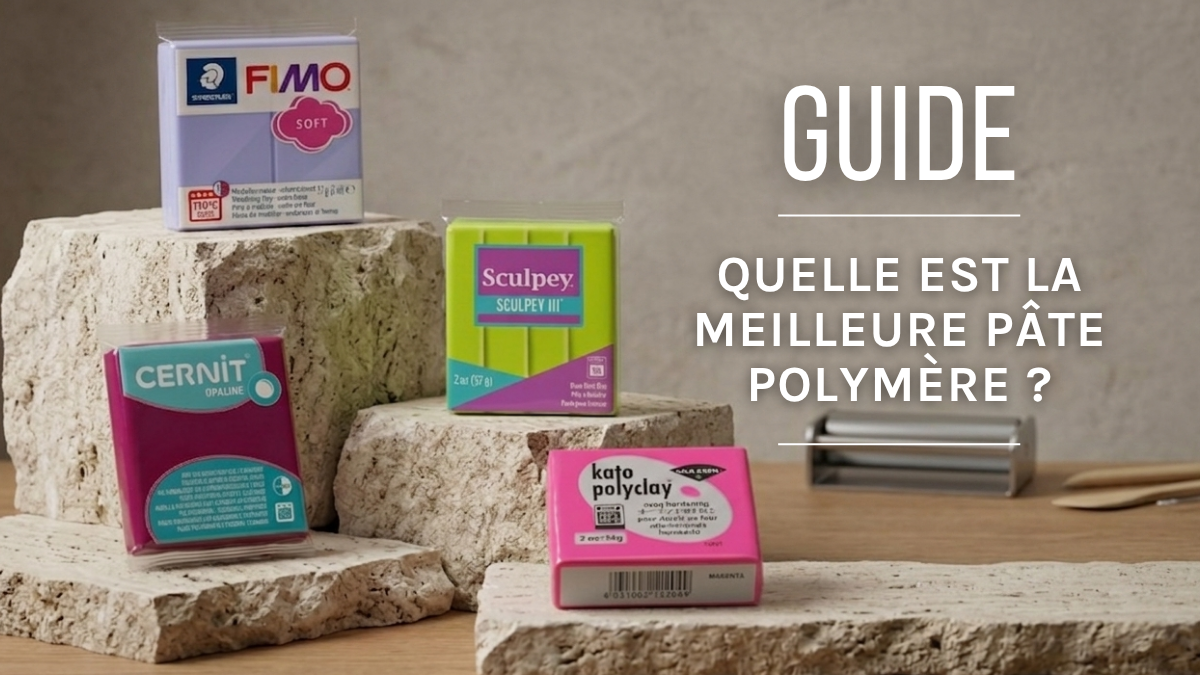
Comparison of the 5 major polymer clay brands

Brand

Firing temperature

Flexibility

Durability

Target audience

FIMO

110 °C

Varies according to range

Very good

All levels

Sculpey

130 °C

Very flexible

Excellent

All levels

Cernit

130 °C

Slightly firm

Excellent

Intermediate to professional

Kato Polyclay

150 °C

Firm

Maximum

Professional

Pardo Viva Décor

120 °C

Semi-flexible

Very good

All levels

Fimo: the benchmark brand in France

pain de pâte fimo

Fimo is so well known that many use its name to designate any modeling material. Its range is the widest on the market:

  • Fimo Soft: soft, ideal for beginners.
  • Fimo Professional: firm, perfect for detailed canes and sculptures.
  • Fimo Effect: translucent, glittery, metallic or leather-effect finishes.
  • Fimo Kids: suitable for children aged 8 and over, soft and non-toxic.

The main asset of the Fimo range: its creative versatility and the wealth of tutorials available online.

Sculpey: the most flexible, ideal for beginners

pain de pâte sculpey

Sculpey Premo is acclaimed by jewelry designers for its ability to retain the finest details even after firing. The Sculpey III range is even more affordable, perfect for a first purchase.

What sets it apart:

  • Easy-to-model paste immediately, without preparation.
  • Natural shine after firing.
  • Can be easily pierced to assemble jewelry.
  • Color palette includes gorgeous golds and pearlescents.

Its only downside: a slightly higher price than its competitors.

Cernit: shine without varnish

pain de pâte cernit

Cernit stands out for its natural gloss finish, with no need to apply a varnish after firing. The Nature range offers a stone-like finish that is highly appreciated for high-end figurines and jewelry. The Neon range is the most fluorescent of all pastes. Cernit Doll is very popular for modeling figurines, and Cernit Number One is a range with 100% opaque colors.

Kato Polyclay: the strongest on the market

pain de pâte polyclay

Kato Polyclay is the absolute benchmark in terms of impact resistance after firing. Firing at 150°C requires precision, and is therefore reserved for experienced users. Its main characteristic is that it is harder than other pasta! You'll need to condition it with a paste machine, to restore its suppleness and mix the color pigments thoroughly.

Pardo Viva Décor: a fine alternative

Less well-known, Pardo offers excellent translucency and pigment compatibility. Suitable for beginners and experienced craftsmen alike.

How to choose the best polymer clay for your project?

Soft or firm: which texture is right for you?

First question to ask: do you want a material that's easy to work with straight out of the packet, or a firmer paste that offers better structural hold?

Soft pastes, such as Fimo Soft or Sculpey III, are ideal for :

  • Beginners who are new to modeling.
  • Detailed creations and small sculptures.
  • Color mixing and gradients.

Firmer pastes, such as Fimo Professional or Kato Polyclay, are aimed at more experienced craftsmen. They require a little kneading to start with, but guarantee remarkable precision and excellent resistance once baked.

Kiln-fired or air-dried?

The vast majority of quality modeling materials - Fimo, Cernit, Sculpey, Kato - require firing at between 110 and 150°C, depending on the brand. This is the process that gives them their final strength.

If you don't have a dedicated oven, or if you're working with children, there are no-fire alternatives. Fimo air, for example, dries in the open air. But beware: these versions are generally less resistant to impact and humidity. To discover the differences in detail, check out our self-hardening vs. polymer clay comparison .

Creating polymer jewelry: which brand to choose?

For successful polymer clay jewelry, three criteria count above all: the hold of fine details, strength after firing and the variety of finishes available.

Our recommendation:

  • Beginners: Sculpey III or Fimo Soft.
  • Fine, detailed jewelry: Sculpey Premo.
  • Special effects (pearlescent, translucent, metallic): Fimo Effect.
  • Professional level: Cernit, Fimo Professional or Kato Polyclay.
DIY bijou en pâte polymèreboucles d'oreilles diy en pâte polymère

Firing, conservation and finishing

Successful firing

Each brand has its own recommendations, but here are the universal rules to follow:

  • Always preheat the oven 15 minutes before placing in the oven.
  • Target temperature: between 110 and 130°C (150°C for Kato).
  • Time: 15 to 30 minutes, allowing about 1 minute per millimeter of thickness.
  • Use parchment paper to protect the surface of your pieces.
  • Prefer a glass or ceramic plate, as aluminum can alter colors.
  • Leave to cool in the switched-off oven for at least 15 minutes to avoid cracking.

Preserving unfired material

The good news is that, unlike clay, it doesn't air-dry. But a few precautions should be taken:

  • Store it in its original packaging or in crystal paper (never in plastic film).
  • Ideal storage temperature: between 15 and 25°C, away from light.
  • If it has hardened, a few minutes kneading in your hands is enough to soften it.

Some brands can be stored for several years in good conditions.

Finishes that make all the difference

After firing, progressive sanding followed by varnishing protects your creation and gives it a professional look. For even more sophisticated jewelry:

  • Metallic powders for a gold or silver effect.
  • Metallic transfer foils.
  • Strass or sequins for a decorative touch.

See our tutorials and inspirations in the polymer creative ideas section .

Result
Schema  What's the best polymer clay (Fimo, Sculpey, Cernit)?
Pauline Perles Co
 Pauline Perles Co - Pauline Perles&Co
Moi, c'est Pauline, je suis assistante SEO chez Perles & Co et depuis mon arrivée, je me découvre une passion pour les bijoux DIY ! Quel plaisir de dénicher la nouveauté qui nous fait craquer et de confectionner des pièces personnalisées..! J'en apprends davantage chaque jour et je partage ça avec vous.

Which polymer clay to choose for beginners?

For your first steps, focus on Fimo Soft or Sculpey III to help you choose the right polymer clay.These soft references are easy to use and require nopreparation, making them ideal for getting started.
Practical advice: start with a selection of small colors rather than a single large block. This way, you can explore different techniques and see what you like before investing further.

Can polymer pastes from different brands be mixed?

Yes, you can mix most polymer doughs, as long as they have the same cooking times and temperatures.provided they have the same firing times and temperatures.For example, you can mix Cernit with other Fimo pastes without any problems.
Be careful with special-effect pastes, however, as their properties may be affected.Our advice: always test a small sample of your mixture before embarking on an entire project.

What equipment do you need to get started?

In addition to loaves of material, you'll need a work mat, a dough machine to even out the thickness, a cutter and a baking tray. Discover the complete list in our beginner's guide to polymer clay.

Share with my friends
To go further
Cleaning the Gold Filled
Howto
Cleaning the Gold Filled
Howto
Cleaning the Gold Filled
Howto
Cleaning the Gold Filled
Howto
Cleaning the Gold Filled
Howto
Cleaning the Gold Filled
Howto
Cleaning the Gold Filled
Howto
Cleaning the Gold Filled
Howto
Cleaning the Gold Filled
Howto
Cleaning the Gold Filled
Howto
Which material to use ?
Modelling clay
Modelling clay
Fimo Polymer clay
Fimo Polymer clay
Sculpey Polymer Clay
Cernit
Cernit
Kato Polyclay
Kato Polyclay
Your questions (0)
You have a question about this sheet? Ask our team and the people who have already tested it. The Perles & Co community is here to help!
Your reviews (0)
Notices subject to control
Please log in to use this feature

Credits

Perles & Co, Internet & E-Commerce company [23/04/2026] Any reproduction, representation, adaptation, in any form whatsoever, even partial, is prohibited, except for reproduction for private use not intended for collective use, representation in the family circle (art. L 122-5 CPI) and online publishing on condition that the source is mentioned and a link is included to the corresponding page of our site www.perlesandco.com.