Delivery unavailable to your country

We are sorry, we are currently unable to ship orders to your country. Thank you for your understanding.

Free shipping on orders over 50€ up to 500g
French Online shop for beads and accessories for the creation of DIY jewellery and other creative hobbies

Log-in

What kind of wire should you choose for making jewelry?

Made by :Lucie T Perles&Co
Published on the :19/11/2021
What kind of wire should you choose for making jewelry?
In summary

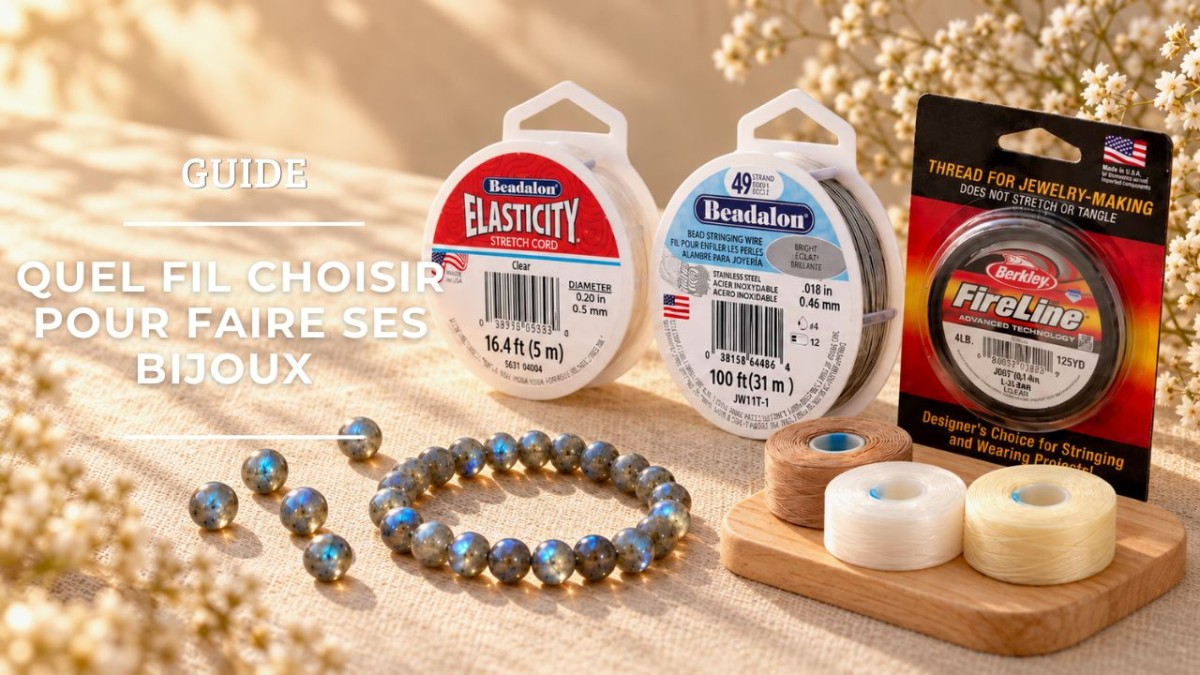
The choice of thread for jewelry making depends on your specific needs. Stainless steel and brass are ideal for heavy pieces, while nylon threads like C-LON and Nymo are better suited for weaving techniques. For delicate pieces, opt for silk thread or elastic thread.

Cord, nylon, elastic, C-Lon, Nymo, copper wire… With so many options, it’s easy to get overwhelmed. To find the right thread, ask yourself three questions:

  • What technique will you be using? Stringing, bead weaving, micro-macramé, crochet, or wire wrapping.
  • What is the diameter of your beads’ holes? The thread needs to fit through—sometimes multiple times.
  • How much weight does it need to support? Lightweight glass beads don’t require the same thread as natural stones or a statement necklace.

Which thread for which project?

Your projectRecommended thread
Clasp-less bracelet made of natural stonesElastic cord
Strung necklace or bracelet, even heavy onesCable wire
Lightweight necklace with a “floating beads” effectClear nylon cord
Notted bead necklaceSilk thread
Seed bead weaving (peyote, brick stitch, etc.)Nymo, C-Lon AA or D, One-G, KO, Sono, Fireline
Micro-macraméC-Lon Beading Cord or C-Lon Micro Cord
Crocheted beaded jewelryMiyuki Bead Crochet
Wire wrapping, ear hooks, ringsMetal wire: stainless steel, copper, brass, aluminum, 925 Sterling Silver

Beading threads

Different types of threadUses for wireAvailable sizes
Cabled WireMade of sheathed steel strands, it can support any type of design, even heavy ones. It ends with Crimp beads.from 0.25 mm to 2.36 mm
Nylon WireVersatile and discreet, it is suitable for many projects, but it cannot support overly heavy pieces. In its transparent version, it creates the effect of beads floating on the skin.from 0.10 to 0.70 mm
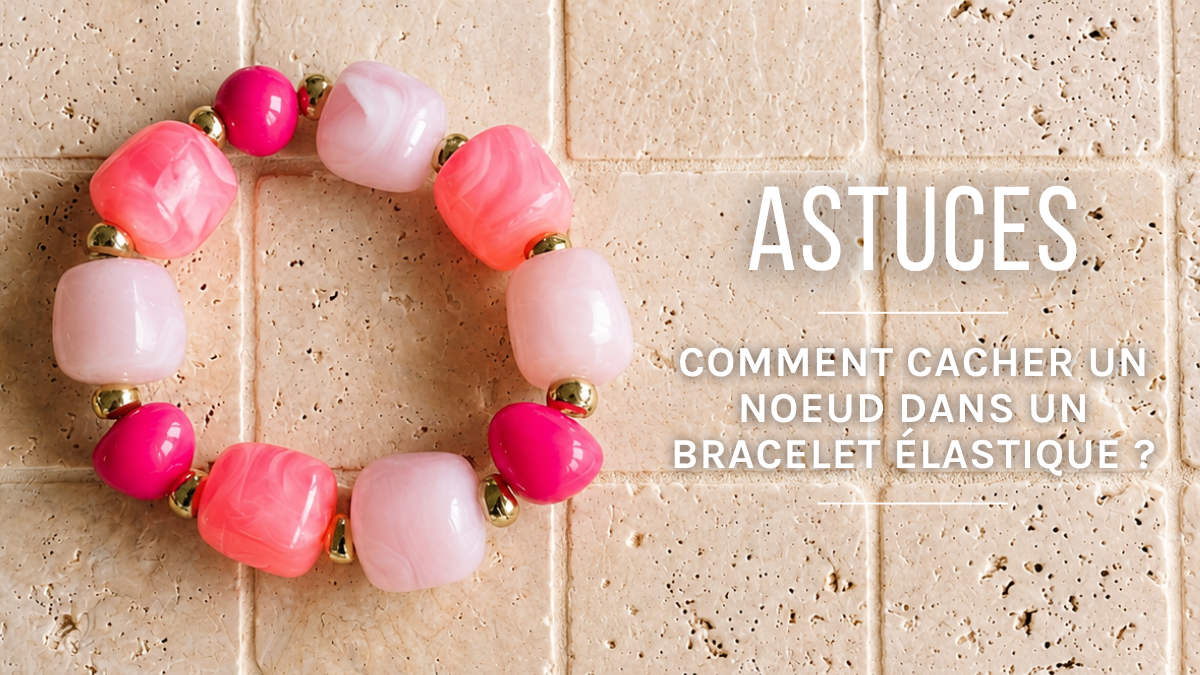
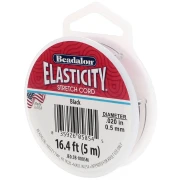
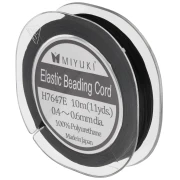
Elastic cordIt allows you to create jewelry without clasps, such as bracelets made of natural stones. Stretch it well before threading your beads to prevent it from losing its elasticity later.
For an invisible knot, see our technical data sheet
0.25 to 3 mm
Silk ThreadThis is the ideal thread for making small knots between beads, as seen on traditional pearl necklaces.0.30 to 1.05 mm
Memory WirePre-formed into a spiral shape for rings, bracelets, or necklaces, it retains its shape without a clasp.0.60 to 1 mm

Threads for beading beads

For weaving techniques (peyote, brick stitch, ladder stitch, etc.), the thread passes through each bead multiple times. It must therefore be fine, flexible, and strong.

Different types of threadDiameterKey Features
Nymo Oapprox. 0.15 mmVery fine, for peyote stitch and bead weaving
Nymo Bapprox. 0.20 mmFor peyote stitch and bead weaving
Nymo Dapprox. 0.30 mmFor peyote stitch and bead weaving
C-LON size AAapprox. 0.15 mmFlexible and durable polyfilament nylon, suitable for multiple passes through 15/0, 11/0, and 9/0 seed beads
C-LON size Dapprox. 0.30 mmA stronger version than C-Lon AA, for the same uses
One-GApprox. 0.25 mmFor peyote stitch and bead weaving
KOApprox. 0.25 mmStronger than C-Lon, comparable to One-G; does not knot or fray
SONOapprox. 0.20 mmNylon designed for seed beads by Japanese designer Sonoko Nozue
Fireline thread0.06 to 0.20 mm

A very strong, very fine braided thread that does not stretch. It can be used for any type of project.

Threads for micro-macramé, kumihimo, and crochet

  • C-LON Beading Cord (approx. 0.50 mm): the go-to cord for micro-macramé.
  • C-LON Micro Cord (approx. 0.30 mm): thinner, for micro-macramé with small beads (11/0 and 15/0 seed beads).
  • C-LON Tex 400 Bead Cord (approx. 0.90 mm): a very strong braided cord for micro-macramé, kumihimo, crochet, and finger weaving.
  • Miyuki Bead Crochet (approx. 0.45 mm): 100% polyester, with a resin coating that prevents fraying. Specially designed for crochet jewelry.
  • Toho Amiet (0.50 and 0.70 mm): 100% polyester embroidery thread, fine enough to thread through Miyuki Delicas 11/0 and stiff enough to thread without a needle.

Metal wires for shaping your jewelry

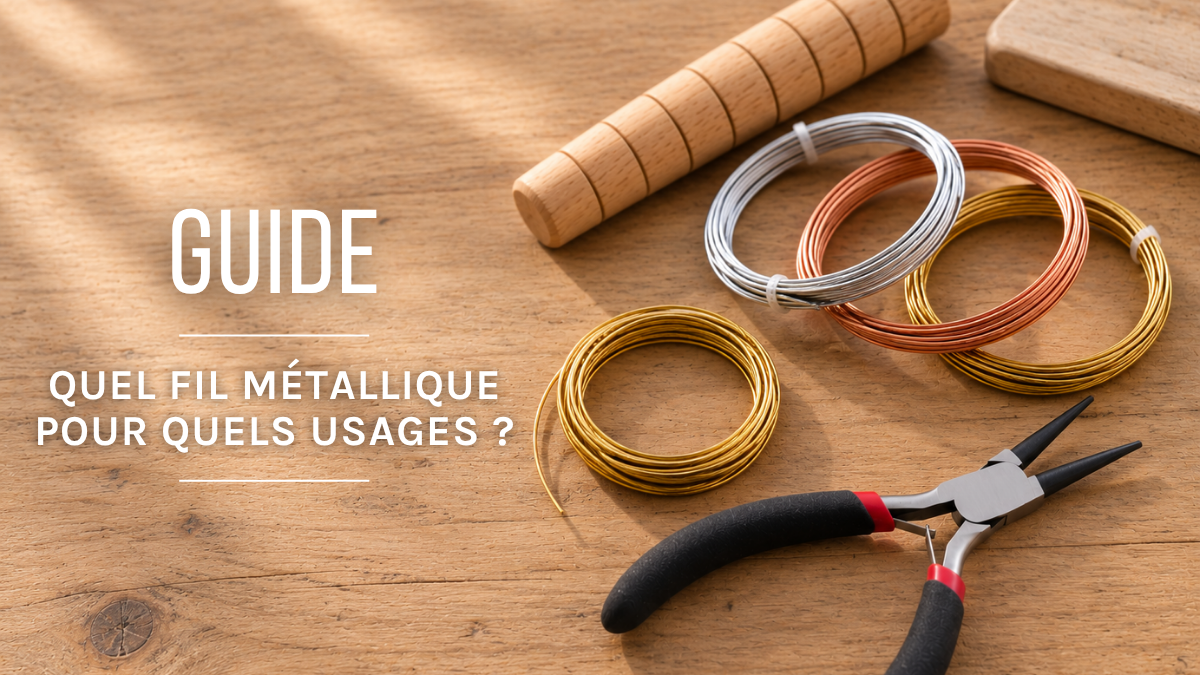
Metal wires are used for wire wrapping and for making ear hooks, rings, or bangles.

MaterialUsageDiametersShapes
Stainless SteelWire wrapping, heavy-duty creations, assemblyfrom 0.38 to 1.25 mmround, half-round, square
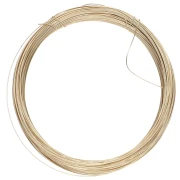
BrassWire wrapping, heavy-duty designs, assemblyfrom 0.40 to 2 mmround, half-round, square
CopperWire wrapping, lightweight creationsfrom 0.20 to 2.59 mmround, half-round, square
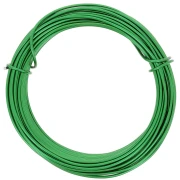
AluminumWire wrapping, large lightweight structuresfrom 1 to 5 mmround, flat
925 Sterling SilverWire wrapping, fine jewelry that retains its luster0.2 to 6 mmround, flat, twisted, diamond-cut

Our tips for choosing the right wire

  • Check the hole in your beads: the wire should pass through easily, and as many times as your technique requires.
  • Match the wire’s strength to the weight: natural stones, ceramic, or metal require cable wire or braided wire rather than thin nylon.
  • Consider the final look: a visible thread is part of the design (silk, colored C-Lon, metal wire), while a transparent thread blends in.
  • Match the thread color to your beads for weaving: it shows through slightly between the beads, especially with transparent beads.
 Lucie T Perles&Co - Lucie T Perles&Co
Hello ! Moi c'est Lucie, je suis responsable du catalogue chez Perles&Co. Je suis bijoutière de métier mais surtout une grande passionnée des loisirs créatifs ! Je touche à tout : bijoux, tricot, macramé, broderie, punch needle.... J'adore découvrir de nouvelles techniques et de nouveaux produits !

What kind of wire should you choose when starting out in jewelry making?

For your first clasp-less bracelet, elastic cord is the easiest option. For a necklace or bracelet with a clasp, cable thread is versatile and durable: it ends with Crimp beads. If you want to learn how to weave beads, start with a thread like Nymo or C-Lon.

What kind of string should I use for a natural stone bracelet?

An elastic thread about 0.5 mm thick works well for gemstones. Make sure the thread fits through the holes in your beads, and stretch it out well before threading it so it doesn't lose its elasticity over time.

What is the difference between nylon thread and twisted thread?

Nylon thread is flexible and inconspicuous, but it cannot support heavy projects. Corded thread, made of sheathed steel strands, is much more resistant to weight and wear: it is suitable for all types of projects.

How do you choose the right wire diameter?

Start by considering the size of your beads' holes and the number of times you plan to thread the wire through: the more times you thread it, the thinner the wire should be. Also consider the weight of the piece: a heavy piece of jewelry requires a thicker or stronger wire.
Share with my friends
To go further
Your questions (53)
You have a question about this sheet? Ask our team and the people who have already tested it. The Perles & Co community is here to help!
By nepsisa (07/09/2026 15:40:18)
Bonjour j’ai un bracelet en pierre naturelles ( améthyste) le fils élastique c’est cassé que prendre pour le remplacer ( le fil était violet )
Merci
Translate the question
Please log in to use this feature
Our Lucie expert answers you (08/09/2026 09:11:37)
Bonjour, pour les pierres gemmes, vous pouvez utiliser du fil élastique de 0,5 mm. Pensez toutefois à vérifier le diamètre du trou de vos perles pour vous assurer que le fil passe sans problème. Personnellement, j'ai une préférence pour le fil Griffin. Pensez à bien étirer votre fil elastique avant d'enfiler vos perles.
Translate the answer
By Mone (21/08/2026 16:12:56)
Je souhaite réaliser des bijoux au crochet avec des perles environ 0,4 mm quel fil brillant dois-je utiliser ?
Translate the question
Please log in to use this feature
Our Laurence expert answers you (24/08/2026 08:46:07)
Bonjour, pour du crochet avec des perles, nous vous conseillons ces fils : Fil en polyester Range - Taille 30 - Argenté et Fil en polyester Range - Taille 30 - Doré
Translate the answer
By Marie (25/07/2026 19:07:01)
Nonjour je souhaiterais savoir si vous avez du fils plutôt brillant pour crocheter avec des perles ?
Svp , merci.
Cordialement
Translate the question
Please log in to use this feature
Our Lucie expert answers you (27/07/2026 08:50:51)
Bonjour, pour crocheter des perles, je vous conseille d'utiliser cette reference : BCO-735
Translate the answer
By Emma (17/05/2026 14:13:10)
Bonjour, quel fil dois-je utiliser pour fabriquer des boucles d’oreilles de type crochet ?
Translate the question
Please log in to use this feature
Our Lucie expert answers you (18/05/2026 09:57:02)
Bonjour, je vous conseille d’utiliser un fil semi-dur, voire dur, avec un diamètre maximum de 0,8 mm. Vous pouvez utiliser du fil en argent 925 , en gold filled ou en laiton.
Translate the answer
By Catherine (13/03/2026 13:17:48)
Bonjour ! J’aimerais faire un arbre mais quel fil dois-je prendre car il m’en faut du solide et du souple !! Merci bonne journée. Amicalement.
Translate the question
Please log in to use this feature
Our Lucie expert answers you (13/03/2026 14:14:28)
Bonjour, nous avons du fil de 3 mm en aluminium qui pourrait convenir pour votre projet.
Translate the answer
Your reviews (38)
Notices subject to control
4.5/5
Average Grades
Please log in to use this feature
By May (posted on : 21/08/2013 )
Un grand merci pour ces explications! j'étais vraiment paumée dans ce vaste choix, et ce tableau, je vais l'étudier ;-)
Translate the notice
By Cécile (posted on : 02/11/2015 )
Pouvez vous me conseiller sur le choix des perles et du fil que je dois utiliser pour faire ce genre de collier. Merci beaucoup

Bonjour,
Je vous conseille d\'utiliser ce fil :
http://www.perlesandco.com/Fil_Cable_7_brins_038_mm_Argente_x92_m-p-11894.html

avec des perles nacrées : http://www.perlesandco.com/Verre_Nacrees-c-2626_40_689.html

et des perles à écraser : http://www.perlesandco.com/Perles_a_ecraser_13_mm_argente_x200-p-9909.html
Translate the notice
By simone (posted on : 15/06/2014 )
C\'est pour un mariage et je vais associé des perles . Plutot du transparent ou du fil argent ??

Admin :
Je vous conseille du fil nylon transparent :
http://www.perlesandco.com/Fils_chaines_rubans_Fil_Nylon-c-139_378.html
Translate the notice
By Anonyme (posted on : 08/09/2012 )
moi qui vous suggérais de faire une synthèse avec les diamètres de fils et ceux des trous des perles, je n'avais pas tout vu sur les petits détails qui font tout sur votre site.
Merci, j'imprime et garde ce précieux document pour faire les commandes.
A ++++
Translate the notice
By JESSICA (posted on : 11/10/2011 )
C'est parfait pour moi qui suis débutante en perle, et qui avais beaucoup de mal à mis retrouver dans ce domaine! Parfait!
Translate the notice

Credits

Perles & Co, Internet & E-Commerce company [19/11/2021] Any reproduction, representation, adaptation, in any form whatsoever, even partial, is prohibited, except for reproduction for private use not intended for collective use, representation in the family circle (art. L 122-5 CPI) and online publishing on condition that the source is mentioned and a link is included to the corresponding page of our site www.perlesandco.com.