Free shipping on orders over 50€ up to 500g
French Online shop for beads and accessories for the creation of DIY jewellery and other creative hobbies

Log-in

Mini creoles with polymer clay beads for beginners

Made by :Lucie L Perles&Co
Published on the :21/06/2023
Time :3h
Level :Easy
Prices :32,34€

How to make jewelry with Fimo clay?

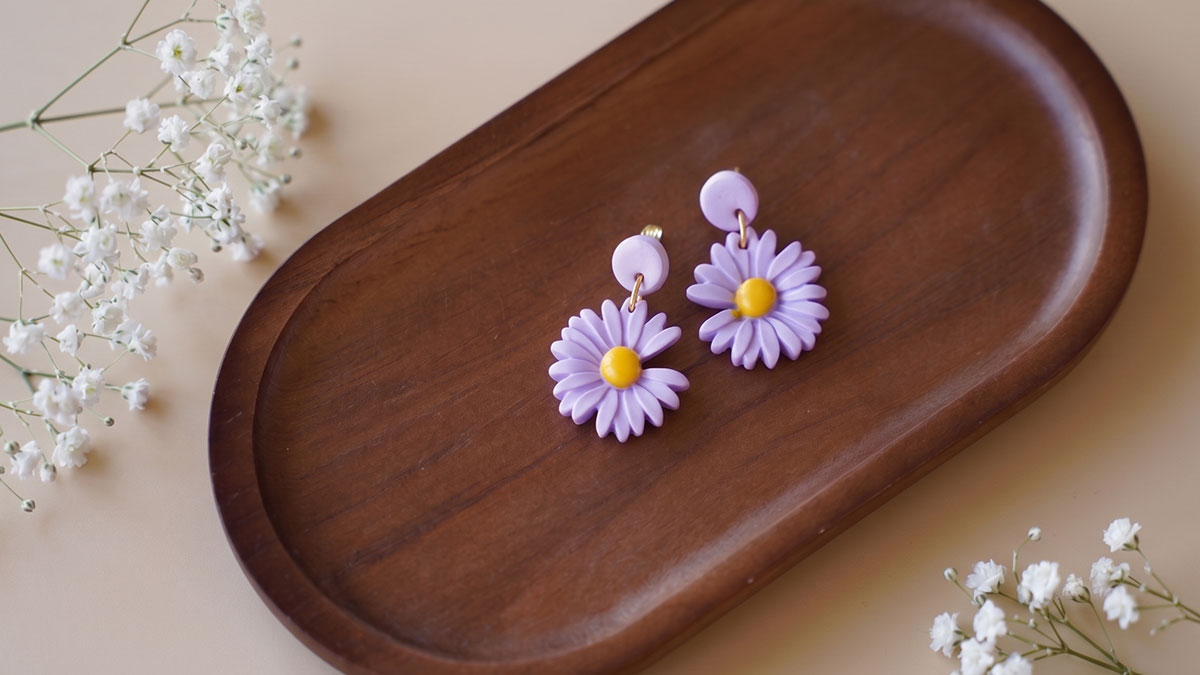
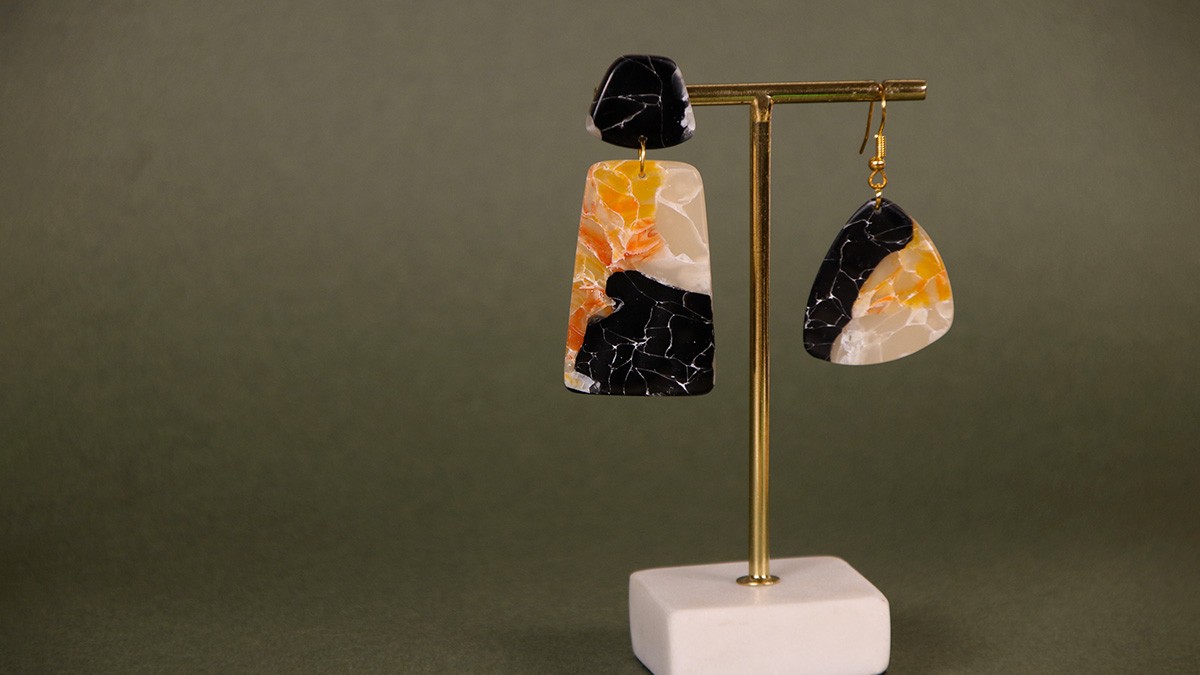
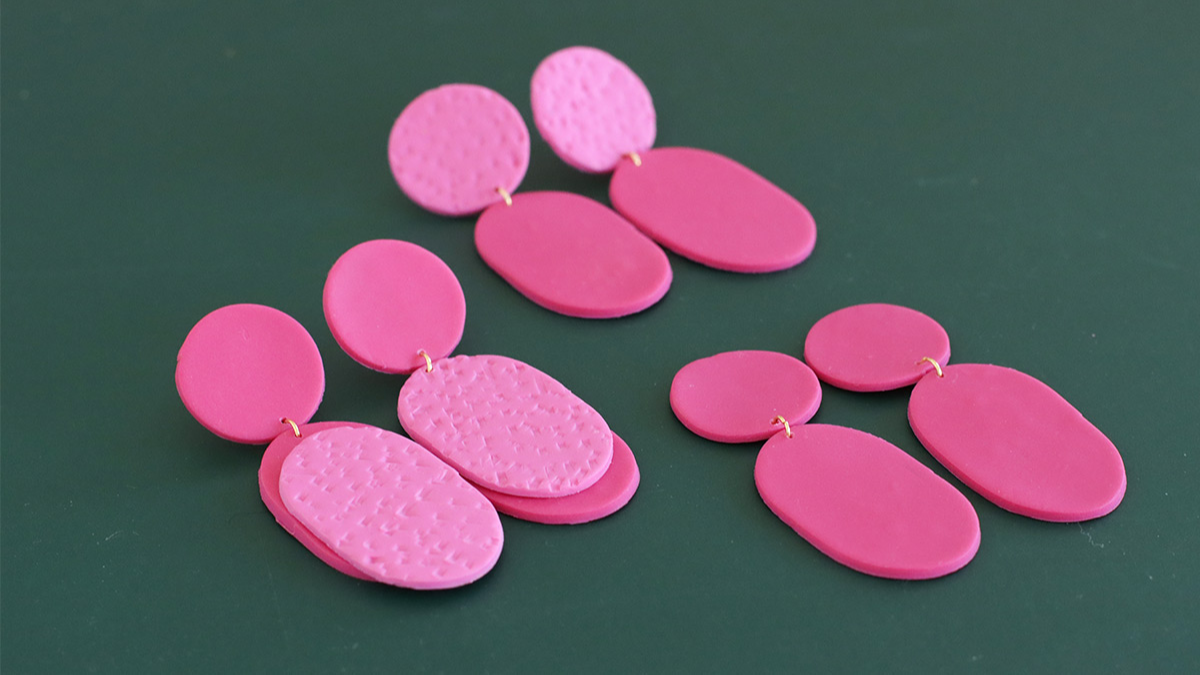
Take your first steps in polymer clay and learn the basics of fimo jewelry creation in this easy beginner's tutorial. You'll make tube beads and die-cut shapes that will then become trendy, asymmetrical (and interchangeable) little earrings thanks to a simple assembly on different types of earring stands: sleepers and mini-creoles.

In the video, I'll give you a few tips on how to get started with the bare essentials or replace certain tools with everyday objects. You'll discover polymer techniques, tips and tricks that will give you the basics you need to start working with this wonderful material that offers infinite possibilities. In particular, you'll learn how to condition dough, make a regular slab of dough, create and reYou'll learn how to condition dough, how to make a regular slab of dough, how to create and bake a polymer clay duck, how to create a marbled effect in fimo, how to create stripes, and how to make polymer clay tube beads.

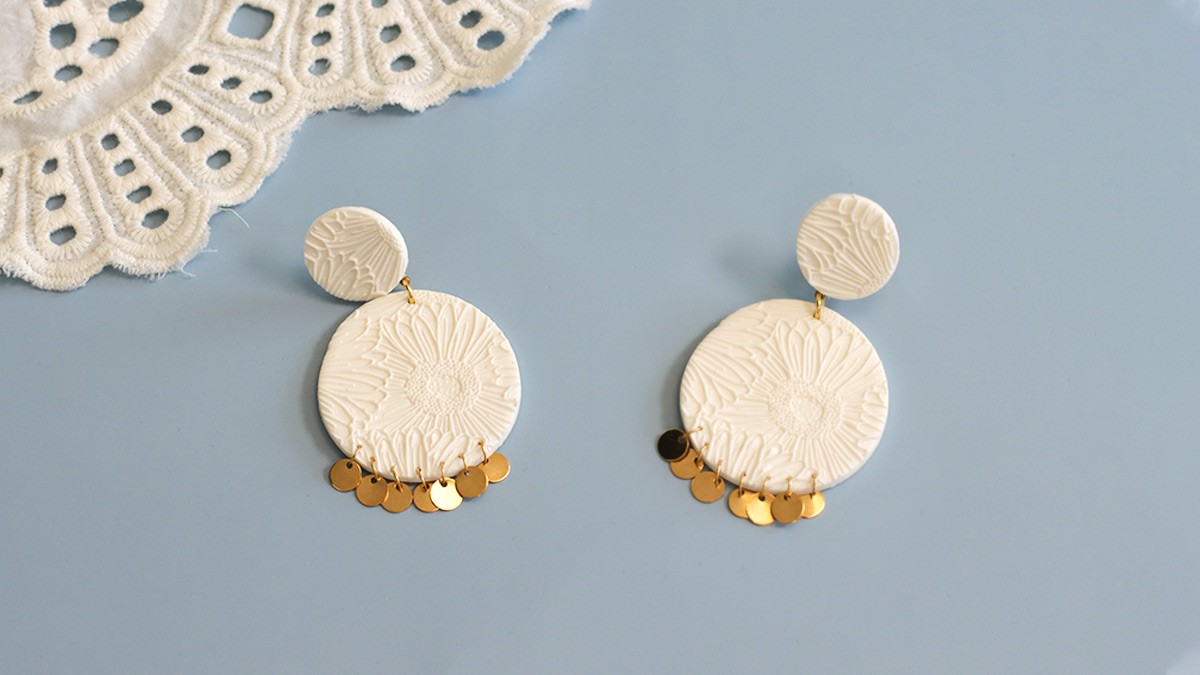
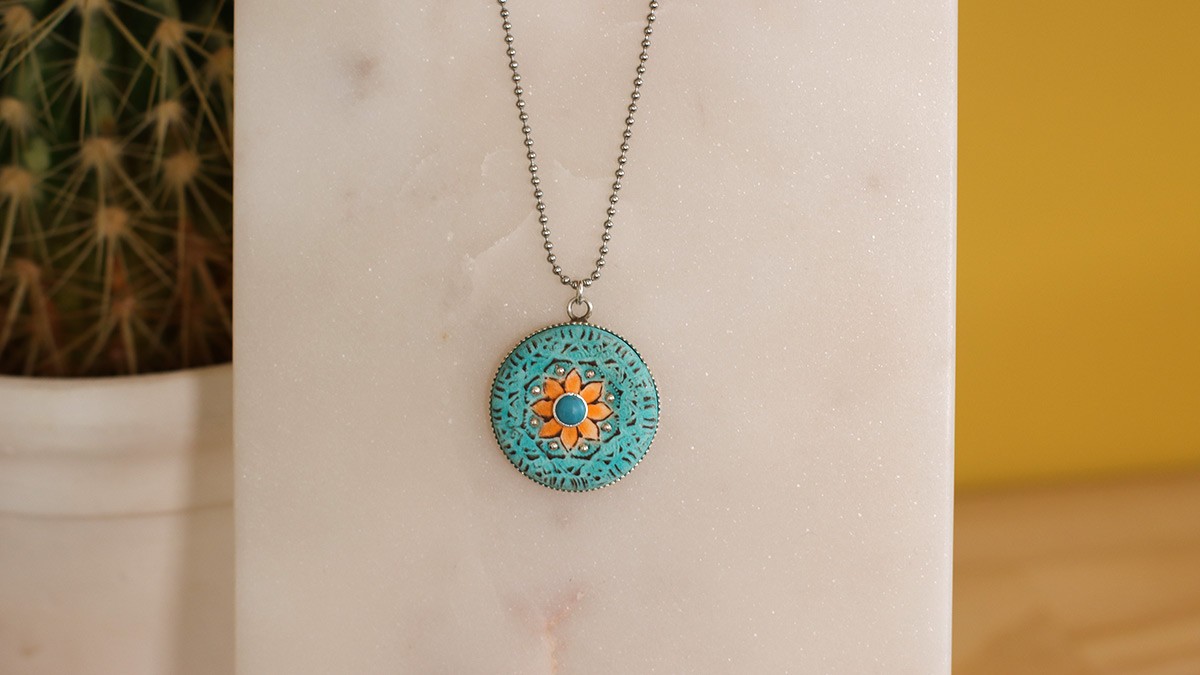
The creations in this tutorial are only ideas, inspirations that you can of course adapt to "your sauce" to create jewelry that's just like you. As you'll see, working with polymer clay encourages creativity, so let your imagination run wild and try things out. Sometimes magic happens, and certain effects are created naturally by random mixing, so don't be afraid of making a mistake.

If you'd like to go even further, I invite you to discover all the other polymer tutorials available on our site. You'll find techniques that will probably give you new inspiration. And don't hesitate to join our Facebook group"Super Club des polyméristes Perles & Co" where you'll find a community of creators with good advice and sharing of polymer creations.

Tutorial steps

Step 1

Cut some dough with your blade. You don't need to take much dough (about 1 quarter loaf if you opt for the assortment), otherwise about 1 or 2 bars of a loaf of classic dough.

Condition the dough by first heating it between your hands, then flattening it several times with your rolling pin. Make sure to remove any air bubbles that may have formed.

This step applies every time you work with a piece of dough for the first time.

Step 2

Stripes

Using your pastry machine (or your rolling pin) and your dough pieces (the height of your choice), prepare your different colors in smooth sheets of identical thickness.

Lay them on top of each other for the first time, then cut the sheet in half again to lay them on top of each other once more. Continue creating a mille feuille with your coloured sheets until you have the desired number of stripes.

Cut the edges for a neat result, and play with the plate to either create tube beads or cut strips to create a flat striped pattern. You can then punch out shapes and pierce them with a needle (or post-fire hand chuck).

Step 3

Marble

Repeat step 1 to prepare your dough, then form colombins (strands) of each of your solid colors. Twist them together to form a single colombin, which you can then fold over itself several times.

Stretch this colombin to a diameter that will allow you to cut tube beads and pierce them, or, as in the previous step, create a plate with the same shape as the colombin.Create a plate with a marbled pattern by gathering pieces of colombin next to each other before flattening them with your roller. Use cookie cutters to create shapes and pierce them before setting them aside for baking.

Step 4

Cane

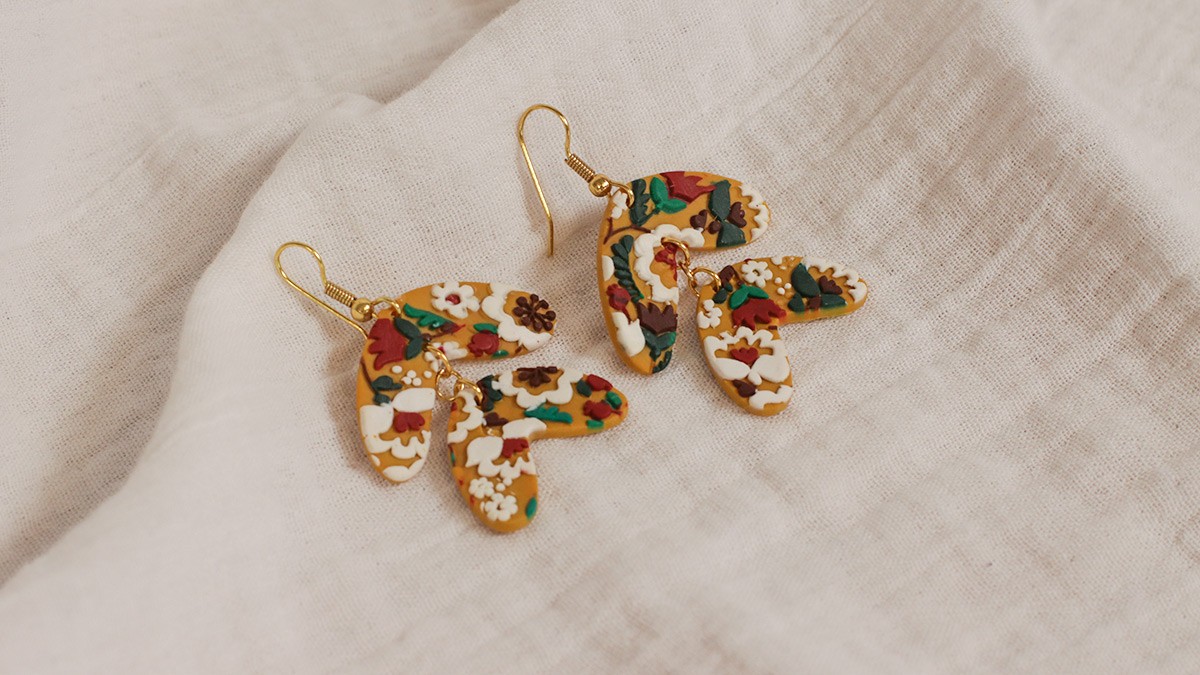
Using the pre-conditioned dough (step 1), form different-diameter colombins and cut them into sections, juxtaposing them (randomly or in a pattern).ons so as to juxtapose them side by side (randomly or in a pattern). Use your fingers to reduce the cane to the ideal pattern size. You can also cut the cane down the middle and stick the piece next to the first if you want to multiply the pattern.

Then have fun with the cane, creating a plate with the pattern to create cookie-cutter shapes.

Step 5

Once your picèes have been pierced with a needle, place them in a conventional oven. If you have one dedicated to polymer baking, this is preferable; otherwise, be sure to clean your household oven thoroughly before the next use.

Be sure to read the supplier's instructions on the dough sachet (generally 110°C for 30 minutes) and place your pieces in the oven. Leave them to cool on removal from the oven, to allow them to harden (they are still malleable when hot).

If necessary, lightly sand your pieces to remove any excess dough left on the edges by the cookie cutter, using very fine sandpaper (800 or 1000 grit).

Step 6

Then move on to assembling your parts. If you haven't drilled holes in your pieces before firing, you can still do so using a hand chuck or a Dremel-type electric drill.

For mounting, depending on the earring brackets you've chosen (creoles, sleepers, studs, etc.), use your pliers and open rings. If you need to make loops and pass through a tube bead, for example, use flat-headed, ball-headed or round-headed studs (metal pins) and form a loop at the other end using one-step looper pliers.

Result
Schema  Mini creoles with polymer clay beads for beginners
Lucie L Perles&Co
 Lucie L Perles&Co - Les tutoriels de Lulu
Hello, moi c'est Lucie ! Chez Perles&Co je m'occupe de chouchouter nos partenaires adorées et d'initier sans cesse de nouveaux projets créatifs ! J'ai plongé dans l'univers des loisirs créatifs depuis petite, où j'ai commencé à créer des bijoux en pâte polymère aux côtés de ma maman. Aujourd'hui, je n'ai pas vraiment de domaine de prédilection et j'aime simplement créer des choses avec mes petites mains selon mon inspiration du moment Je suis plutôt une touche à tout et j'ai toujours hâte de découvrir de nouvelles choses : le macramé, la résine, le tricot/crochet... et bien d'autres !
Associated keywords
Techniques
Matières
Couleurs / Effets
Niveau de réalisation
Pour qui ?
Share with my friends
Which material to use ?
Supplies
Set of mini metal cutters flower x5
OUT-457
Qty : 1
497 in stock
2,50€
Jumprings open  5x0.7mm gold tone x50
ACC-105
Qty : 1
529 in stock
1,00€
Soft head pin 30 x 0,8fine Gold plated x10
2,00€
Premo clay 12 color assortment - Classic x1
18,90€
Subtotal : 32,35€
Tools
Distancer 1mm x2
OUTIL-194
Qty : 1
36 in stock
2,50€
Pliers to create loops One Step 1.5mm Looper x1
27,00€
Artémio - Set of 3 polymer clay cutters with 2 handles x1
7,50€
23x2cm Acrylic Roller for polymer clay - Transparent x1
7,50€
11.5cm Flat nose pliers by Perles& Co - Glitter Mint x1
6,20€
Subtotal : 50,70€
Equivalent product
Manual Polymer and Modelling Clay Rolling Mill Artemiox 1
31,00€
33mm Hollow design hoop earrings - Gold Tone x2
6,90€
Your questions (0)

You have a question about this tutorial? Ask it to our team and the people who have already tested it. The Perles & Co community is here to help you!

Your reviews (0)
Notices subject to control
Please log in to use this feature

Credits

Perles & Co, Internet & E-Commerce company [21/06/2023] Any reproduction, representation, adaptation, in any form whatsoever, even partial, is prohibited, except for reproduction for private use not intended for collective use, representation in the family circle (art. L 122-5 CPI) and online publishing on condition that the source is mentioned and a link is included to the corresponding page of our site www.perlesandco.com.