Average Grades

Je viens de voir une vidéo parlant du(?)jaspe qui dit que cette pierre s'enflamme quand on tape dessus. Qu'en est il vraiment ?
1 Answer
Show answers

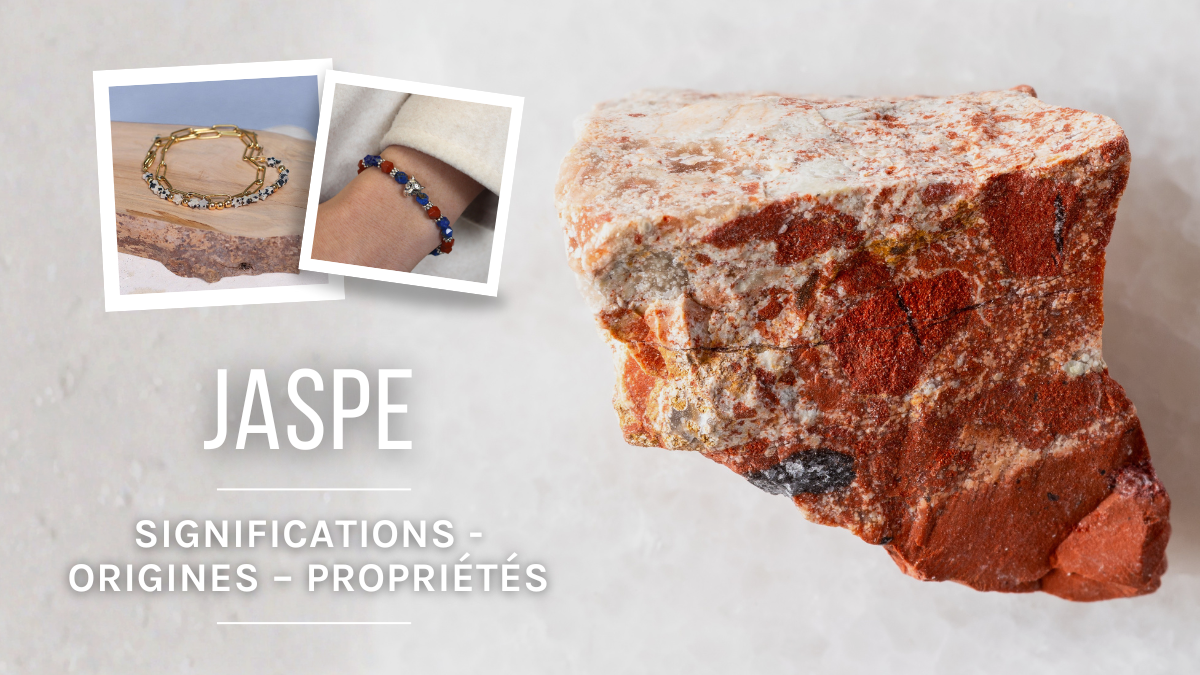
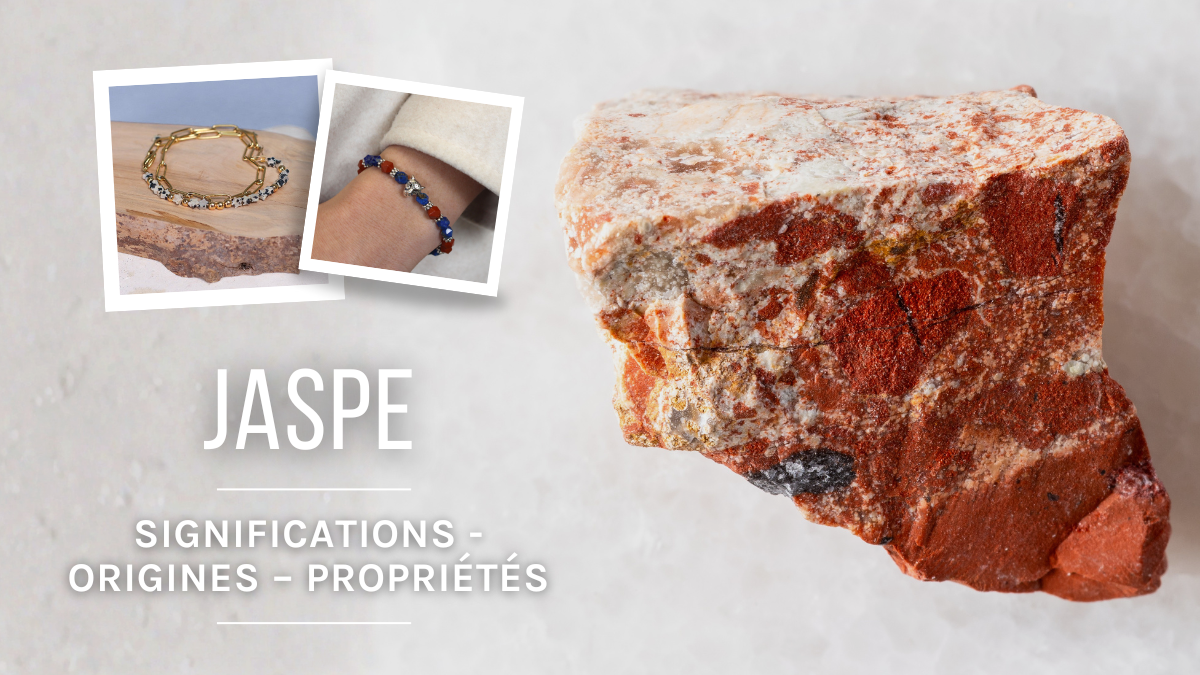
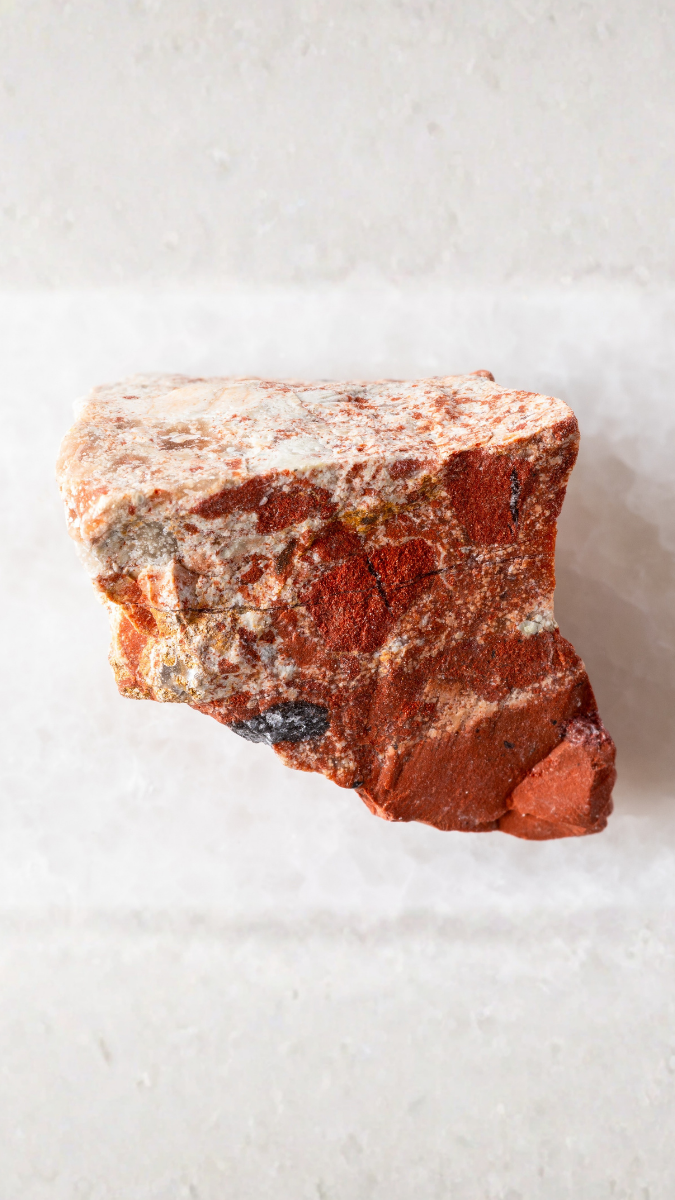
Jasper is a natural stone of many colors, from red to black, highly prized in jewelry. Mainly mined in Germany, Brazil and Mexico, it comes in several varieties, such as red jasper or Picasso jasper, each with its own aesthetic particularities. For your jewelry creations, jasper offers a varied palette to suit every style.
Jasper is a natural stone found in abundance all over the world. Highly prized in jewelry making for centuries, this gemstone comes in a wide range of colors, making it perfect for creating a variety of DIY jewelry pieces.
Check out all our jasper jewelry components and get inspired by our tutorials to create stunning pieces of natural stone jewelry.
The name “jasper” comes from the Greek iaspis and the Latin jaspidem, meaning “speckled stone.” Another theory suggests that this gemstone derives its name from the Hebrew yashepheh, which means “agate.”
This gemstone was already known in prehistoric times, when it was used to make tools, such as fire-starting drills.
As early as ancient times, it was considered a protective stone. The Egyptians crafted amulets from red jasper in the shape of a scarab—a symbol of eternal life—or in the shape of a serpent’s head to protect against snake bites. The Greeks and Romans crafted religious ornaments in honor of their gods. Meanwhile, Native Americans used it to make amulets believed to protect them from the dangers of the night.
In China, it was used to make the emperor’s seals.
Jasper is even mentioned in the Bible. It is also referenced in Norse legends, which tell that the pommel of Siegfried’s sword—the dragon slayer—was inlaid with red jasper to symbolize the blood of this mythical creature.


It belongs to the chalcedony family. Its hardness ranges from 6.5 to 7 on the Mohs scale, and its density is 2.60.
It is a rock of volcanic or sedimentary origin, consisting mainly of silica.
Jasper is a stone that comes in many colors with numerous shades, ranging from blue to green, including yellow, brown, red, beige, pink, and black. It often features geometric lines, speckled patterns, spots, clouds, or stripes.
There are many varieties of jasper, each characterized by its unique color. On our website, you’ll find the following stones:
This gemstone, formerly known as a “semi-precious stone,” is found in abundance around the world. However, the main deposits are found in Germany, Brazil, Mexico, Africa, Peru, the United States, France, Namibia, India, Madagascar, and the Ural Mountains in Russia.
In crystal healing, jasper is considered a stone with powerful properties, particularly regarding emotional balance, the development of self-esteem, creativity, and communication. Its properties vary depending on the color of the jasper.
Red jasper is associated with the first chakra, known as the root chakra. It is said to ward off negative influences.
Landscape jasper is ideal for meditation.
Mookaite jasper is said to affect the third chakra (solar plexus chakra) and promote positive energy, courage, and self-confidence. It is also said to influence the root chakra and sacral chakra to bring balance to one’s energies.
Please note: our gemstones are not sold for the purpose of crystal healing. Natural stones are in no way a substitute for medical expertise or medical treatment.
Like all crystals used in crystal healing, jasper accumulates negative energy. Crystal healers therefore recommend cleaning and recharging it regularly.
If your stone is not set in jewelry, you can cleanse it by leaving it in a container of demineralized water for several hours.
To purify it, simply place the stone in sunlight for a few hours.
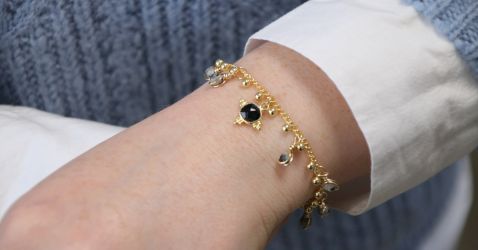
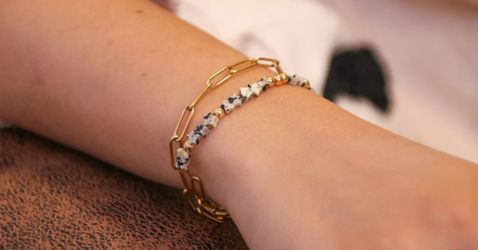
Since this stone comes in an endless variety of colors, you’ll be spoiled for choice. You can pair it just as easily with gold tones as with silver tones. Depending on your taste, choose from stainless steel, 925 Sterling Silver, 3-micron gold-plated, or 14K Gold Filled.
Which stones pair well with jasper? In crystal healing, it’s recommended to combine different types of jasper with one another. In a DIY jewelry piece, you can also pair it with labradorite, tiger’s eye, agate, obsidian, black onyx, quartz, hematite, rock crystal, citrine, or chrysoprase. Also consider rubellite, pietersite, aventurine, garnet, bronzite, lava stone, pyrite, black tourmaline, or rhodonite.
However, it is recommended not to pair red jasper with lapis lazuli.



Credits
Perles & Co, Internet & E-Commerce company [30/01/2026] Any reproduction, representation, adaptation, in any form whatsoever, even partial, is prohibited, except for reproduction for private use not intended for collective use, representation in the family circle (art. L 122-5 CPI) and online publishing on condition that the source is mentioned and a link is included to the corresponding page of our site www.perlesandco.com.