Average Grades


Le proprietà energetiche dell'opale, cambiano in base al colore della pietra? Grazie!
1 Answer
Show answers

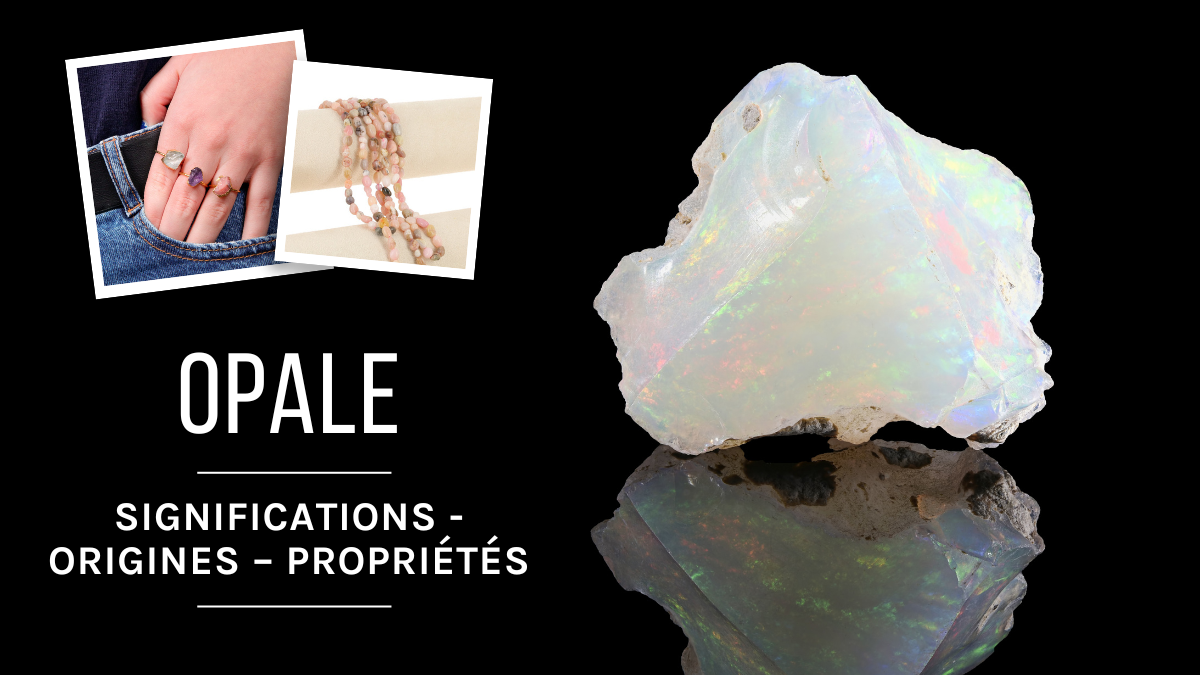
Opal is a gemstone famous for its fascinating play of colors, ranging from blue and red to yellow and violet. It comes mainly from Australia, Mexico and Ethiopia, and comes in different varieties, such as black opal and fire opal. With a hardness of 5.5 to 6.5 on the Mohs scale, it requires delicate handling, but remains ideal for unique jewelry creations.
Opal is a unique and fascinating gemstone, known for its iridescent play of colors that can vary and change depending on the light and the viewing angle. It’s perfect for creating DIY fashion jewelry with personality.
Discover all our opal components and get inspired by our natural stone jewelry tutorials to create without limits!
The name of this gemstone comes from the Ancient Greek “Opallios, ” derived from the Sanskrit “Upala, ” which can be translated as “color changes.”
Opal is sometimes calledthe “Tear of the Gods” in Australian Aboriginal legends. It is said that a spirit, known as the Creator, once descended to Earth on a rainbow to bring a message of peace to humankind. When he touched the ground, all the stones at his feet lit up and took on the colors of the rainbow, thus giving birth to the opal. This gemstone was seen as a divine gift, a sacred link between heaven and earth.
A legend from Greek mythology tells that when Zeus, the king of the gods, witnessed the suffering of mortals, he shed tears of sorrow. These tears, upon touching the ground, turned into opals. Each contained a fragment of the sky, reflecting the shifting colors of day and night. Born of Zeus’s divine compassion, they were considered symbols of protection and beauty, embodying the power and benevolence of the heavens. Hence its nickname, “tears of Zeus.”
In India, the opal symbolizes the Trinity (Trimurti), composed of the creator god Brahma, the preserver Vishnu, and the destroyer Shiva.
The Romans regarded it as a symbol of hope and purity. They believed it possessed the power of all natural stones combined, due to its unique play of colors.
The largest opal ever discovered is called the “Olympic Australis.” Discovered in 1956 in Australia, it weighs nearly 17,000 carats and measures approximately 28 cm long, 12 cm wide, and 11 cm deep.

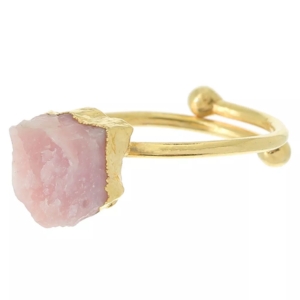

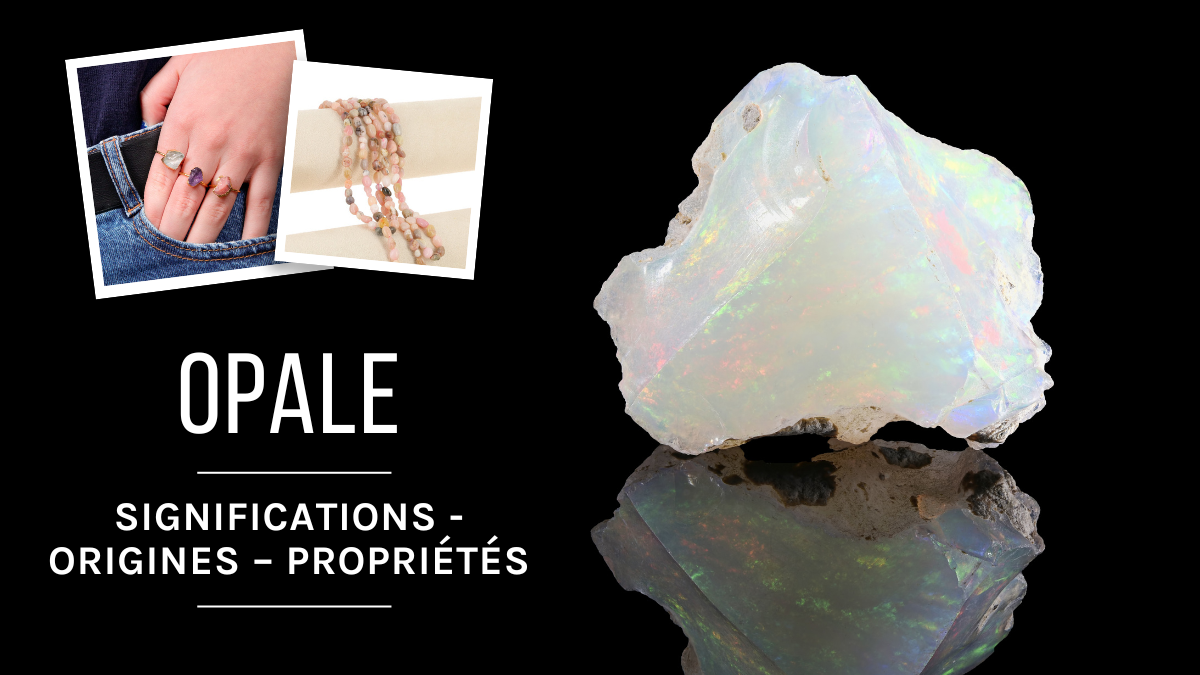
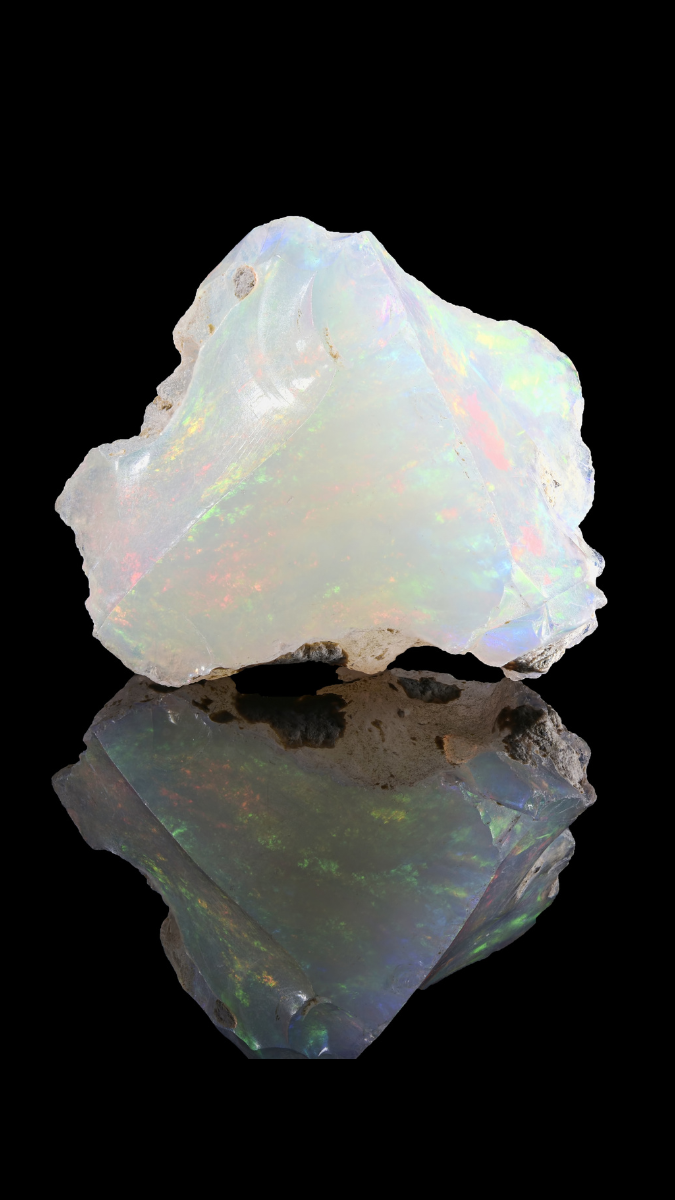
Opal is best known for its play of colors, also called “opalescence” or “play of light.” This characteristic is due to the diffraction of light within the tiny silica spheres that make up the stone. The colors observed can include shades of blue, green, red, yellow, and purple.
There are several varieties of opal:
It is sometimes confused with moonstone or certain types of labradorite.
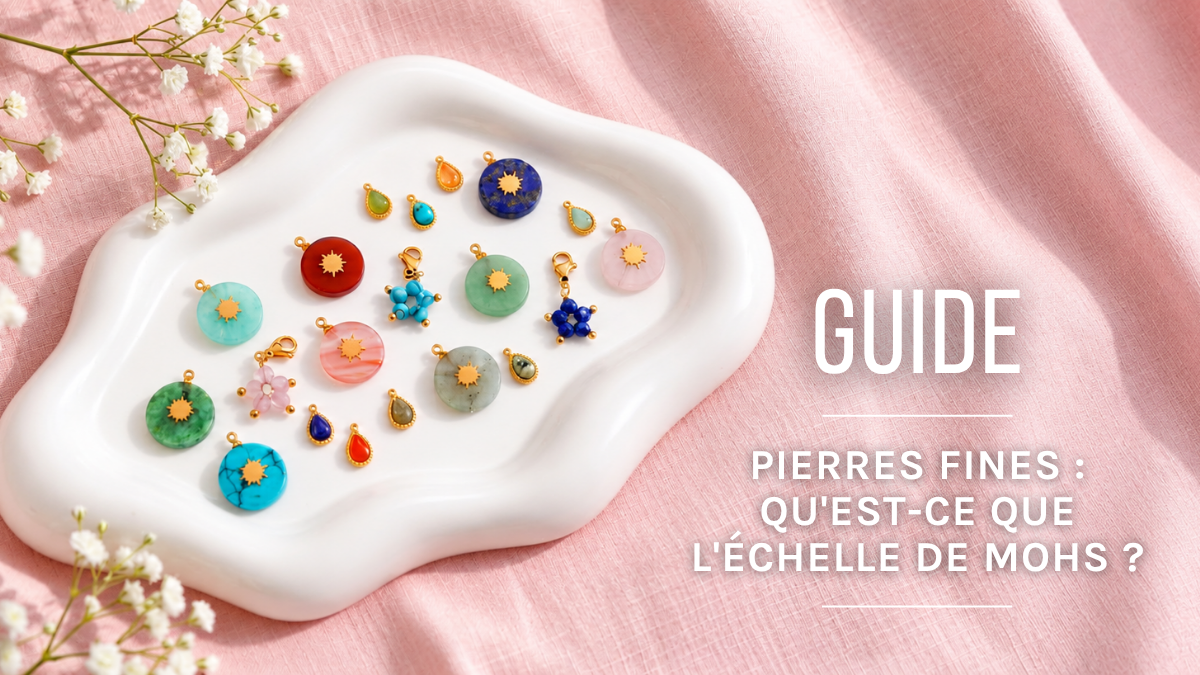
Opal has a hardness of 5.5 to 6.5 onthe Mohs scale, which makes it more fragile. It is prone to scratching and cracking, especially if exposed to excessively dry conditions or thermal shock due to its water content.
The main deposits are found in Australia, Mexico, Ethiopia, Brazil, the United States, Honduras, and Slovakia.
Some believe that this gemstone brings calm and peace, and promotes love and tenderness. Furthermore, it is said to open the mind to spirituality.
It is the ideal stone for those born under the zodiac signs of Gemini and Aquarius.
Please note: Our gemstones are not sold for crystal healing. The effects of gemstones have not been scientifically proven. Natural gemstones are in no way a substitute for medical expertise or medical treatment.
To purify this natural stone, use the smoke from white sage, sandalwood, or cedar to cleanse this gemstone. Pass the stone through the smoke for several seconds, making sure the smoke completely surrounds it. You can also submerge it in saltwater, distilled water, or demineralized water.
After the cleansing process, it’s time to recharge your stone so it regains its full energy. To do this, expose it to sunlight or the soft light of the moon for a few hours.
There are so many different types of opals that anything goes! The warm color of gold-plated or Gold Filled metal perfectly complements the golden or orange hues of certain opals, particularly fire opals. It adds a touch of luxury and classic elegance, while accentuating the gemstone’s shimmering play of light.Stainless steel and925 Sterling Silver highlight specimens with cool tones. They offer a vivid contrast that accentuates the stone’s play of colors.
Which stone pairs well with opal? In crystal healing, opal can be paired with several other stones to enhance or balance its effects:

Credits
Perles & Co, Internet & E-Commerce company [07/01/2026] Any reproduction, representation, adaptation, in any form whatsoever, even partial, is prohibited, except for reproduction for private use not intended for collective use, representation in the family circle (art. L 122-5 CPI) and online publishing on condition that the source is mentioned and a link is included to the corresponding page of our site www.perlesandco.com.