Average Grades
Dans un tricot point riz, on me demande de poser une maille. Je ne connais pas cette action
1 Answer
Show answers

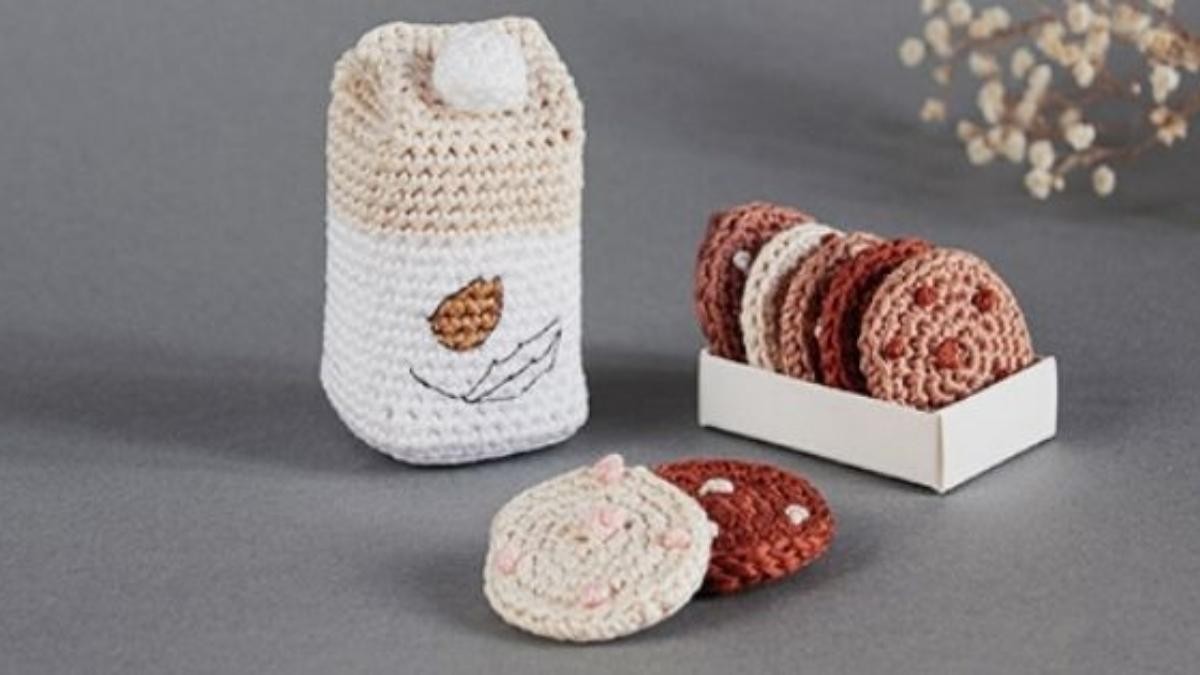
Mastering the vocabulary of knitting is essential for beginners to understand the instructions and make their first projects. Different types of needles, such as wool needles and circular needles, are available, each with specific uses depending on the project. Thus, for knitting in the round, circular needles are often recommended, while for seams, wool needles are ideal.
For many beginners, knitting can quickly turn out to be a puzzle. Because, in addition to knowing the abbreviations, there is an essential vocabulary to master before embarking on a knitting project. Here are some specific terms to understand the language of the knitting world.
Once you have mastered this vocabulary, you can create your first sweater ! How about trying other knitting projects? We have many ideas for you. So don't hesitate to take a look at our knitting tutorials !
Alpaca
The alpaca is an animal native to South America, which resembles its cousin the llama. Its fleece is used to make a very high-end wool, warm, soft and more resistant than sheep's wool. Balls of alpaca yarn have many advantages and are pleasant to knit.
Angora
Angora is an animal fiber obtained from the fleece of the Angora rabbit (and not from the Angora goat which produces mohair!). Its wool is known to be soft and warm.
Assembly
This is the last step in your knitting project. It is a question of bringing together the various parts of creation with pliers, then of sewing them with the needle.
Ball of yarn
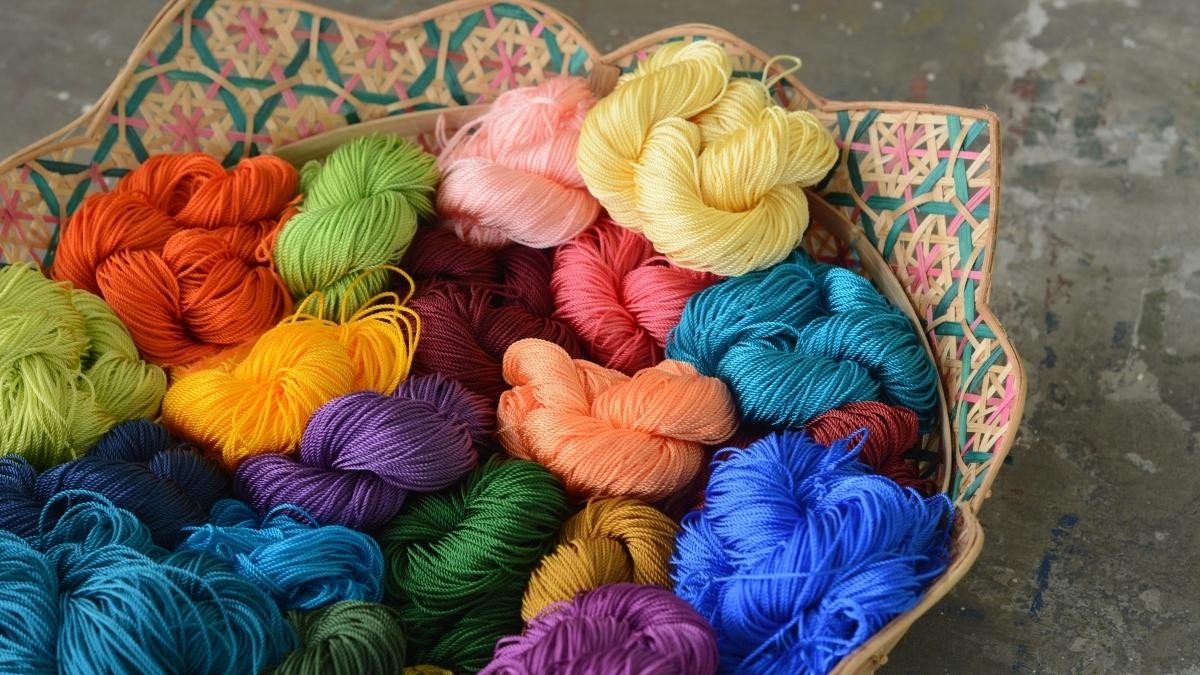
It is a kind of ball made up of woolen threads (mohair, merino, alpaca ...), cotton threads or acrylic threads, wound together. As you can see, you can do without knitting needles using a hook or your own hands, you can not do without a ball of yarn! Without it, there is no knitting project.
Usually, it is accompanied by a label on which are mentioned: the size of the knitting needles to be used, the maintenance conditions, the origin of the wool, its weight and its measurement, the bath of the dye and the value of the sample.
Cast off
It is quite simply the operation to stop his knitting. By casting off the stitches one by one on the needle, you form a nice even selvage on the same row, which will prevent the stitches from coming undone.
Circular knitting needles
Unlike their cousins, straight needles, circular needles are made up of two tapered tips, connected by a flexible cable. Usually, it is used to knit large pieces like shawls or throws. But some knitters swear by them and use them for all their knitting creations!
Diagram
It is a kind of diagram which shows all the stitches seen on the place. It consists of squares with symbols, which represent the stitches. To sum up, 1 square = 1 symbol = 1 stitch. The knitting diagram is read in the opposite direction, that is, right to left and bottom to top.
Decrease
Unlike increase, decrease is used to remove stitches in a row to reduce the width of a work.
Double overlock
Like the single overlock, this is a decrease in the lace stitch technique. It is used to reduce two stitches at a time and is worked with three stitches.
Double point needle
These are needles with two sharp ends. The two tips allow you to knit in both directions (no need to turn your knitting!). They are mainly used by four to be able to knit in the round, when you want to make socks or gloves for example.
No content for this part
Garter stitch
This is the most common stitch in knitting, the one with which all knitters have started. To achieve this easy stitch, all stitches and rows are knitted, turning the piece each time at the end of the row.
To glide
Action which consists in passing one or more stitches from one needle to another without having to knit it or them.
Grafting
Technique which allows to join in an invisible way two pieces knitted by a seam which imitates a row of stitches. Basically, we create an extra row to join the two pieces.
No content for this part
Increase
Operation to widen a knitting, that is to say add additional stitches in one or more places in your creation. This step is done at the end or at the beginning of the row. This technique is used to make the sleeves or a shawl.
Jersey point
This is the second most common stitch in knitting after the garter stitch. It is worked in two rows: one row with all knitted stitches and one row with all purl stitches. There is the stockinette stitch and the reverse stockinette stitch.
Knitting
It is a kind of special wool loom that allows you to knit in the round and make tubes of wool, hats, snoods ... Easy to use, it can be manual or automatic.
Knitting needles
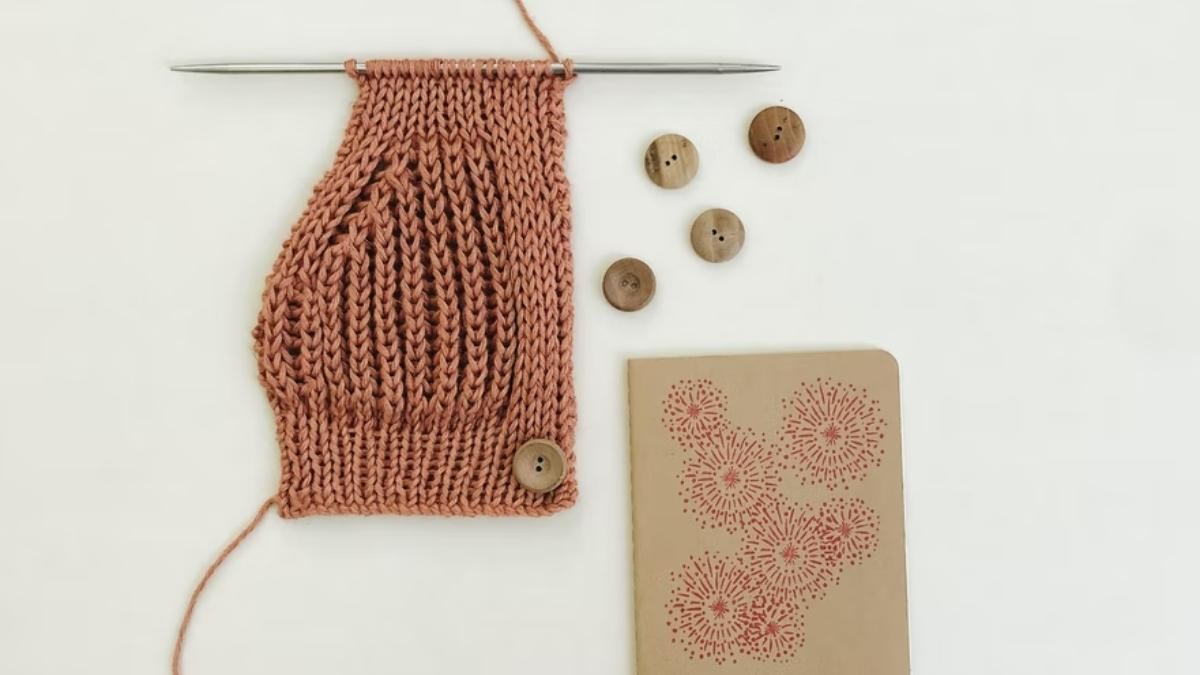
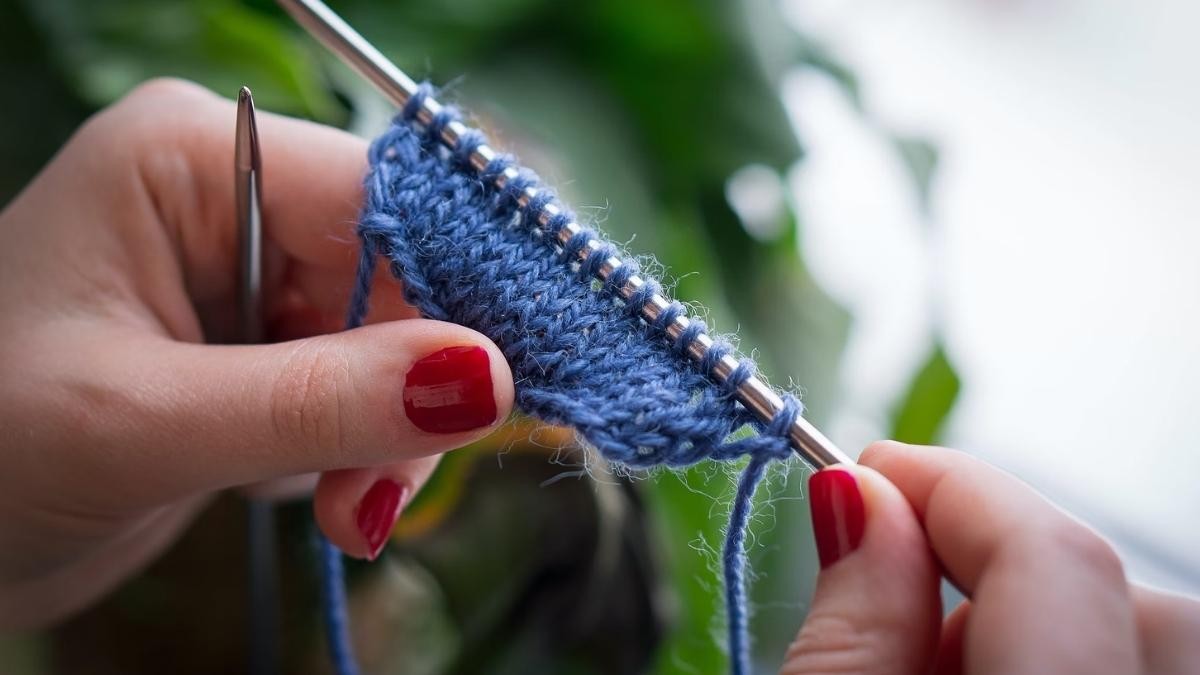
Although you can use a hook, a knitting or even your hands, knitting needles remain the essential tool for any DIY knitting project. They look like long rods more or less pointed on one side and with a tip on the other side (this is usually where you can see a number that corresponds to their diameter). There are different types of knitting needles: straight needles, circular needles, double-pointed needles, cable needles ... They can be made of aluminum, plastic, bamboo or wood. To choose them well, it is best to refer to the labels of the balls.
No content for this part
Marker rings
These colored rings serve as a guide when marking the stitches of your DIY knitting creation. They make it possible to know the number of meshes, to indicate an increase or a decrease.
Mesh
It is a loop mounted on the needle and which is tightened by a knot. This is the basis of needle knitting. The set of stitches on a needle forms a row.
Mesh hook
It is also called "remailleur". It is used to catch stitches and threads pulled from a knitting or to thread the threads.
Mesh place
It is the basic stitch in knitting and the easiest to knit. It forms a sort of "V" on the book. All rows knitted in garter stitch.
Merino
It is a 100% natural textile fiber derived from the dense fleece of the Merino sheep, a breed of sheep native to Asia Minor, introduced to Spain in the Middle Ages. They are mainly bred in Australia, New Zealand and South Africa.
Merino knitting wool is much finer than "classic" sheep's wool.
Mohair
It is a natural animal fiber obtained from the shearing of the long hairs of the Angora goat . Not to be confused with the angora rabbit, whose hair is used to make balls of angora wool.
No content for this part
Openwork stitch
It is a fancy stitch that contains openings that form different patterns like flowers, leaves, arrows ... It is the perfect stitch for knitting light summer clothes.
Overlock
It is a decrease in the technique of openwork stitches. It creates an inclination of the drawing to the left. It is worked with two stitches and we obtain one stitch less on the row.
Pick up the stitches
Action to resume with a knitting needle the stitches stopped or waiting to make the collar or the edges of the fronts.
Point
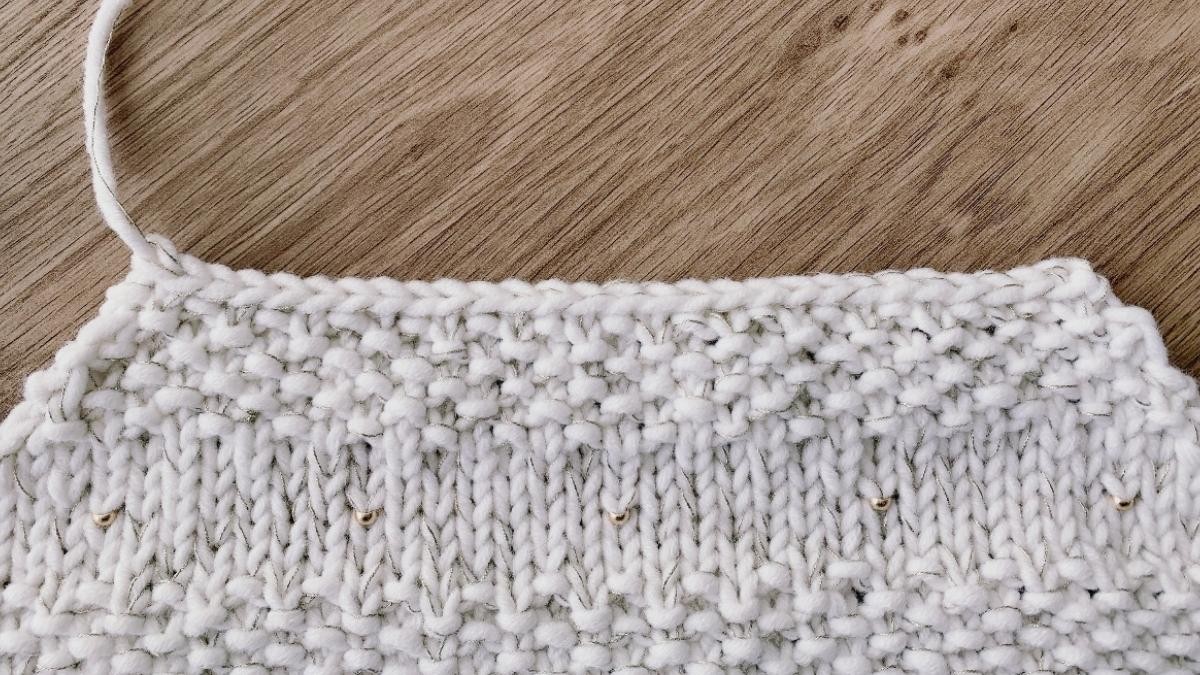
This is a set of stitches and rows that form a pattern that is repeated over the entire piece or only in selected places. There are many knitting stitches: chevron stitch, garter stitch, stockinette stitch, wheat stitch, moss stitch, gadroon stitch ... It is also called "knit stitch".
No content for this part
Rank
It is a set of stitches made on a single needle. On the patterns, it is indicated the number of rows to achieve to make a wool work.
Rank account
As its name suggests, it allows you to count the rows when knitting. They slip over the tips of the knitting needles.
Rear strand
Unlike the front yarn, and logically, it is the yarn placed at the back when knitting.
Remeshing
Action of taking again the stitches released after having pulled a thread of the knitting. This is also said when taking the stitches left on hold on an auxiliary needle.
Reverse stitch
It is also a basic stitch of knitting. It forms a sort of small ball on the book.
Reverse stockinette stitch
As the name suggests, it is the opposite of stockinette stitch. It is worked in two rows: one row with all stitches purloined, then one row with all knitted stitches. The reverse stockinette stitch looks like small waves.
Ribs
This is a knit stitch that alternates knit and purl stitches on the same row to create a pattern. It is often used to make the border of the cuffs or the bottom of a sweater, but it can also be used to bring a little fantasy to a project. There are different kinds of ribs: 1/1 ribs, 2/2 ribs, pitted ribs, moss ribs, English ribs ...
Sample
On the balls and on the patterns, the sample indicates the number of stitches and rows knitted over 10 cm? (value of the sample). It is necessary to knit your own sample, the goal being to get closer to these indications to realize if the finished measurements will be the right ones. If your sample is smaller, the result will be smaller and, conversely, if the sample is larger, the result will be larger.
Basically, this small knitted square will be used as a test before "really" starting your work. The sample makes it possible to check, and to validate or modify if necessary, the tension of the thread, the size of the needles used, the color or the rendering of the chosen wool.
Sample value
It is an indication present on the balls. It represents a small square indicating how many stitches we must knit if our work was 10 cm square by 10 cm.
Selvedge mesh
These are the meshes located on each edge. These are therefore the first and last stitches in the row. They allow you to assemble the different parts of your work when it is finished.
Stockinette stitch
It is worked in two rows: one row with all stitches in place, then one row with all stitches purloined. The stockinette stitch looks like a succession of small "V".
Stop a work
It is also said to "bind off the stitches" or "bind off the stitches". This consists of making a nice border to prevent the stitches from unraveling when you finish a knitting.
Strand
This is one of the two threads in your stitch. The stitch being formed by two strands of knitting yarn: there is therefore the front strand and the back strand.
Thrown
Action of passing the knitting yarn over or around the needle before knitting it. This makes it possible to create a new mesh.
Trapilho
Even if it is knitted, the trapilho is not a woolen thread. It is a thick and coiled cotton thread 100% recycled and eco-responsible. Indeed, this irregular textile yarn is made from surplus fabrics (usually cotton jersey) worked in textile factories. It is sometimes called a lirette, fettuccia, zpagetti or yarn t-shirt.
Twist
It is a shape that is created when crossing stitches, that is to say by reversing the position of the stitches on the needle. There are different kinds of twists: the corded twist (which looks like a rope, hence its name!), A serpentine twist (also called "caduceus" twist), a braided twist, a cob twist ... depending on the number of crossed stitches, you will need to use a cable needle.
Twist needle
It is also called "auxiliary needle". And as its name suggests, it is used to make twists. This needle, shorter than the knitting needles, is composed of a curved part which allows the stitches of the knitting to be put on hold before crossing them to form the cable.
No content for this part
No content for this part
Wool needle
This specific needle allows you to sew the seams when you have finished knitting.
No content for this part
No content for this part
No content for this part


Credits
Perles & Co, Internet & E-Commerce company [06/12/2021] Any reproduction, representation, adaptation, in any form whatsoever, even partial, is prohibited, except for reproduction for private use not intended for collective use, representation in the family circle (art. L 122-5 CPI) and online publishing on condition that the source is mentioned and a link is included to the corresponding page of our site www.perlesandco.com.