Average Grades
Utiliser le peigne à picots sur un arceau
1 Answer
Show answers

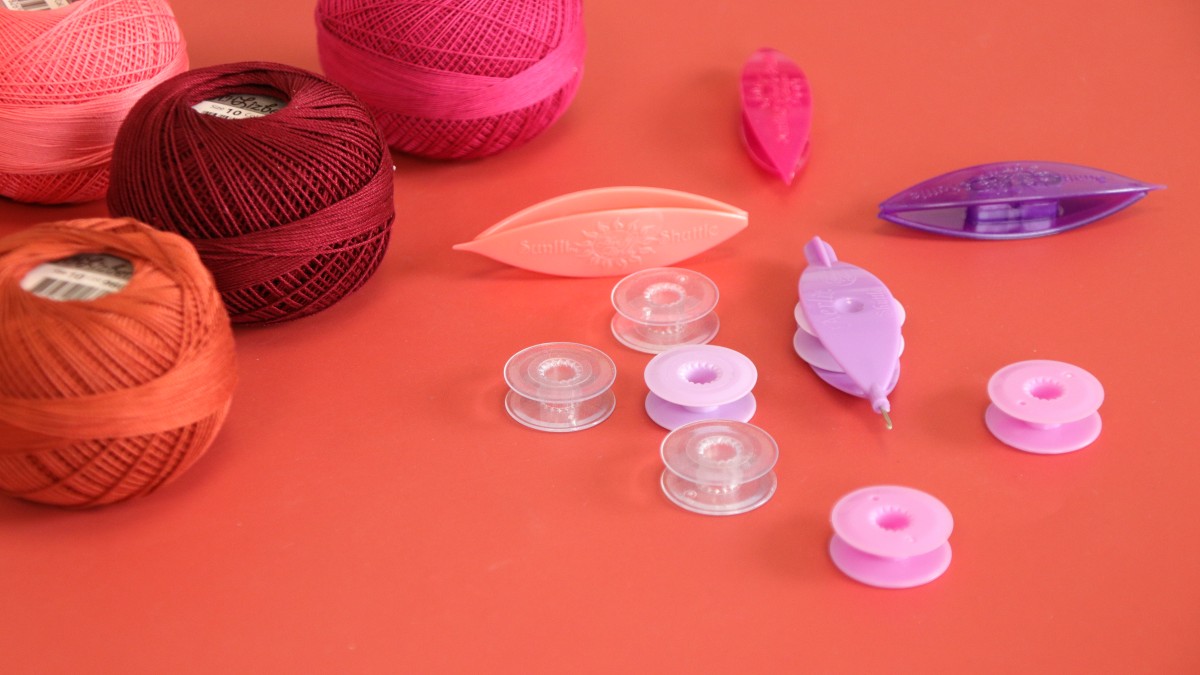
Frivolity is a traditional knotted lace technique, creating fine patterns using navettes, needles or hooks. Shuttles are preferable for more refined work, while the choice of thread, whether cotton or polyester, will influence the look of your creations. To get started, opt for a fairly thick cotton thread and a few essential tools such as fine scissors and a suitable hook.
The shuttle frivolity, contrary to the needle frivolity or the crochet frivolity, is, as its name indicates, a traditional technique to make a lace using one or more shuttles. These shuttles are used as a thread reservoir for the work to be done.
This lace in frivolity consists of a succession of double knots, realized on a thread of weft. One thus obtains rings (closed), and hoops (open). These rings and hoops can be decorated with pearls and picots.
To start with shuttle lace, you will not need much material, but those presented here are essential.
The essential tool of course! Many beginners wonder whether it is better to practice lacemaking with a shuttle or with a needle. The main interest of the shuttle for frivolity work is that it allows you to create much finer works, and with a much better hold, because the knots are worked directly on the weft thread, without a needle crossing them.
There are several types: plastic lace shuttles, classic, whose thread is loaded directly by winding the thread on the shuttle. Others, which have a spool that can be removed to load the thread, before repositioning the spool.
There are also shuttles with an integrated hook at the end of the shuttle. This can be handy if you need to undo your work in case of a mistake. But it can also get stuck in the threads when the shuttle passes. The choice to have a hook at the end of the shuttle is a question of personal comfort.
You will also find very beautiful shuttles made of wood, bone, ivory or metal which are real collector's items!
The size of the shuttle will depend on the size of your hands, and the size of your project. The smaller the shuttle, the more you will need to refill it and add threads as you work.
It will be of great use to you especially if your shuttles are without a hook. It will allow you to make connections, possibly load pearls, undo your lace if you made a mistake, etc.
The hook must be very fine (between 0.5 mm and 0.60 mm) but it must also be adapted to the thickness of your thread. If it is too thin, it may damage your yarn. A 0.50 mm hook will be perfect for Lizbeth 40 and 80 thread, as well as Vega 40 or 30 thread. The 0.60 mm hook will work for thicker yarns, such as Lizbeth size 20 or 10, and Vega size 20 or 10.
Scissors should be thin enough, but with sharp tips, to be able to cut the finishing threads as close to the work as possible.
Sewing needles, which you will use to finish the work by hiding the threads in the knots, should be thin enough not to distort the work, but they should have an eye large enough to pass the thread through. In addition to helping you pull the threads in, they will help you undo the knots if you make a mistake.
You will also need a beading needle if you want to decorate your work with beads.
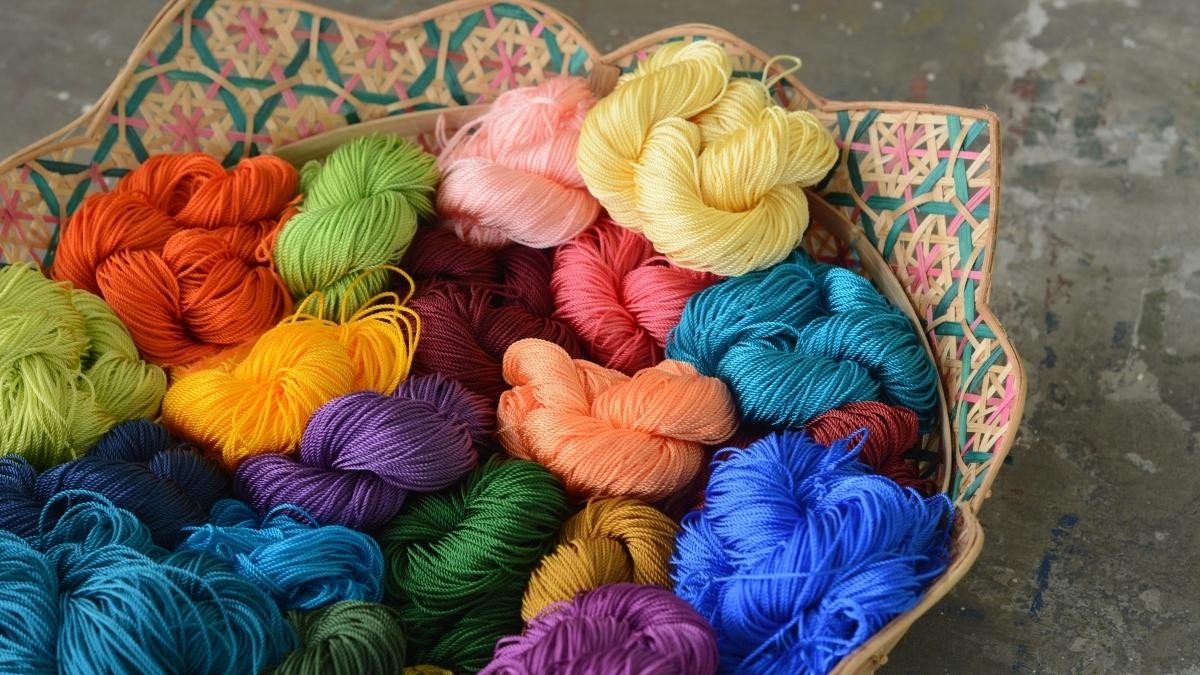
To begin, it is highly recommended that you start with fairly thick cotton thread, such as Lizbeth #10, so that you can see the knot formation and the transfer of the knot. When you have acquired sufficient ease, you can move on to thinner threads, such as Lizbeth n° 20 (which is still quite thick), Lizbeth n° 40 and Lizbeth n° 80 or DMC 80 special lace, which are two very thin threads and for which you already need to have some automatisms.
The advantage of these yarns is that they are of very good quality, and exist in a wide range of colors, plain or shaded.
These are threads that offer a very good hold if you want to make jewelry. They provide a stiffness that you won't get with cotton, so you won't need to use a hardener. However, they are not suitable for beginner frivolous women because they are more difficult to master, especially in the tension of the knots. If the knots are too tight, you will not be able to close your rings, and if they are too loose, the result will be soft.
Among these threads, there is the Vega thread proposed in 3 sizes at Perles & Co: 20, 30 and 40, knowing that the larger the number, the finer the thread will be. The thread is to be adapted to the look you want to give to your jewel.
I also use C-Lon micro cord thread which offers a very nice hold and a wide range of colors.
They are used to make decorative picots of regular size. They are not essential, but when you are a beginner, they will be a great help.
Seed beads are, of course, optional, but they add a touch of refinement to your jewelry. Moreover, they can also help the fall of an earring for example, by giving them a little weight, jewelry frivolity is very light and thin.
Their size will of course depend on the size of your wire. With wire size 30 or 40, the ideal size of beads is 15/0. With size 20 wire, 11/0 seed beads are perfectly suitable. The choice of the brand (Miyuki, Toho, Matubo, Preciosa Ornela...) is a matter of personal taste.
Like the seed beads, they are optional, but they give weight and shine to your jewel. The size of the beads will depend on the final result you want and the size of your wire. For example, for n° 30 and 40 wires, 3 or 4 mm beads are perfectly balanced.



Credits
Perles & Co, Internet & E-Commerce company [21/03/2022] Any reproduction, representation, adaptation, in any form whatsoever, even partial, is prohibited, except for reproduction for private use not intended for collective use, representation in the family circle (art. L 122-5 CPI) and online publishing on condition that the source is mentioned and a link is included to the corresponding page of our site www.perlesandco.com.