Average Grades
Bonjour, au 20ème rang fu manteau de souris il est écrit : 4 end 2 end ens tourner le travail 2 l 3 end tourner. C'est quoi le l ? On passe de 21 m à 5 m
Un grand merci
Un grand merci
1 Answer
Show answers

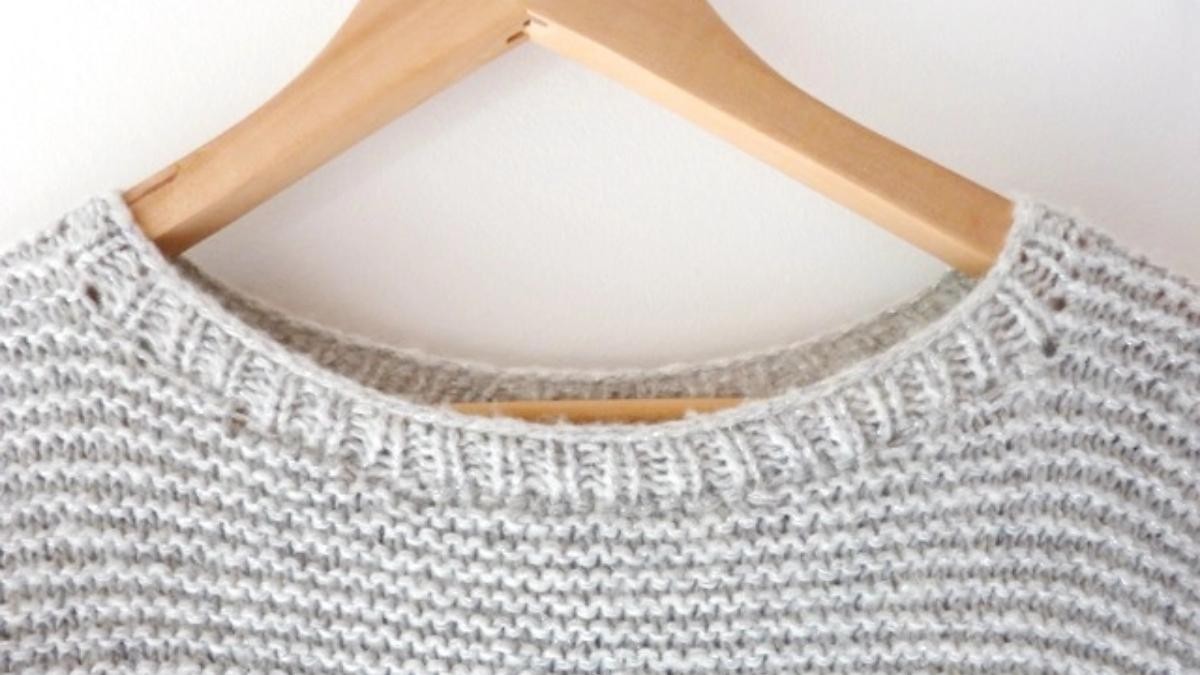
To successfully knit a sweater or jacket, it's essential to understand the pattern and to respect the sizes and swatches to get the right tension. Familiarize yourself with the abbreviations and stitches indicated, and follow the instructions for increases and decreases. With patience and the right tips, you'll be able to decipher any pattern and create a unique design with pride.
Do you know how to put on stitches, fold sts and make garter stitch? You've learned to make simple scarves, hats, and now you want to get into a more complex knitting pattern like a sweater or a jacket? But now, you do not know how to read a knitting pattern ? We give you all the tips to get to decipher the language knitting. At first glance it may seem incomprehensible, but once you have all the Turnkey it will be a breeze to understandsexplanationof knitting. So follow the guide to find out how to read a knitting pattern?
1. The size : you must find the elements concerning your size SM or L. After choosing your knitting pattern, the pattern will propose several sizes, choose yours. We advise you to take the time to read all the explanations and to highlight all the information that applies to your size.
2. At first, it's best to follow the pattern to the letter and use the same wool as your knitting sweater pattern for example. Reading a boss is complicated enough in the beginning needless to add difficulties by changing the thread.
3. The knitting sample : It is very important to take the time to knit a sample. Especially if you decide to take another wool than the model. Indeed, each person has a way of knitting of his own. We knit more or less close stitches. Knitting a sample will allow you to check the knit tension. A sample is a square that usually knits 10 x 10 cm but we advise you to make a square of 15 x 15 cm using the point used for your work and the needles that are indicated to you.
To measure and count the stitches , you must mark with pins a square of 10 x 10 cm in the center of your sample. Then you simply count the number of stitches and compare the result to your boss.
4. The lexicon of knitting in French : here are the general abbreviations used which will allow you to understand the explanations ofyourknittingwork:
aig. : needles / needles: circular needles (twisted needles)
m. : meshes
R or rg (s): ranks
tric. knit
end. : in law
approx. : towards
ens. : together
inc. : increase
Sun: decrease
rab. : fold down
pt: point
cont. : Carry on
5. The points used: it is indicated in your boss the points used for the work. And sometimes they can explain to you how to make the employee point. For example :
Ribs 2/2
R1: 2m end, 2m approx
R2: 2m approx, 2m end
Always repeat these two ranks
Jersey place
R1: place
R2: upside down
Always repeat these 2 rows
5. Asterisks : This knitting symbol ** serves to delimit all or part of the explanation of a rank.
For example: * 1m end, 2m approx * => you have to knit a stitch and two stitches and you have to repeat it until the end of the row. The description of the point is between two *. Another example: 3m end * 1m end, 2m approx * => you need to knit 3 stitches, then 1 stitch stitch and 2 stitches, then repeat * 1 stitch st and 2 stitches * to the end of your st.
6. Increases and decreases in knitting : you do not know how to do them? We give you all the explanations in videos to make your increases and your decreases .
In the explanations of your knitting sweater pattern , you may have noticed: "2 x 1m every 14 rows". Which means that you need all 14 rows to make an increase of stitches on your knit: 2 x 1 stitch. Basically knit 13 rows, then at row 14, knit 1 stitch at the beginning and another at the end. Then knit 13 rows without inc and knit 1 more each side and retricot 13 rows ...
Another example for the decreases: " At 46 cm high, after the ribs, form the arms on the left side of the 2 rows 1x3m, 2x2m and 3x1m .:" Which means in French: à 46 cm high after the ribs you must form armholes:
Count the number of meshes obtained at the end, if it does not correspond to the number of meshes indicated it is that there is an error and that you must start again. Do not be discouraged, in the beginning it is normal to make mistakes!
7. Assembly and finishing : this is the final step not to miss! At first, you have to get all the threads that go beyond your work (change of ball, color, ...) you just need to use a wool needle for this operation and "hide" the threads in the box. back of your book. We advise you to pass the son in several meshes for more security.
In your boss, the seams to make are indicated, you just have to follow the steps step by step in the right order.
And now, you are ready to decipher any knitting pattern. With a lot of time and patience you will be able to make a beautiful sweater or knit jacket. And what a pleasure to wear a unique model and say proudly to everyone: "I did it!" Go to your needles, get started in a knitting project!


Credits
Perles & Co, Internet & E-Commerce company [30/11/2018] Any reproduction, representation, adaptation, in any form whatsoever, even partial, is prohibited, except for reproduction for private use not intended for collective use, representation in the family circle (art. L 122-5 CPI) and online publishing on condition that the source is mentioned and a link is included to the corresponding page of our site www.perlesandco.com.