
Charms




How to hang a charm?
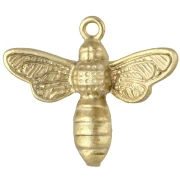
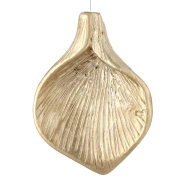
There are many ways to hang a charm in metal, or any other material. The charm generally has a closed ring or a hole.
You can simply thread it onto a fine cord or chain.
For a professional look and a straight charm, you can use open rings. These enable you to attach your charm to earrings, rings, bracelets, chain... Or use your charms to make a charm bracelet.
Simply attach a Lobster Clasp to your charm, and you'll be able to put it on and take it off your bracelets as you please.
How to use a charm
This small component is ideal for creating jewelry and accessories.
Here are a few creative ideas, but there's nothing to stop you letting your imagination run wild.
- Make a man's key ring in leather.
- Surfer necklaces, heishi bracelets always with a little summer charm.
- Fall for this bracelet with cowrie shell and water lily charms.
- Use your charms as earrings, inspired by these mini gold creoles.
As you can see, there are an infinite number of possibilities for creating jewelry with charms. For beginners, we give you the basics of jewelry-making in our toolbox. You'll learn how to properly attach your charms or choose the right joining rings.
How durable are metal charms?
It all depends on the type of metal used, its surface treatment and your intendeduse. There are several metals commonly used for charms: brass, zamac, zinc, aluminum and more. Each has its own specific characteristics.
- Brass is a solid alloy, frequently used in costume jewelry. It is durable if well protected by plating (e.g. PVD) or varnish. Untreated, it can oxidize on contact with moisture or skin.
- Zamac is an alloy of zinc, aluminum, magnesium and copper. It is appreciated for its good resistance to corrosion, especially when plated. It is often used for cast charms with fine details.
- Zinc and aluminum are lighter metals. They can be durable, but are sometimes more susceptible to scratches or wear if not protected by a surface treatment.
To prolong the life of your metal charms, avoid contact with water, chemicals and perfume, and store them away from humidity. As for cleaning, you can find all our advice in this fact sheet.