Average Grades
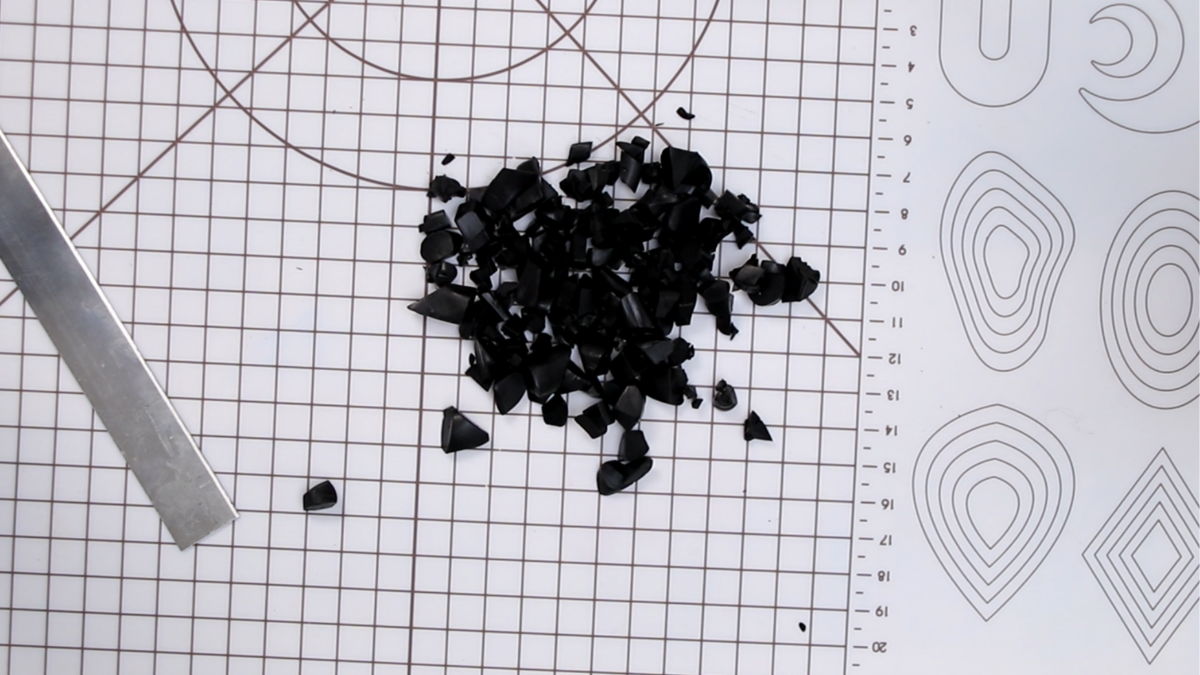
Take your black dough loaf and cut it into two pieces. Use one of the halves by cutting it into small pieces with your blade. Try to roughly make 3 different sizes of dough pieces for a more natural effect.

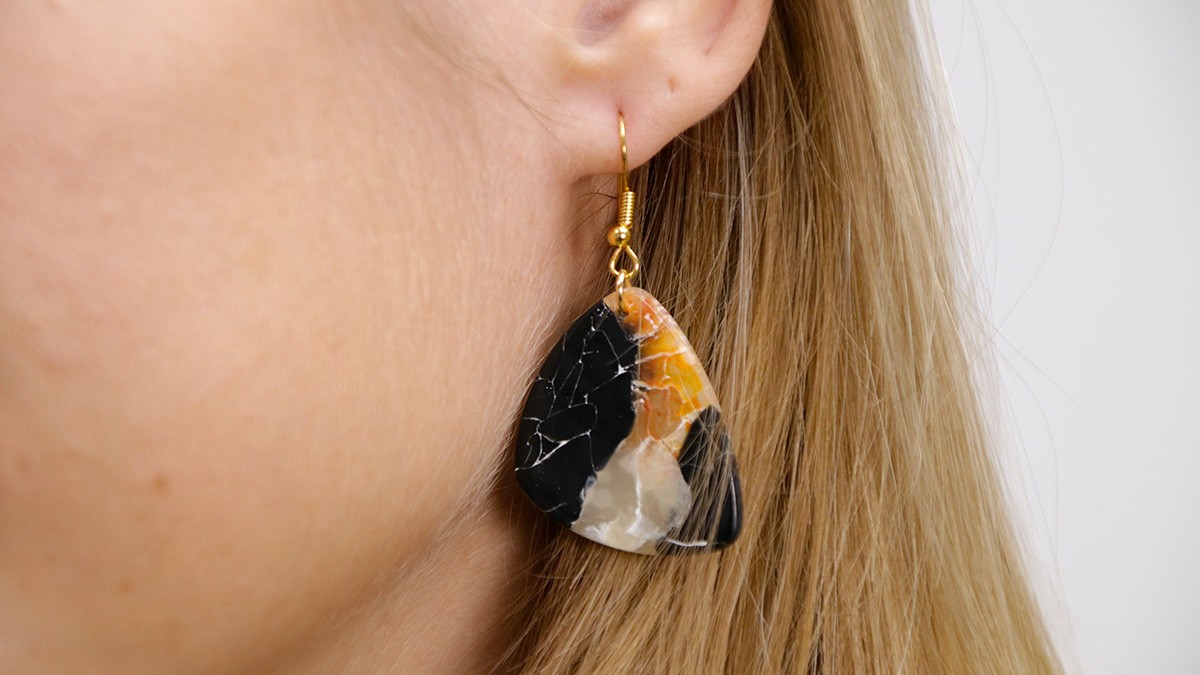
You want to learn how to make a marble effect with polymer clay? Karine Barrera alias Akak, gives you in this tutorial her secrets to create a very natural marble effect in just a few steps by mixing polymer clay with acrylic paint. You are a beginner in jewelry creation but this tutorial tempts you? Go for it, you risk nothing, this tutorial is accessible to all!
Once the technique of polymer marble mastered, it is a whole field of possibilities that opens to you. Do not be shy and play with colors and materials. Try mixing different polymer clay (glitter, translucent, opaque, neon...) with paint for a unique and original result. Karine shows you 3 different examples of marble: a black opaque, a beige/white translucent and an orange marble obtained with pastels.
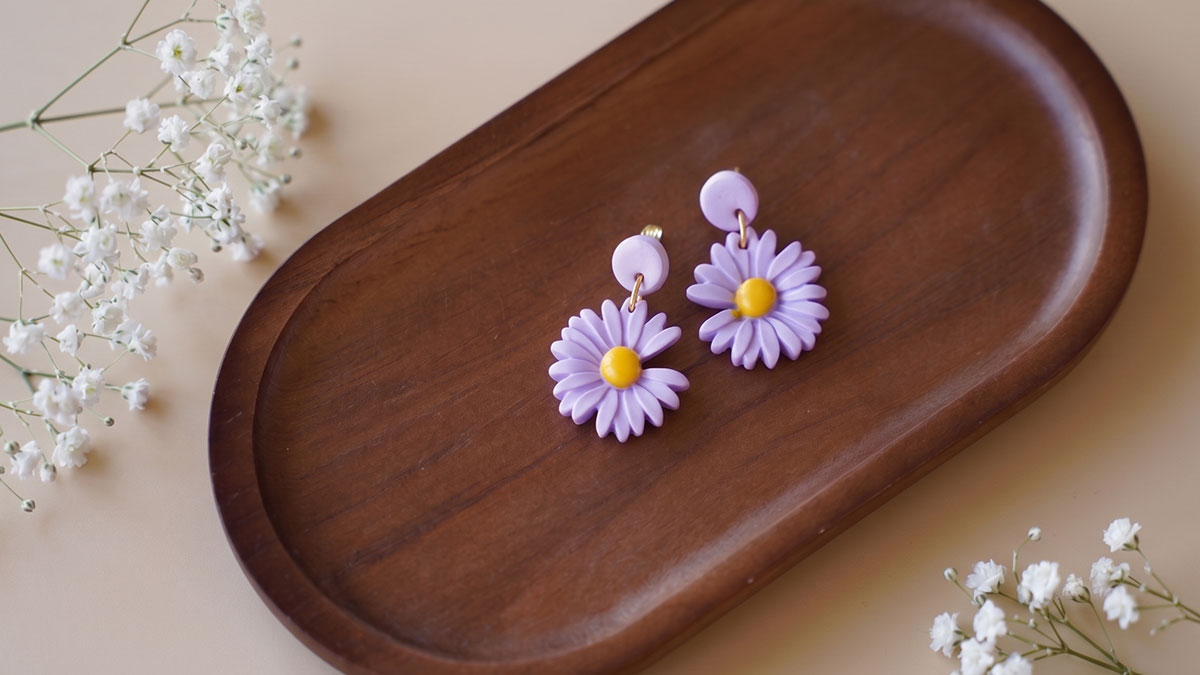
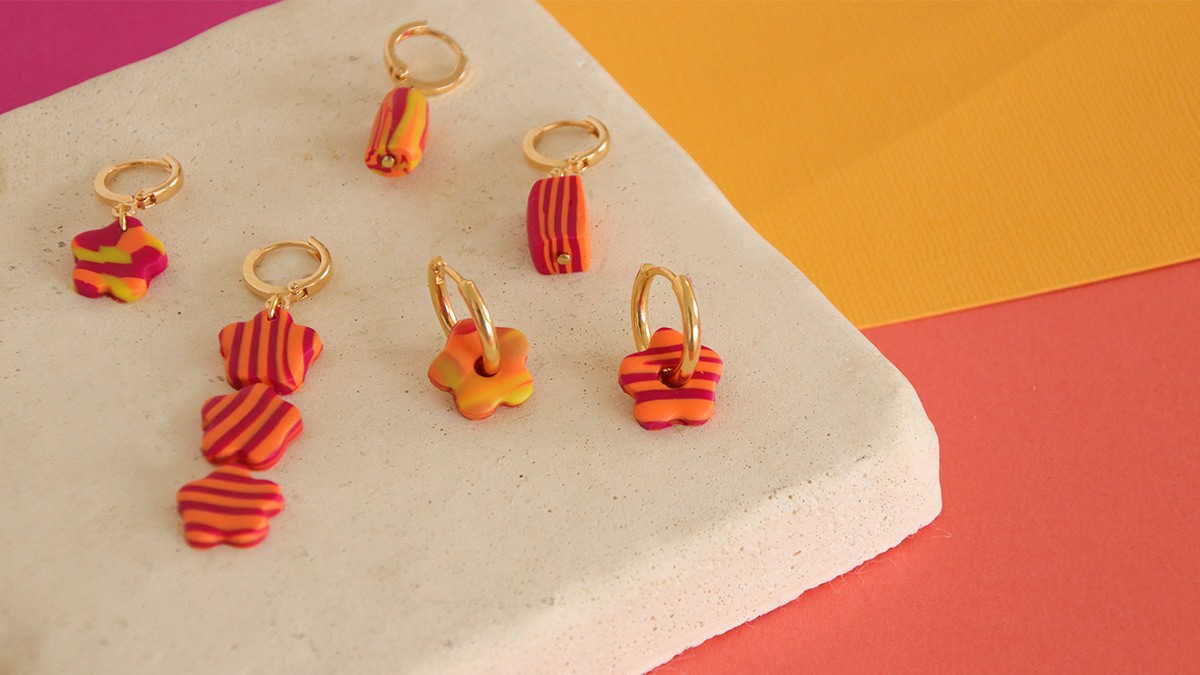
You can then use your marbled cane to make beautiful creations. Here, Karine suggests you to make in the clay plate two pairs of earrings both trendy and timeless, which can be worn daily or for a special occasion. As you can see, we are fans of these earrings and we even think they are "hot". The set of cookie cutters used offers you many possible combinations (18 shapes in total to mix with each other). It is impossible not to find what you are looking for: XL earrings, dangling earrings, or even ear chips... The set of cookie cutters is sold with ear hooks and rings as well as kraft jewelry cards (practical for gift giving or simply to store your jewelry).
If this tutorial inspired you, don't hesitate to leave us a review at the bottom of the tutorial page and especially to share your creation by posting a picture on our social networks.
To go further in polymer, take a look at our polymer clay jewelry tutorials and our technical sheets to learn polymer
Take your black dough loaf and cut it into two pieces. Use one of the halves by cutting it into small pieces with your blade. Try to roughly make 3 different sizes of dough pieces for a more natural effect.
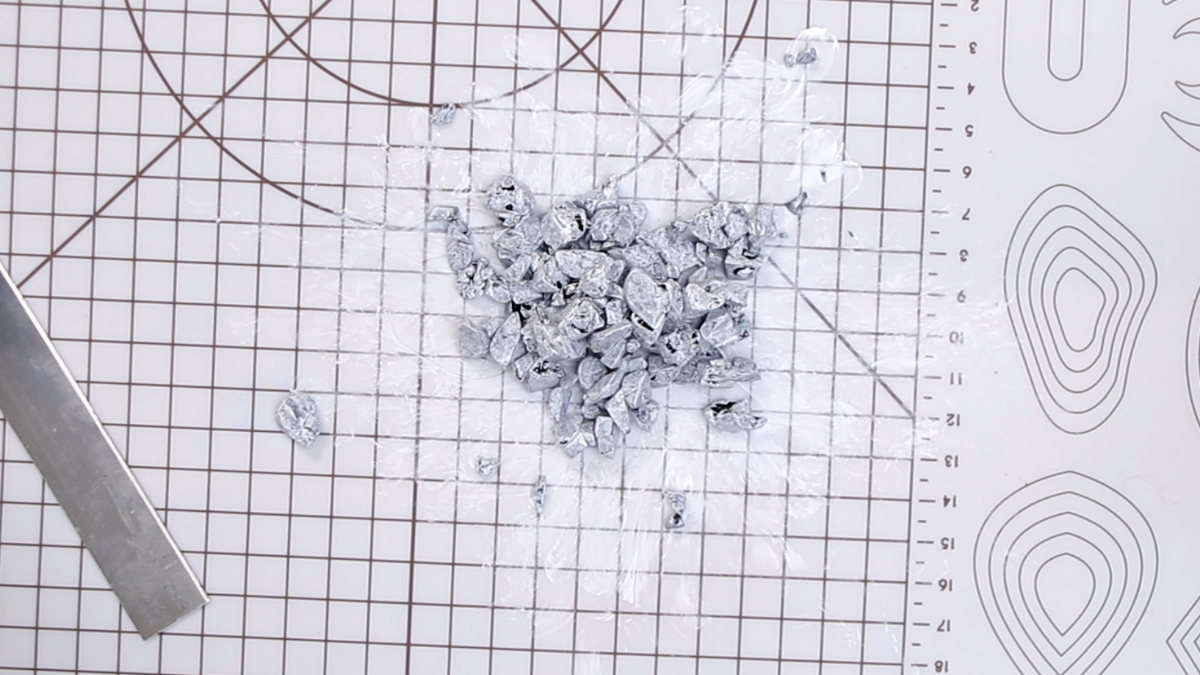
Put a small amount of acrylic paint on the pasta and mix well, the goal is to cover a maximum of facets. Be careful not to put too much paint, if you see that it slips too much you must remove a little with a towel.
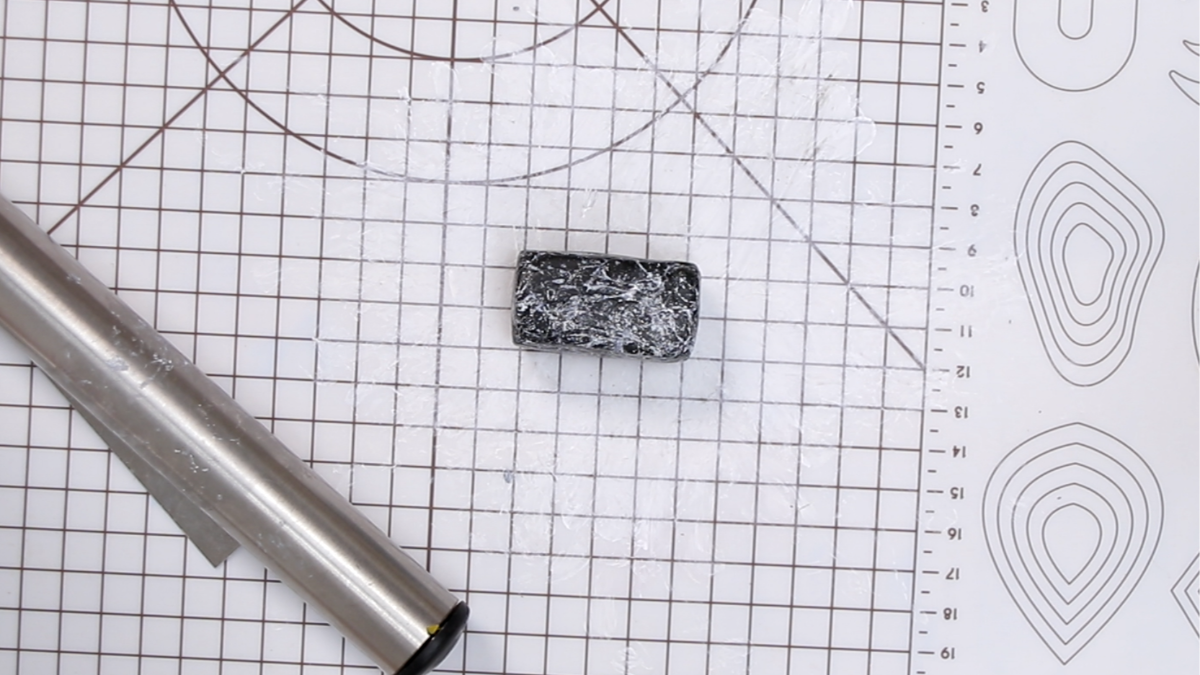
Form a block of dough by bringing all the ends together and squeezing them tightly in your hand. Then roll the dough into a square cane shape on all sides.
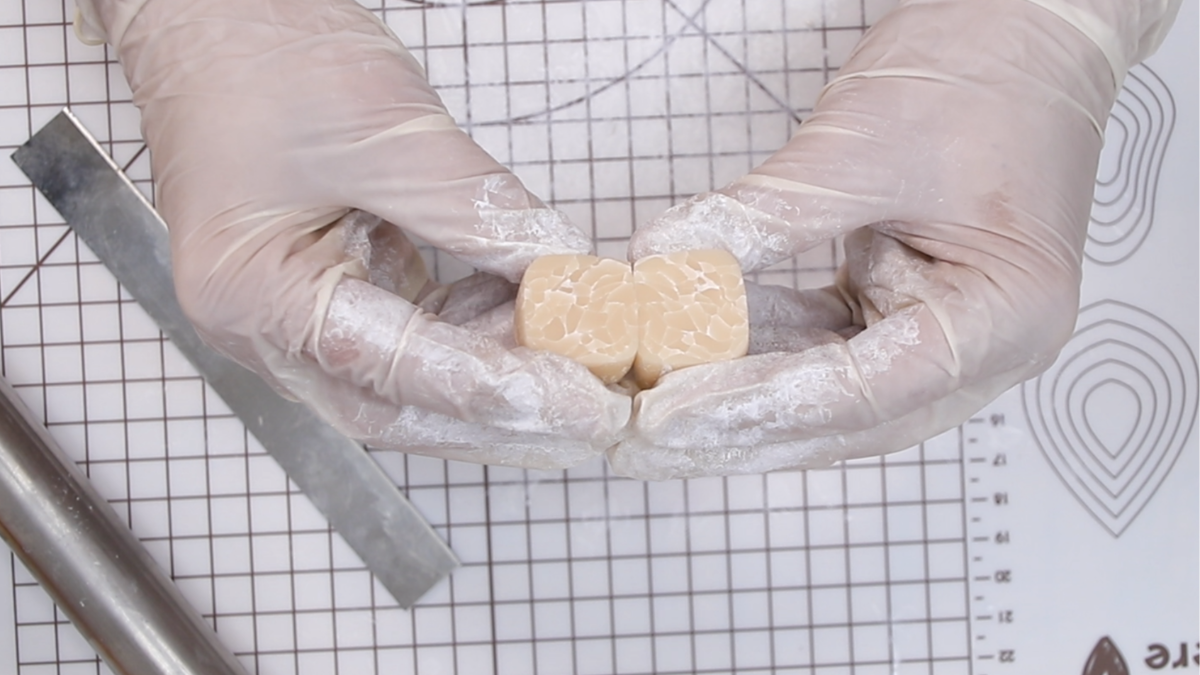
Take half of the transparent dough, start cutting out pieces and follow exactly the same instructions as for the black dough until the cane is formed.
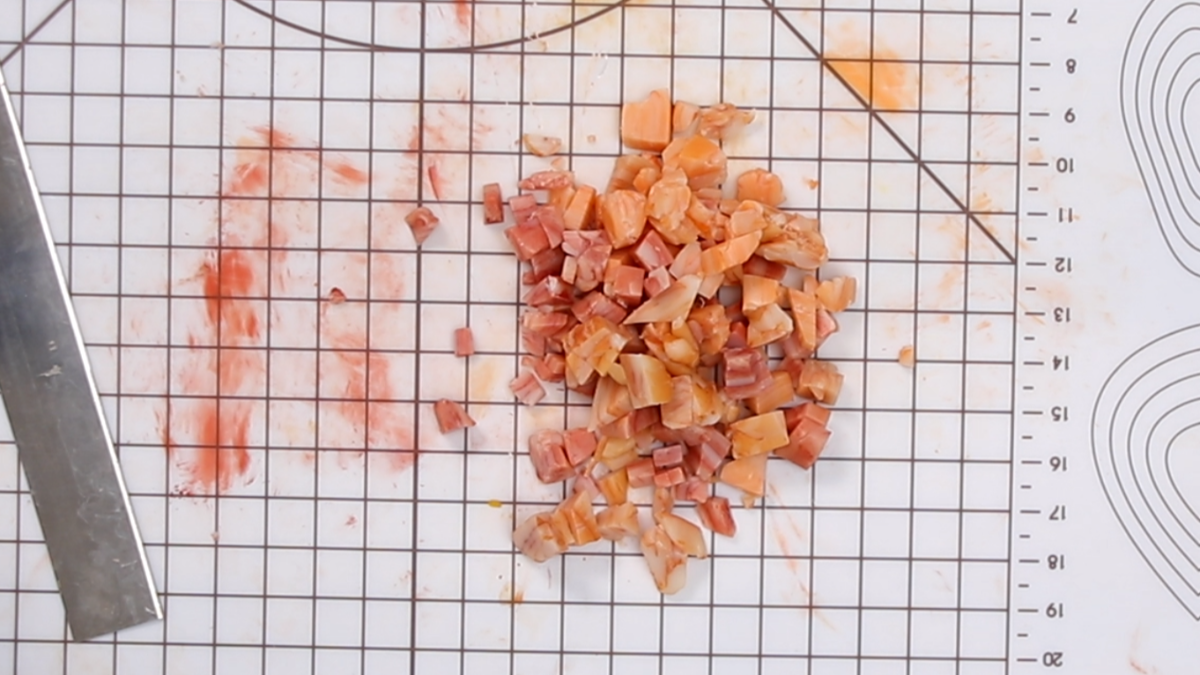
Take half of the transparent white dough, cut it into three pieces and flatten them with your roller or dough machine. Scrape three different warm colors on each of the dough strips. Mix the three colors by twisting them separately, you don't want to get a homogeneous color, on the contrary.
Cut in small pieces as for the two previous canes, add the paint and form a cane which will be colored.

Once your three canes are finished, you can start cutting some slices of all colors.

Prepare a soleplate with the remaining half of the clear dough by running it through the dough machine at step 6, which is the widest.
Take a slice of duck and pull a little on one side so that it separates in a marbling pattern, do the same for all the slices. Place them side by side on the transparent plate, leaving no gaps. First, roll with parchment paper to smooth the surface and join the different doughs without visible joints. Then put the whole set in the dough machine always at the wide notch.
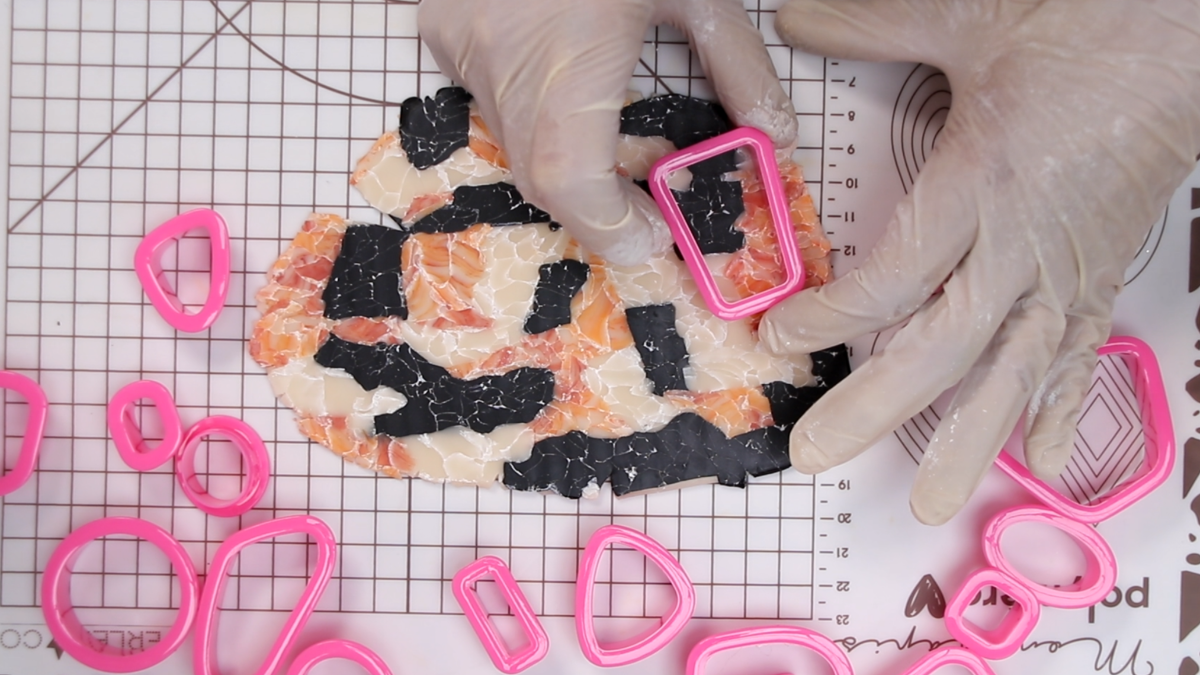
Cut out your earring shapes from the baking sheet using the 3D cookie cutters.
Gently rework their shape if necessary (after demolding), then place them on a tile or baking sheet and bake for 30 minutes at 110 degrees.
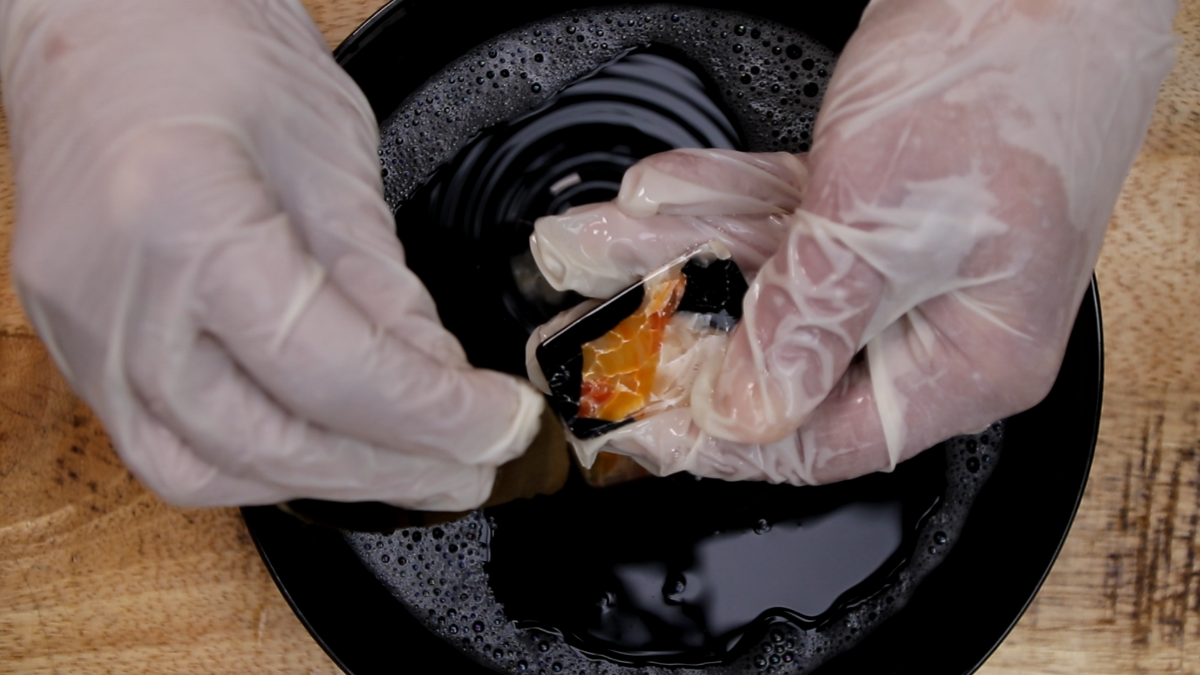
Sand all your shapes in warm water with a little soap, first take a 600 grit abrasive and then a 1000 grit. For more shine you will need to polish your jewelry either with a router and a disc or with a dremel drill with a flexible hose and a flannel brush tip.
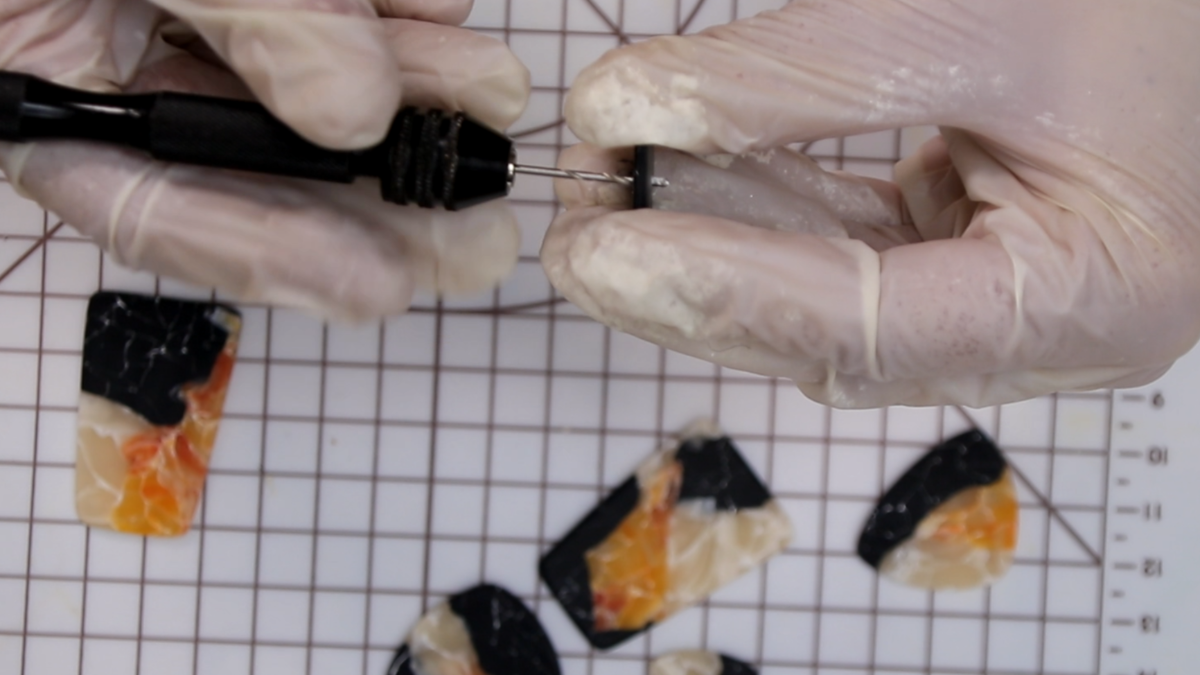
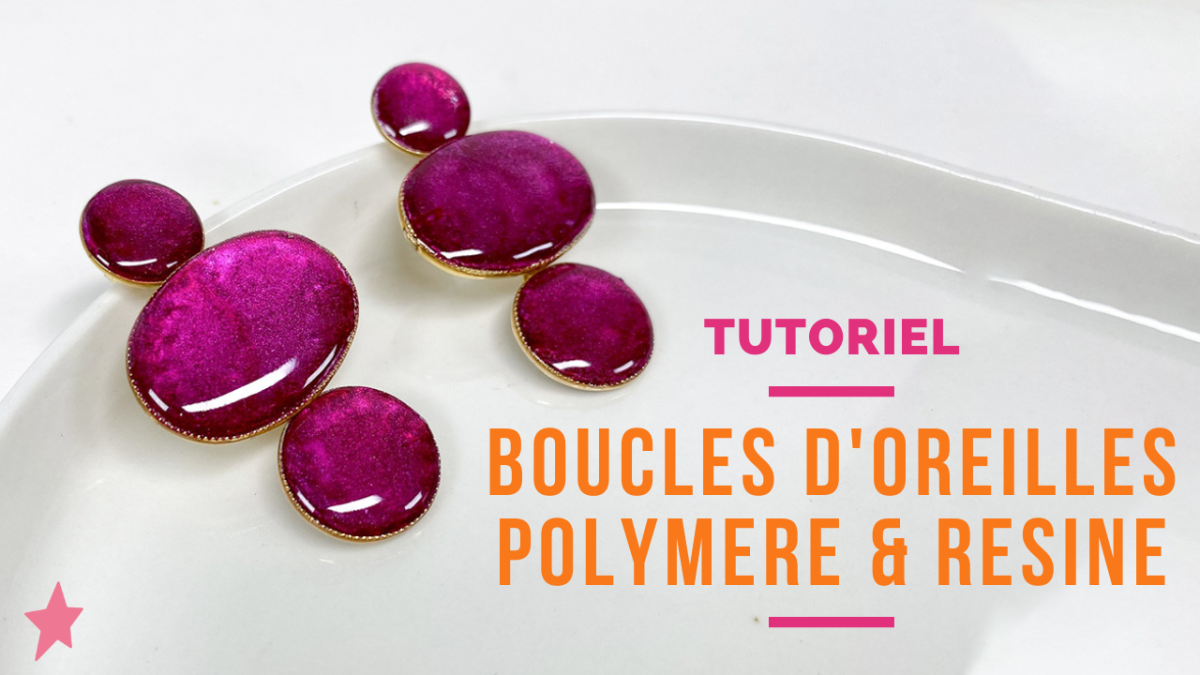
Drill your pieces with a hand chuck. Prepare with the ceralun paste a mixture of the two components in the same proportion to obtain a very solid resin. Place a small amount of this resin on the ear stud and then glue the polymer part that will cover this support. Pass a 7 mm ring to join your two parts of earrings.




You have a question about this tutorial? Ask it to our team and the people who have already tested it. The Perles & Co community is here to help you!
Credits
Perles & Co, Internet & E-Commerce company [18/12/2022] Any reproduction, representation, adaptation, in any form whatsoever, even partial, is prohibited, except for reproduction for private use not intended for collective use, representation in the family circle (art. L 122-5 CPI) and online publishing on condition that the source is mentioned and a link is included to the corresponding page of our site www.perlesandco.com.