Average Grades
Free shipping on orders over 50€ up to 500g
French Online shop for beads and accessories for the creation of DIY jewellery and other creative hobbies
Log-in
0
Shopping cart
Shopping cart
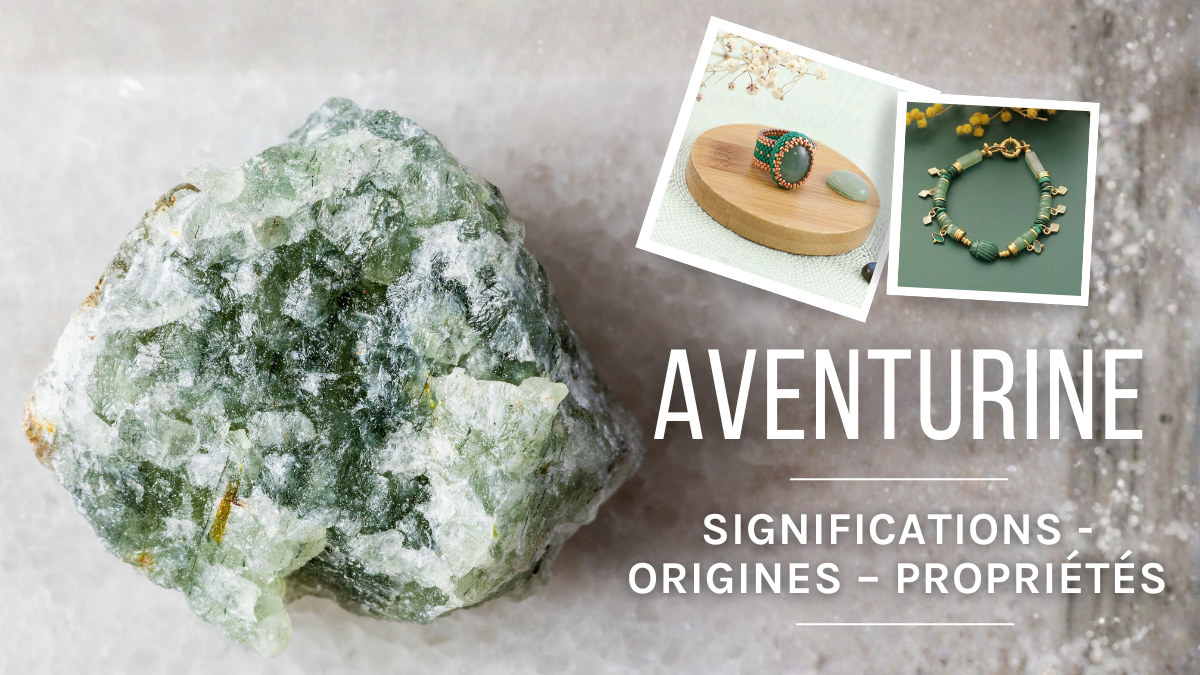
Aventurine is a green gemstone, perfect for creating elegant jewelry such as bracelets and necklaces. Its main deposits are found in Brazil, India and China, and it is distinguished by its mica inclusions, which give it a unique brilliance. Ideal for bringing softness and serenity, it is often associated with creativity and decision-making.
Aventurine is a type of gemstone that was formerly known asa “semi-precious stone.” With its ultra-feminine appeal, it adds a touch of softness and serenity to a bracelet, necklace, or earrings.
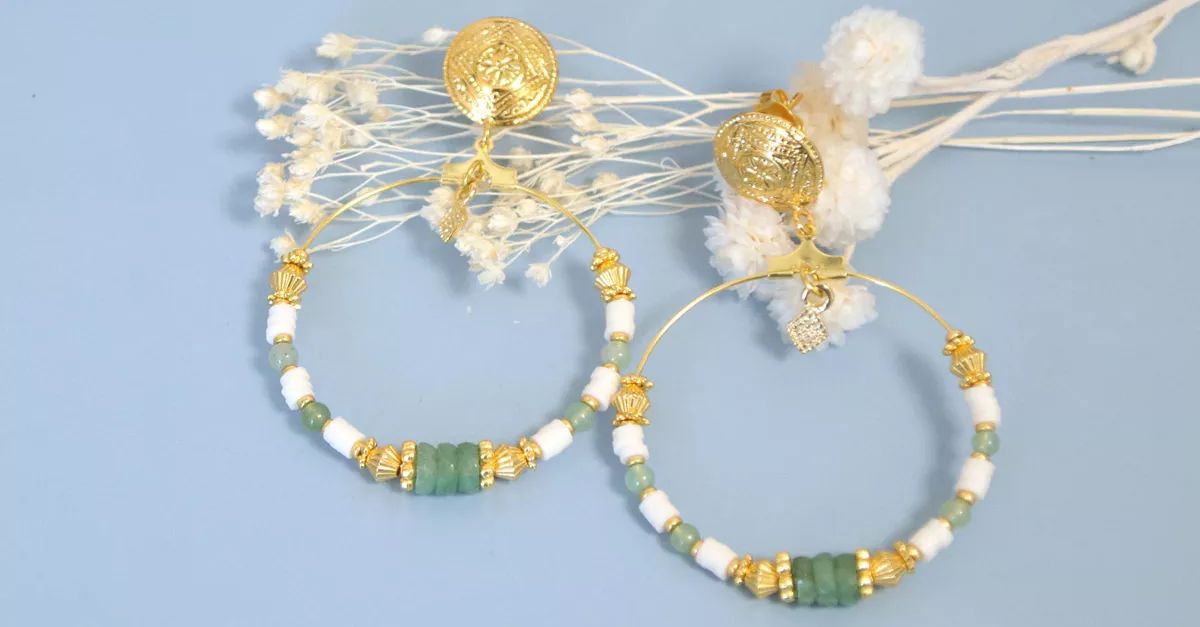
Why not make your own costume jewelry with gemstones? We offer a wide variety of components for aventurine jewelry. All you have to do is take your pick!
Aventurine takes its name from the Italian word “avventura, ” which means “adventure.” It was given this name in reference to aventurine glass.
In the 16th century, glassmakers from Venice, Italy, settled on the island of Murano to protect the City of the Doges from fires. It is said that at that time, a master glassmaker inadvertently spilled copper filings into the molten clay. This resulted in glass with glittering flecks. Aventurine glass was thus born per aventura (by chance). Hence its other name, aventurine quartz!
This decorative glass is still produced today using processes that are kept secret.
Highly prized in Russia, it was used to make jewelry, as well as objects such as vases, candlesticks, and tableware...
Before being called aventurine, this gemstone went by several names, such as prase (a word derived from prason, meaning “leek” in ancient Greek), in reference to its green color.
This green stone has been present in many civilizations for centuries. As far back as prehistoric times, the peoples of what is now Ethiopia crafted tools from aventurine.
For the Chinese, this gemstone was the imperial stone. They associated it with the goddess Guanyin Pusa, considered the goddess of mercy, compassion, and unconditional love. The Chinese used it to make talismans or to concoct elixirs intended to give them vitality and well-being.
The Celts associated it with knowledge and spirituality. The Incas used it to attract luck and good fortune.
In Tibetan culture, aventurine holds a special significance. It was worn as an amulet believed to correct eye problems. It was also used to make the eyes of statues.


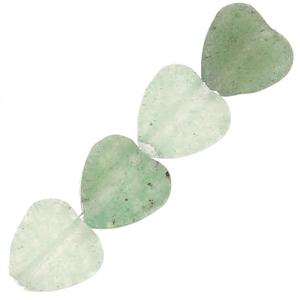
Aventurine belongs to the quartz family. It has a hardness of 7 on the Mohs scale and a density between 2.60 and 2.65.
It forms in igneous rocks or hydrothermal veins.
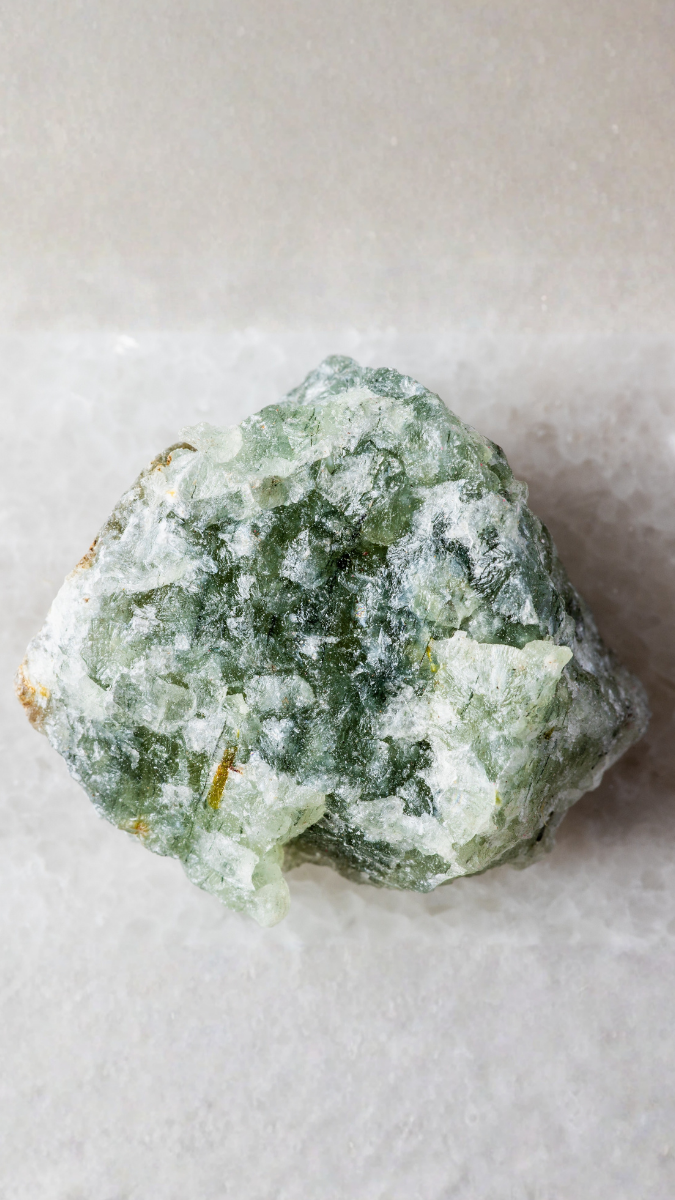
Its color ranges from light green to green-brown, including golden brown-green. Translucent in appearance, it is characterized by unique mica inclusions that vary from stone to stone, producing a shimmering effect (aventurescence).
There are also peach-colored, brown, red, or orange aventurine stones. Much rarer, aventurine can be blue (ranging from very light blue to dark blue, including midnight blue). In this case, it is called dumortierite.
This green stone is sometimes confused with aventurine glass, amazonite, serpentine, and jadeite. Some brown varieties may also resemble smoky quartz.
The main deposits of this green stone are found in Brazil, India, the United States, China, and Russia. There are also deposits in Europe, such as in France, Germany, and Austria.
Like turquoise, aventurine is a stone renowned for its gentleness. In crystal healing, it is believed to possess numerous virtues. Considered the stone of peace and balance, it is said to facilitate meditation and help stimulate creativity and decision-making.
Linked to the heart chakra, it is said to bring calm and inner peace, soothe the mind, and help control emotions. It is believed to have an anti-stress effect and to promote self-acceptance and acceptance of others.
Crystal healers say it is the stone of luck and optimism. They even attribute to it the power to restore humor and cheerfulness to those who have lost them.
Please note: Our gemstones are not sold for use in crystal healing. Natural stones are in no way a substitute for medical expertise or medical treatment.
Like all stones used in crystal healing, aventurine absorbs negative energy. That’s why it’s recommended to clean and recharge it regularly so it can regain its full benefits.
To purify it, simply cleanse it with saltwater or by smudging it with incense.
How do you recharge aventurine? To recharge it, you can expose the stone to sunlight or moonlight for a few hours. You can also place it on a cluster of quartz.
When creating jewelry with green aventurine, opt for silver tones, as gold tends to dull its luster. It will look its best paired with925 Sterling Silver, stainless steel jewelry findings, or rhodium-plated components.
Which stones pair well with green aventurine? To enhance its benefits in a piece of jewelry, you can pair aventurine with rose quartz, smoky quartz, citrine, turquoise, tiger’s eye, amethyst, carnelian, or labradorite.



Credits
Perles & Co, Internet & E-Commerce company [23/12/2025] Any reproduction, representation, adaptation, in any form whatsoever, even partial, is prohibited, except for reproduction for private use not intended for collective use, representation in the family circle (art. L 122-5 CPI) and online publishing on condition that the source is mentioned and a link is included to the corresponding page of our site www.perlesandco.com.