Average Grades
Bonjour. J'ai vu des paquets de pâte de la marque Fimo, gamme 'Smart'. Est-ce une nouvelle gamme? Ou juste un autre nom? Merci
3 Answers
Show answers

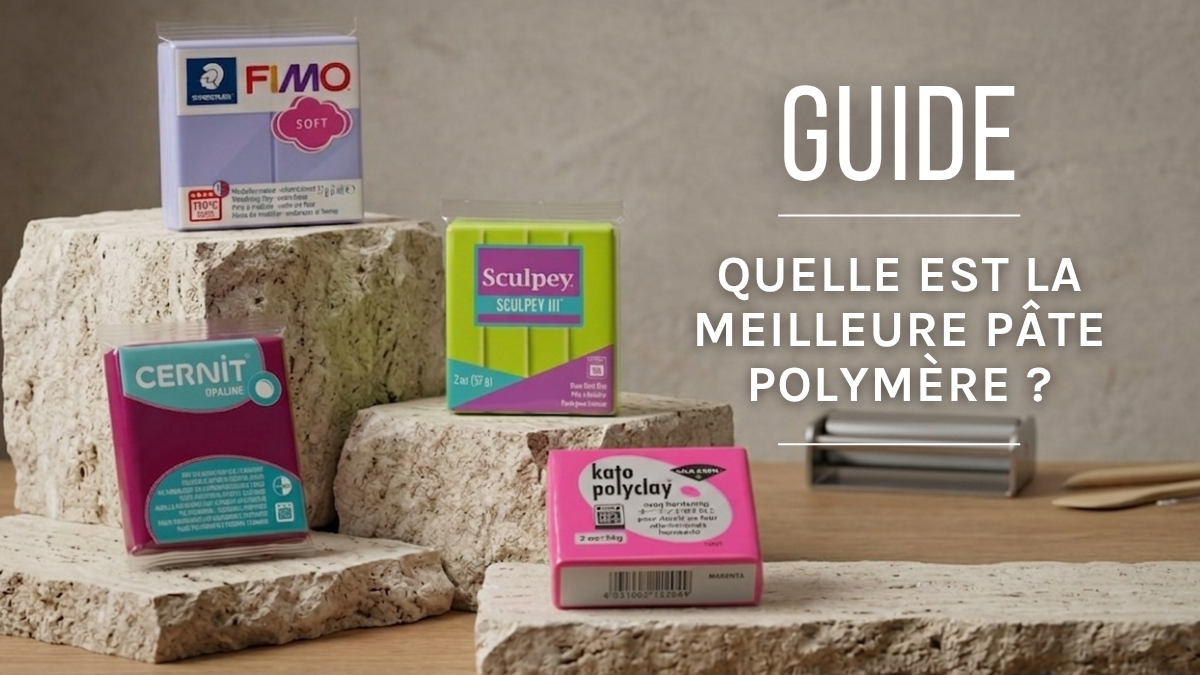
The polymer clay comparison helps you choose between Fimo, Cernit, Sculpey, Kato and Pardo, highlighting their essential differences. Fimo paste is well-known and varied, Cernit is supple and glossy, while Sculpey is easy to handle and ideal for children. Depending on your needs, Fimo Professional is recommended for its durability, while Cernit is appreciated for its glossy, varnish-free finish.
Not sure which polymer clay to choose —Fimo, Cernit, or Sculpey? Feeling overwhelmed by all these brands and their product lines? Are you wondering if there’s a difference between Fimo and polymer clay? We’ve put together a comparison of the polymer clays available on the market to help you make your choice. In the second part, we’ll look at how to bake polymer clay. We’ll show you how different polymer clays react during baking: which one is the most translucent, the one with the most mica, the whitest, and the strongest?
By definition, polymer clay is a plastic-based modeling clay that hardens (polymerizes) after being baked in the oven. You can use polymer clay to create costume jewelry, decorative items, or even small figurines.
There are various brands of polymer clay, all of which are generally compatible with one another: Fimo, Sculpey, Pardo, Cernit, and Kato. Each brand offers different product lines. They are generally compatible with one another, provided that compatible baking temperatures are followed.
Brand | Baking Temperature | Flexibility | Durability | Target Audience |
110 °C | Varies by product line | Very good | All skill levels | |
130 °C | Very flexible | Excellent | All levels | |
130 °C | Slightly firm | Excellent | Intermediate to professional | |
150 °C | Firm | Maximum | Professionals | |
Pardo Viva Décor | 120 °C | Semi-soft | Very good | All levels |
Before choosing a brand, ask yourself this question: Do you want dough that’s ready to use right out of the package, or firmer dough that holds its shape better?
Soft clays are ideal for:
Firm clays are best suited for experienced artisans. They require a bit of kneading at first, but guarantee remarkable precision and excellent durability once fired.
| Very pliable | Flexible | Medium | Hard |
Fimo Kid | Cernit other lines | Sculpey Premo, Premo Accent | Fimo Professional |
Sculpey 3 | Fimo Soft | Pardo | Kato Polyclay |
Cernit Metallic |
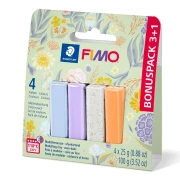
What is Fimo clay? Fimo clay is the best-known polymer clay in France. It’s so well-known that people often say “Fimo” instead of “polymer clay.” It has become a generic term for a type of polymer clay. There are 6 product lines available in 56-gram or 454-gram blocks, plus another line that comes in liquid form. Note that Fimo tends to stain your hands and the clay machine. We recommend cleaning your clay machine between colors with paper towels, and if you’d like to take it apart completely, you can follow this guide: How to Clean Your Impéria Polymer Clay Machine?
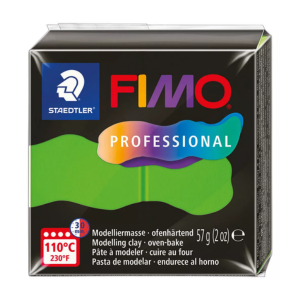
This is Fimo’s hardest line; it was previously known as Fimo Classic. This firm clay is much less pliable than Fimo Soft; Fimo Professional allows you to create beautiful canes with varied patterns, and its firmness ensures your designs won’t lose their shape during the cane-shrinking process. It’s also the most durable after baking. Its stable formula prevents your creations from breaking.
This is the best range for beginners and is affordably priced. Very easy to shape, it’s the most flexible and malleable clay in the Fimo range. Odorless, Fimo Soft is a pleasure to work with. Here’s an example of how to use Fimo Soft clay in this tutorial to make a unicorn pendant.
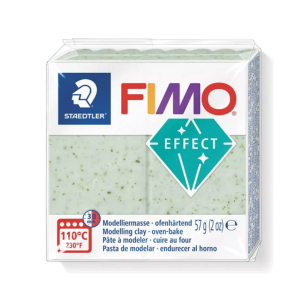
Just as soft as the Soft line, the Fimo Effect range lets you create different material effects (pearlescent, glittery, beaded, metallic, translucent, granite stone, or even the latest neon range, which produces fluorescent and phosphorescent colors under blue light). Many specialized techniques are associated with this Effect line; with the metallic colors, learn how to make a Sutton Slice cuff bracelet using neon colors, and create your own Heishi beads.

Fimo Leather Effect is a range that’s just as flexible as Fimo Soft; it has a unique, slightly grainy texture and contains textile fibers that give it more elasticity than other clays. Its leather-like finish is incredible, as is its flexibility after baking, so you can start creating faux leather projects. We’ve put together a comprehensive technical sheet to show you what the Fimo Leather range is all about .
Fimo Air is a no-bake polymer clay, meaning it hardens in the open air. It’s made up of 95% natural ingredients, and thanks to the cellulose fibers it contains, its final appearance resembles clay. Lightweight and flexible, it dries within 24 hours. Work this clay in thicker layers for greater strength, as it remains fragile.
Fimo Kids is THE line for children. Suitable for children ages 8 and up, this clay is more pliable and easier to work with than other polymer clays, making it ideal for introducing your children to Fimo clay techniques. The easiest way to use it is with a silicone mold; you’ll create a variety of shapes that you can then customize by adding acrylic paint or pieces of cane. An adult must be present during the baking stage; like other polymer clays, this one bakes at 120 degrees for 30 minutes.
The best-known product in this line is translucent Fimo; it’s used like glue, and it can also be mixed with clay that’s become too hard to soften it. There are techniques where you mix liquid Fimo with alcohol-based inks or even pastels to achieve ceramic-like effects, as seen on these earrings. The line is gradually expanding, offering us additional colors—this time opaque ones—including gold, black, and silver. You can check out this technical sheet, which focuses exclusively on the use of liquid polymers.


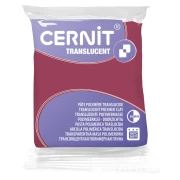
Although less well-known than Fimo clay, the Cernit brand does have certain advantages. It doesn’t stick to your fingers, doesn’t stain, and is odorless. Cernit clay is a flexible and highly malleable polymer clay that can be worked with endlessly. The glossy finish when it comes out of the oven will add a unique touch to all your creations. You won’t need to varnish your projects to achieve a brilliant finish: after sanding and polishing, Cernit clay is glossy. These are the main differences between Cernit and Fimo clay.
Cernit clay is similar to other heat-sensitive clays, but it’s more flexible. So it’s best to avoid it if you have warm hands. As a Cernit clay wholesaler, you’ll find 8 product lines on our website, each with different finishes:

Sculpey is an American polymer clay that is very well-known in the United States and popular among polymer clay enthusiasts. There are four lines of Sculpey clay.
Sculpey III is a very flexible and malleable polymer clay, ideal for children. Ready to use, this clay requires no kneading before use. We do not recommend running Sculpey III through a clay machine, as it sticks to the rollers and does not withstand stretching. Note that this clay stains hands and equipment.
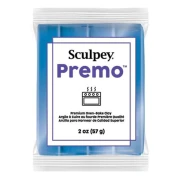
Sculpey Premo is a soft, lightweight clay that doesn’t stick to your fingers but remains firm enough to sculpt details. Premo Accents offers specific effects (pearlescent, glitter, granite, translucent, etc.). This line is particularly rich in mica particles. It may stain your hands slightly, depending on the colors used.
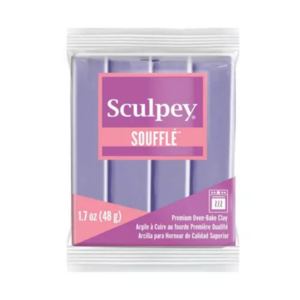
Sculpey Soufflé is the lightest polymer clay. Its innovative texture, with a powdery finish, allows you to create polymer clay jewelry that is exceptionally lightweight. This clay is perfect for making large-scale pieces that are normally heavy and difficult to wear. Very pleasant to the touch, you’ll enjoy working with this line. Note that it’s firmer than Premo but softer than Sculpey III.
Liquid Sculpey is used just like traditional polymer clay. It’s especially ideal for creating details, such as glazes or coulis, for your culinary-themed creations.



Kato Polyclay polymer clay is a professional-grade modeling clay. Developed by artist Donna Kato, it is particularly suited for experienced users. The main drawback is its strong plastic odor, and it is the only polymer clay that bakes at 150°C, so it is not compatible with other polymer clays. You get used to it, but it can be bothersome at first. It stains your hands and dirties the rollers, so you need to clean them between colors. It’s also the clay that lasts the longest; even when hardened, it can regain its original suppleness after several passes through the clay machine, each time set to a finer setting. For canes, this clay is ideal—its firmness ensures that the cane’s patterns won’t distort during the delicate process of reducing it. You’ll also be able to store your Kato clay canes much longer than those made with other brands. The only drawback is that it’s hard at first. If you don’t have much strength or have hand issues, skip this and go with other clays instead.


Pardo polymer clay is made from natural pigments and beeswax. It doesn’t have a strong odor, is pleasant to work with, and is neither too soft nor too hard. It’s well known for its neutral translucent clay, which is the most transparent—second only to Cernit’s. Specially designed for jewelry and small accessories, it’s very easy to work with and comes in several colors and finishes. Viva Decor has developed four product lines: Jewelry Clay, which offers a wide range of colors to perfectly mimic gemstones; Professional Art Clay; Professional Mica Clay; and Translucent Clay.


This comparison was conducted not only between brands but also between product lines to give you the most comprehensive overview possible of which options might best meet your needs. In a second technical guide, we’ll explain in detail how polymer clay reacts during baking: How do you bake Fimo clay? What happens during the process? We’ll answer all kinds of questions.
For successful polymer clay jewelry, three criteria matter most: the ability to retain fine details, strength after baking, and the variety of finishes available.
Here are our recommendations based on your skill level:
Each brand has its own recommendations, but here are the universal rules to follow:
Good news: unlike clay, it doesn’t dry out when left exposed to the air. But a few precautions are necessary:
Some brands can be stored for several years under the right conditions.
After baking, gradual sanding followed by a coat of varnish protects your creation and gives it a professional finish. For even more polished jewelry:
Check out our tutorials and inspiration in the “Creative Polymer Ideas” section.
For beginners, we’ve put together a list of the necessarysupplies for Fimo clay and other polymer clays. These basic supplies will allow you to start creating objects or costume jewelry. For experienced polymer clay artists, check out our toolbox for plenty of tips and techniques, such asthe Batik effect.
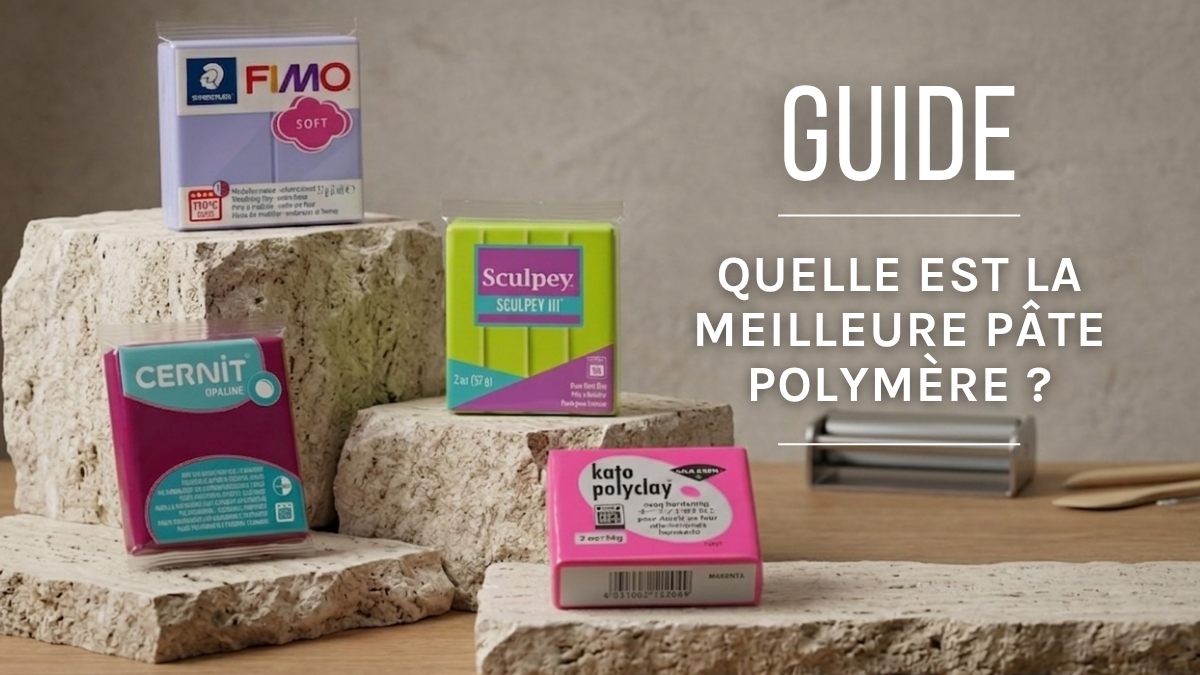
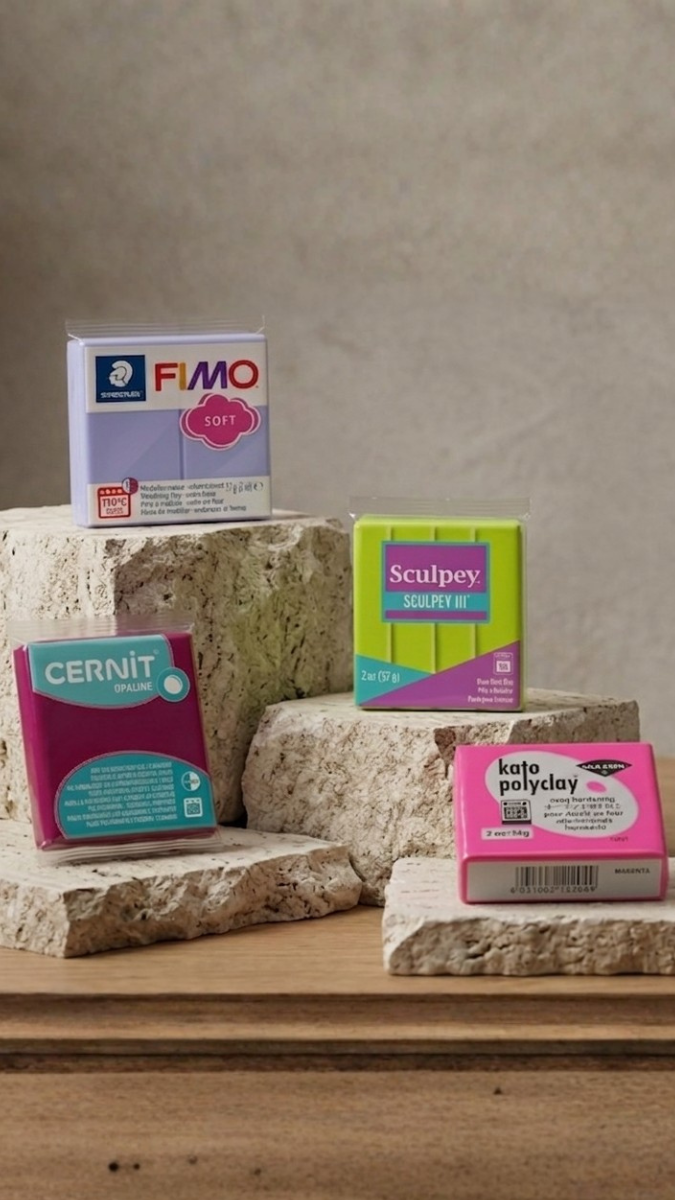

For your first steps, focus on Fimo Soft or Sculpey III to help you choose the right polymer clay.These soft references are easy to use and require nopreparation, making them ideal for getting started.
Practical advice: start with a selection of small colors rather than a single large block. This way, you can explore different techniques and see what you like before investing further.
Yes, you can mix most polymer doughs, as long as they have the same cooking times and temperatures.provided they have the same firing times and temperatures.For example, you can mix Cernit with other Fimo pastes without any problems.
Be careful with special-effect pastes, however, as their properties may be affected.Our advice: always test a small sample of your mixture before embarking on an entire project.
Kato Polyclay bakes at 150°C, making it incompatible with other brands.
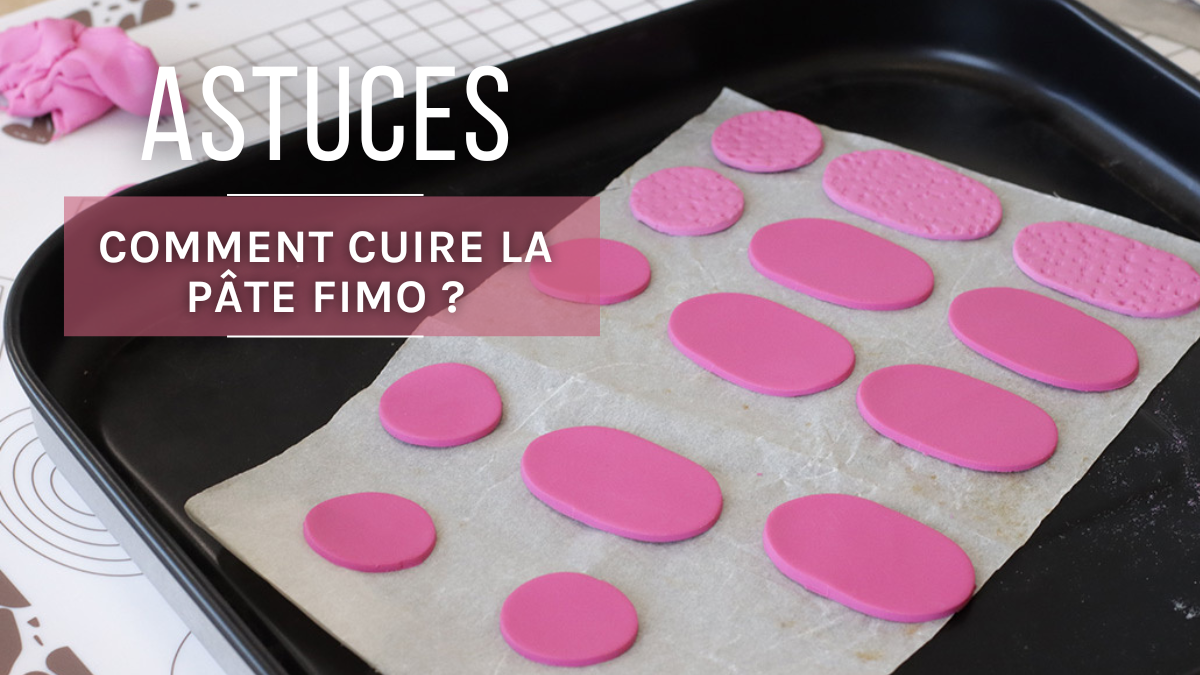
In addition to loaves of material, you'll need a work mat, a dough machine to even out the thickness, a cutter and a baking tray. Discover the complete list in our beginner's guide to polymer clay.
A well-fired piece is slightly flexible when still hot, but hardens as it cools. If it remains soft after complete cooling, extend the baking time by 5 to 10 minutes. If it blackens or gives off a strong odor, the oven was too hot.
Fimo is a brand of polymer clay, but its success in France is such that its name has become generic, a bit like Scotch for adhesive tape. All polymer pastes (Cernit, Sculpey, Kato...) work on the same principle, with different properties according to brand and range.


Credits
Perles & Co, Internet & E-Commerce company [24/04/2026] Any reproduction, representation, adaptation, in any form whatsoever, even partial, is prohibited, except for reproduction for private use not intended for collective use, representation in the family circle (art. L 122-5 CPI) and online publishing on condition that the source is mentioned and a link is included to the corresponding page of our site www.perlesandco.com.