Average Grades
Free shipping on orders over 50€ up to 500g
French Online shop for beads and accessories for the creation of DIY jewellery and other creative hobbies
Log-in
0
Shopping cart
Shopping cart
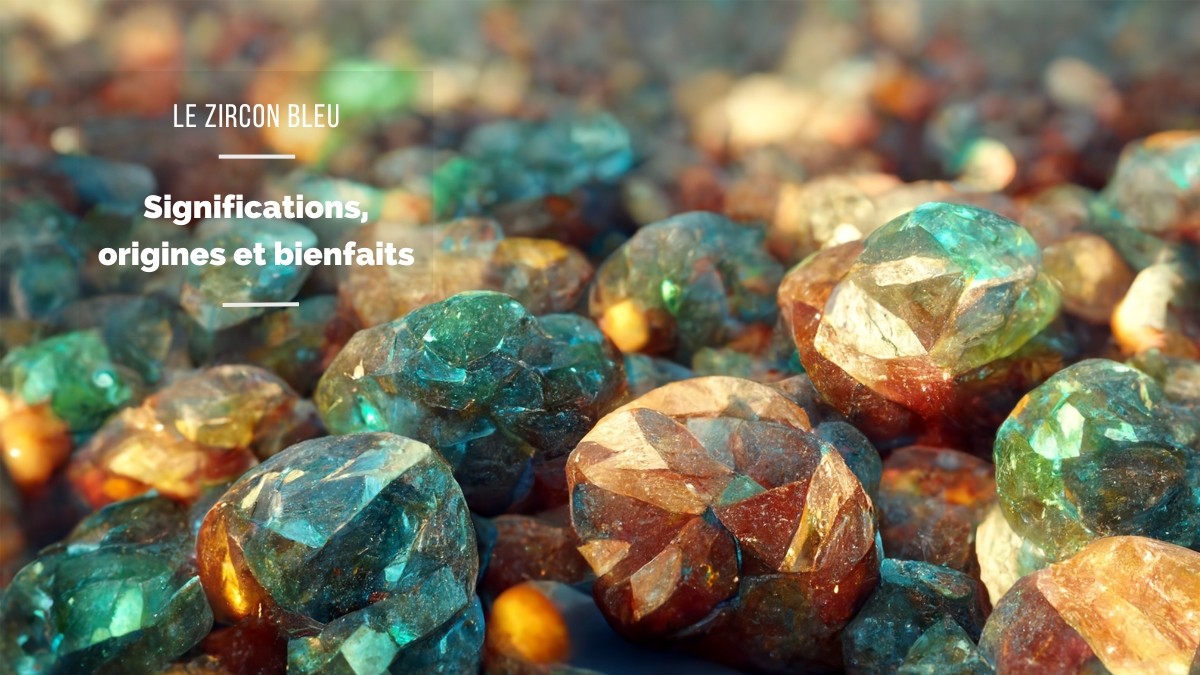
Blue zircon stands out for its vibrant hues and remarkable luster, offering timeless elegance. Mined primarily in the United States, South Africa, and Australia, it is often mistaken for sapphire because of its color. With a hardness of 7.5 on the Mohs scale, this natural stone is both durable and captivating.
Blue zircon, with its vibrant hues and mesmerizing brilliance, captivates with its timeless elegance. This gemstone, both captivating and sophisticated, is also prized for its exceptional luster.
Be inspired by our natural stone jewelry tutorials and elevate your DIY costume jewelry creations.
The word “zircon” has several possible origins. Some believe it comes from the Persian word “zargun,” meaning “golden color.” Others believe it derives from the Arabic word “zarqûn,” meaning “vermilion.”
Although it is one of the oldest gemstones, its use in jewelry dates back thousands of years. It has been used in various cultures around the world, often mistaken for other gemstones due to its wide range of colors. For example, in medieval Europe, it was sometimes used as a substitute for diamonds, particularly its colorless variety.
In the Middle Ages, it was associated with various beliefs. People believed that this gemstone could ward off evil spirits and bring wealth, honor, and wisdom. It was a prized stone, particularly among nobles and monarchs, who sought to benefit from its supposed virtues.
This gemstone is considered a sacred stone in several religious traditions. In Hindu culture, for example, it is one of the nine gems of the Navaratna, a set of stones used in talismans to bring protection, wisdom, and prosperity. It was used in various religious rituals and sacred objects.
In the Bible, it is known as “hyacinth.” In the Book of Revelation, it is described as one of the twelve precious stones adorning the foundations of the New Jerusalem.
This natural stone can range in color from brown to red, including shades of yellowish, colorless, gray, green, or black. Clear and transparent, the blue color is generally achieved by heat-treating a natural brown or colorless zircon. Depending on the intensity of the treatment, the blue can range from light blue to deep blue.
Because of its color, it is sometimes mistaken for sapphire or aquamarine.
As its name suggests, blue zircon belongs to the zircon family. This gemstone has a hardness of 7.5 onthe Mohs scale, making it fairly scratch-resistant. Its density ranges from 4.5 to 4.6 g/cm³.
It has a high refractive index, which gives it excellent brilliance and luster.
Not to be confused with zirconium oxide, which is a man-made synthetic stone, zircon is a genuine natural gemstone. We explain the difference between these two stones in our technical data sheet.
The main deposits are found in the United States, South Africa, India, Australia, Cambodia, Sri Lanka, Thailand, and Myanmar.
According to some beliefs, this natural gemstone is considered soothing and protective. It is said to help calm the mind and soothe emotions by promoting a state of inner peace and serenity. It also acts as a shield against negative energies and unwanted influences.
It is the birthstone for those born under the zodiac signs of Aries, Taurus, Virgo, Libra, Scorpio, Sagittarius, and Pisces.
Please note: Our gemstones are not sold for the purpose of crystal healing. The effects of gemstones have not been scientifically proven. Natural gemstones are in no way a substitute for medical expertise or medical treatment.
You can purify it by rinsing it under clean water for a few minutes. The water removes any accumulated negative energies. Another method: pass your stone through the smoke of incense or white sage.
This blue stone recharges particularly well in the light of the full moon. Place it outside or near a window so that it is exposed to moonlight all night long. However, avoid direct sunlight.
You can also place it on a quartz or amethyst geode to recharge it.
The blue hues of this stone pair perfectly with silver or gold metals. The cool tones of925 Sterling Silver andstainless steel accentuate the luminosity of this blue stone. Gold-plated and Gold filled metals will add warmth to it.
Which stones pair well with blue zircon? In crystal healing, this gemstone can be combined with several other stones to create a beneficial synergy.
On the other hand, it is generally recommended to avoid pairing it with stones that are highly grounding or offer intense protection, such ashematite orblack obsidian.

Credits
Perles & Co, Internet & E-Commerce company [10/09/2024] Any reproduction, representation, adaptation, in any form whatsoever, even partial, is prohibited, except for reproduction for private use not intended for collective use, representation in the family circle (art. L 122-5 CPI) and online publishing on condition that the source is mentioned and a link is included to the corresponding page of our site www.perlesandco.com.

