Free shipping on orders over 50€ up to 500g
French Online shop for beads and accessories for the creation of DIY jewellery and other creative hobbies

Log-in

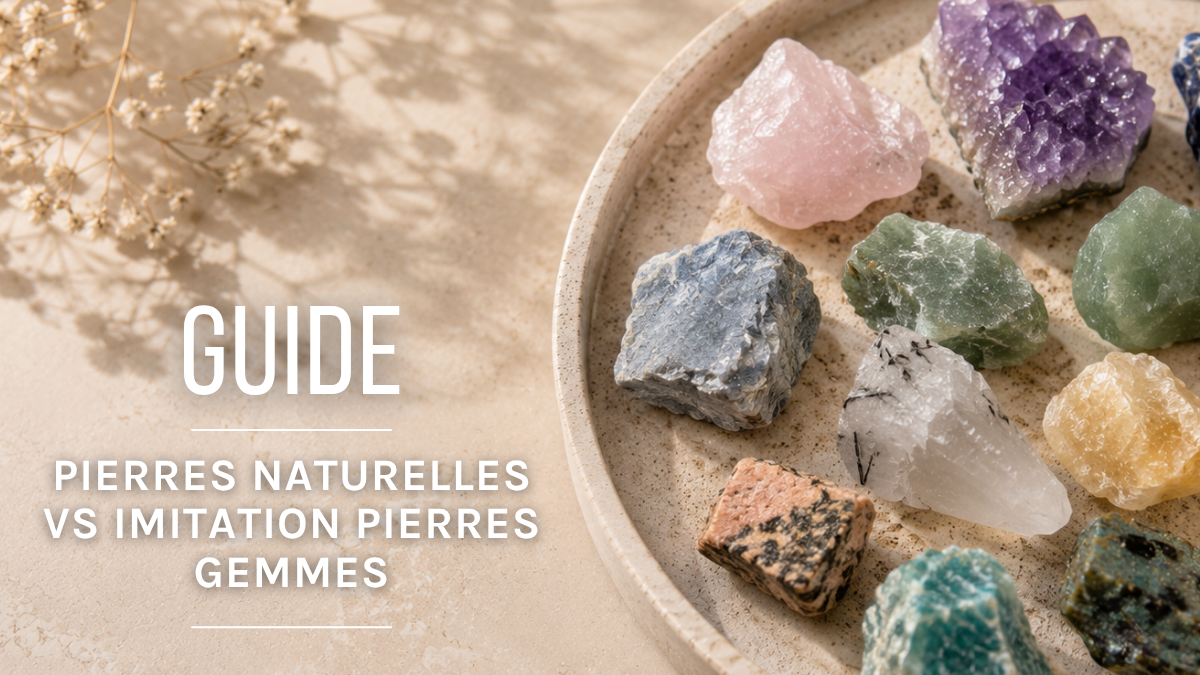
Natural stone classification

Made by :Laurence T Perles&Co
Published on the :04/06/2024
Natural stone classification

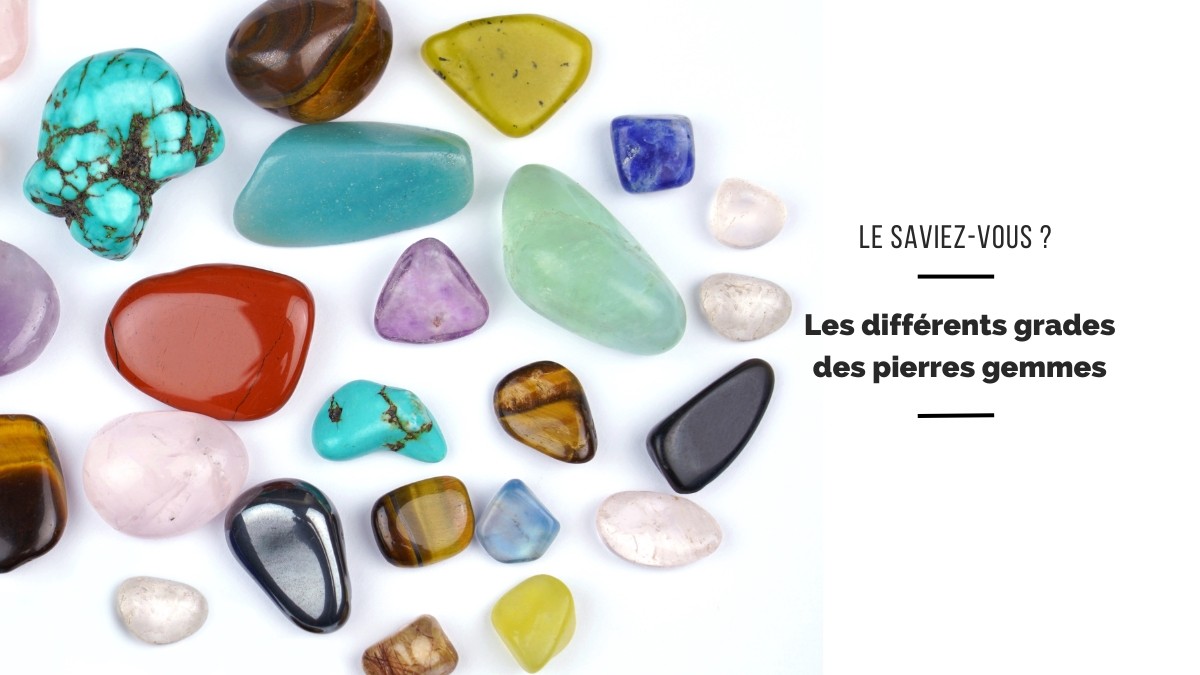
Each gemstone is unique. To quickly understand the quality of a stone, a classification of natural stones has been established. This is expressed in grades. It is based on key criteria such as color, clarity and cut.

  • Color: Color is one of the most important criteria for grading gemstones. It is assessed according to three aspects: hue, saturation and tonality. Hue refers to the actual color of the stone (red, blue, green, etc.), saturation to the intensity of that color, and hue to the degree of lightness or darkness of the color.
  • Clarity: The clarity of a fine stone refers to the absence or presence of inclusions (internal elements) and blemishes (surface imperfections). Stones are often classified from 'without inclusions' (completely transparent) to 'with inclusions' (imperfections visible to the naked eye), but not all inclusions are considered defects.
  • The cut: The cut does not refer to the shape of the stone, but to the quality of its cutting and polishing. A good cut maximizes the reflection of light inside the stone, which affects its brilliance and luster.

Gemstone classification chart

Quality levelDescription
AAAGemstones of the highest quality. They have exceptional, vivid, uniform color, near-perfect clarity and excellent cut.
AAGemstones of very good quality. They have a beautiful color, but may have some inclusions or not be as well cut as AAA stones.
AGemstones of average quality. They may have visible inclusions, a less vibrant color or a less precise cut. They have some imperfections but remain attractive.
ABMedium to low-quality gemstones. Uneven color and clarity, more obvious inclusions. Cutting and polishing may be imperfect.
BLower quality stones. Less intense color and clarity, obvious inclusions. Basic cutting and polishing.
CLowest quality stones. Uneven color and low clarity, numerous highly visible inclusions. Cut and polish often insufficient or poor. Hardly used for jewelry.

There is no international grading standard for gemstones. Only diamonds have a universally established and respected grading system, with rigorous and strict criteria, such as those of the GIA (Gemological Institute of America), which use the four Cs: carat, clarity, color and cut.

Beauty is a subjective quality. Everyone has their own definition of beauty. So don't be too quick to judge a stone: the singularity of an A-rated gemstone could move and captivate you, even more than a AAA-rated stone. It's all a question of taste!

What is a gemstone?

A gemstone is a natural stone, i.e. a stone found in nature. Gemstones are classified into 3 main families:

  • gemstones: this select group comprises four stones: ruby, sapphire, emerald and diamond. These stones are particularly prized for their rarity, exceptional beauty and great hardness.
  • semi-precious stones: these include all the stones previously known as"semi-precious stones", such as amethyst, amazonite, aquamarine and lapis lazuli. They are less rare than gemstones, but are also highly prized for their colors and unique properties.
  • organic stones: these are stones derived from living organisms, i.e. from organic rather than mineral sources. Examples include amber, cultured pearls and coral.

To choose a gemstone, you can base your choice on its color, beauty and reflections, as well as its properties and meaning. If you're still undecided, take a look at our gemstone guide or rely on your birth month. Find out which is your birthstone or that of your loved ones on our data sheet!

Once you've chosen your ideal stone, get inspired by our many natural stone jewelry tutorials.
Share with my friends
Which material to use ?
Please note that the quantities of the suggested equivalents are not necessarily exact. You can adjust them in your basket.
List of useful products
Oval cabochon 18x13mm Snowflake Obsidian
2,30€
Beads Red Jasper  8mm x10
SP-020
Qty : 1
96 in stock
2,40€
Oval cabochon 18x13mm Amethyst
SEM-057
Qty : 1
97 in stock
4,10€
Beads Amethyste flat Olive bead 14x10 mm x5
5,30€
Oval cabochon 18x13mm Zoisite
SEM-322
Qty : 1
32 in stock
4,90€
Beads Faceted round beads  8 mm Green Aventurine x10
2,50€
Beads Round Gemstone beads 6 mm Citrine x15
6,00€
Small round 4 mm cabochons - Citrine x5
2,20€
925 Sterling Silver Faceted charm 6.9 mm - Cornaline x1
2,50€
Round 6 mm Aquamarine beads x15
SP-900
Qty : 1
Out Of Sotck
5,50€
8mm Gemstone round Puck - Red Jasper x1
1,00€
10mm Gemstone round beads Map Stone x5
1,70€
20mm round flat Cabochon - Labradorite x1
3,90€
20mm round flat Cabochon - Leopard Jasper x1
3,30€
6mm Round flat cabochon - gemstone - Apatite x1
1,20€
3mm Round faceted gemstone beads - Apatite x25
3,60€
Round faceted beads 4 mm gemstone - Mokaite Jasper x36cm
12,30€
Your questions (1)
You have a question about this sheet? Ask our team and the people who have already tested it. The Perles & Co community is here to help!
By Janja (16/10/2024 15:27:31)
Can gemstons be heated, which and at what temperature?
Please log in to use this feature
Our Tiffanie J. expert answers you (17/10/2024 15:42:40)
The maximum temperature a stone can withstand greatly depends on its chemical composition and crystalline structure. Here are some general guidelines for different types of stones:
1. Quartz and chalcedony (amethyst, citrine, agate, etc.): These stones can withstand temperatures up to around 573°C. Beyond this, they undergo a crystalline transformation (from alpha quartz to beta quartz), which makes them brittle and can cause them to crack.
2. Opal: Very sensitive to heat, opal should not be exposed to high temperatures, as the water it contains can evaporate, leading to cracks. Opals generally can’t withstand temperatures above 100°C.
3. Diamond: One of the most heat-resistant stones, diamond begins to burn in air around 850°C and can withstand temperatures up to 1,700°C in the absence of oxygen.
4. Corundum (sapphire and ruby): Highly resistant, these minerals can be heated up to **2,000°C** without deteriorating, though common heat treatments are usually limited to around **1,800°C**.
5. Turquoise, malachite, and organic stones: Highly sensitive, these stones typically can’t withstand temperatures above 150°C, as they may lose their color or decompose.
Heat treatments are common for certain stones (such as corundum), but others, like opal and turquoise, are rarely heated to avoid potential damage.
Your reviews (0)
Notices subject to control
Please log in to use this feature

Credits

Perles & Co, Internet & E-Commerce company [04/06/2024] Any reproduction, representation, adaptation, in any form whatsoever, even partial, is prohibited, except for reproduction for private use not intended for collective use, representation in the family circle (art. L 122-5 CPI) and online publishing on condition that the source is mentioned and a link is included to the corresponding page of our site www.perlesandco.com.