Threads and needles for bead weaving

Want to start weaving beads but don't know which needle and thread to choose? You've come to the right place! It's true that we offer a wide range of thread and needle references, so it's not easy to choose. To answer this question, you first need to decide what you want to do: loom weaving, needle weaving or Czech glass bead weaving?
1- Choosing the right needle for bead weaving
Always choose needles for bead weaving. This should be indicated on the box or product page. Sewing needles are thicker and will be more difficult to thread through the beads. Next, you need to pay attention to 3 other things.
Needle size
Needle size, or rather needle thickness, is associated with a number. The larger the number, the thinner the needle. The thinner the needle, the more easily it will pass through the smallest pearls. On the other hand, the thinner the needle, the finer the thread required. Here's a chart to give you an idea of the needle size for the beads you want to use. The size system is the same for all beads. The larger the number, the smaller the bead.
| Needle size / Beads | Rocailles and Delica 15/0 | Rocailles and Delica 11/0 | Rocailles and Delica 10/0 | Rocailles and Delica 8/0 | Czech glass beads and Puca beads |
| needle size 13 | X | X | X | X | X |
| needle size 12 | | X | X | X | X |
| needle size 11 | | | X | X | X |
| needle size 10 | | | X | X | X |
Needle length
Needle length is less important. It's more a question of improving handling. For meticulous work involving a lot of back-and-forth beading and needle contortion, a short needle under 40 mm is preferable. For most work, a needle between 40 and 55 mm will do. For a very wide bracelet on the loom, use a needle larger than the width of your bracelet.
Special needles
Special needles are available for certain weaving and threading tasks. Split needles, for example, are needles that open almost completely lengthwise, enabling you to thread larger-than-usual threads. They are generally thicker than weaving needles, so are not suitable for meticulous work. Needles with large, flexible or reformable eyes are also unsuitable, as they will deform very quickly when weaving beads. These needles are useful for threading small beads onto thick thread.
You need a fine, rigid needle with a narrow eye.
2- Loom weaving, small bead needle weaving or heavy glass bead needle weaving?
Weaving on the loom
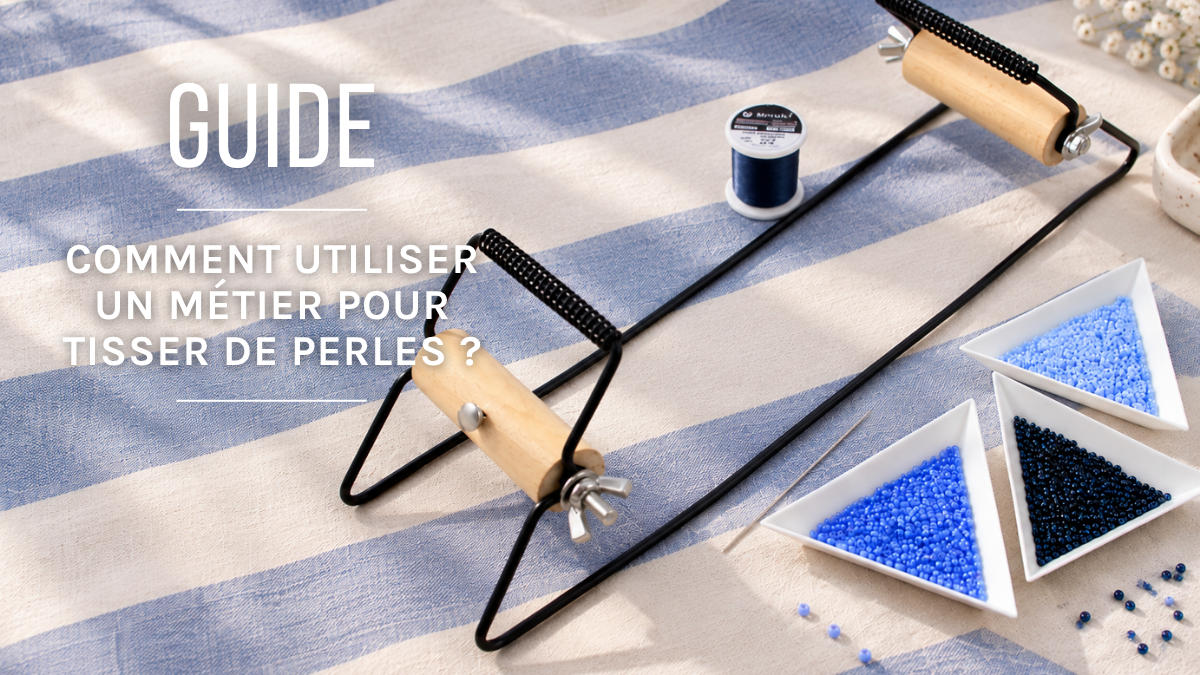
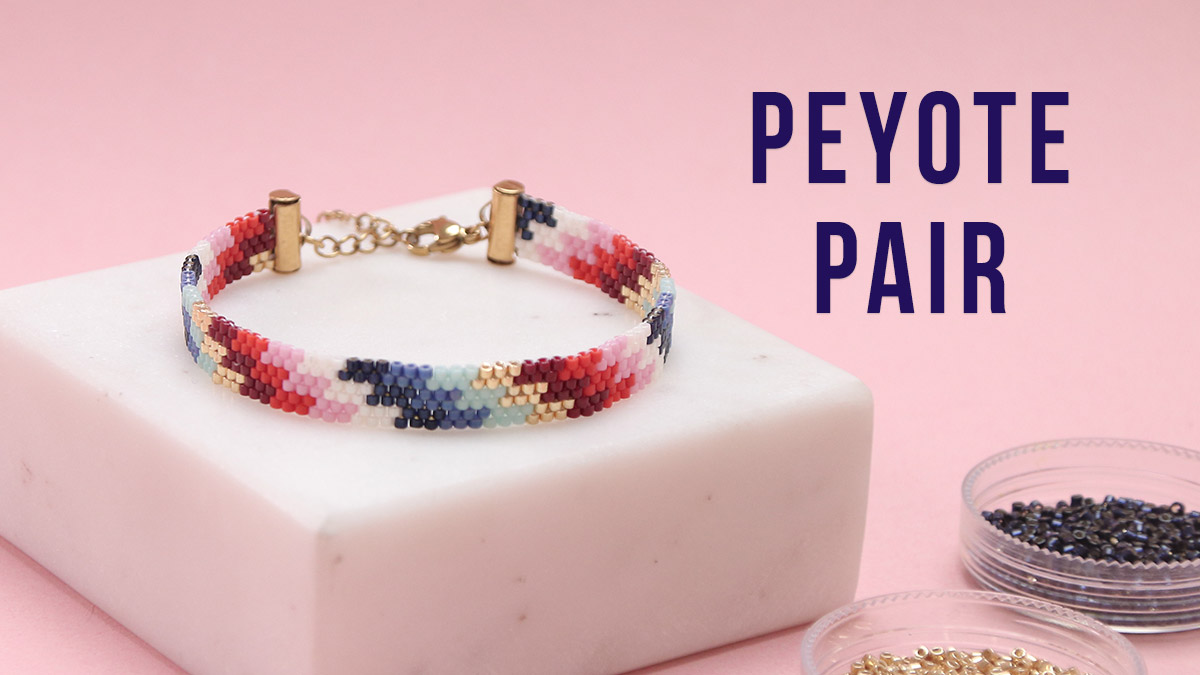
The loom is a tool that enables you to weave mainly vertically and horizontally aligned bands of beads. It can also be used with a weaving needle. It will enable you to weave mainly bracelets and necklaces. The thread is used in two places: fixed to the loom and another thread is threaded onto the needle. The yarns attached to the loom are just used for support. You can use the same thread for both the needle and the loom, but you can also be more creative with the threads on the loom. You'll just have to think about the finish and the clasp before you start the project, so you don't get stuck. The easiest way to get started is to use the same thread for both loom and needle. Here are a few articles on loom weaving and our selection of tutorials:
As you can see, the most important thread is the one you thread onto the needle. You need a very fine, supple thread that can be threaded several times through the bead holes. It also needs to not fray too quickly. I personally recommend the following: Miyuki Beading Thread, Ko, One-G, Hana. These threads can fray, but are supple and pleasant to weave. Some people prefer to weave with 0.12 mm fireline thread. This is a stiffer thread, but does not fray. C-Lon AA and C-Lon D, while less expensive than the others, are also less resistant. I don't recommend them for beginners.
Needlepoint bead weaving
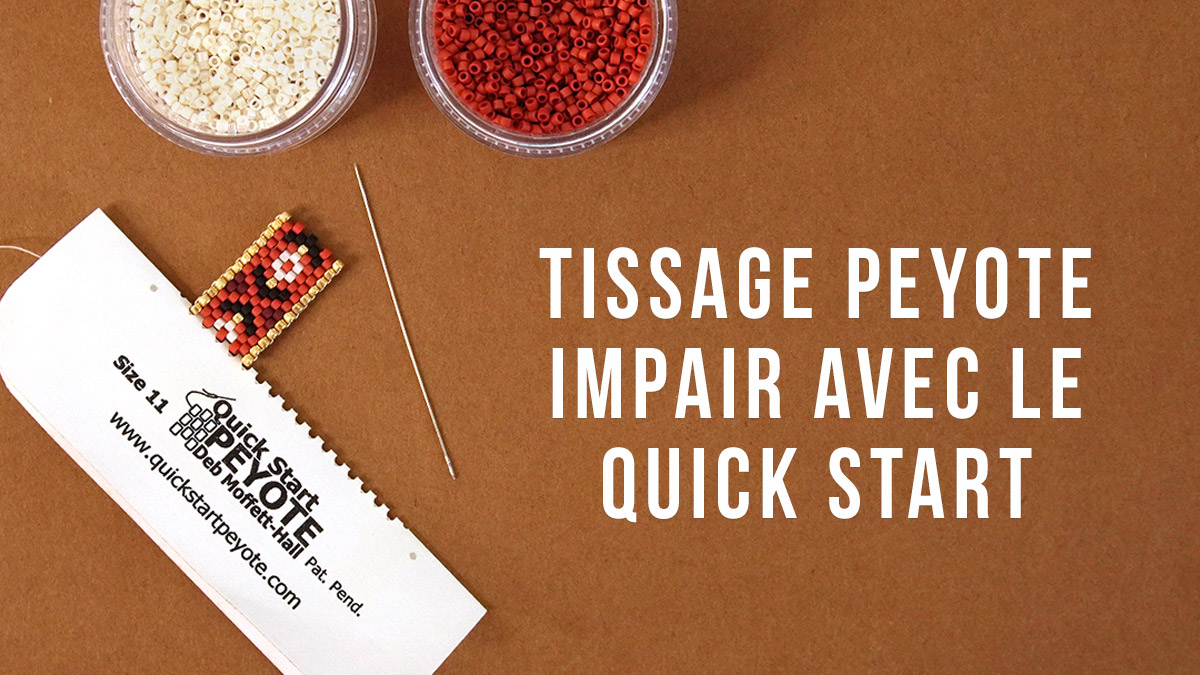
This refers to bead-weaving techniques that do not require a loom. These include Peyote, Brick Stitch, Herringbone and others. The above-mentioned threads can be used, as well as Miyuki Dura-line, Sono, Sonoko Nozue.
Weaving heavy glass beads
Czech glass beads and beads by Puca are larger than miyuki and rocailles and therefore heavier. What's more, the inside of the holes may have rough edges that can damage the thread. Fireline 0.12 or 0.15 mm thread or other nylon thread of this type must be used.
3- Choose compatible thread and needle
4- Conclusion
In conclusion, if you plan to weave Miyuki 11/0 on a loom or with a needle, the simplest thing to do is to use Miyuki needles and Miyuki Beading Thread or fireline 0.12 mm thread.
If you're weaving Czech glass beads, take size 12 to 10 needles like size 11 Pony needles and 0.12 mm fireline thread.
Have you been weaving beads for years? Don't hesitate to indicate which needle and thread you use in the comments of this article.
And if you're more of a beginner and want to know everything there is to know about Miyuki beads, check out our complete guide to these little Japanese beads!