Average Grades
Bonjour, puis je faire du herringbone tubulaire avec des Delicas 8 ? merci
1 Answer
Show answers


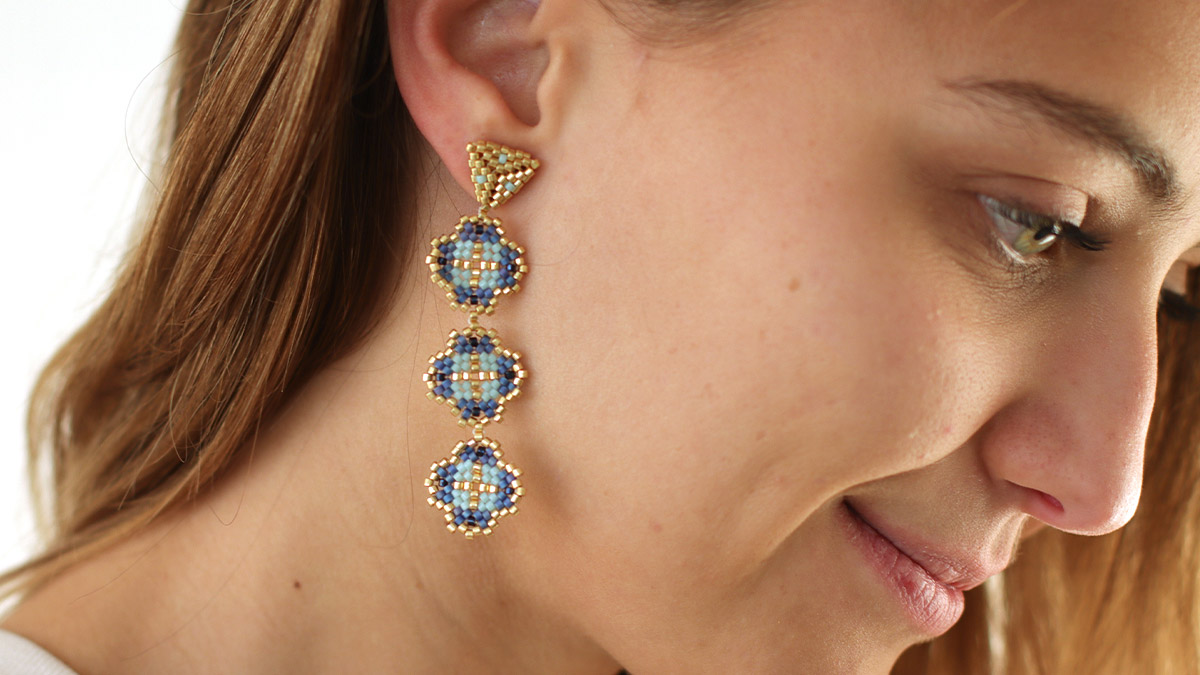
Tubular herringbone weaving is a technique for creating tube-like patterns, with variations such as straight or spiral weaving. The latter, more dynamic, offers a unique aesthetic while remaining accessible to beginners thanks to detailed tutorials. Choose the version that suits your style, whether for bracelets or earrings, and let your creativity run wild.
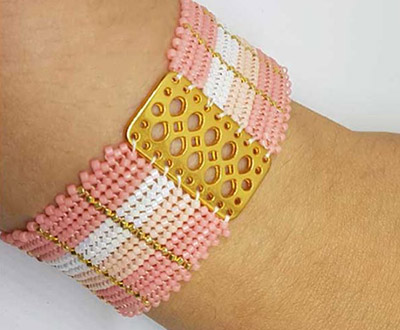
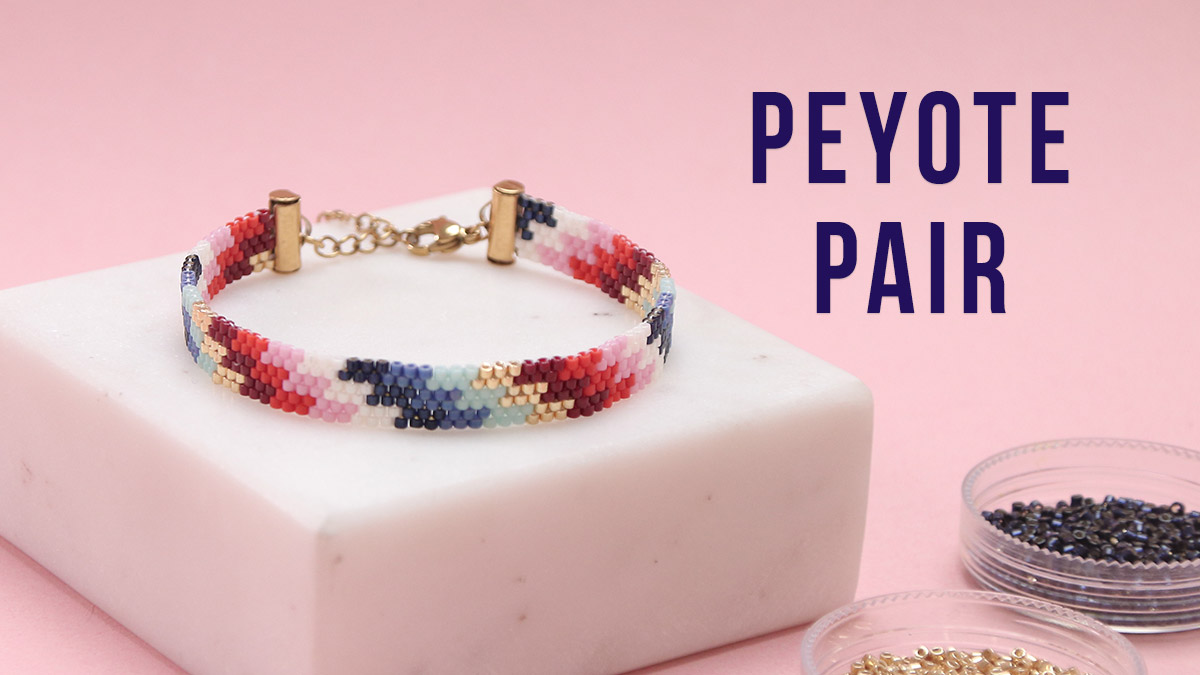
First of all, herringbone bead weaving is a technique for weaving beads at an angle. This creates weaves with a chevron pattern. We already have a datasheet available to explain the simple, flat herringbone technique, as well as a few tutorials:

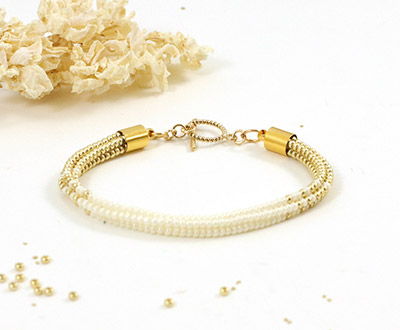
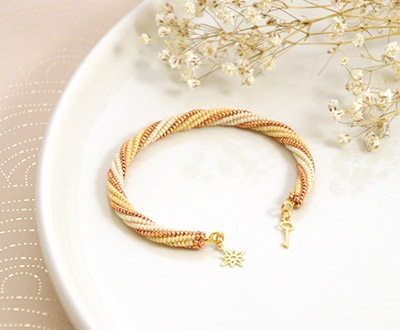
Tubular herringbone weave is a tubular adaptation of this weave. It comes in several variants: straight and twisted or spiral. These techniques are no more difficult than the flat version. We've also produced tutorials for each of these versions:
Below are some diagrams to help you understand the technique. The diagrams show a tube of 4 beads, but you can make tubes with more beads. However, you'll always need an even number of beads, i.e. 4, 6, 8, 10, etc.
Step 1: The first part (steps 1 to 7) consists in creating a base to which the beads will be attached and angled. String 4 beads and work your way through the first two to form a loop.

Step 2: Return to the last two beads.

Step 3: Thread two new beads and pass through the previous two to form a loop.

Step 4: Return to the last two beads.

Step 5: Add another pair of beads, repeating the previous two steps.

Step 6: Attach the first two beads to the last two.

Step 7: The diagram has been rotated 90° clockwise for each subsequent step. Thread the next two beads.

Step 8: String two beads and pass through the red bead shown in the diagram.

Step 9: Return to the top, passing through the next bead.

Step 10: Thread two beads and pass through the next red bead.

Step 11: Go up two beads to start a new round.

Step 12: String two beads and pass through the next bead below. Repeat steps 9 to 12 to continue weaving your tube. For each new turn, you need to go up two beads instead of one.

Creating the base with steps 1 to 7 is the same. Here's what to do next. The spiral appears little by little.
Step 1: The diagram rotates 90° clockwise with each step. Thread 2 beads and pass, not through a single red bead as in the classic tubular version, but through both beads.

Step 2: Return to the top, passing through the bead indicated, not the next two beads. This difference will create the spiral.

Step 3: Thread two new beads and pass through the next two red beads.

Step 4: Work your way up through the next red bead.

Step 5: String two new beads and pass through the next two beads.





Credits
Perles & Co, Internet & E-Commerce company [26/01/2021] Any reproduction, representation, adaptation, in any form whatsoever, even partial, is prohibited, except for reproduction for private use not intended for collective use, representation in the family circle (art. L 122-5 CPI) and online publishing on condition that the source is mentioned and a link is included to the corresponding page of our site www.perlesandco.com.