4 ways to create a cabochon in Fimo clay
The use of cabochons is a basic part of DIY costume jewelry design. Making cabochons isn't complicated, you just need to master a few basic techniques.
Many creative jewelry tutorials give us a step-by-step guide to discovering how to make your own "homemade" cabochon with polymer clay. This data sheet is a summary of the different ways of proceeding and the tools we need, to obtain a personalized and original cabochon to your taste.
What is a cabochon?
A cabochon is a jewelry term that designates a polished piece that is domed at the top and flat at the bottom. It can be transparent or opaque, in a variety of materials and shapes.
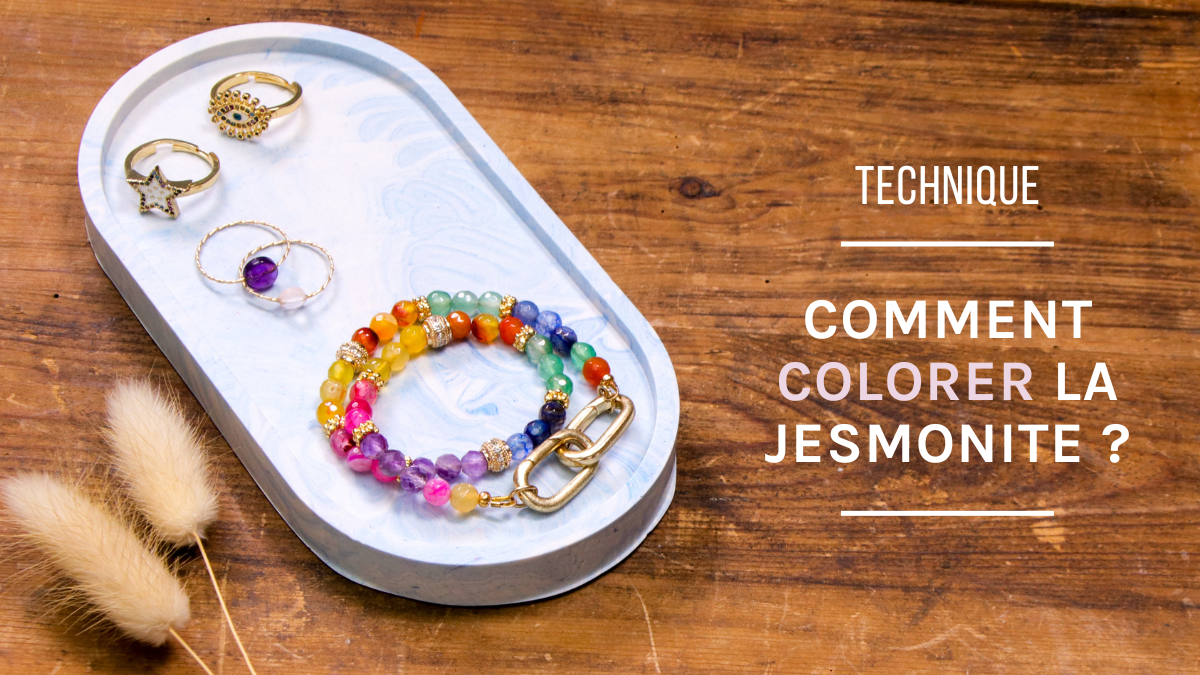
A cabochon can be inserted into a setting to create a pendant, a ring, a bracelet or earrings, it can be bonded to a metal support or to another material. It can also be used as a base for macramé weaving or surrounded by soutache.
Below are some examples of jewelry creations in polymer clay. Here are four ways to create your own cabochon in Fimo clay.
1 - Create your cabochon with a mold
This is the quickest way to make your cabochon! The mold must be made of silicone, and can take a variety of shapes, from the basic round to ovals, drops, squares and more complex shapes imitating jewelry stones, for example.
Its molds are ready-to-use, but don't forget that you can also make your own mold with Siligum or Oyumaru clay, molding the desired cabochon shape beforehand.
How do you make your own mold in Fimo clay? We suggest you discover this in another technical data sheet: " 3 ways to create your own mold for polymer clay".
Put a ball of clay into the mold, and roll it over the surface until it's flat. If the mold is made from Oyumaru, don't put it in the oven: you'll have to unmold it and then bake the cabochon in the oven. If the mold is made from silicone or Siligum, your clay can be baked directly in the mold.
Silicone mold tutorial

2 - Creating a cabochon with a cookie cutter
This method is also known as "hollow bead": only the edges on the underside of the pieces are flat.
For this method, you can use metal cookie cutters just like those made for 3D printing, or a template plate :
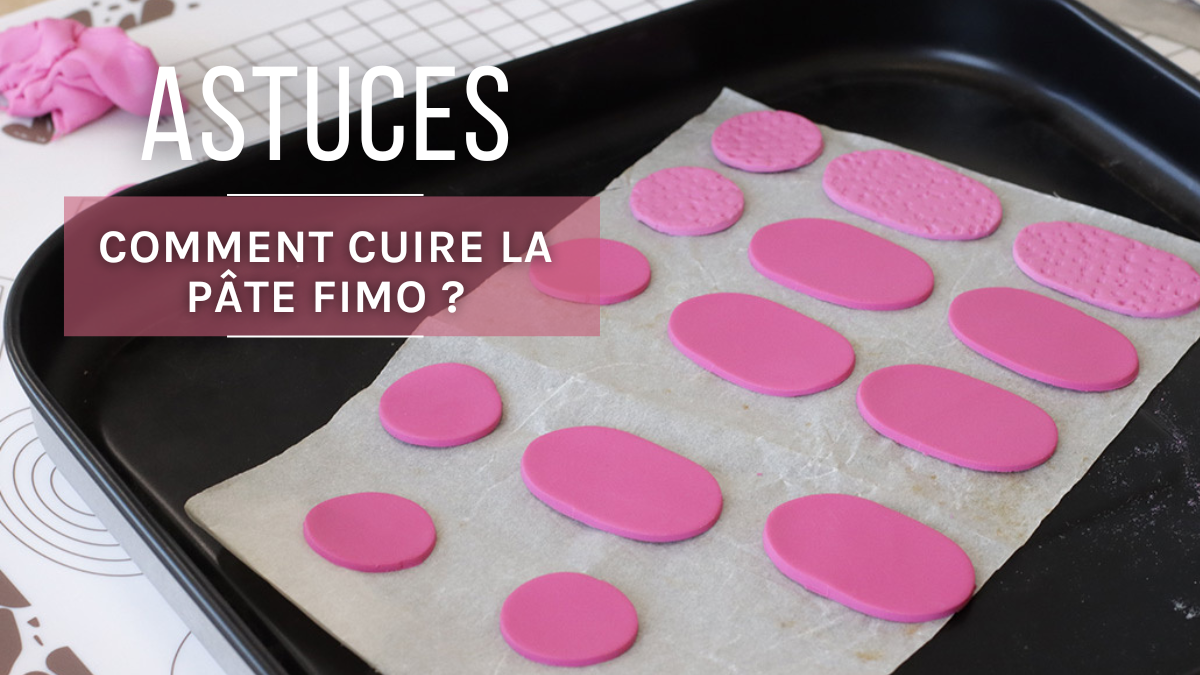
- First, use a roller or the dough machine to make a polymer clay plate. It mustn't be too thin, as the clay will stretch and break if it isn't thick enough. The plate should also be wider than the size of the cookie cutter.
- Place the cookie cutter on the clay, press lightly to mark the clay, then lift the clay, run your index finger underneath and push lightly to stretch and create a domed effect.
- Place the shape upright on a baking tray.
- Remove the cookie cutter and cut out the marked shape with a scalpel or fine-edged cutter. Bake your cabochon.
3 - Creating a cabochon with a cookie cutter and cling film
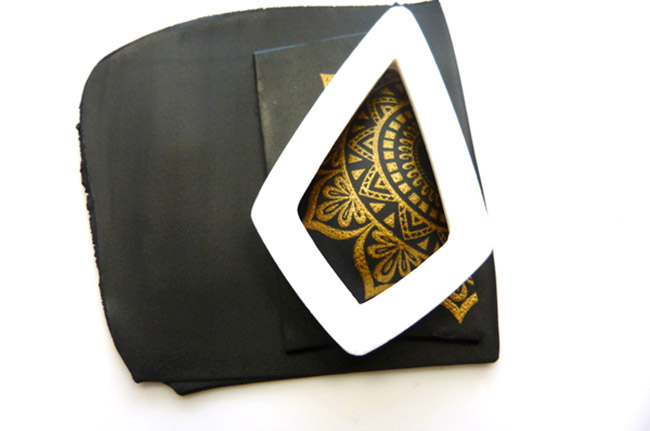
To create cabochons using a cookie cutter and cling film, you need a thick polymer sheet. The denser it is, the more rounded the cabochon will be. Place the cling film on the clay, then press down to remove your shape with the cookie cutter.
To obtain a well-defined shape, e.g. if you want to place your polymer cabochon in a setting, you can invert your setting onto the cling film and use it to mark the clay, then press it into shape. Then cut away the excess clay with a knife.
Foil tutorial
4 - Creating a cabochon with a domed baking tray
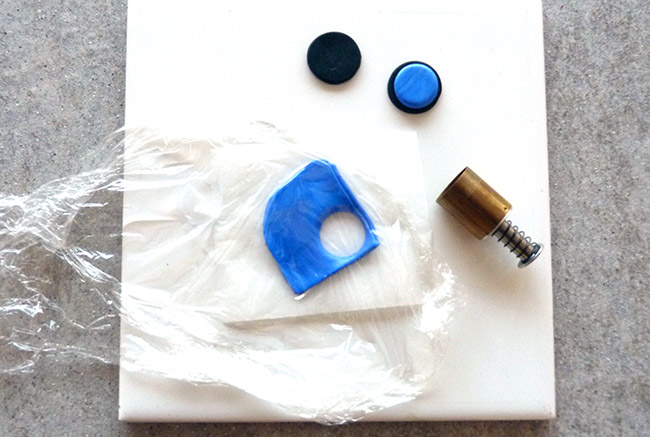
First create your polymer clay shape using a cookie cutter or template. Place the clay on a curved form that can be baked at the temperature used for baking pasta. You can work on glass, ceramic, metal... There are specialized firing supports for polymer as in this tutorial.