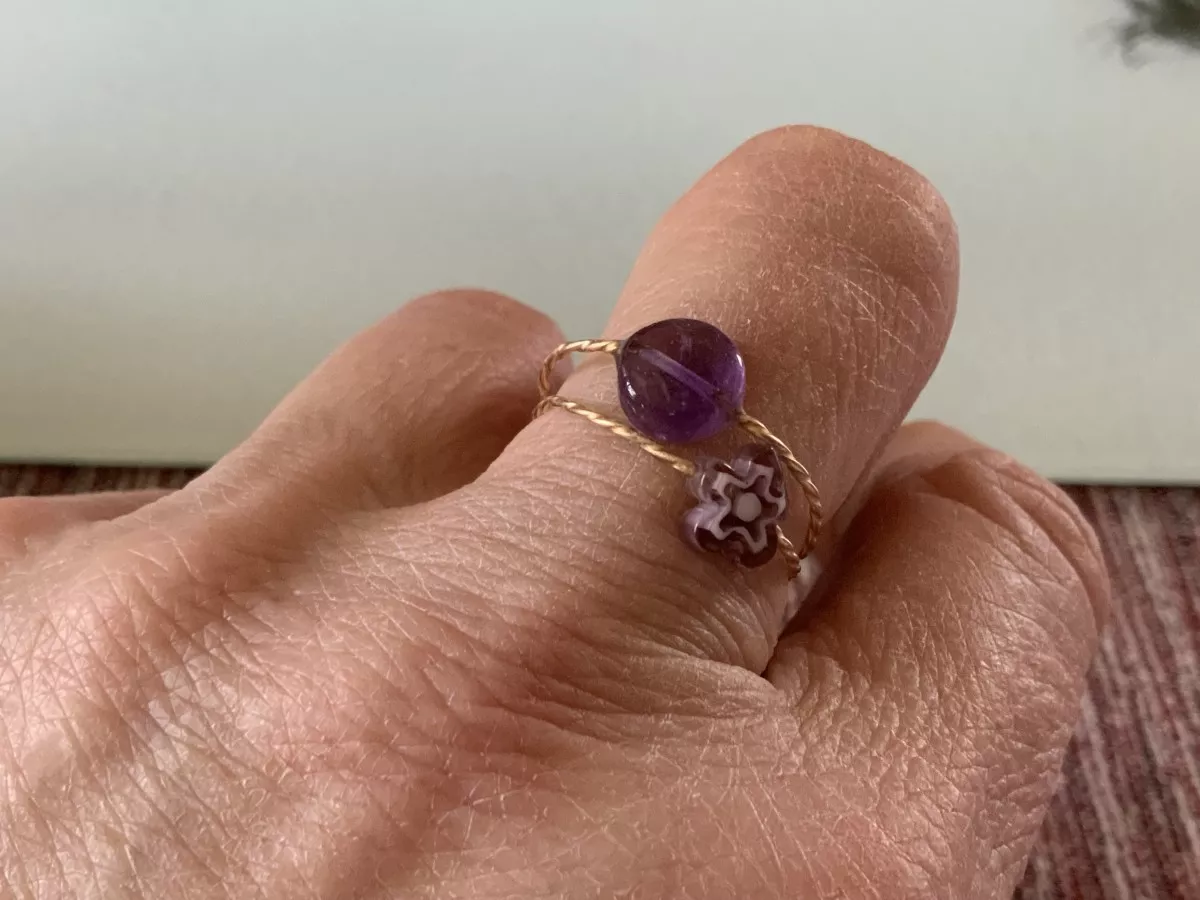
Average Grades
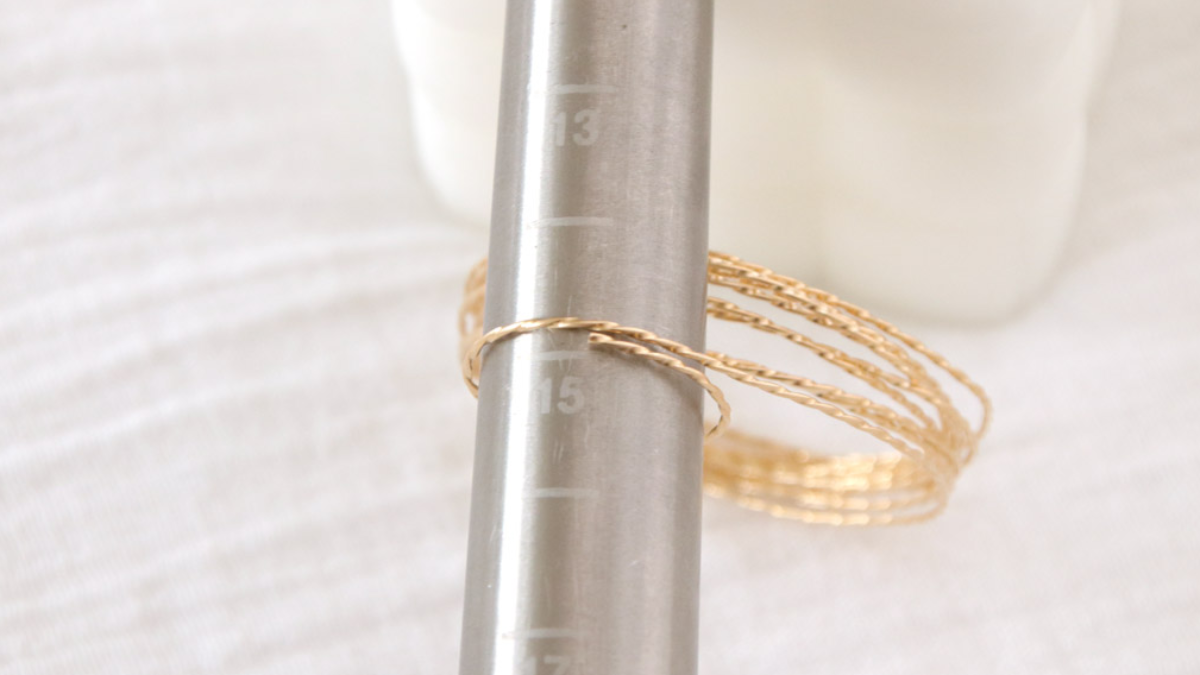
Wrap and form the thread around a tube that is about the size of your finger. You can do this by hand easily.

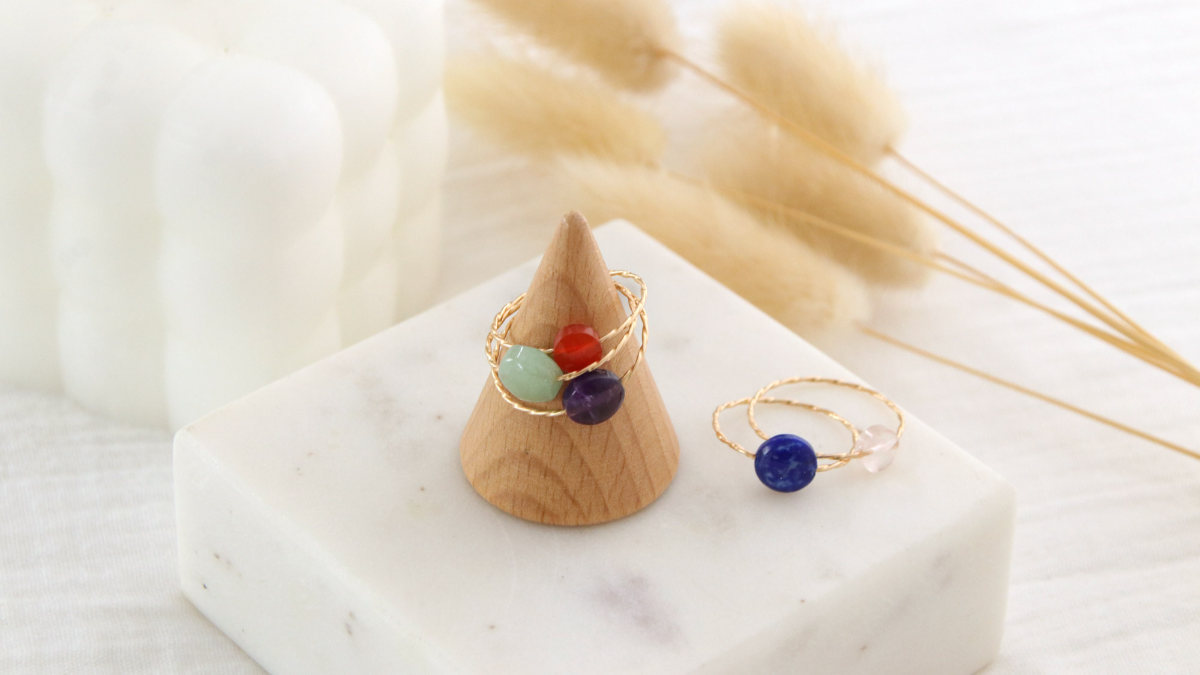
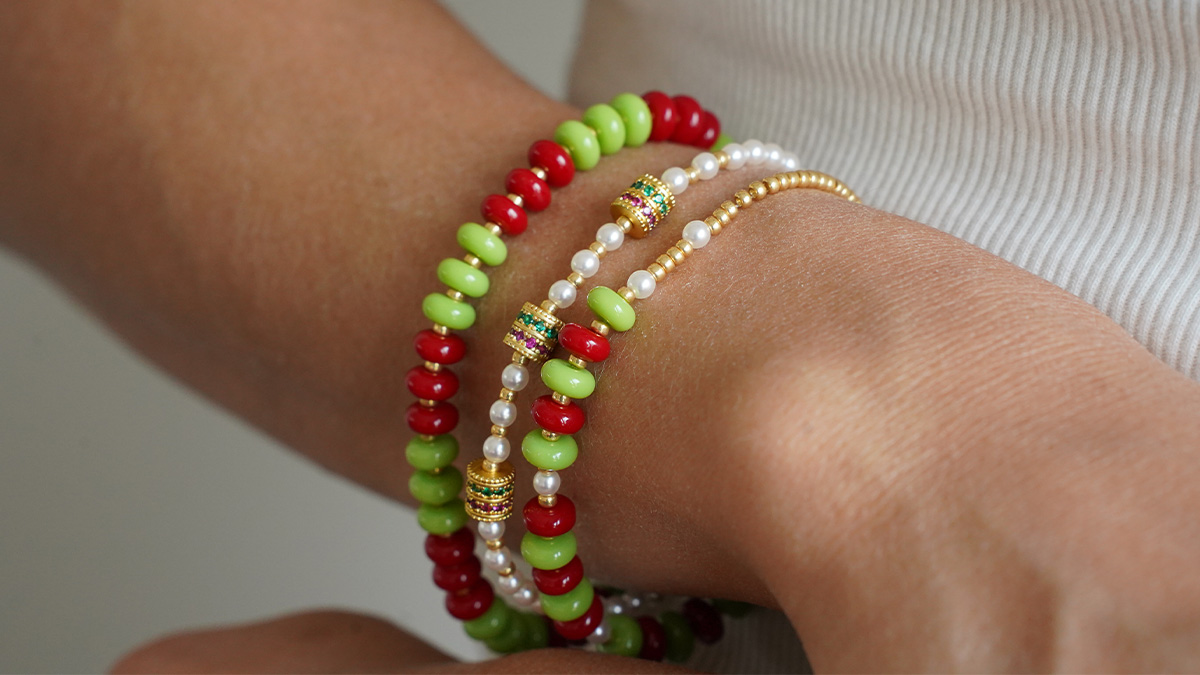
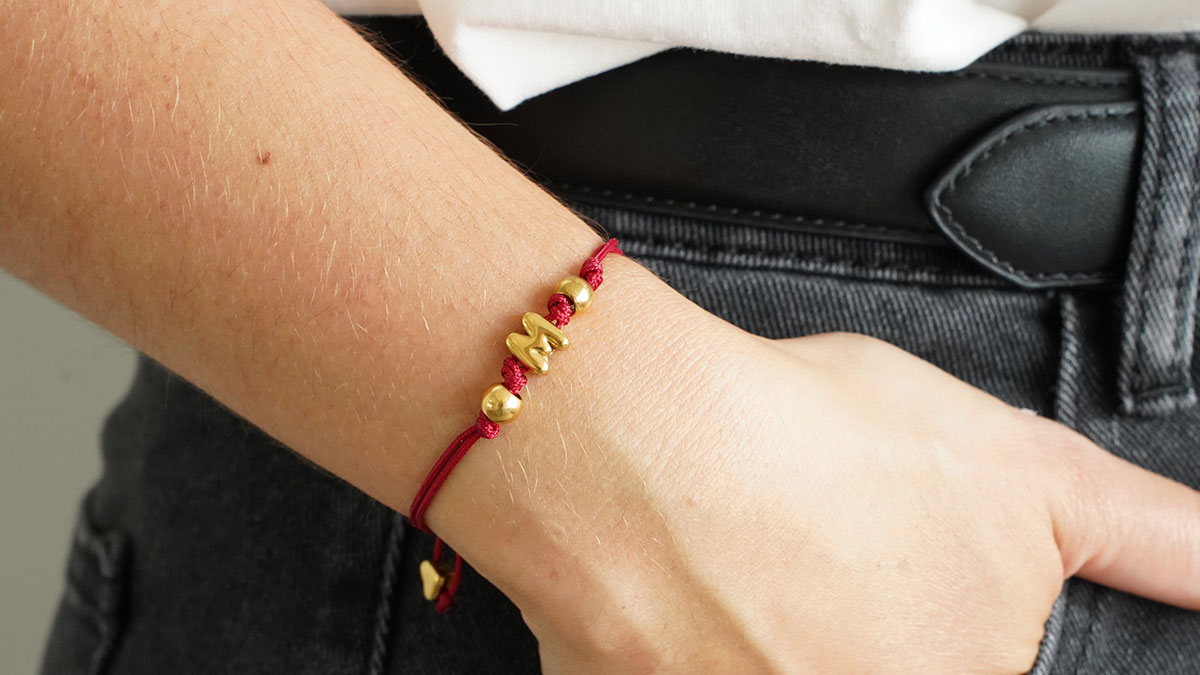
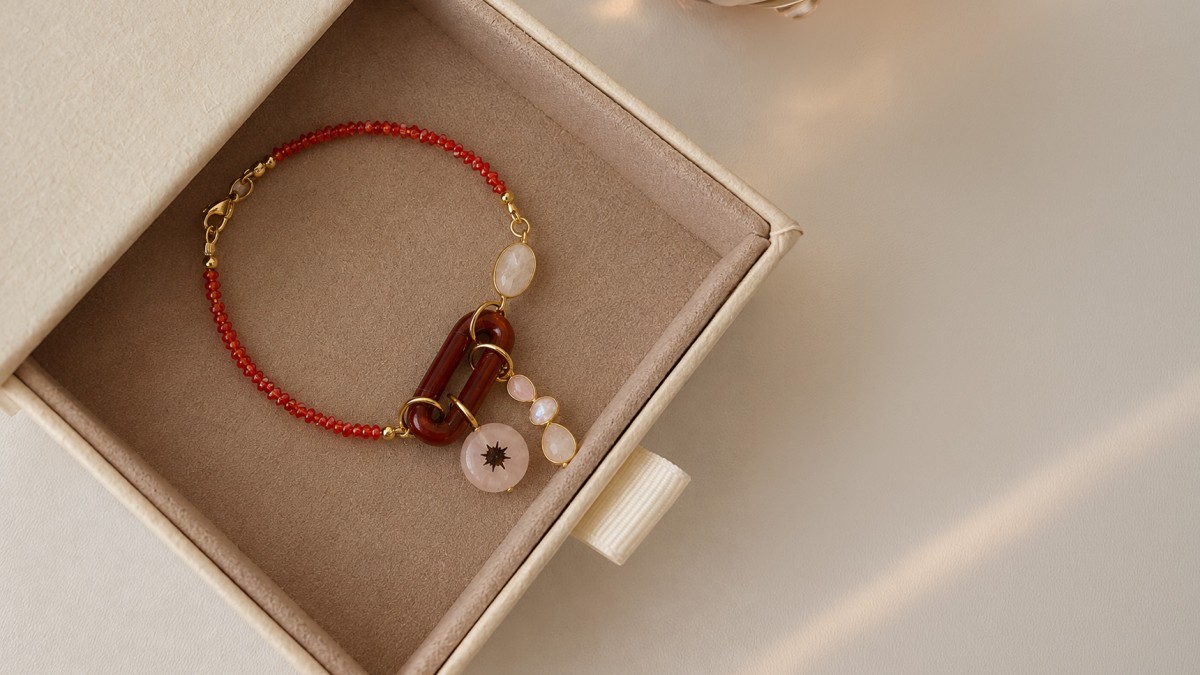
Would you like to create gemstone rings, but don't want to invest in professional jeweler's equipment? Here's an easy jewelry tutorial you might enjoy. To make the wire rings, we used hard-twisted Gold Filled wire. This wire is the most expensive product on this tutorial's list of materials, but it's essential for a high-quality, long-lasting finish. It is sold in 1.5 m lengths, allowing you to make between 25 and 28 rings. You can also make a few rings and use the rest for bracelets like these:
This wire should be strong enough not to deform easily, and thin enough to pass through the hole in the 8 mm diameter stone pucks. You'll need to recut the wire with precision cutters, as the hole on one side is smaller. You can also use a bead reamer, if you have one, to enlarge the hole if necessary.
The other essential element is glue. Hasulith glue will be too weak for this purpose. Use two-component glue, which involves mixing two pastes together. After 24 hours drying time, the glue will hold the wire in the bead. The glue should protrude a little from the hole and be distributed over the wire and the entrance to the hole. Once dry, it will shrink a little and be less visible.
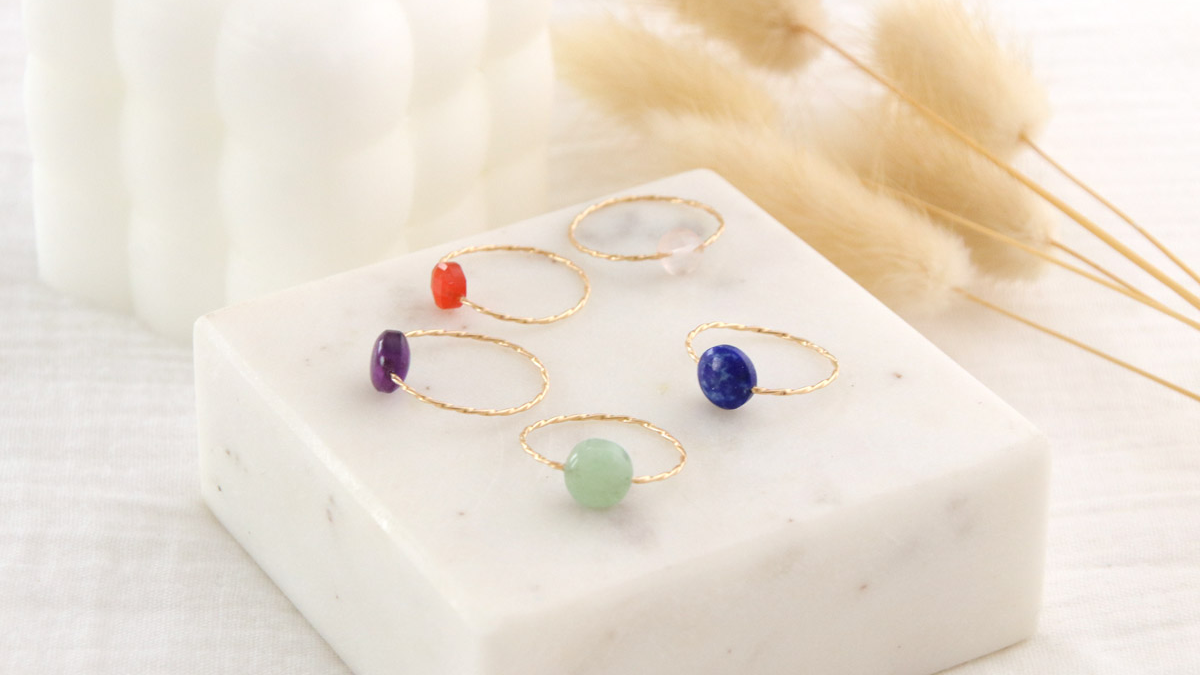
Have fun creating all kinds of natural stone rings with this technique. You can also use freshwater beads or other small pearls.
The metal triboulet is not essential. You can replace it with a tubular object about the size of your finger.
Small carnelian and rose quartz beads have been withdrawn from the material list, as the hole is smaller and irregular, creating incompatibilities with the wire.
Wrap and form the thread around a tube that is about the size of your finger. You can do this by hand easily.

Cut the wire to obtain your ring. With round pliers, fold the last few millimeters of each end to form a straight line at the opening. The ends should be aligned in a line. As you can see in the transparency, the bead hole is a straight line. It will be easier to put the wire in the hole if it is straight rather than curved.
Prepare the glue in the cup provided with it. You need to mix the same amount of paste in it. You don't need to mix a large amount.
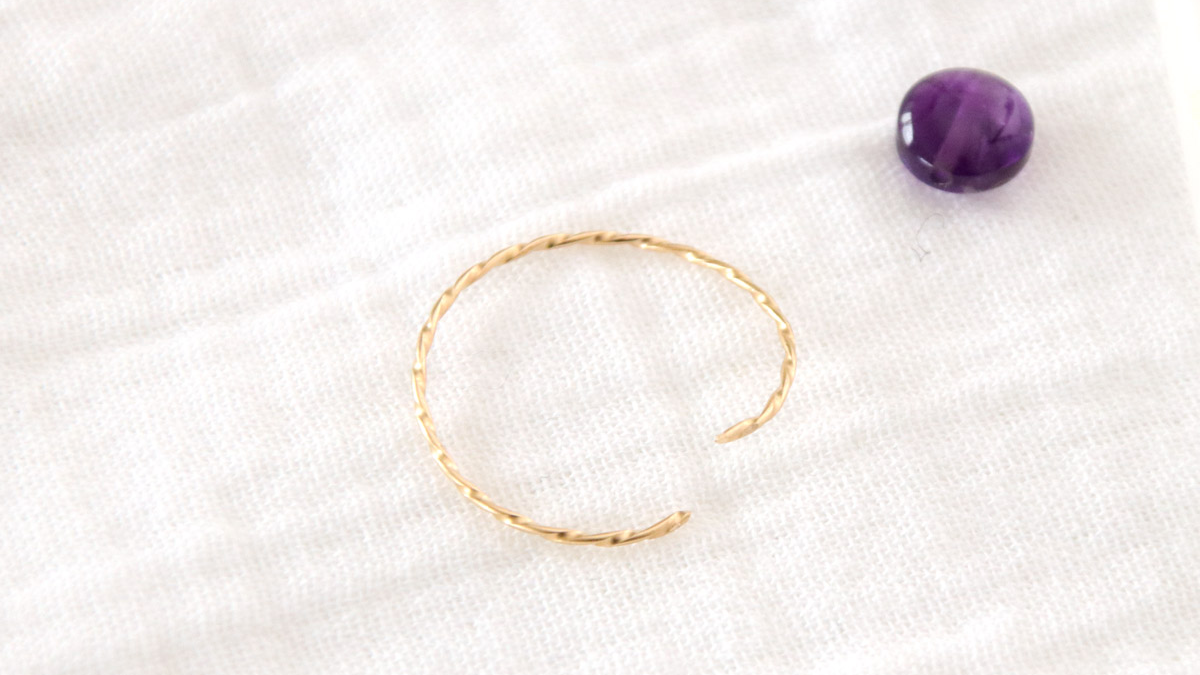
Open the opening by twisting the two ends. To do this, grasp one end with your fingers and the other end with the pliers and pull the ends apart without twisting them. This will make it easier to place the bead on one end, then the other.
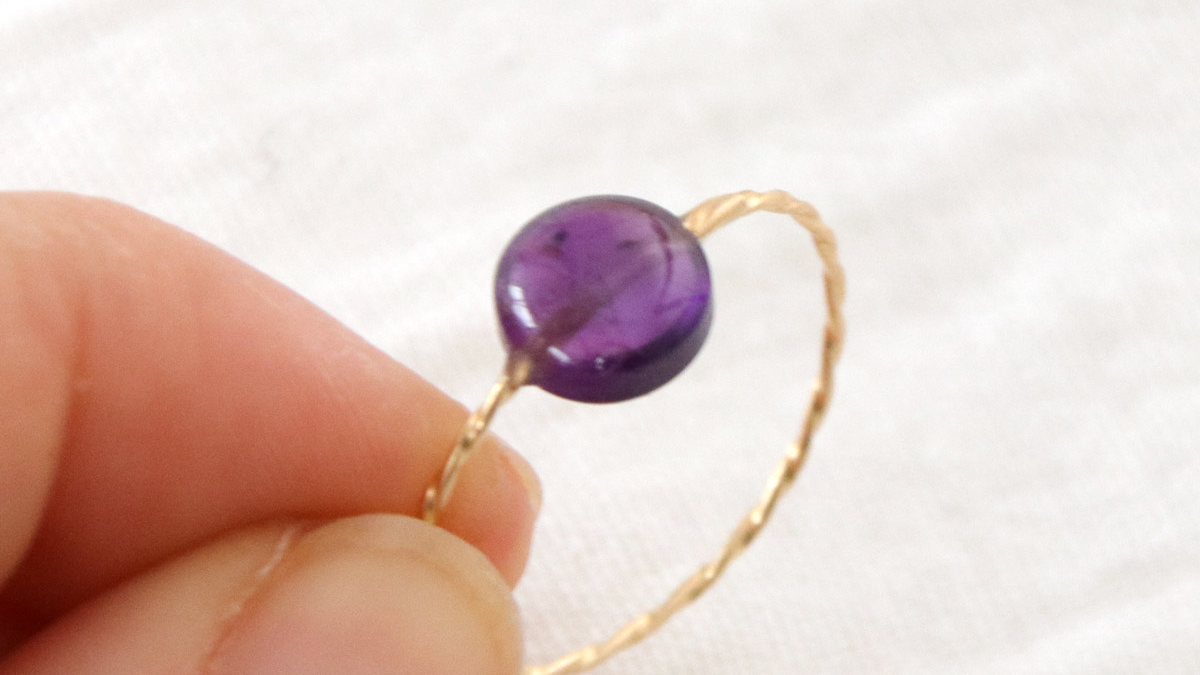
Apply glue to 2 or 3 mm of each side of the wire, spreading it well. Tuck the bead into the first piece of wire. Glue should stick out slightly on the wire and bead. Then place the second end. Wait 24 hours before wearing your ring.
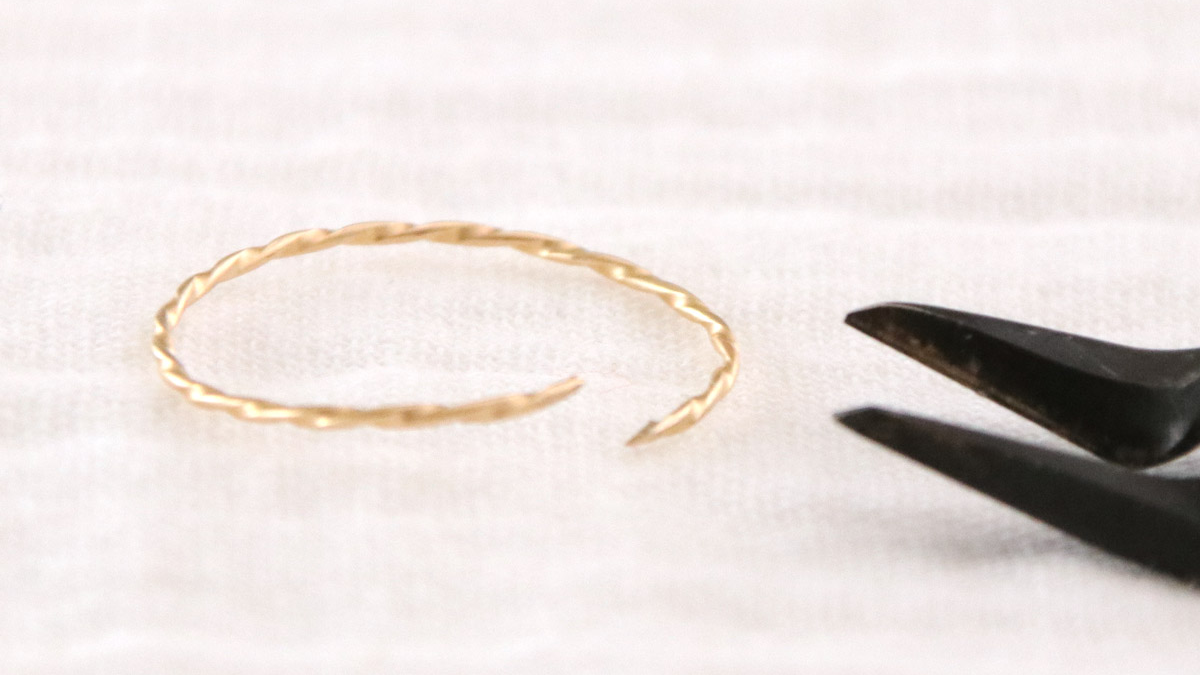
For the 6 mm pucks, you will have to cut the end of the wire at the point because the hole is smaller. The wire may not go through the whole bead.



You have a question about this tutorial? Ask it to our team and the people who have already tested it. The Perles & Co community is here to help you!
Credits
Perles & Co, Internet & E-Commerce company [19/10/2022] Any reproduction, representation, adaptation, in any form whatsoever, even partial, is prohibited, except for reproduction for private use not intended for collective use, representation in the family circle (art. L 122-5 CPI) and online publishing on condition that the source is mentioned and a link is included to the corresponding page of our site www.perlesandco.com.