Average Grades
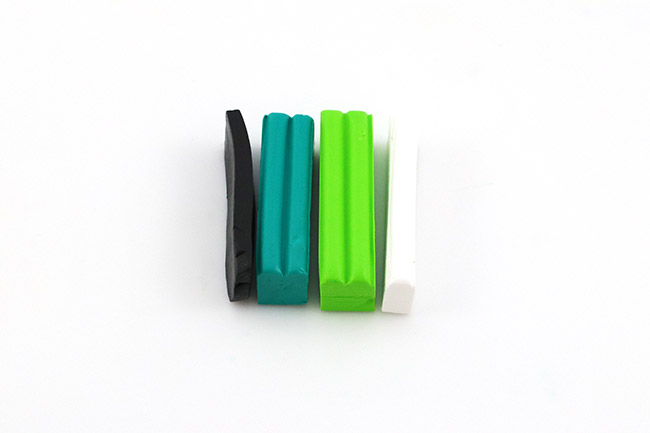
Take 4 colors of polymer clay with 2 different greens, black and white, but in smaller quantities. Prepare your dough by rolling it on a support to make 4 cylinders of equal length.

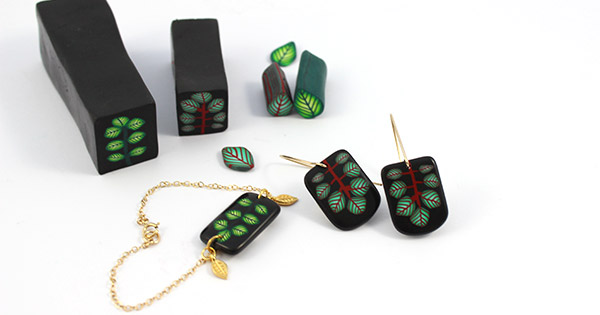
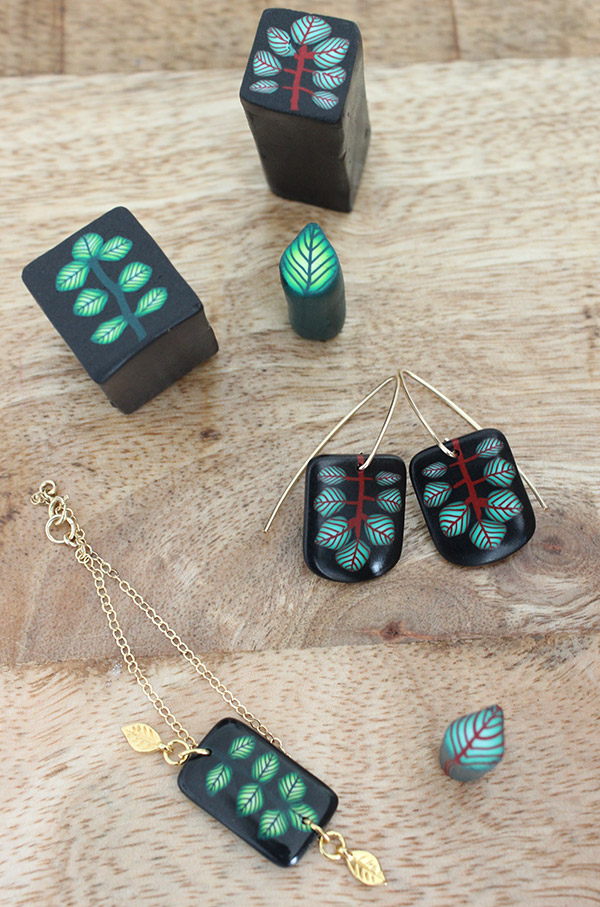
Learn how to make a leaf-shaped cane with polymer clay from a target cane. You'll see how to rework a simple cane into a more complex one, as we do here with a branch structure. You can use any brand of polymer clay you prefer, but be careful not to work with clay that's too soft, or you'll find it hard not to crush your design. The most popular pastes for canes are Fimo professionnal and Kato Polyclay.
Take 4 colors of polymer clay with 2 different greens, black and white, but in smaller quantities. Prepare your dough by rolling it on a support to make 4 cylinders of equal length.
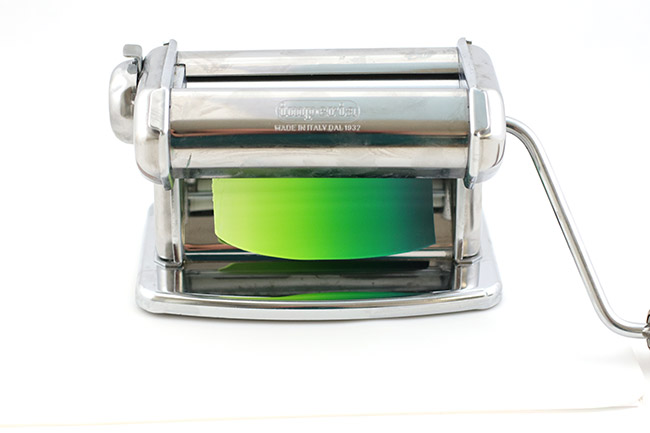
Place your cylinders side by side, then roll lengthwise. You can now pass your sheet through the pastry machine at the widest notch, placing your different colored stripes vertically. You must always respect this direction until you obtain your gradient. Take the machine down 2 notches, fold the sheet in 2 and pass it through the machine fold-first, about fifteen times.
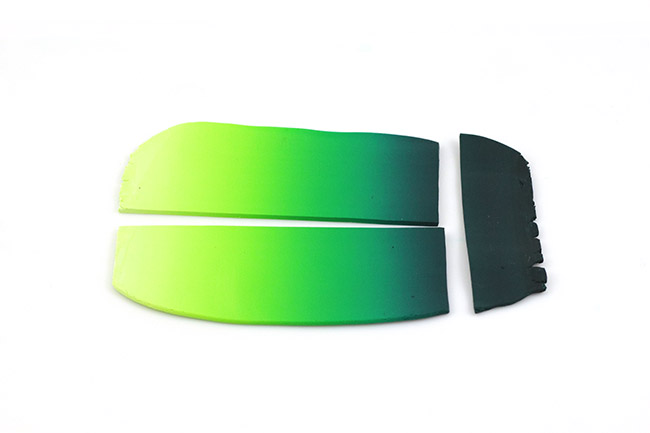
Cut off a little of the dark part and reserve. Divide your colored plate into 2 parts.
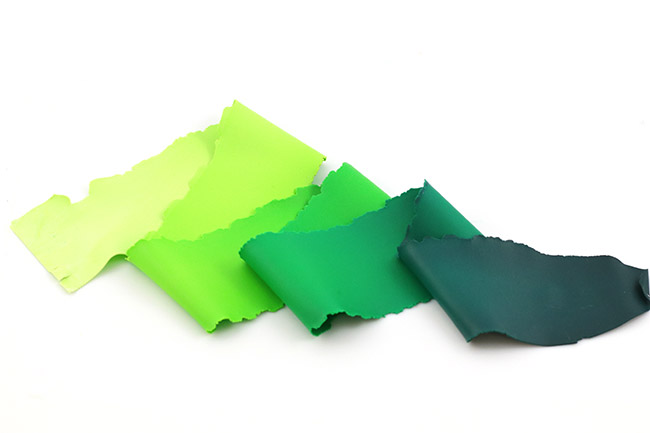
Superimpose your 2 pieces of baking sheet, and use the rolling pin to lightly weld them together. Then pass it through the dough machine, first at the wide notch, always in the vertical direction. Run it through the machine a second time, but this time at the thinnest setting to obtain a long ribbon.
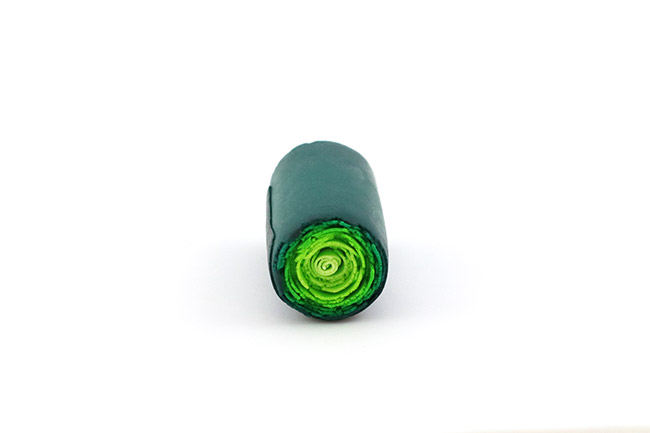
Wrap the resulting ribbon, starting with the light side, to create a target cane.
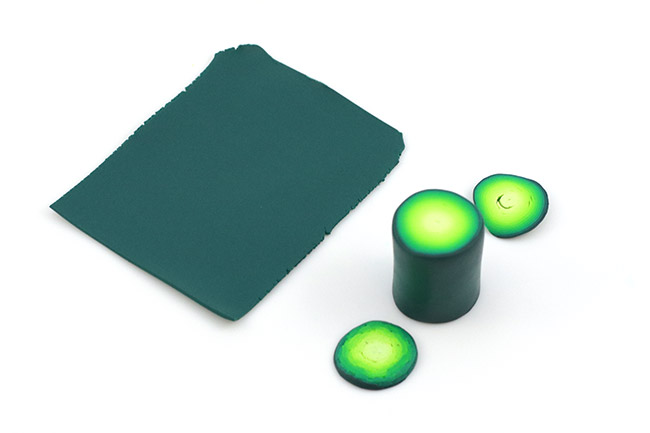
Work on the dark part you reserved when cutting the plate. If you don't have much of it, find the same color by mixing a little black with emerald green. Run your dark green through the dough machine at a medium notch, in this case number 4 on the Imperia.
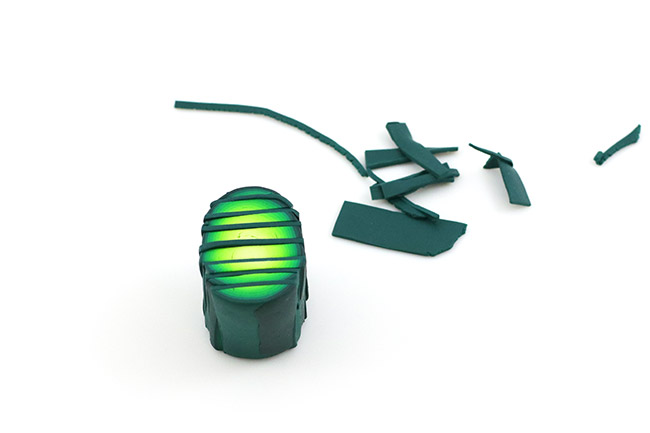
Cut your target cane into 2 parts, open the cane and place a piece of plate inside, cut off the excess and close the cane. Continue in this way, placing seven dark-green strips.
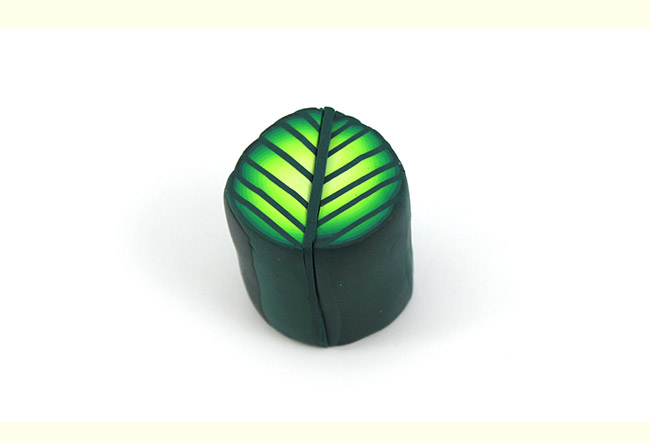
Cut the striped circle diagonally into 2 parts. Invert one of these parts and place it in the other direction, so that the stripes face the right way. Before re-soldering these 2 sides, you'll need to place a new strip of green plate, but one that's been through the pastry machine at the widest notch.
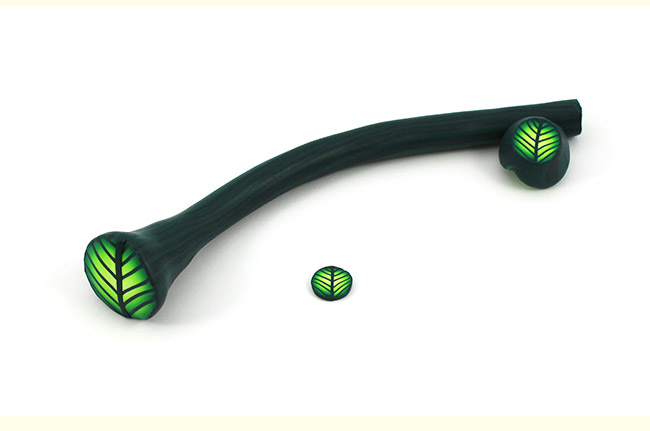
Leave your cane round to lengthen it by making a cane reduction.
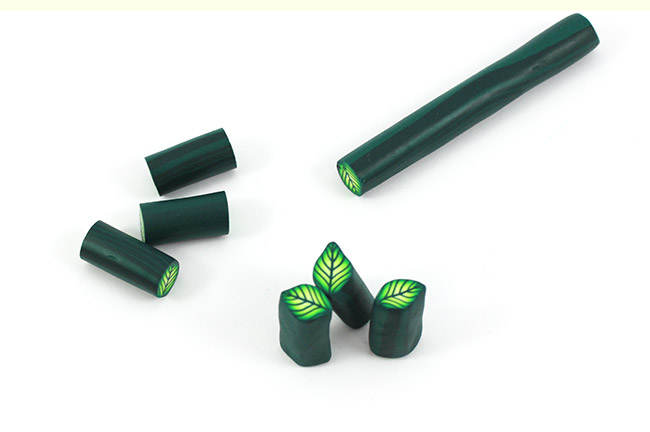
Stretch out your leaf cane until it's about 10 mm in diameter. Cut seven 2 cm lengths from your cane. Pinch each end to obtain your leaf shape.
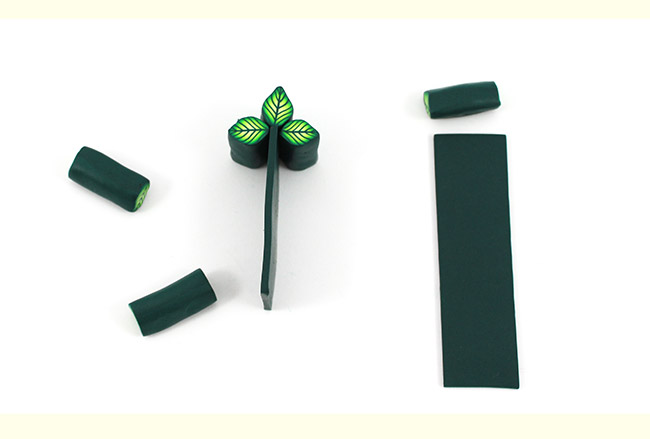
Cut a rectangle from the remaining green sheet, about 2 cm long, to match the length of the cane. Start building your cane branch and leaves.
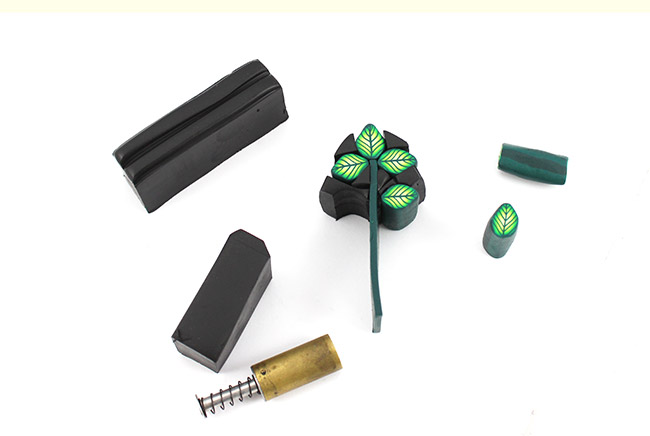
Work to fill all the gaps with fairly hard black clay such as Fimo professionnal. Your block of clay is about the same height as all our canes, so it's easy enough to cut out bits from the black block to fill the gaps exactly. You can also use small round cookie cutters to take a piece from the cane and insert a leaf.
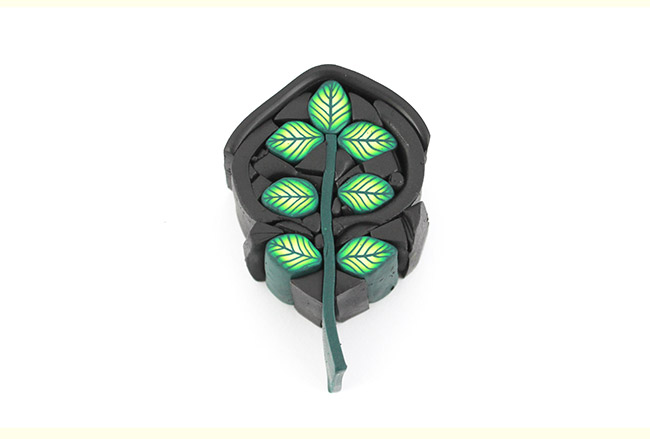
Continue this work by moving down and adding your leaves.
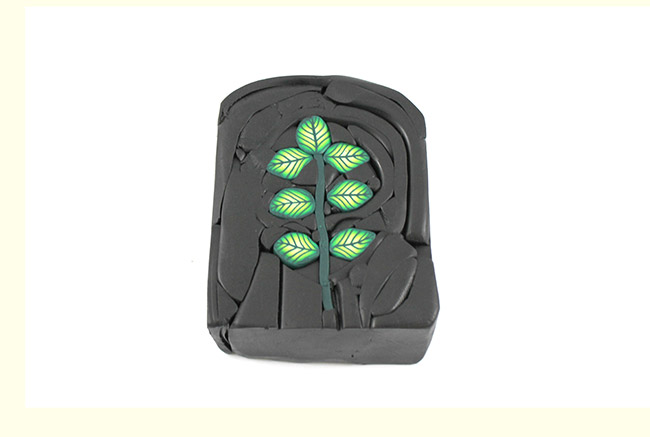
Surround your design with lots of black paste, trying as much as possible to obtain a square shape.
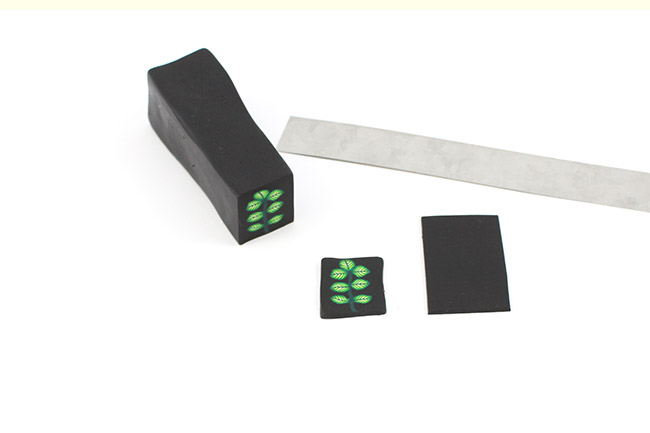
Wait until the next day to reduce the cane so that the dough cools and doesn't become too soft, allowing you to stretch it without deforming it.
I'd advise you to keep pieces of cane of different sizes, so that you can have fun later and multiply your designs.




You have a question about this tutorial? Ask it to our team and the people who have already tested it. The Perles & Co community is here to help you!
Credits
Perles & Co, Internet & E-Commerce company [22/03/2019] Any reproduction, representation, adaptation, in any form whatsoever, even partial, is prohibited, except for reproduction for private use not intended for collective use, representation in the family circle (art. L 122-5 CPI) and online publishing on condition that the source is mentioned and a link is included to the corresponding page of our site www.perlesandco.com.

