Average Grades
Se puede utilizar un collar de aguamarina y una pieza de serpentina peruana. Gracias
1 Answer
Show answers

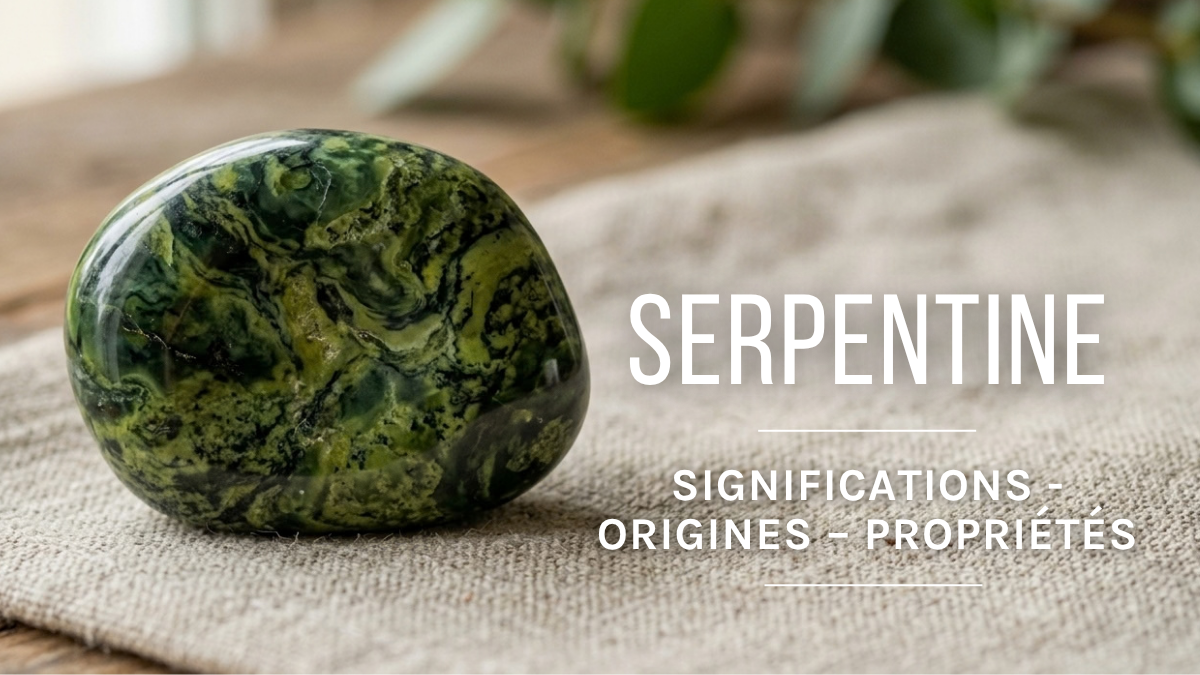
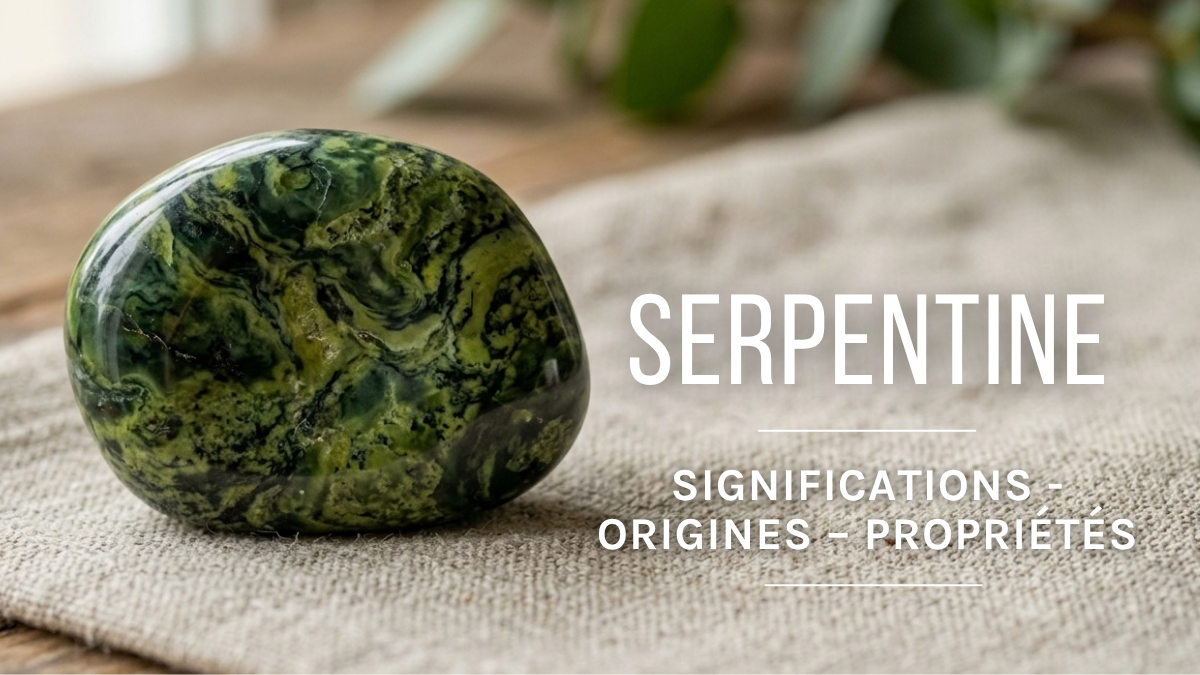
Serpentine is a natural stone with soothing green hues, prized for its beauty and its use in jewelry making. Its main deposits are found in Italy, Russia, and the United States, and it is often chosen for its versatility in DIY projects. Easy to work with, it stands out for its unique patterns and protective properties.
Serpentine is a fascinating stone, rich in history and mystery, distinguished by its soothing shades of green and enchanting patterns. It has been used for millennia in various cultures for its beauty and its protective and spiritual properties. Today, it’s also highly prized for creating DIY costume jewelry.
Use serpentine jewelry findings and beads to create beautiful natural stone jewelry with no limits. Get inspired by our tutorials!
The origin of this natural stone’s name can be traced to several different sources… Some believe the name “serpentine” comes from the Latin “serpentinus,” meaning “stone serpent.” Others think it derives from the Greek “ophidis,” meaning “serpent.”
It is sometimes called “ophite” or “ophiolite.”
This gemstone has been well known for millennia for its versatility in a wide range of uses.
As early as the Neolithic period, it was used to craft long axe blades for ritual ceremonies and other decorative objects.
Cylindrical serpentine seals were commonly used in Mesopotamia—particularly by the Sumerians and Assyrians—to imprint patterns or inscriptions on clay. These seals were often worn as amulets and used to authenticate documents or property.
In ancient Egypt, this natural stone was used to carve statuettes, amulets, and ritual vases, thanks to its ability to be finely polished and carved. Its green color was particularly prized for depicting divine or royal figures.
In Italy, particularly in Florence, it was used in Renaissance architectural works. It features in the green marble inlays on certain church facades, such as the Basilica of San Miniato al Monte, where it contrasts beautifully with the white marble.
In India, it was used to create jewelry, as well as to decorate the hilts of swords and daggers, small statues, and tableware (glasses, cups, cutlery, etc.).
The Māori of New Zealand used it to carve sacred and symbolic objects. They called this stone Tangiwai, a Māori term meaning “tears” because, according to legend, it is said to be the petrified tears of a woman.
It was designated the official state stone of California in 1965, due to its abundance in that region. However, this controversial designation is now prohibited.
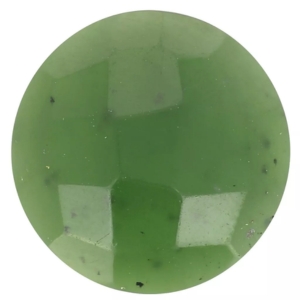
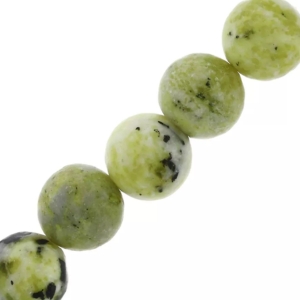

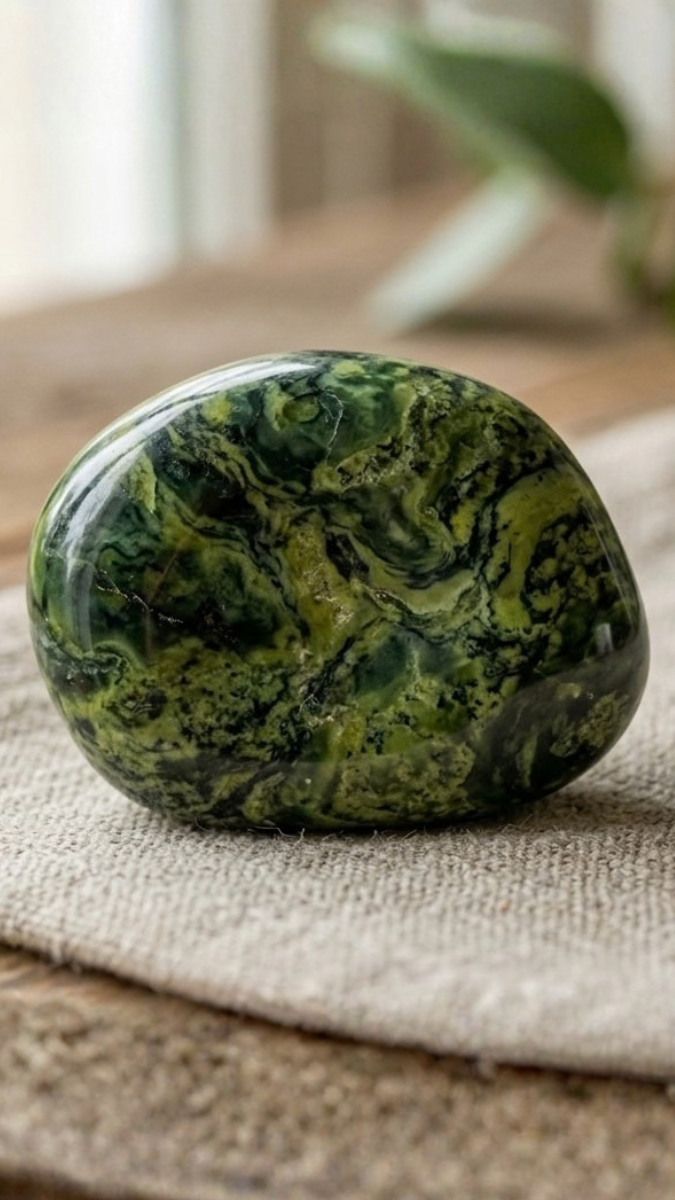
This natural stone is distinguished by its varied shades of green, ranging from light green to dark green, with shades of ochre in between, sometimes featuring veins or marbled patterns of yellow, brown, or black. Its green color and sinuous patterns evoke the texture and scales of a snake. Hence its name!
Its color palette encompasses so many shades of green that it has sometimes been difficult to identify.
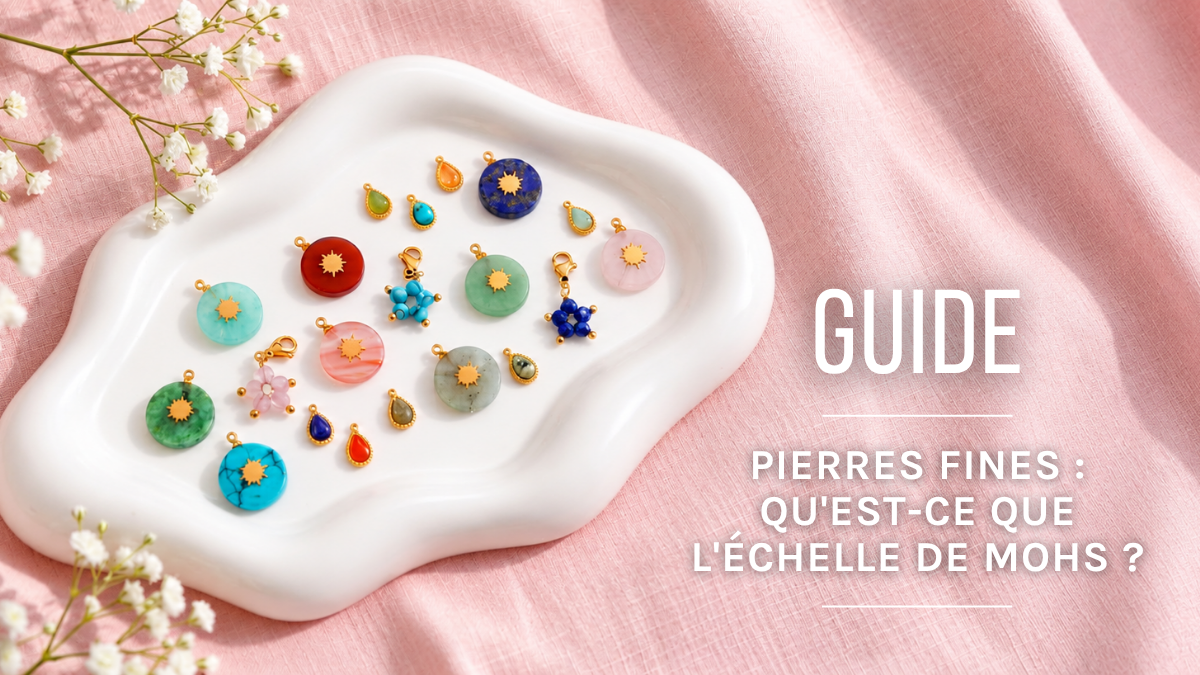
It has a relatively low hardness, generally around 2.5 to 5 on the Mohs scale, which makes it softer and easier to carve. Its density ranges from 2.5 to 2.8 g/cm³.
Serpentine includes several varieties. Here are the three most common types of serpentine:
This olive-green stone is very widespread. The finest serpentine deposits are found in Italy, Russia, Great Britain, New Zealand, France, Norway, the United States, India, Canada, China, and Zimbabwe.
In crystal healing, it is known as a soothing stone, capable of dispelling negative energies, combating stress and anxiety, and bringing calm and serenity. Some people consider it the ideal stone for stimulating creativity and inspiration.
It is also highly valued for meditation practice.
Which chakra is serpentine associated with? It is associated with the root chakra and the throat chakra. By working with the root chakra, serpentine is said to help dissolve energy blockages that can impede the flow of energy through this center. When working with the throat chakra, it is said to make it easier to find the right words to express your thoughts and feelings, thereby improving your ability to communicate with others.
It is the natural stone for those born under the astrological signs of Libra, Pisces, and Gemini.
Please note: Our gemstones are not sold for use in crystal healing. The effects of gemstones have not been scientifically proven. Natural gemstones are in no way a substitute for medical expertise or medical treatment.
Crystal healers recommend regularly cleansing this gemstone to rid it of any negative energies it may have accumulated. They advise submerging it for a few minutes in a container of demineralized water. Since serpentine is a soft stone, salt and tap water should be avoided. Once the cleansing process is complete, be sure to purify it by smudging it with white sage.
After purification, you can recharge it by placing it for a few moments on a cluster of quartz bathed in sunlight.
Silver tones, such as those of925 Sterling Silver andstainless steel, highlight the green hue of this natural stone without overshadowing it. Golden tones, such as those of gold-plated or Gold Filled jewelry, create a rich and luxurious combination with this stone, enhancing its warm tones. Finally, copper adds an earthy and natural touch.
Which stones pair well with serpentine? In crystal healing, it’s recommended to combine it with stones of similar colors, such as jade oraventurine. This combination is said to enhance its stress-relieving effects.
Credits
Perles & Co, Internet & E-Commerce company [28/09/2024] Any reproduction, representation, adaptation, in any form whatsoever, even partial, is prohibited, except for reproduction for private use not intended for collective use, representation in the family circle (art. L 122-5 CPI) and online publishing on condition that the source is mentioned and a link is included to the corresponding page of our site www.perlesandco.com.