Average Grades
EST-CE QUE JE PEU ACHETER CETTE PIERRE ICI? A PERLES & CO?

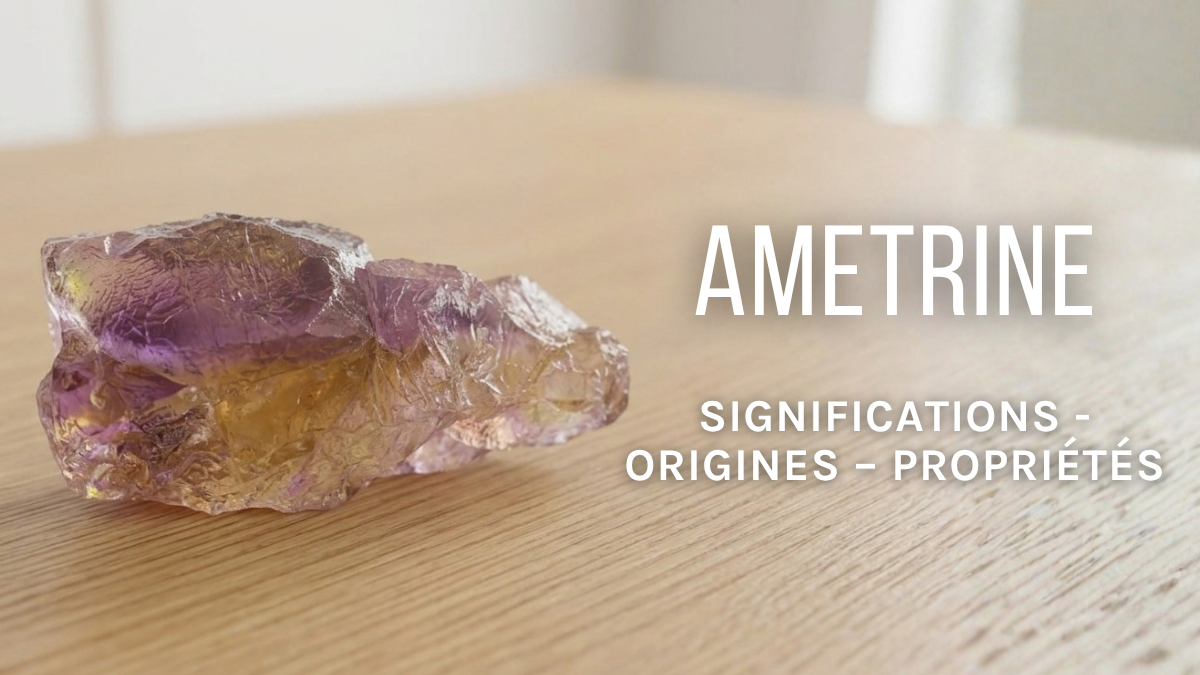
Amethyst, with its blend of deep purple and golden yellow hues, is a prized gemstone, especially for DIY jewelry making. Mined primarily in Bolivia, it is distinguished by its balance between the energies of amethyst and citrine, offering a unique aesthetic for your creations.
Ametrine, with its captivating blend of purple and yellow, is a natural stone prized for its exceptional beauty. It is therefore a wise choice for DIY jewelry makers seeking originality. But it’s also sought after for its properties in crystal healing, as it embodies the perfect balance between serenity and vitality.
Explore our selection of ametrine beads and jewelry findings to create original DIY jewelry. Get inspired by our natural stone jewelry tutorials to craft one-of-a-kind pieces.
This natural stone gets its name from the two types of quartz that make it up: “ame” for amethyst and “trine” for citrine.
The history of this two-tone stone is steeped in romance, tragedy, and magic.
Legend has it thatAnahí was a princess from the Ayoreo tribe in Bolivia. She was given in marriage to a Spanish conquistador as a sign of peace between her people and the invaders. The ametrine mine, which bears her name today, served as the bride’s dowry.
Another, more romantic version of this legend says that Anahí found herself torn between her love for the conquistador and her loyalty to her people. When the tribe rebelled, she helped her husband escape, paying with her life for what her tribe considered an act of betrayal.
Before she died, she gave her beloved a one-of-a-kind stone, representing her heart torn between two worlds: the violet of the amethyst symbolizing her loyalty to her tribe and the yellow of the citrine representing her love for the conquistador. After her death, the conquistador returned to Spain, taking this stone with him as a final memento of his lost love.
The other conquistadors brought back ametrine gifts for the Queen of Spain, which helped spread awareness of this gemstone throughout the European continent.


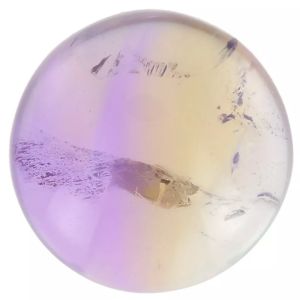
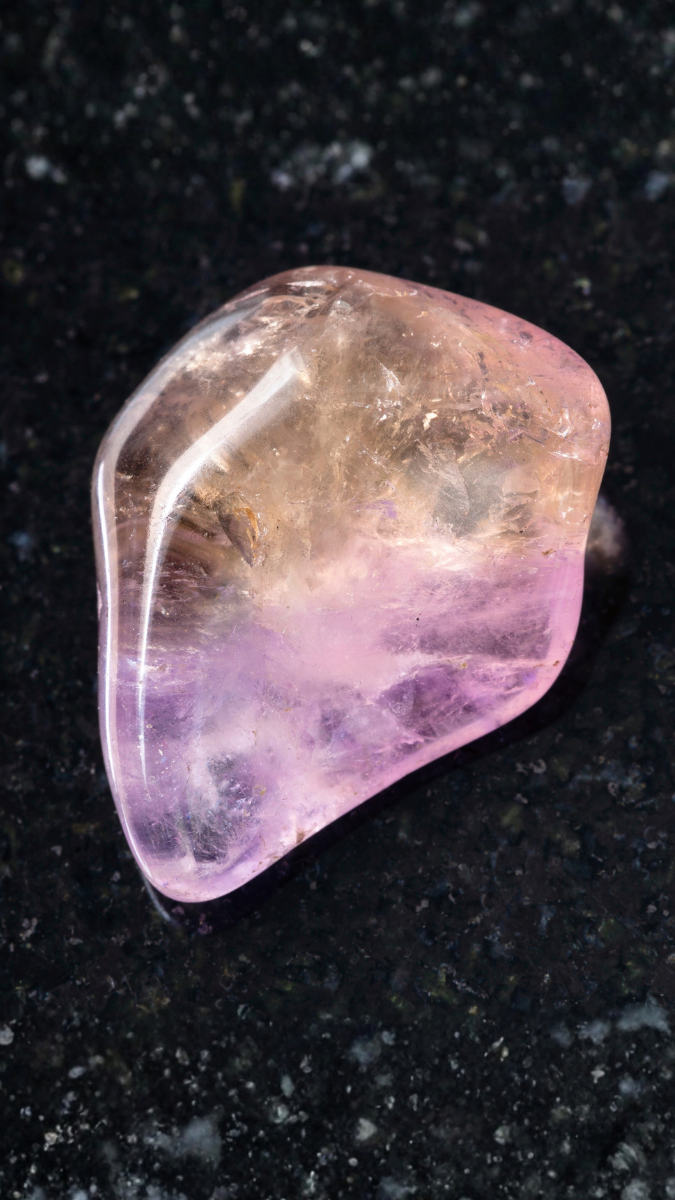
Ametrine captivates with its colors: deep, feminine purple areas typical of amethyst and fresh, golden-yellow hues of citrine, which never blend together.
The stone is cut in such a way that both colors appear in a single piece.
Formed by the combination of amethyst and citrine, this gemstone is naturally part of the large quartz family. It therefore has a hardness of 7 onthe Mohs scale, and its density ranges from 2.65 to 2.70 g/cm³.
The main mining site is located in Bolivia, at the Anahi mine. Other deposits are found in Brazil, India, Madagascar, and Sri Lanka.
According to certain beliefs, such as crystal healing, amethyst—with its purple color—is said to bring calm and serenity, while citrine—which is yellow—is known for its energizing properties and its ability to stimulate creativity. Ametrine is therefore said to soothe the mind and encourage meditation. It is believed to foster imagination and open-mindedness, making it an ideal stone for creators.
This stone, considered a soothing stone, is said to ward off negative energies and promote optimism.
Which chakra is associated with ametrine? It is associated with the solar plexus chakra and the third eye chakra, thereby enhancing intuition and self-confidence.
Please note: Our gemstones are not sold for use in crystal healing. Natural stones are in no way a substitute for medical expertise or medical treatment.
To maintain ametrine’s energy, crystal healers recommend purifying and recharging it regularly.
Purification can be done underrunning water or through smudging. To recharge it, expose it to natural moonlight overnight. To enhance this ritual, place it on a cluster of quartz or inside an amethyst geode.
Ametrine harmonizes equally well with both silver and gold tones, offering endless possibilities for jewelry designs. It pairs perfectly with 925 Sterling Silver, stainless steel, gold-plated, or Gold Filledfindings to highlight its two-tone brilliance.
Which stones pair well with ametrine? This two-tone stone pairs very well with agate or strawberry quartz, labradorite, lapis lazuli, moonstone, rock crystal, and, of course, amethyst and citrine.
However, it is not recommended to combine it with obsidian, black onyx, sunstone, or hematite. These stones are considered too energetic when paired with the gentler, more meditative vibrations of ametrine.
Credits
Perles & Co, Internet & E-Commerce company [12/03/2024] Any reproduction, representation, adaptation, in any form whatsoever, even partial, is prohibited, except for reproduction for private use not intended for collective use, representation in the family circle (art. L 122-5 CPI) and online publishing on condition that the source is mentioned and a link is included to the corresponding page of our site www.perlesandco.com.