Average Grades


Peut on porter une hematite avec une perle de culture
1 Answer
Show answers

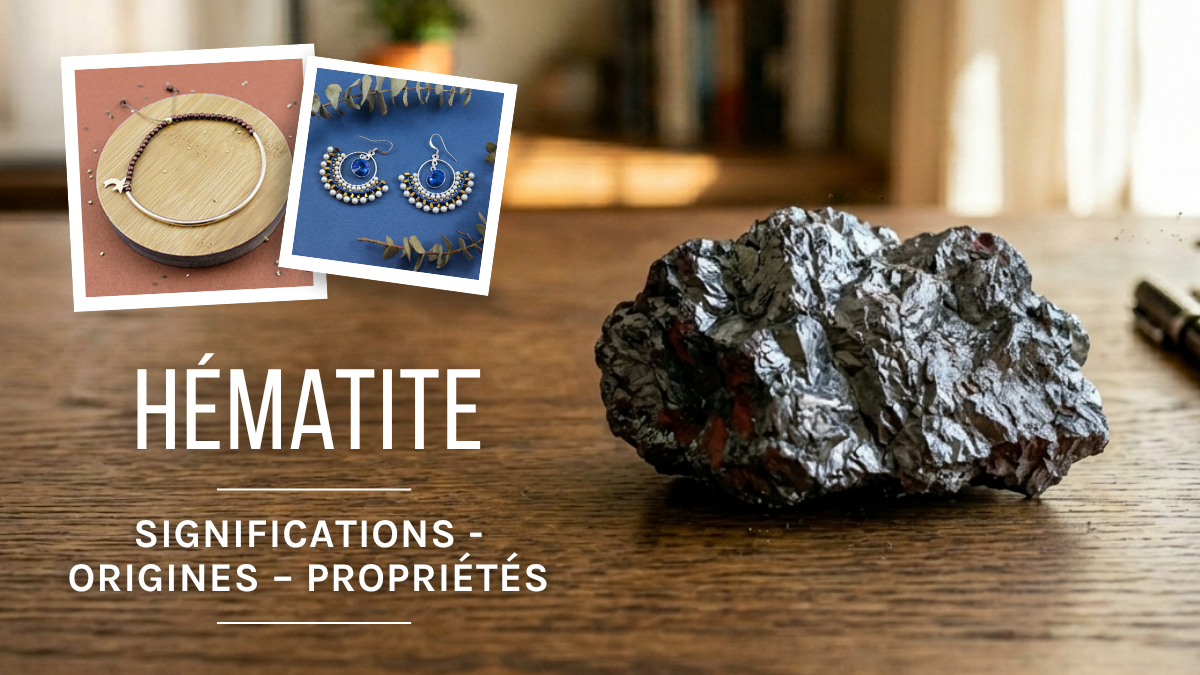
Hematite is a steel-gray natural stone with metallic highlights, mined mainly in England, Germany and Brazil. It is prized in jewelry for its symbolism of strength and anchorage, and comes in a variety of shapes for DIY jewelry creation. For an elegant look, combine it with silver or gilded primers.
Hematite, a natural stone with a steel-gray hue and metallic sheen, has fascinated people since prehistoric times. A symbol of strength and grounding, it is highly sought after in both jewelry making and crystal healing. Whether you’re a beginner looking for inspiration or an expert in jewelry making, hematite offers a world of possibilities to explore. Discover our hematite beads and jewelry findings, and create stunning DIY jewelry inspired by our natural stone pieces.
The name of this gemstone comes from the Latin “haematites,” which means “blood.” It is sometimes called “oligist” or “bloodstone.”
This natural stone was already known during the Upper Paleolithic period. Homo sapiens ground it into powder, mixed it with water, and used it as a red pigment to paint cave drawings. If you visit the Chauvet Cave, you can admire depictions of reindeer and bison painted with hematite.
The Egyptians used it to make cosmetics such as lipstick and blush.
The Romans, like the Native Americans, also used hematite to make amulets and protective talismans. They believed it would protect them from curses and negative energies.
Native Americans believed that this gemstone enhanced the effectiveness of shamanic rituals.
In the Middle Ages, it was cut to make jewelry and decorative objects, as well as used in cosmetics. Once ground, artists used it as a pigment to paint frescoes in cathedrals and churches.
Today, hematite is the primary iron ore used in the production of steel, cast iron, and numerous alloys. It is also frequently used in drilling, the production of heavy concrete, the manufacture of radiation shields, and as counterweights.
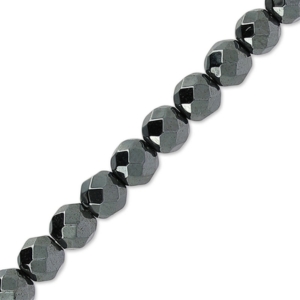
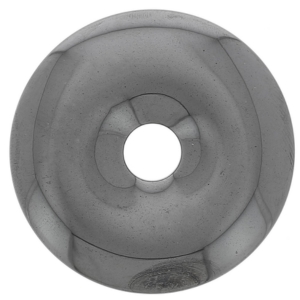
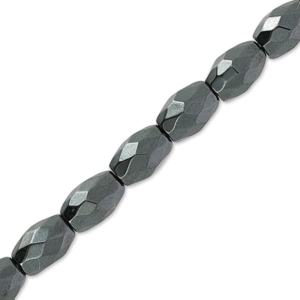
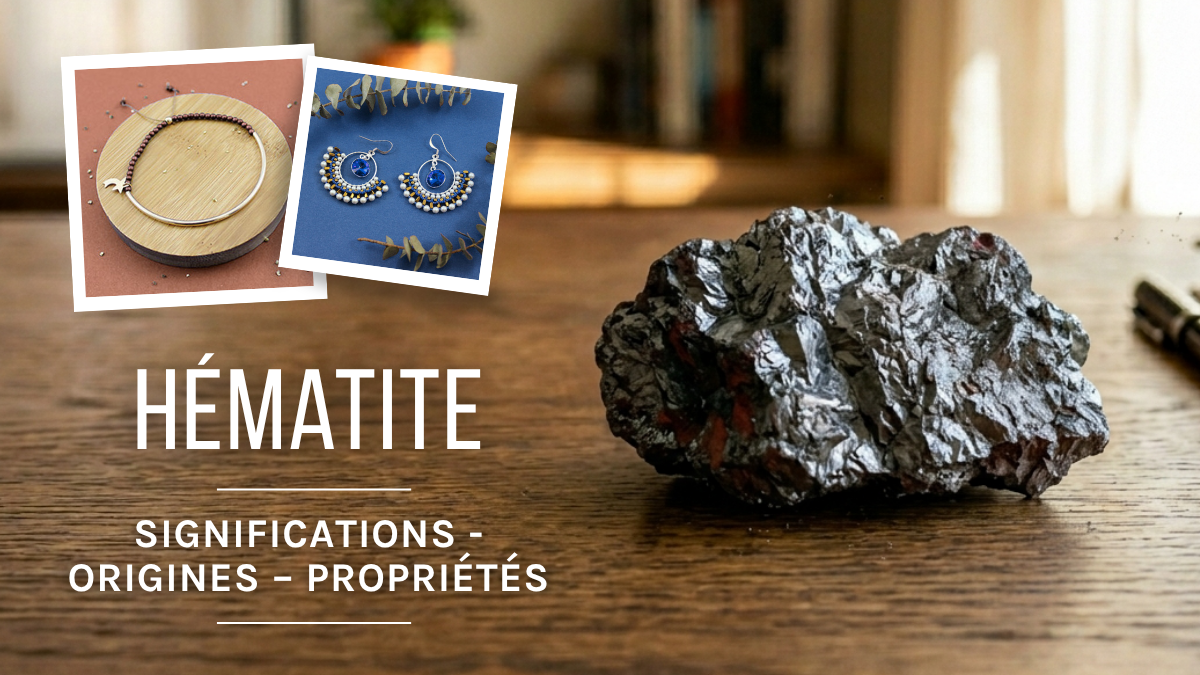
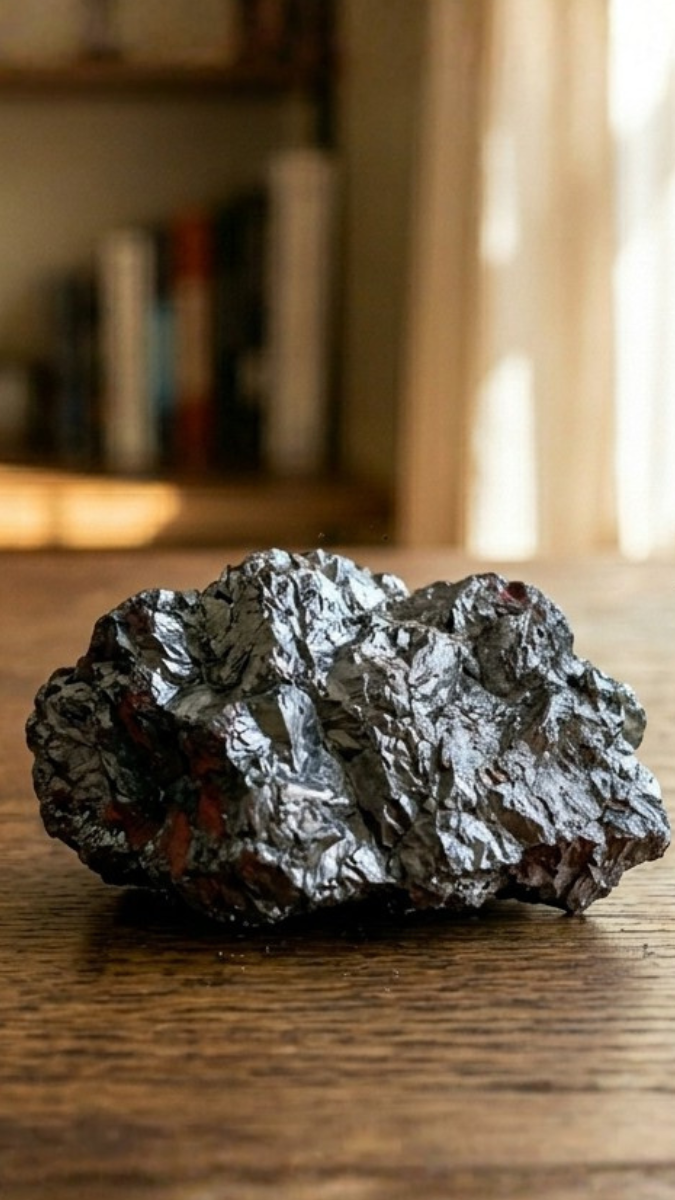
It is an opaque stone, usually gray, silver, or black, with a metallic luster. It can also exhibit shades of red, brown, and even blood red when polished.
The main deposits are located in England, Germany, Brazil, Spain, the United States, France, Italy, Norway, and Canada. And there may even be some on Mars! In fact, in 2004, an American probe discovered raw hematite on the Red Planet.
This gemstone (formerly known asa “semi-precious stone”) is composed mainly of iron oxide, as well as manganese, titanium, and aluminum. It has a hardness between 5.5 and 6.5 on the Mohs scale and a density between 4.9 g/cm³ and 5.3 g/cm³.
In crystal healing, hematite is considered a stone of connection with strong energy and a powerful grounding potential. It protects and balances the body and mind.
It is said to promote self-confidence and make communication easier. Natural hematite is believed to be a powerful shield, ideal for dispelling negative energies.
Which chakra does hematite correspond to?Hematite primarily affects the root chakra (1st chakra) and the sacral chakra. By working on the root chakra, hematite can help restore balance and serenity in daily life.
It is the ideal stone for those born under the signs of Capricorn, Aries, and Scorpio.
Please note: our gemstones are not sold for the purpose of crystal healing. The effects of these stones have not been scientifically proven. Natural stones are in no way a substitute for medical expertise or medical treatment.
Crystal healers recommend cleansing this gemstone regularly to remove the negative energies it has accumulated.
To purify it, place it in a container of distilled water or salt water for a few hours.
To recharge it, simply place it in direct sunlight for a few hours or under the moonlight overnight. To enhance this effect, you can place the hematite on a cluster of quartz or inside an amethyst geode.
The silvery color pairs perfectly with the dark hue of hematite. To create jewelry that complements your everyday outfits, use 925 Sterling Silver or stainless steel findings.
Gold-colored jewelry findings, such as Gold Filled, gold-plated,925 Sterling Silver Fine gold plated, orgold-plated stainless steel, add a touch of warmth to hematite. The contrast between the coolness of the metal and the warmth of the gold is an ideal combination for creating classic and elegant jewelry.
In crystal healing, hematite is often paired with other stones to create combinations believed to offer various benefits or balance certain energies.

Credits
Perles & Co, Internet & E-Commerce company [13/02/2026] Any reproduction, representation, adaptation, in any form whatsoever, even partial, is prohibited, except for reproduction for private use not intended for collective use, representation in the family circle (art. L 122-5 CPI) and online publishing on condition that the source is mentioned and a link is included to the corresponding page of our site www.perlesandco.com.