Average Grades
Free shipping on orders over 50€ up to 500g
French Online shop for beads and accessories for the creation of DIY jewellery and other creative hobbies
Log-in
0
Shopping cart
Shopping cart
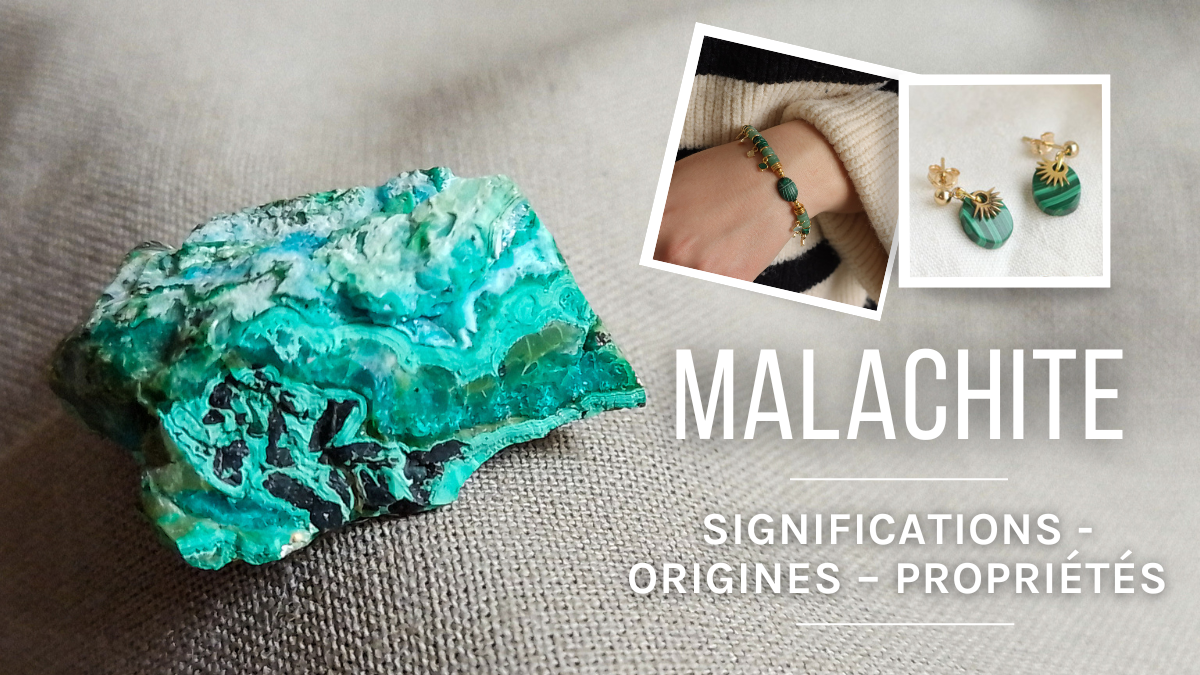
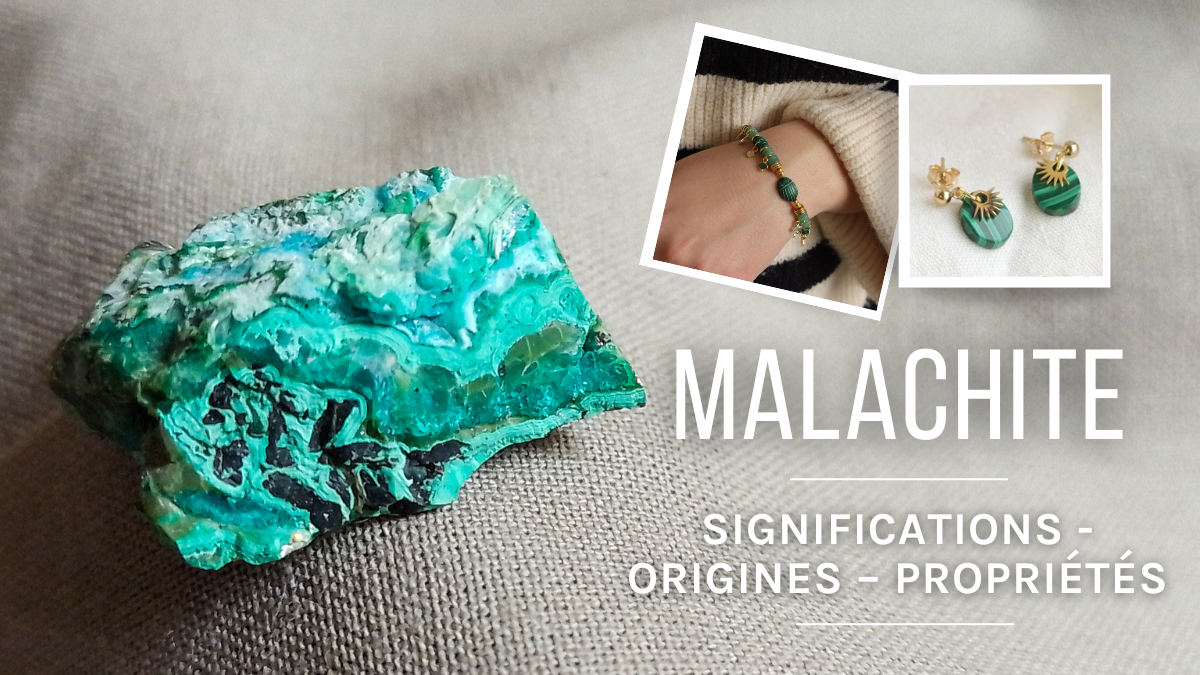
Malachite is a natural stone with an intense green color and unique patterns. Mainly mined in Australia, Brazil and the Democratic Republic of Congo, it is prized in jewelry for its aesthetic appeal and softness, with a hardness of 3.5 to 4 on the Mohs scale. Ideal for a variety of creations, it blends harmoniously with gold or silver jewelry.
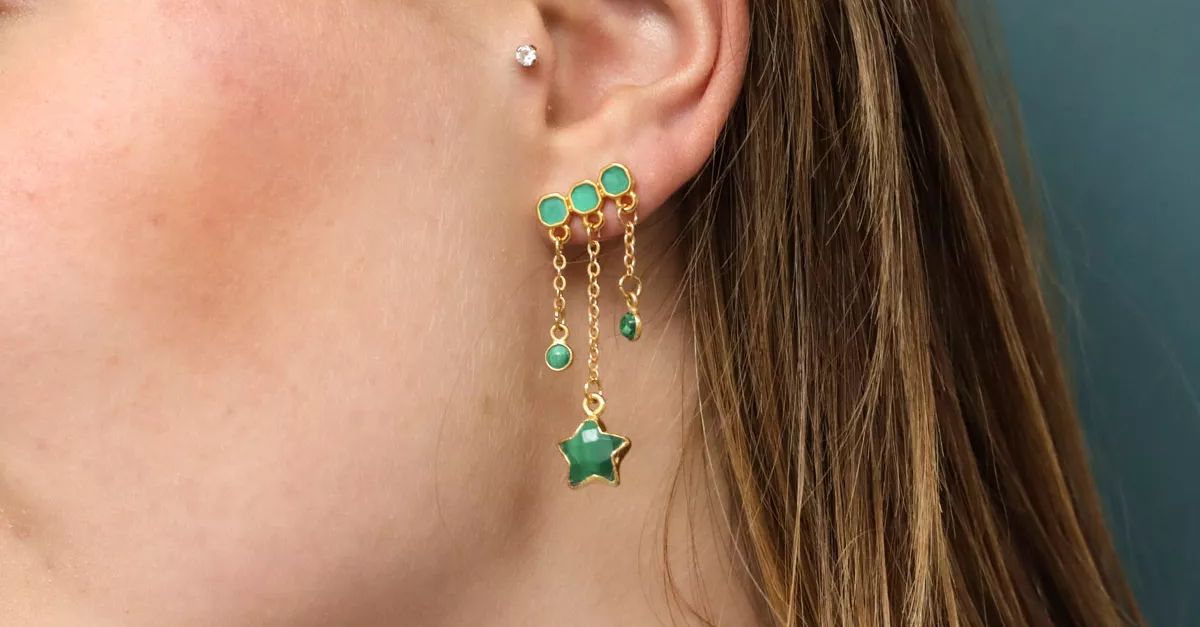
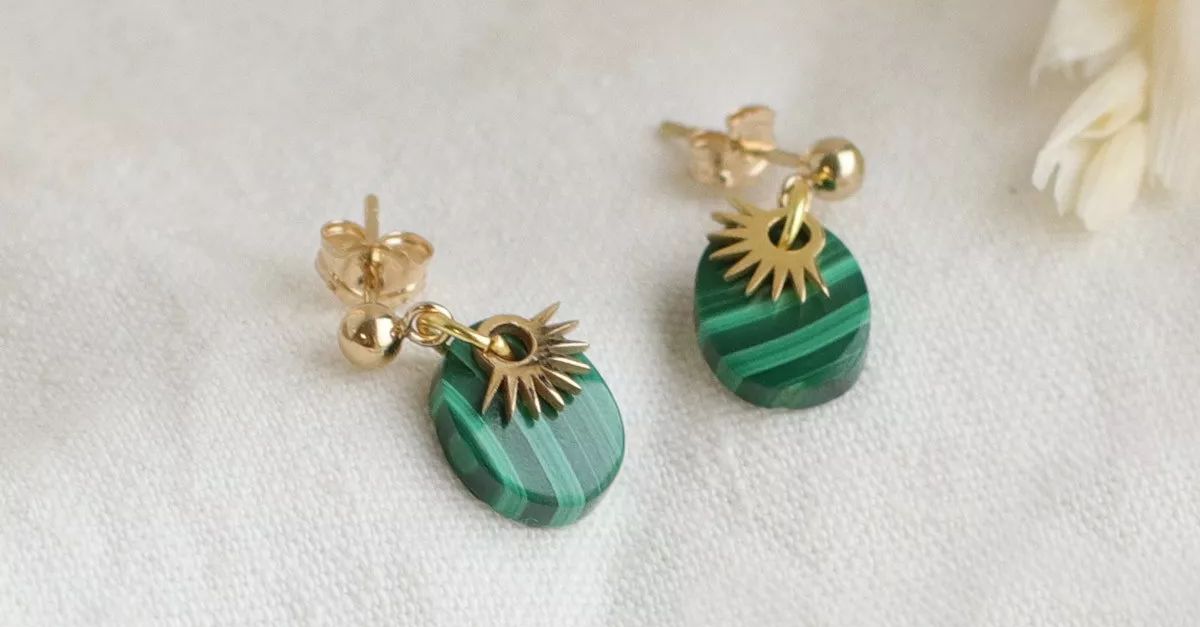
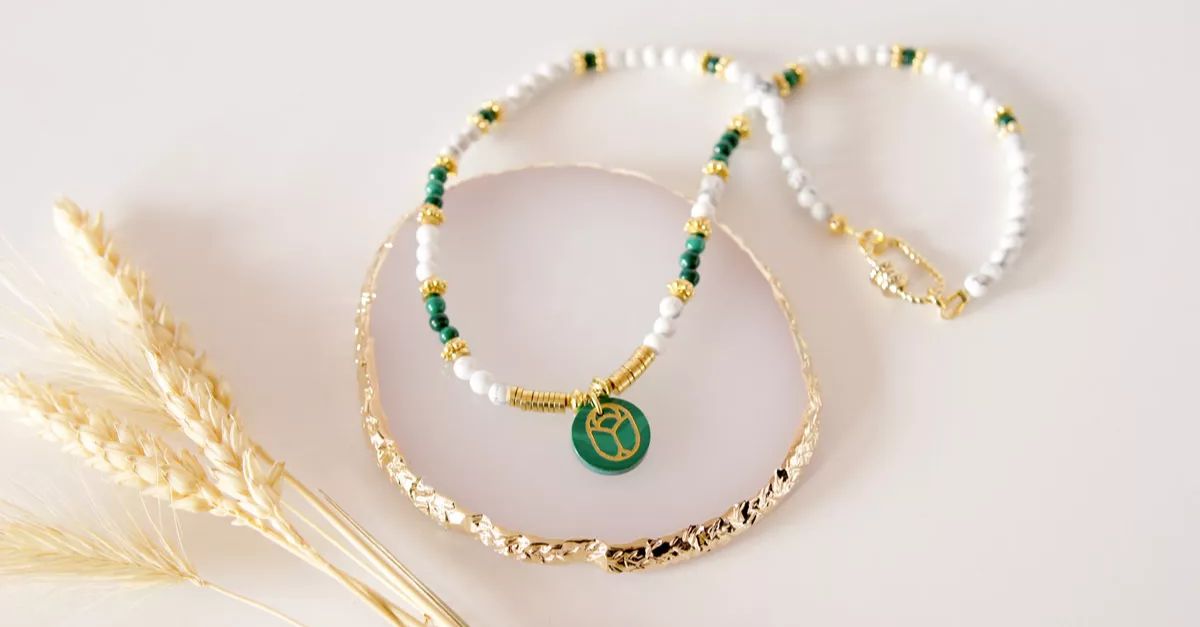
Malachite is a very beautiful natural stone. In jewelry, it is prized for its intense, vibrant green color—ranging from pale green to dark green—featuring light, dark, and almost black rings, ribbons, and bands. Discover our malachite beads and jewelry components, and draw inspiration from our gemstone jewelry tutorials to create earrings, necklaces, bracelets, and even anklets.
The name “malachite” has several origins.
One theory suggests that this gemstone derives its name from the Latin “malachites,” meaning “through,” and the Greek “malakhê,” meaning “mauve.” The stone’s color closely resembles that of mauve leaves.
Another theory traces the origin of its name to the Greek word “malakos,” which can be translated as “softness,” due to the stone’s fragility and sensitivity to heat.
Malachite is a gemstone that has been known and prized for many centuries.
In ancient Egypt, this gemstone was associated with Thueris, the hippopotamus goddess and protector of motherhood, and was believed to protect pregnant women. It was also a symbol of rebirth and eternal youth.
In ancient Greece, the temple dedicated to Artemis, the goddess of hunting and the wilderness, was decorated with objects and ornaments inlaid with malachite.
Since ancient times, this stone has often been used as a talisman to ward off the evil eye, tragedies, and negative energies.
The Romans believed that malachite could protect them from lightning strikes.
Greek soldiers wore it on their wrists or around their necks to avoid injuries on the battlefield.
During the Middle Ages, it was believed to have the power to ward off the evil eye and protect children from childhood illnesses.
In ancient times, it was used for an entirely different purpose. It was ground into a powder to serve as a green pigment (mountain green) in various iconographic paintings.
Russians have valued it for centuries as a decorative stone, as seen in St. Isaac’s Cathedral in St. Petersburg.
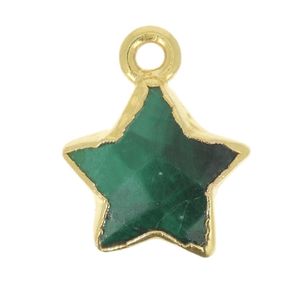
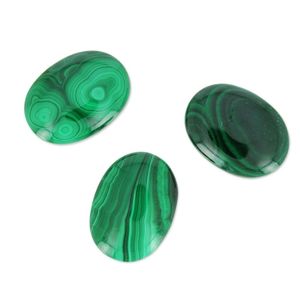
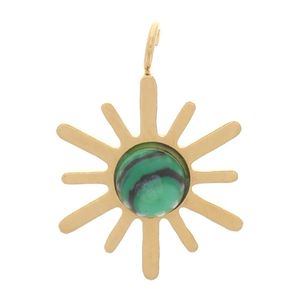
This highly aesthetic green stone is a soft stone. It has a hardness of 3.5 to 4 on the Mohs scale and a density of 3.60 to 4.05.
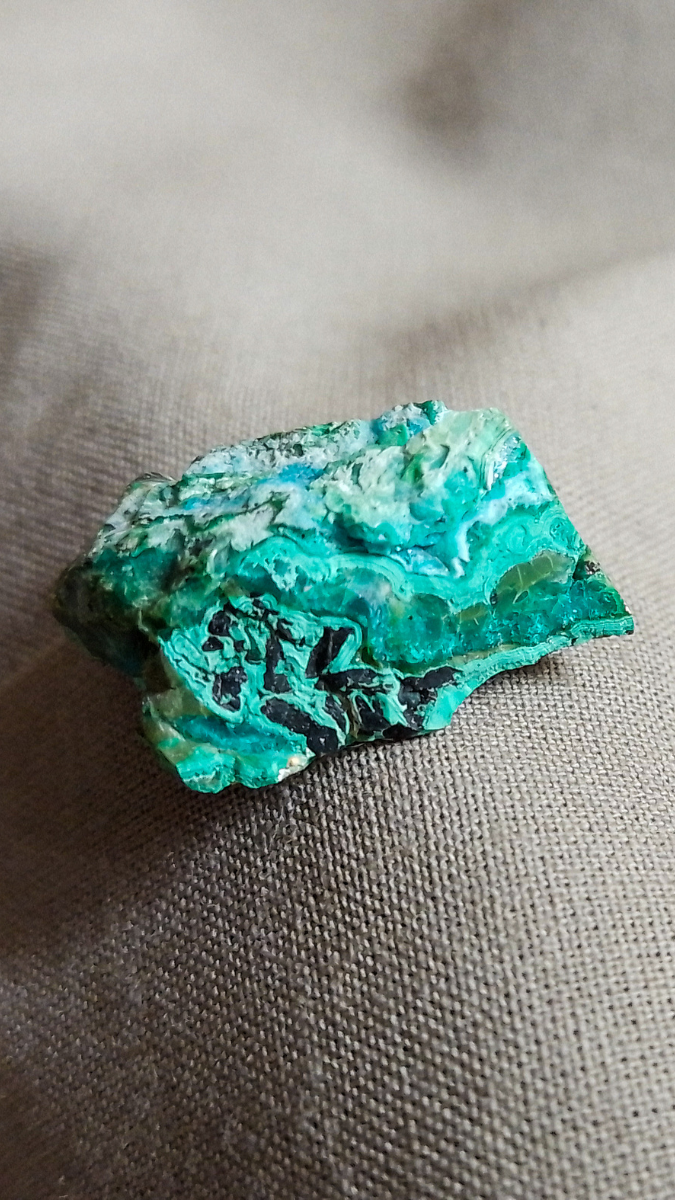
It is composed mainly of copper carbonate and forms naturally in copper mines. Sometimes, it may contain other minerals such as azurite. The stone takes on a color that is both blue and green, and is then referred to asazurite-malachite.
This gemstone is highly prized for its green color, ranging from pale green to dark green. When polished, its surface reveals rings, ribbons, and bands of light, dark, and nearly black hues that accentuate its intense and vibrant color.
It is an opaque to translucent stone with a vitreous luster, verging on silky.
The main deposits are located in Australia, Brazil, Chile, the Congo, the United States, France, Italy, Israel, Zambia, Rhodesia, Russia, and Zaire.
Crystal healers attribute many properties to this green stone. It is a reassuring stone; it is said to reduce stress and boost self-confidence. Soothing and calming, it is believed to bring inner peace.
It is also said to facilitate persuasion by enabling clear and measured speech.
Malachite primarily affects the heart chakra (fourth chakra). It is said to restore balance to the soul by fostering positive energies and absorbing negative and harmful vibrations. It is believed to encourage change and strengthen relationships with others.
In crystal healing, it is said that wearing malachite as a necklace or bracelet helps balance the sacral chakra (second chakra).
There are several methods for purifying malachite:
Once purified, you can recharge it in sunlight or moonlight for a few hours. If you choose sunlight, opt for a time when the rays aren’t too strong, as malachite is sensitive to heat.
To enhance this technique, you can place your malachite stone on a cluster of quartz, rock crystal, or an amethyst.
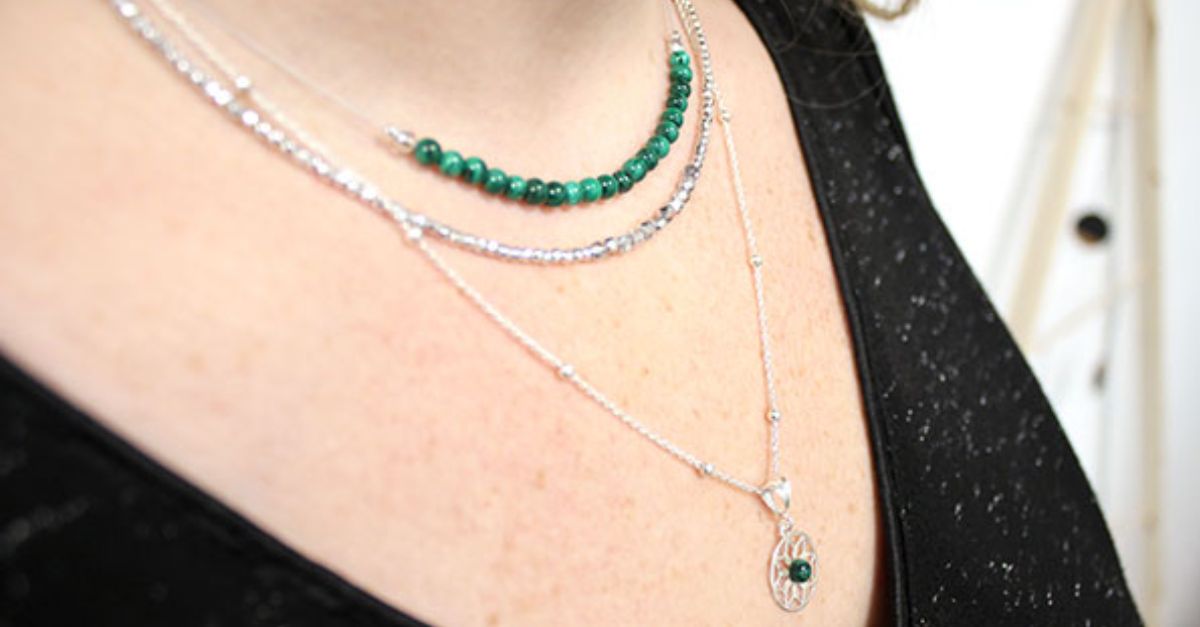
It looks just as good in gold jewelry as it does in silver jewelry. That’s why you can showcase it beautifully with Gold Filled or gold-platedsettings for a luxurious and enchanting effect. But you can also set malachite jewelry with 925 Sterling Silver or stainless steel settings for a more understated yet equally refined style.
In crystal healing, it’s recommended to pair certain stones together to enhance their benefits. However, malachite has an energy that’s too strong. It should therefore be worn alone, as it could negate the properties of other stones.
If you’re simply looking for a pretty effect or a harmonious color combination, pair your malachite with the stones you love.

Credits
Perles & Co, Internet & E-Commerce company [27/12/2025] Any reproduction, representation, adaptation, in any form whatsoever, even partial, is prohibited, except for reproduction for private use not intended for collective use, representation in the family circle (art. L 122-5 CPI) and online publishing on condition that the source is mentioned and a link is included to the corresponding page of our site www.perlesandco.com.